Theoretical physicists have delved into the mysterious world of granular materials, shedding light on the propagation of sound through these materials, particularly near the "jamming transition." Their study, published in the European Physical Journal E, reveals universal and non-universal statistical features of the vibrational spectra of granular packings, described by random matrix theory. This work not only provides insights into everyday scientific mysteries but also presents a unified model for stress distribution and vibrational spectra, highlighting the importance of studying fundamental problems in the everyday world around us.
MIT engineers have developed a new experimental technique that allows for detailed 3D experiments to probe the mechanisms of landslides and earthquakes by revealing how forces are transmitted through granular materials and how the shapes of the grains can dramatically change the outcomes. The method involves using photoelastic particles and computed tomography to visualize the internal stresses in a granular material as loads are applied, providing insights into the strength and stability of different grain types. This breakthrough could lead to better understanding of landslides, improved control of granular materials in industrial processes, and potential applications in various fields, supported by the U.S. National Science Foundation.
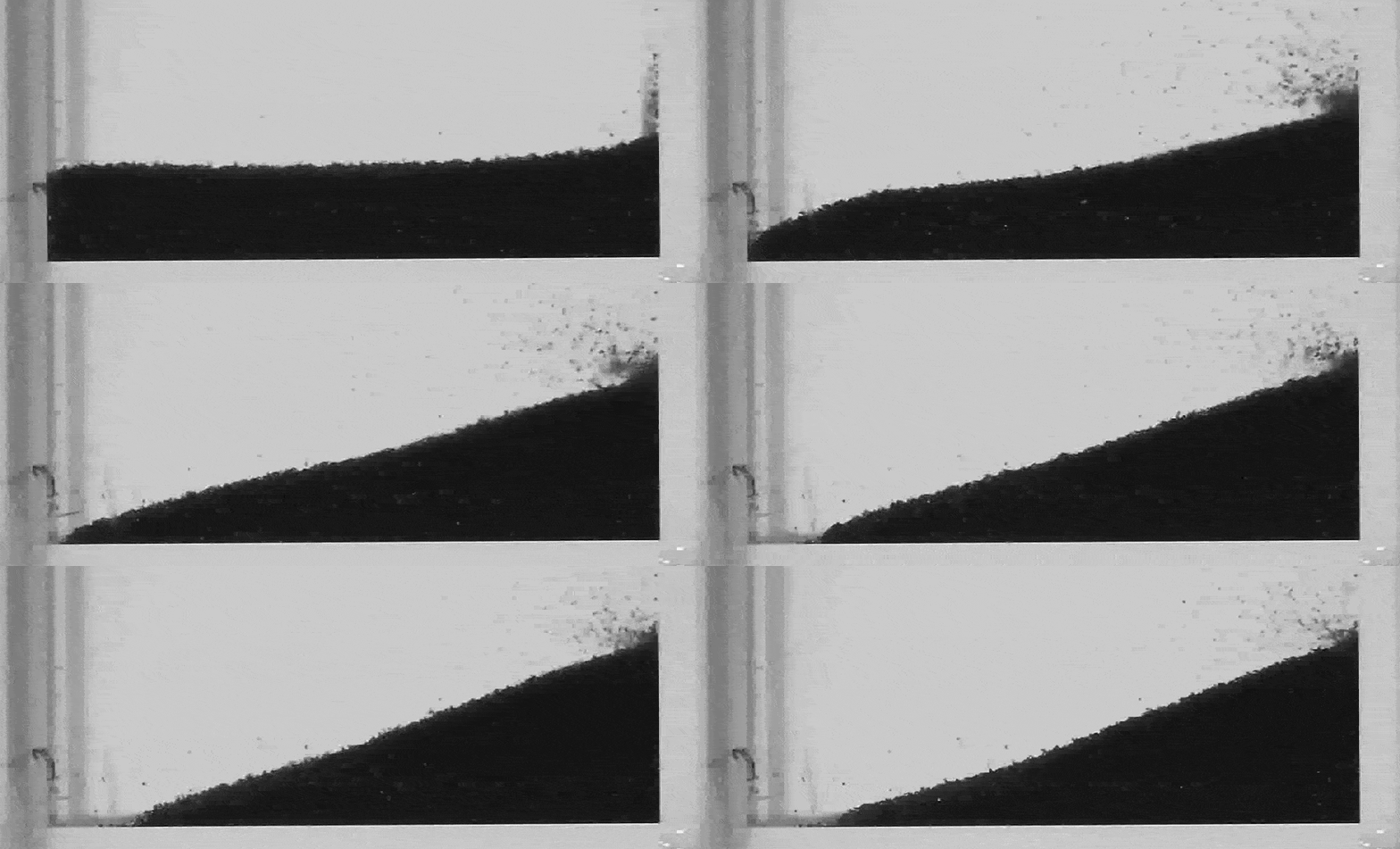
Engineers at Lehigh University have discovered a phenomenon where magnetized sand flows uphill, defying conventional wisdom about granular materials. The research, published in Nature Communications, challenges our understanding of how these materials behave. By using equations that describe the flow of granular materials, the researchers were able to confirm that the particles were indeed moving uphill, contrary to the force of gravity.
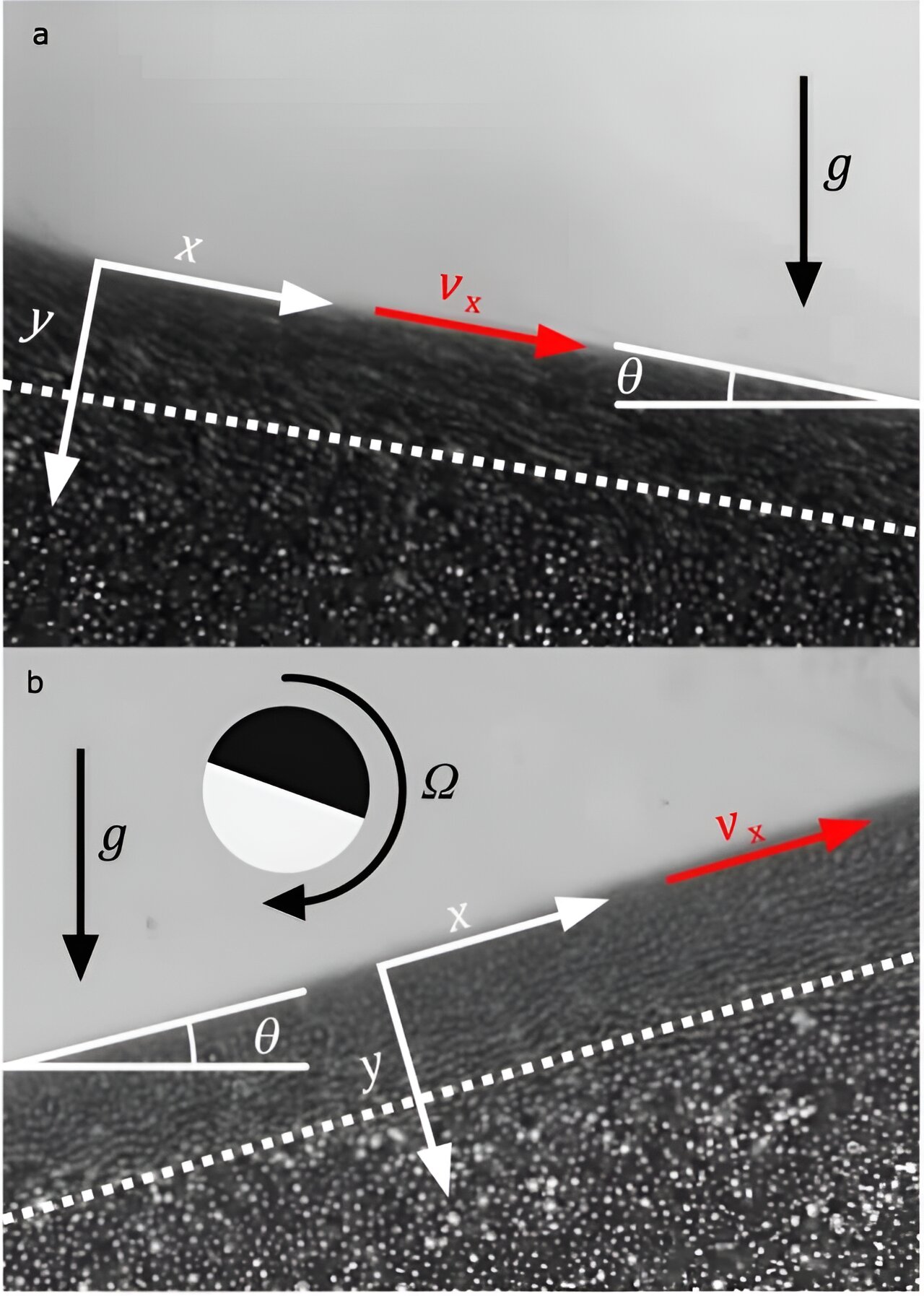
Scientists from Lehigh University have developed a sand-like material called microrollers, which can flow uphill when subjected to a rotating magnetic field. The particles, coated in iron oxide, exert a twisting force on each other and overcome obstacles against gravity. This phenomenon, referred to as a negative angle of repose, is caused by a negative coefficient of friction that boosts movement. The researchers believe this discovery could have various applications, such as controlling substance mixing or separation and in microrobotics for drug delivery. Further research will focus on exploring the particles' ability to climb obstacles.
Researchers at Lehigh University have discovered that sand can flow uphill when subjected to torque and an attractive force. By applying these forces to each grain, the sand particles were observed to flow uphill, up walls, and up and down stairs. This unusual discovery could have various applications in fields such as healthcare, material transport, and agriculture. The researchers are now exploring the collective motion of the sand particles and investigating potential uses in microrobotics and nutrient delivery systems.