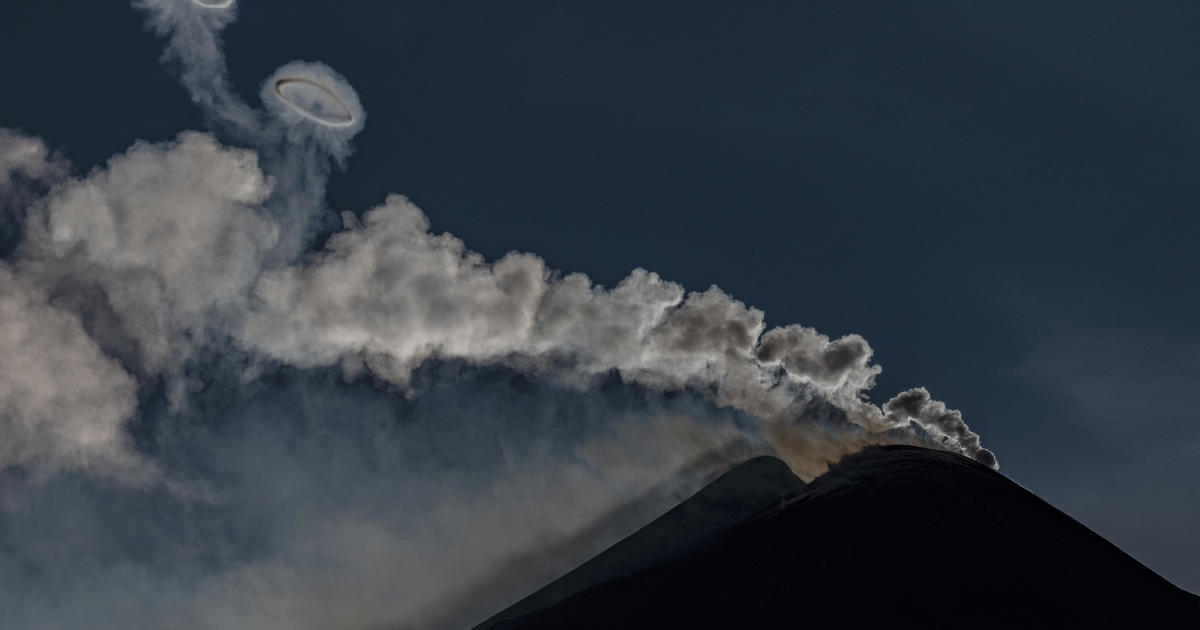
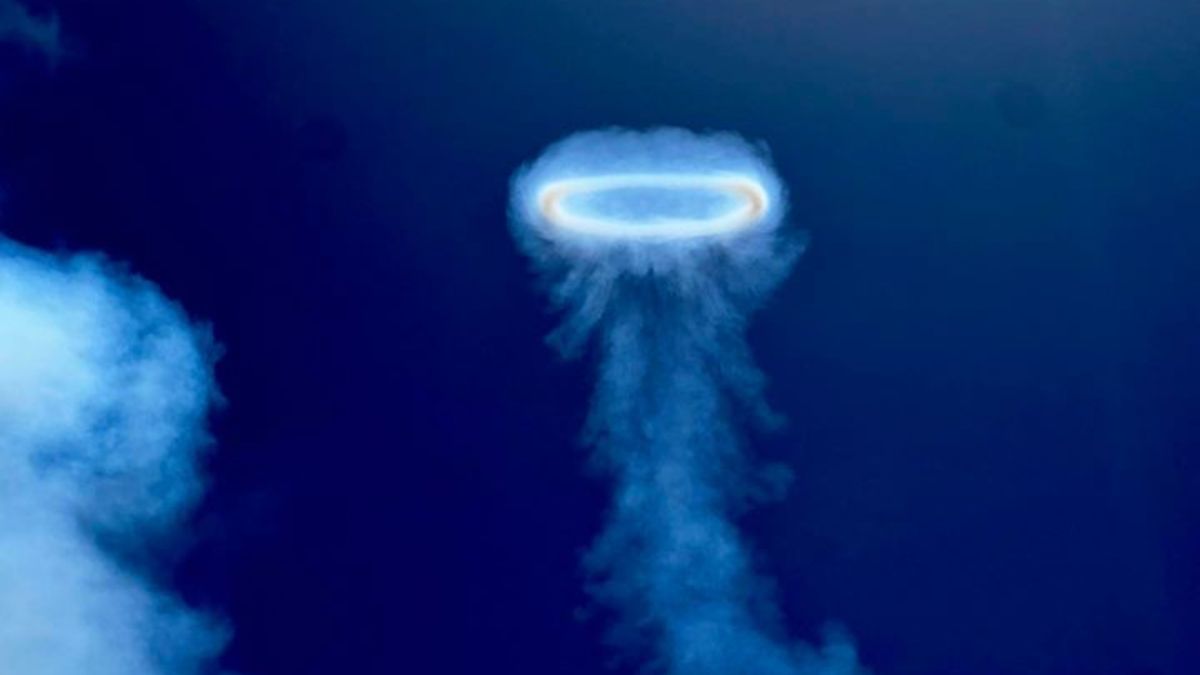
Italy's Mount Etna, the most active stratovolcano in the world, was seen spewing rare and nearly perfectly circular volcanic vortex bubbles, some appearing pink in color against the sky. A new pit crater formed along the volcano within the past week, contributing to the formation of the nearly perfectly circular rings of gas and vapor. This rare phenomenon, which can be traced back to as early as 1724, has been observed emitting "unprecedented quantities" of the rings, with locals referring to Etna as "Lady of the Rings." Etna is one of the most active volcanoes, with the last significant activity recorded in December 2023.
Mount Etna, Europe's most active volcano, is producing numerous "vortex rings" from a single vent in its Bocca Nuova crater. These rings, made of smoke, steam, and gases, can remain airborne for several minutes. The volcano has been releasing these rings for about a week, with no signs of stopping. Mount Etna produces more vortex rings than any other volcano, and the secret lies in the shape of the conduit below the vent. Recent activity also includes the opening of a new vent and minor eruptions, but experts say a major eruption is not imminent.
Researchers at the University of Michigan have developed a mathematical model to understand the formation of vortex rings, which could aid in efficient fuel compression for nuclear fusion and assist in fluid mixing post-shock wave. The model has implications for engineers in supersonic jet engine design and physicists studying supernovae. By gaining deeper insight into vortex ring formation, scientists could improve fuel compression in nuclear fusion, bringing us closer to harnessing fusion as a viable energy source. The model also has potential applications in designing fuel capsules and managing fluid mixing in various fields.
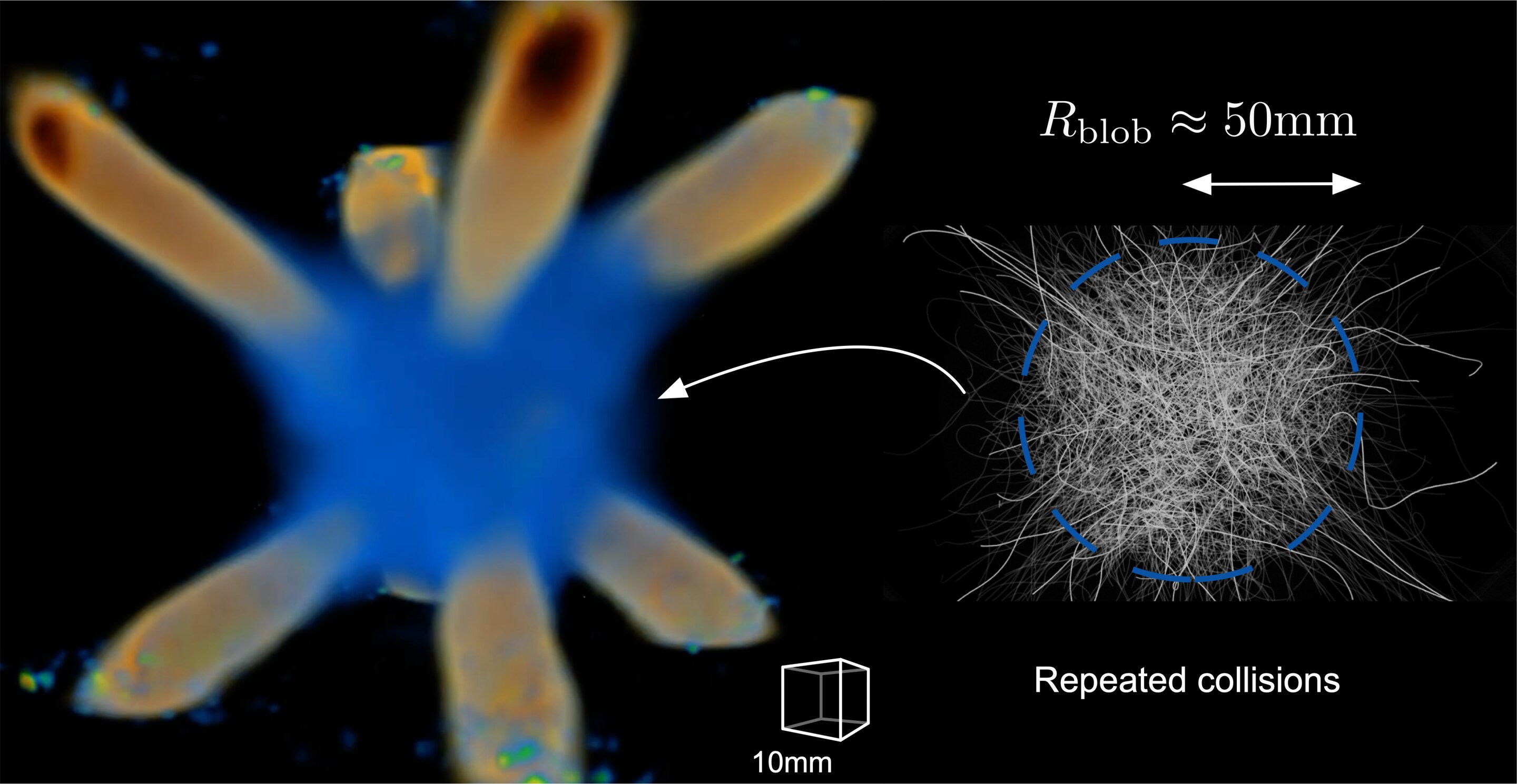
Researchers at the University of Chicago have developed a new strategy to control the location, position, and properties of turbulence in experimental settings. The strategy involves creating an isolated turbulent blob within a calm environment by repeatedly firing sets of eight vortex rings towards the center of a cubic water-filled tank. The successful creation of such an isolated blob could open up new avenues for research, allowing physicists to explore questions that have been difficult to answer using traditional experimental methods.
Researchers at the University of Michigan have developed a model to better understand the formation of vortex rings, which could help nuclear fusion researchers compress fuel more efficiently and bring humanity closer to capturing the power of nuclear fusion as an energy source. The model could also help other engineers who must manage the mixing of fluids after a shock wave passes through, as well as physicists trying to understand supernovae. The researchers have shown that vortex rings that form at the leading edge of jets are mathematically similar to smoke rings, the eddies behind jellyfish, and the plasma rings that fly off the surface of a supernova.