Tag

Supernovae

All articles tagged with #supernovae

science2 months ago

Universe's Expansion Is Now Slowing Down


A recent study suggests that the universe's expansion is slowing down rather than accelerating, challenging the standard cosmological model and implying potential new physics or models like a cyclic universe. The findings focus on the impact of progenitor star age on Type Ia supernova luminosity, which could bias previous measurements of cosmic expansion. While intriguing, the results are met with cautious skepticism and require further validation with upcoming data.

science2 months ago

Emerging Evidence Indicates Universe's Expansion Is Decelerating

A new study suggests that the universe's expansion is slowing down rather than accelerating, challenging the long-held belief that dark energy is causing an ever-increasing expansion rate. The findings indicate that dark energy may weaken over time, leading to a transition from acceleration to deceleration, which could significantly alter our understanding of the universe's past and future.

science4 months ago

Origins of Cosmic Dust

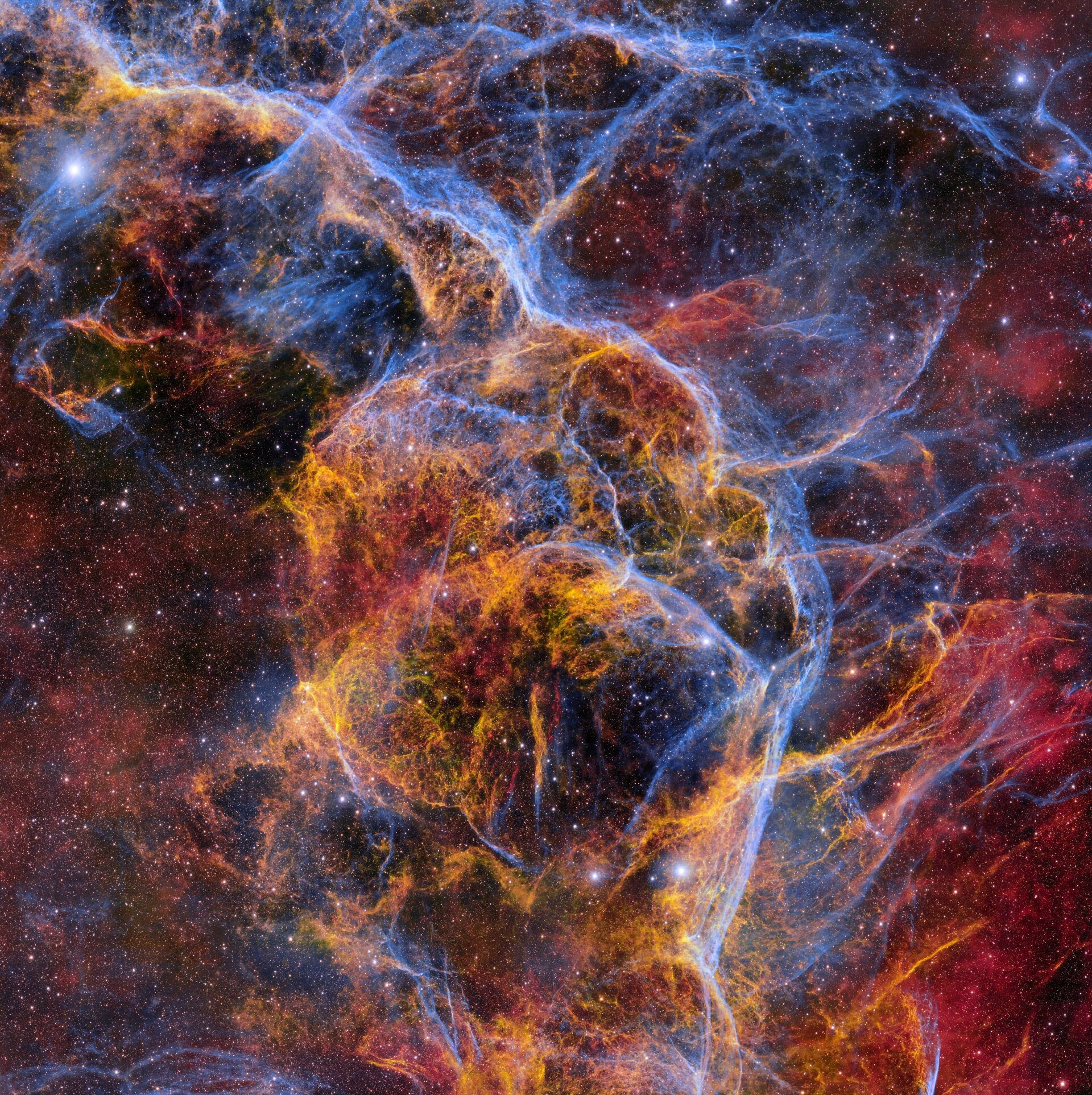
Cosmic dust, composed mainly of small particles of silicates, ices, and metals, originates from processes like supernova explosions, stellar outflows, and planetary nebulae, but the primary source of the universe's dust appears to be core-collapse supernovae, which produce large amounts of dust that can survive destructive processes, playing a crucial role in star and planet formation.

science5 months ago

Scientists Suggest Earth Is Inside a Cosmic Void Based on Early Universe Echoes

Recent observations using the eROSITA telescope have revealed that the Local Hot Bubble surrounding our solar system is an irregular, dynamic structure shaped by multiple supernova explosions and possibly connected to other galactic features through interstellar tunnels, providing new insights into the active and interconnected nature of our galaxy's environment.

science5 months ago

NASA's Roman Space Telescope Nears Completion, Ready to Capture Cosmic Explosions

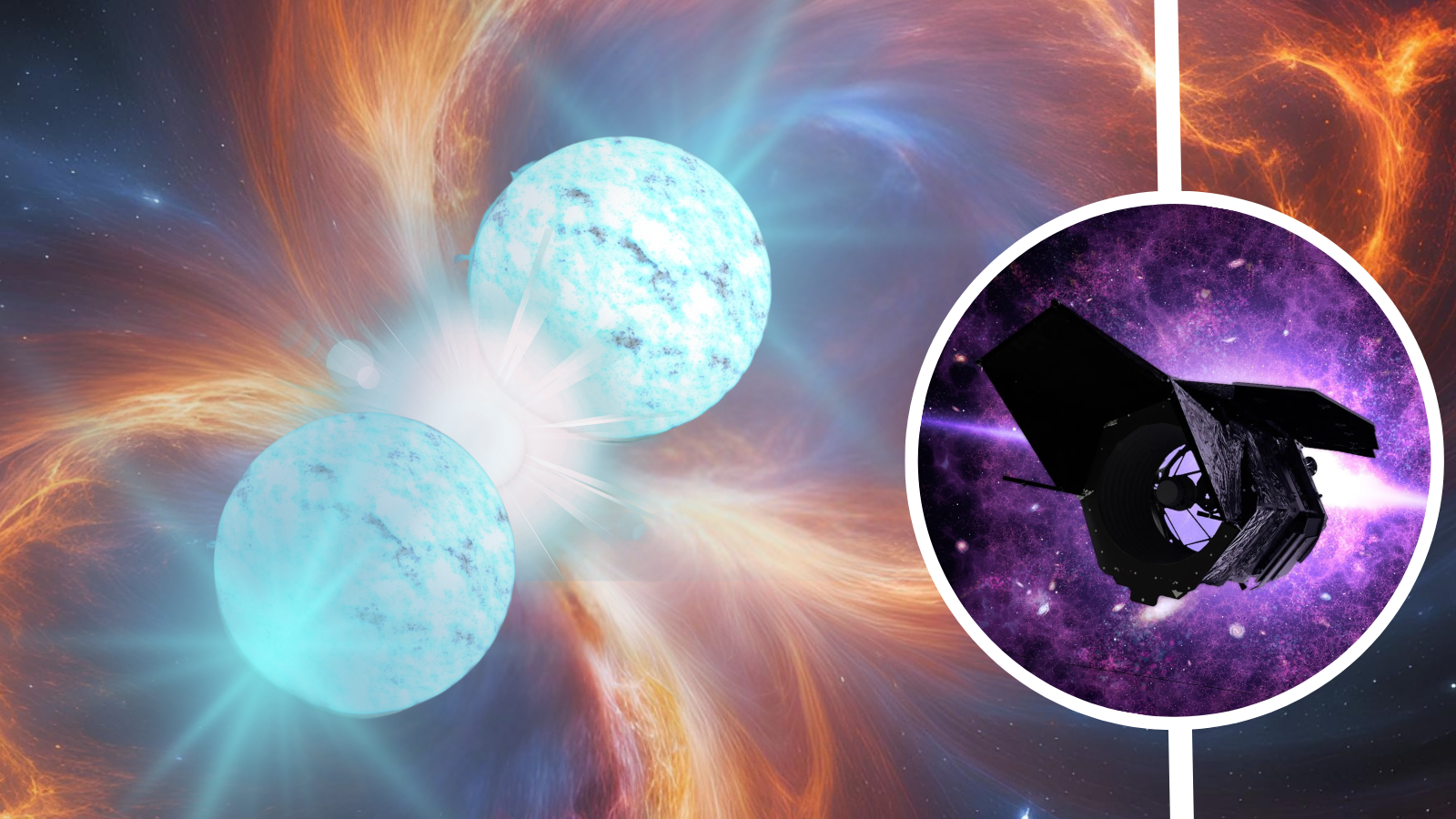
NASA's upcoming Roman Space Telescope, set to launch by May 2027, is expected to discover up to 100,000 cosmic explosions, including supernovas, kilonovas, and black hole events, which will help scientists understand dark energy, stellar life cycles, and the origins of heavy elements. The telescope's high-cadence survey will create cosmic movies over two years, vastly expanding our knowledge of the universe's most violent phenomena.

science7 months ago

Exploding Star Behind Earth's Most Dangerous Radiation Source

A new study suggests that supernova remnants can temporarily become the universe's most powerful particle accelerators, called PeVatrons, capable of producing ultra-energetic cosmic rays. This phase is brief, lasting only a few months, which explains why direct detections are rare despite frequent supernovae in the Milky Way. The key factor is the dense gas shell around the star, which, when hit by the explosion, creates intense magnetic fields that accelerate particles to PeV energies.

science1 year ago

Scientists Unveil Source of Milky Way's Fiery Gas Veil

Scientists have identified the source of the super-hot gas surrounding the Milky Way, attributing it to supernovae explosions in the galaxy's stellar disk. These explosions heat the gas to millions of degrees Kelvin, creating a veil of fiery gas enriched with α-elements. This gas emits X-rays and absorbs light from distant quasars, providing clues about its composition and origin. The research, conducted by the Raman Research Institute and collaborators, offers insights into the dynamics of the Milky Way's circumgalactic medium.

science1 year ago

James Webb Validates Hubble's Constant Measurement

The James Webb Space Telescope (JWST) has confirmed the Hubble Space Telescope's (HST) measurements of the Hubble Constant, a key parameter in cosmology that defines the universe's expansion rate. A study led by Adam G. Riess used JWST to validate HST's results using the cepheid/supernova distance ladder, achieving a Hubble Constant value of 72.6 ± 2.0 km/s/Mpc, closely aligning with HST's 72.8 km/s/Mpc. This cross-verification helps refine the accuracy of the constant, crucial for understanding the universe's age, size, and fate.