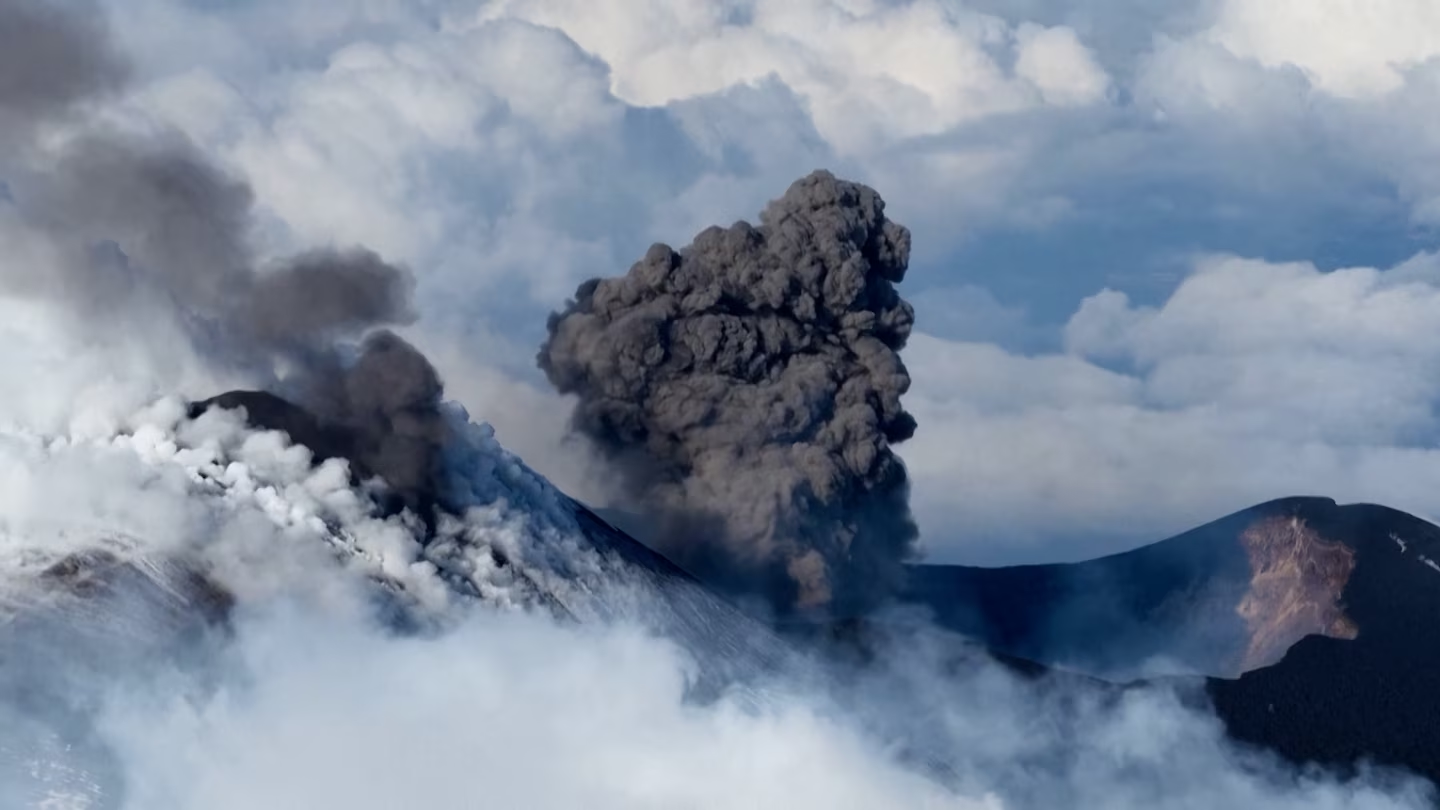
Skier Descends Mount Etna Amid Eruption
Skier descends Mount Etna in Sicily as the volcano erupts explosively, spewing ash and lava, despite increased volcanic activity in recent days.

All articles tagged with #mount etna
Skier descends Mount Etna in Sicily as the volcano erupts explosively, spewing ash and lava, despite increased volcanic activity in recent days.
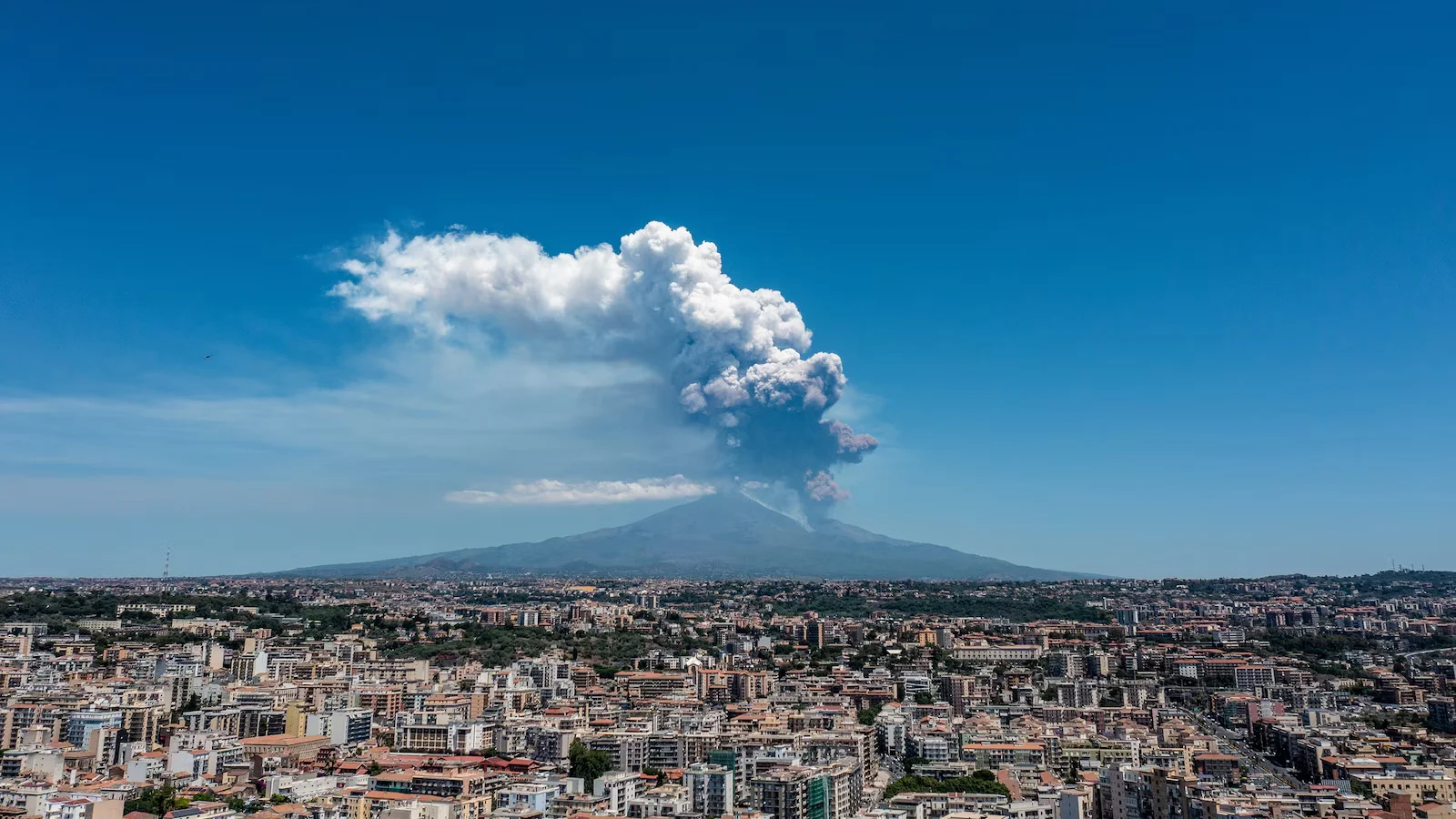
Scientists have developed a new method to predict eruptions at Mount Etna by monitoring the b value, which measures earthquake magnitudes, allowing earlier warnings of potential eruptions based on crustal stress changes and magma movement, potentially providing critical lead time for nearby communities.
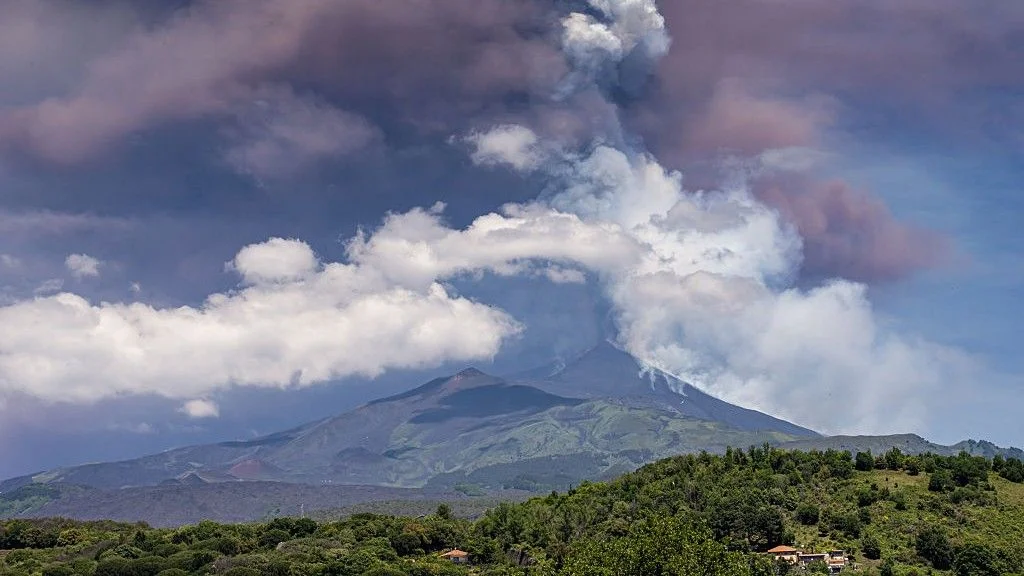
Scientists have developed a new method using the b value, which analyzes earthquake patterns, to better predict eruptions of Mount Etna by tracking magma movement within the volcano's crust, potentially improving eruption forecasts.

Mount Etna erupted on June 2, 2025, spewing ash, smoke, and lava, with the eruption captured by ESA's Sentinel-5P satellite, highlighting its ongoing volcanic activity and potential hazards.
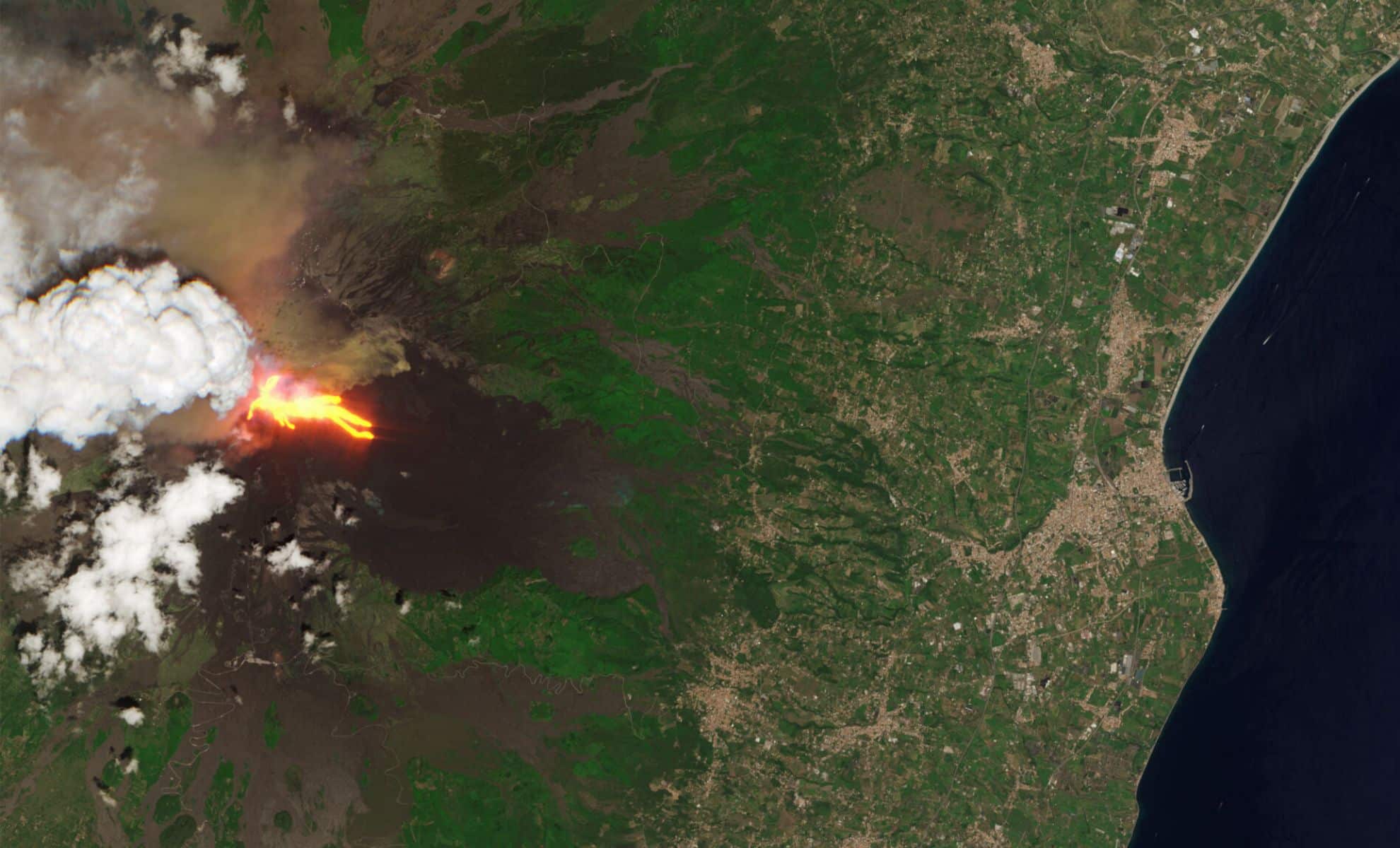
On June 2, 2025, Mount Etna erupted, releasing a massive plume of sulphur dioxide and ash, captured by ESA's Sentinel satellites, highlighting the volcano's ongoing activity and environmental impact.
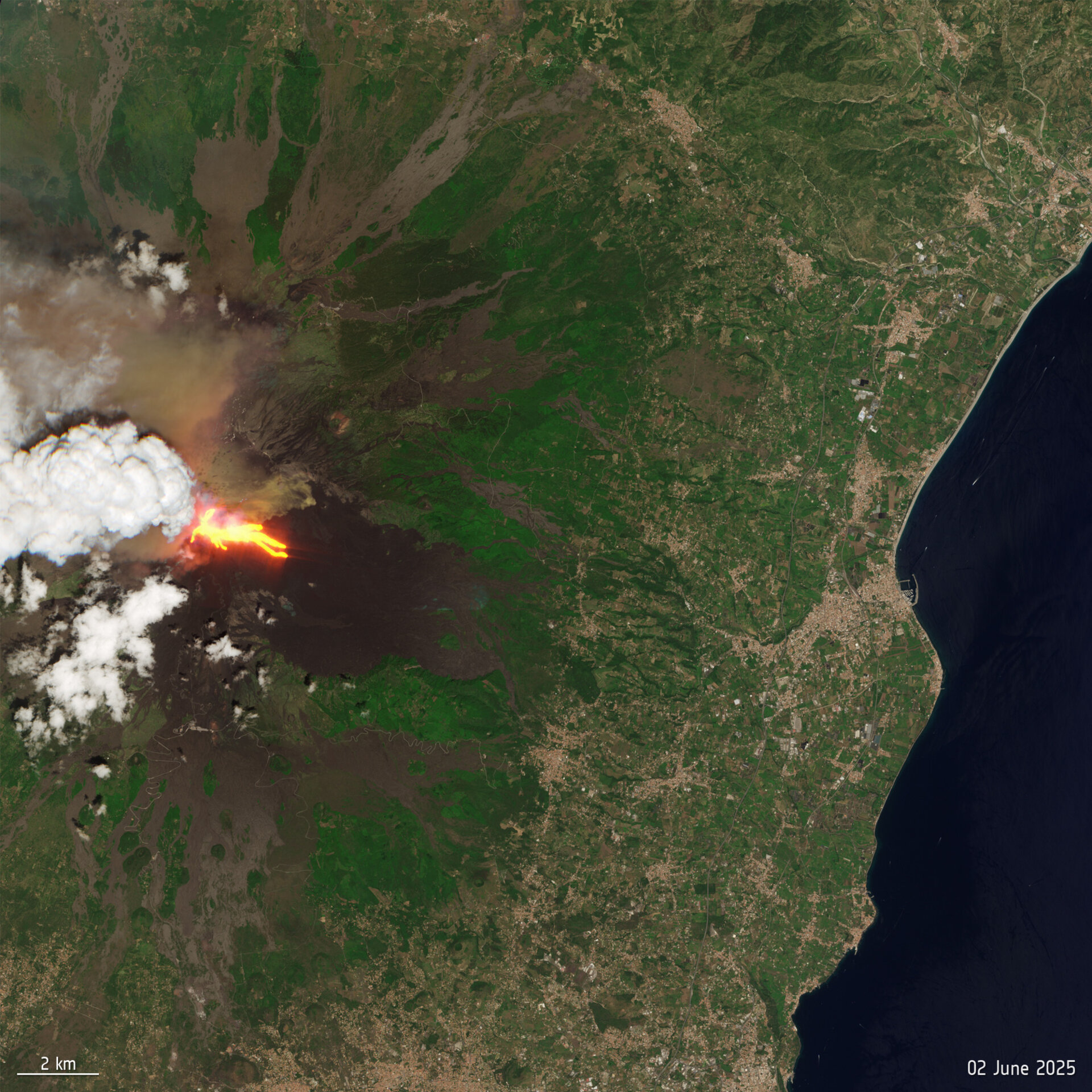
Mount Etna erupted dramatically on June 2, 2025, sending ash, gas, and rocks into the air, causing tourists to flee; this was the largest eruption since 2014, with significant lava flow and sulfur dioxide emissions captured by satellite images.
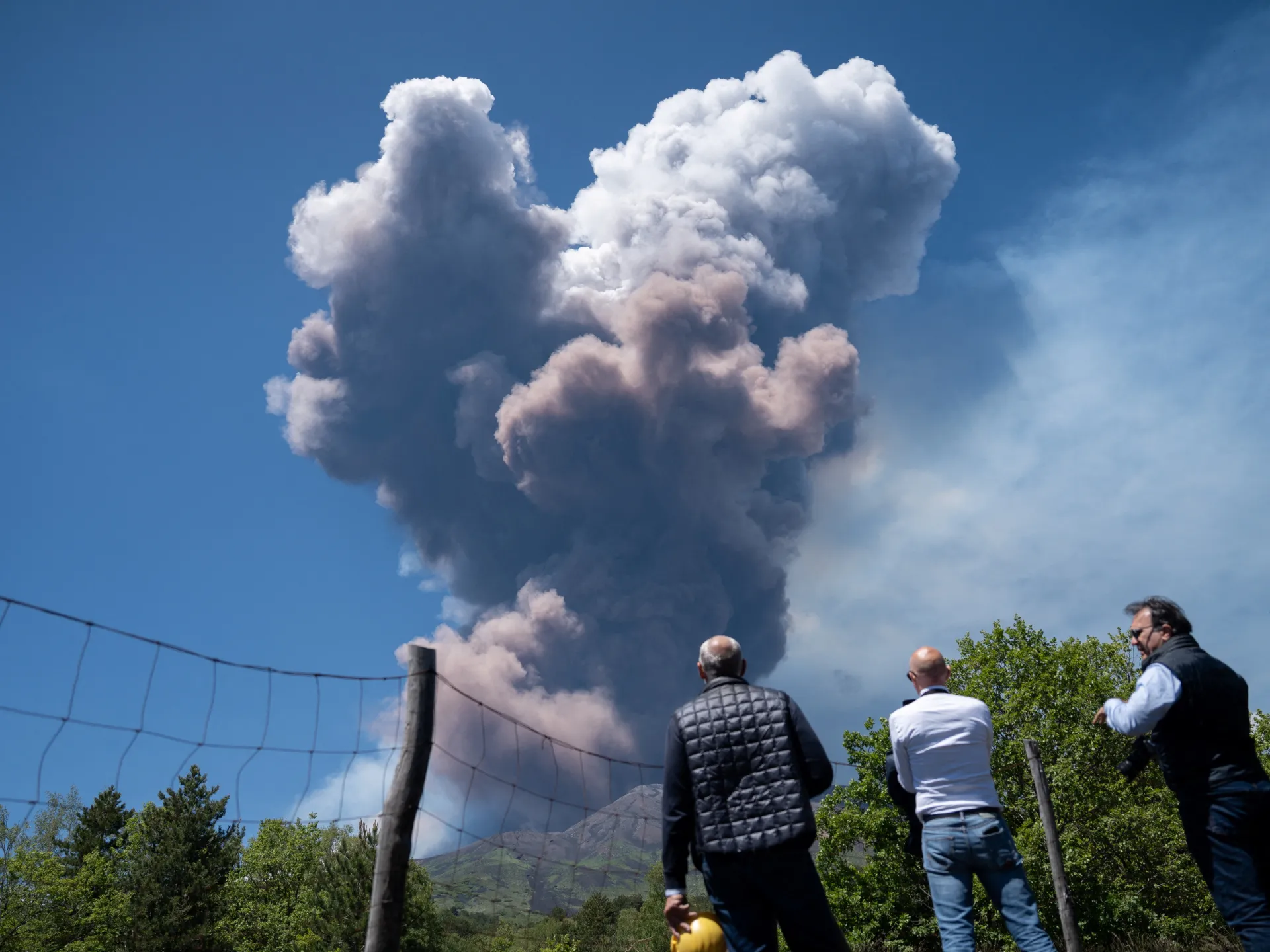
Mount Etna in Sicily erupted spectacularly, sending ash and gas high into the sky, but officials assured there was no danger to residents, and the eruption was confined to the summit area, with no disruptions to flights or safety.
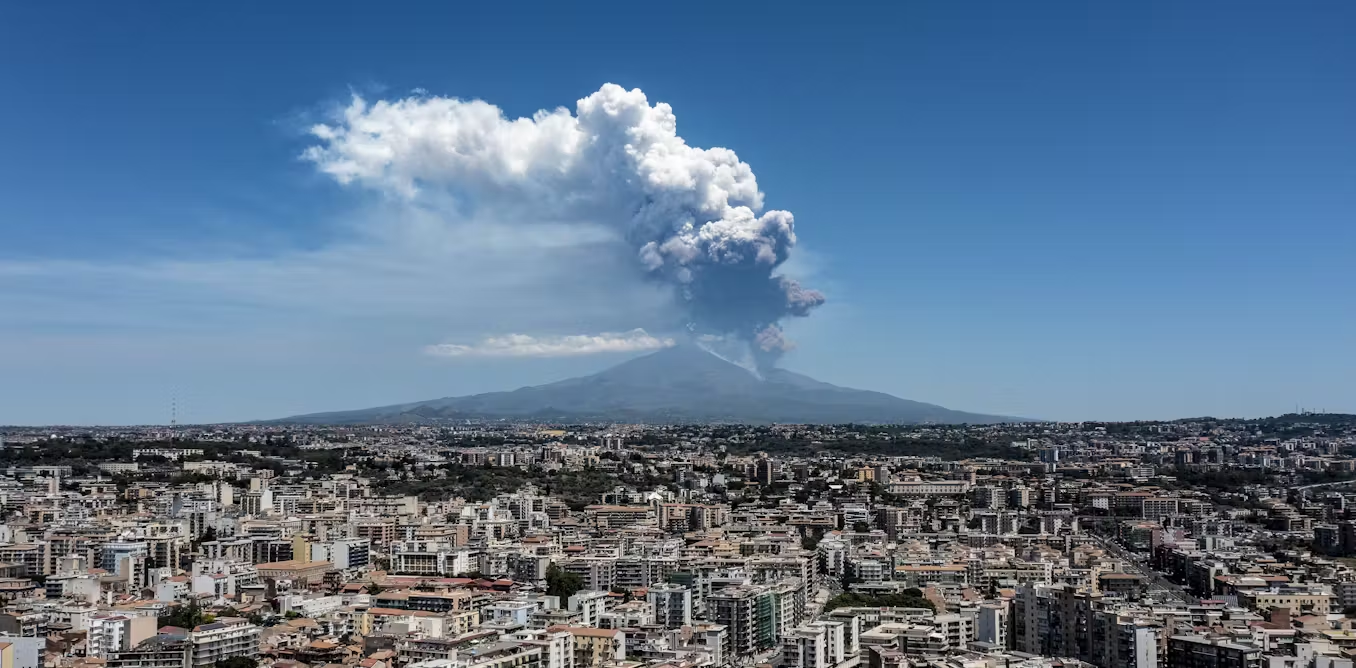
A recent eruption at Italy's Mount Etna produced a large ash cloud and lava flows, but caused no injuries or major disruptions. The event was more explosive than a typical Strombolian eruption, which is characterized by small rock and cinder bursts. Volcanologists classify eruptions by explosiveness, with Strombolian being mild, and more explosive types like Plinian causing widespread destruction. Monitoring techniques such as seismic activity, ground deformation, and gas analysis help forecast eruptions, though predicting exact timings remains challenging. Improved monitoring has increased our awareness of eruptions, but the frequency has not necessarily increased.
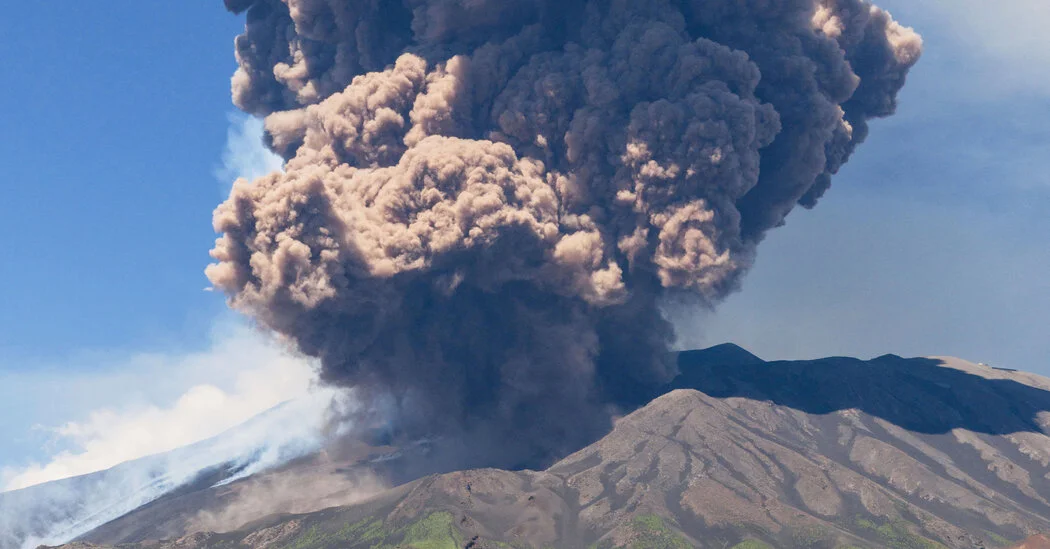
Mount Etna in Sicily erupted, causing tourists to evacuate as ash and gas clouds billowed into the sky, though no injuries were reported and activity has since ceased. The eruption led to flight delays and highlighted ongoing risks for visitors to the active volcano.
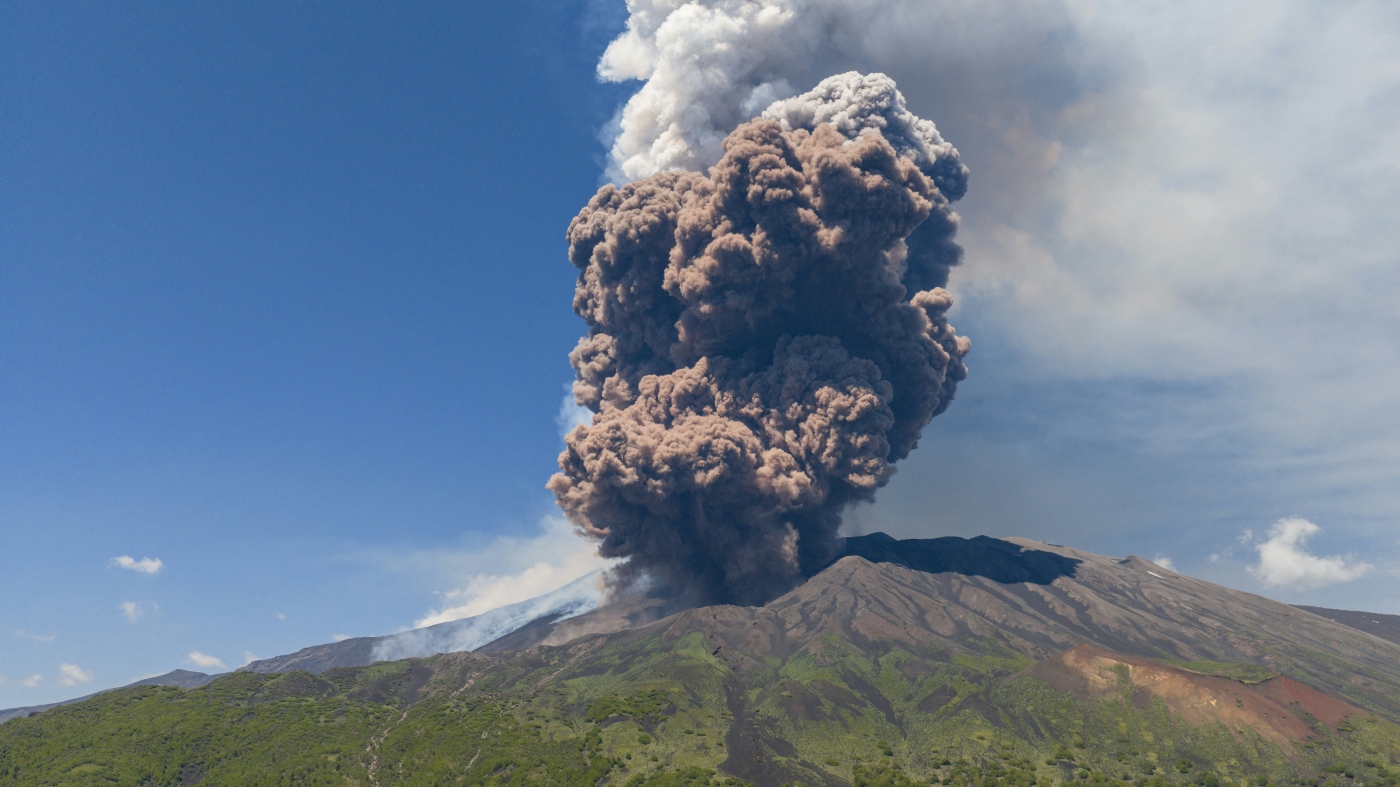
Mount Etna, Europe's highest active volcano, erupted explosively, sending a large ash cloud into the sky and triggering aviation alerts, though immediate impacts on people were minimal and activity has since decreased.
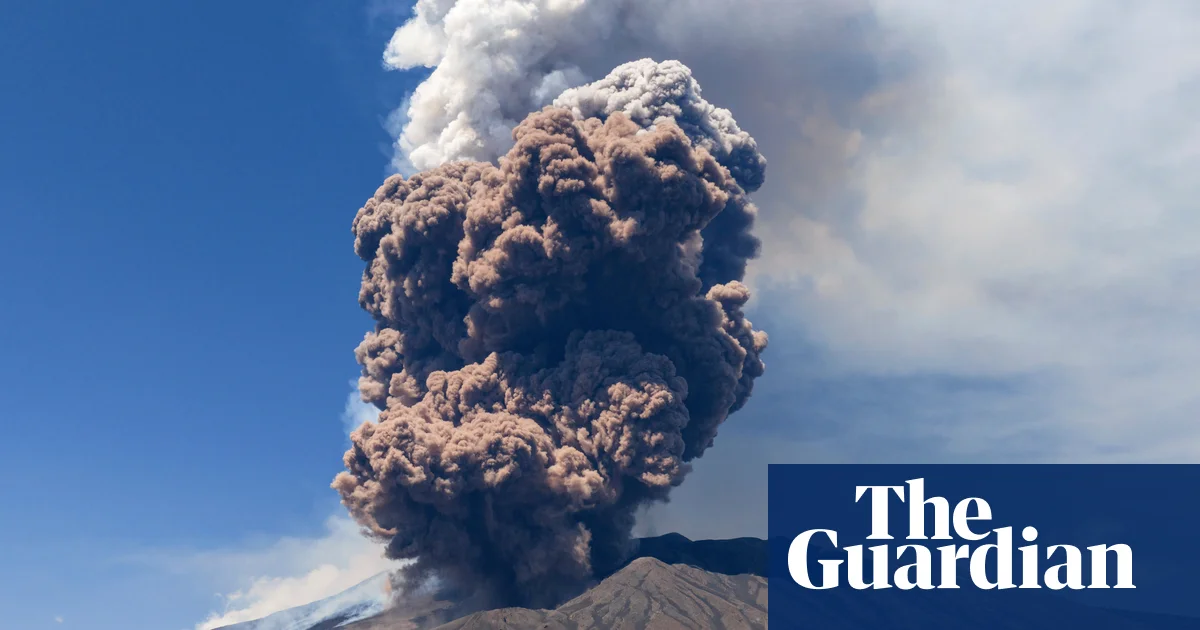
Mount Etna, Europe's largest active volcano, erupted with a significant ash and gas plume, but authorities confirmed there is no current danger to the population or tourists, with the eruption transitioning to a lava fountain and the ash cloud reaching over 6.5 kilometers high.
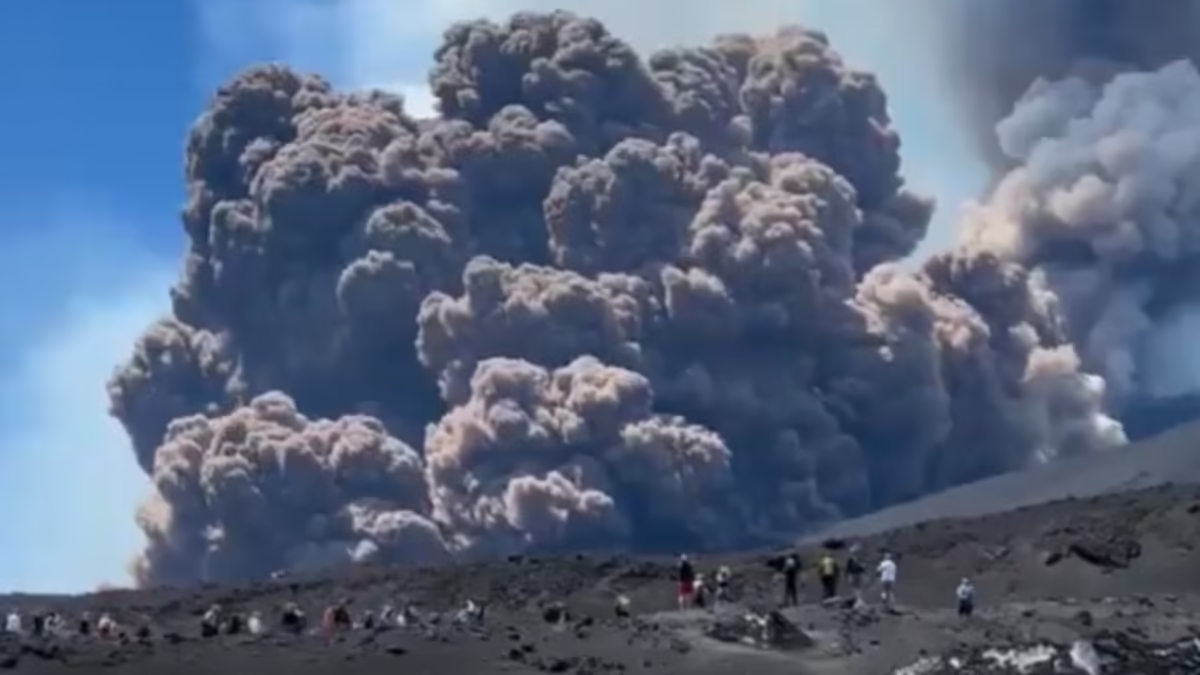
Mount Etna erupted with a massive ash plume over a mile high, causing tourists to flee in panic while seismologists observed ongoing explosive activity, with ash affecting nearby towns and air travel.
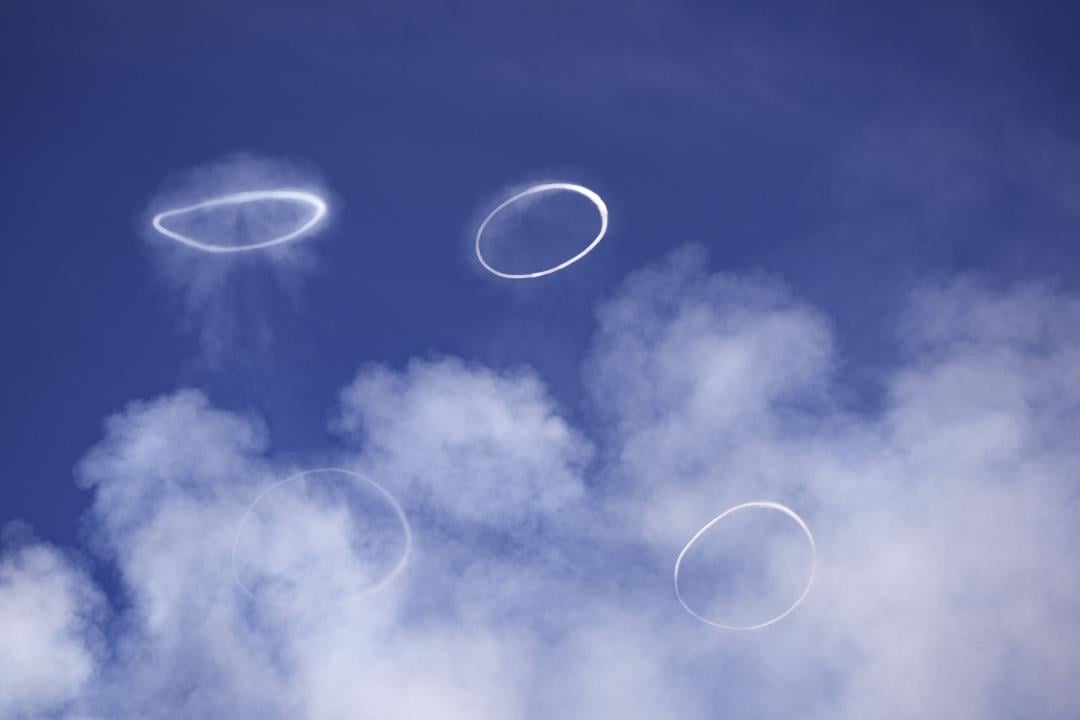
Italy's Mount Etna recently produced perfectly circular volcanic vortex rings, some with a pink hue, a phenomenon first observed in 1724 and now seen at various volcanoes worldwide. The rings are formed by a combination of fast gas release from gas bubbles at the top of the magma conduit and regularity in the shape of the emitting vent, and are composed of roughly 80% water vapor and 20% sulfur dioxide and carbon dioxide. Etna's unique crater shape contributes to the rings' circular nature, and the recent quantities of rings produced were described as "unprecedented" by a Sicilian volcanologist.
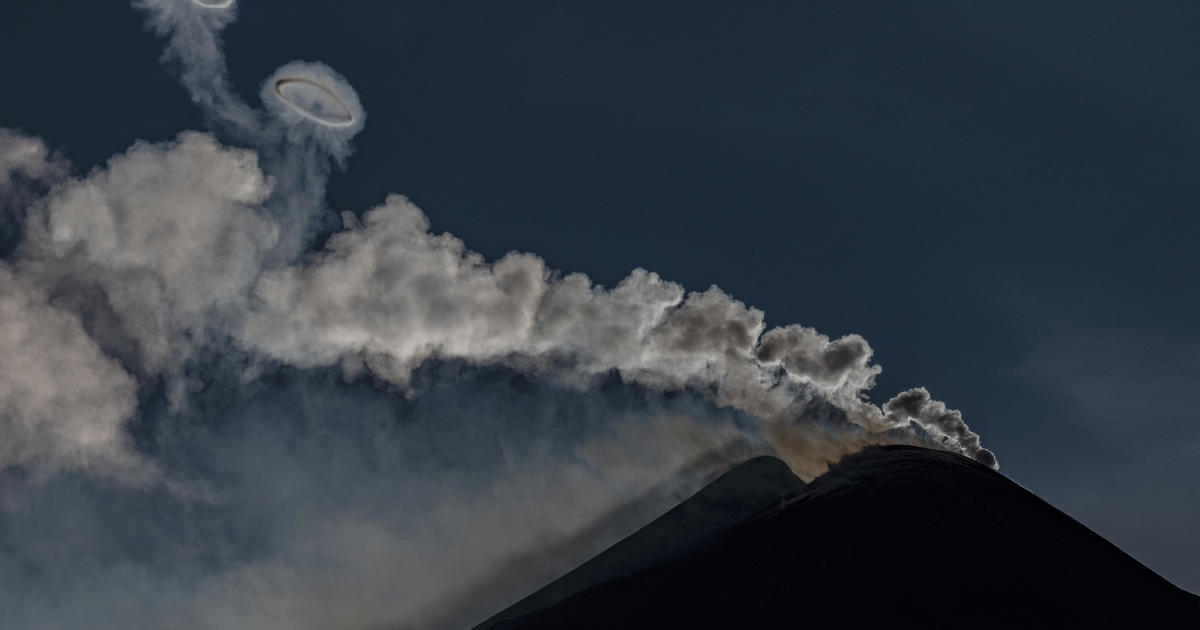
Italy's Mount Etna, the most active stratovolcano in the world, was seen spewing rare and nearly perfectly circular volcanic vortex bubbles, some appearing pink in color against the sky. A new pit crater formed along the volcano within the past week, contributing to the formation of the nearly perfectly circular rings of gas and vapor. This rare phenomenon, which can be traced back to as early as 1724, has been observed emitting "unprecedented quantities" of the rings, with locals referring to Etna as "Lady of the Rings." Etna is one of the most active volcanoes, with the last significant activity recorded in December 2023.
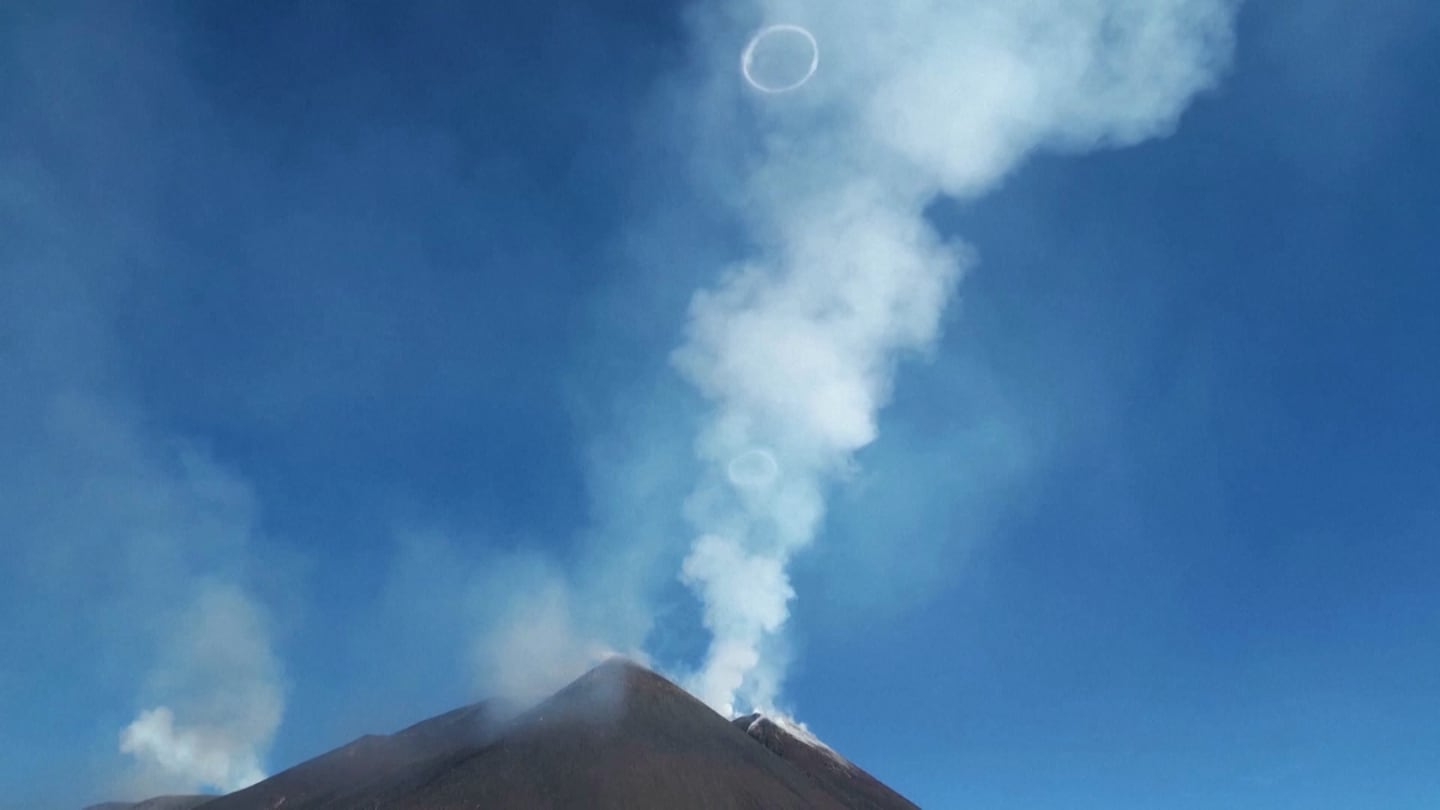
Mount Etna, Europe’s largest active volcano, recently produced near-perfect rings of gas and vapor, known as "volcanic vortex rings," through the rapid release of gas and vapors from a newly formed crater. These rings, composed mostly of water vapor, resemble smoke rings and are not particularly rare phenomena for the prolific volcano.