The University of Toronto is recruiting three top U.S. researchers in astrophysics, innovation economics, and public policy to join its faculty in 2026-27, strengthening its global research reputation and addressing major societal challenges.
Harvard University and the University of Toronto have announced a plan for Harvard students unable to enter the US due to visa restrictions to complete their studies in Canada, reflecting the political tensions affecting international education during Trump's presidency. The program, involving the Harvard Kennedy School and the Munk School of Global Affairs, aims to provide alternative study options and includes an online and in-person component, without reducing spots for Canadian students.
A study from the University of Toronto warns that the upcoming solar eclipse on April 8, 2024, could lead to a significant increase in fatal car crashes, with over 1,000 additional road deaths predicted across the US. The surge in driving is expected due to millions of people traveling to cities within the eclipse's path of totality, leading to heightened traffic risks comparable to major holidays. Concerns also include potential disruptions to air travel and cellphone service, with Texas expected to see the most visitors for the event.
A study conducted by University of Toronto researchers suggests that slowed-down speech may be a greater early indicator of dementia than forgetting words. The study involved showing pictures to 125 healthy adults and analyzing their descriptions using artificial intelligence to measure speech speed, pauses, and word variety. The findings indicated a correlation between executive functioning and speech speed, particularly in older participants. However, some experts caution that the experimental tasks may not fully reflect real-world language processing, suggesting the need for additional tools to detect early cognitive decline.
A recent study from the University of Toronto suggests that the speed of speech, rather than the difficulty in finding words, is a more accurate indicator of brain health in older adults. The research found that the pace of everyday speech was closely linked to age-related decline in cognitive abilities, highlighting a broader decline than just difficulty in word retrieval. While the study's findings are promising, future research could incorporate verbal fluency tasks and subjective experiences of word-finding difficulties to better quantify and detect early cognitive decline. Additionally, advancements in natural language processing technologies could allow for automatic detection of language changes, such as slowed speech rate, as a subtle marker of cognitive health.
A new study suggests that the speed at which a person talks could be linked to their risk of developing dementia, with researchers finding that changes in talking speed may reflect changes in the brain. The study, involving 125 healthy volunteers, found that the speed of speech surrounding pauses, rather than the pausing itself, may be a more important indicator of changes in brain health. While these findings could potentially lead to the development of tools to detect cognitive decline early, it's important to note that dementia is not a natural part of aging, and individuals experiencing memory problems or other symptoms should seek medical advice.
Researchers at the University of Toronto's Donnelly Center for Cellular and Biomolecular Research have discovered nearly one million new exons in the human genome using a method called exon trapping. These exons, which are stretches of DNA expressed in mature RNA, were found to be mainly due to random mutation and are unlikely to play a significant role in human biology. The findings challenge assumptions about the accurate removal of non-protein-coding intron regions and could potentially impact our understanding of genetic diseases and the development of tools for predicting splice sites and aberrant splicing.
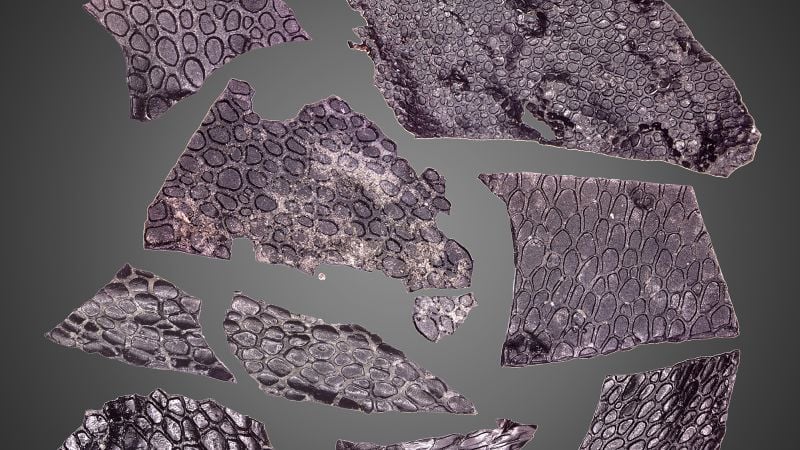
Researchers have discovered the world's oldest known fossilized skin, dating back around 289 million years, from a species of reptile that predates dinosaurs. The skin fragment, found in an Oklahoma limestone cave, is at least 130 million years older than the previous oldest known skin fossil. The sample, resembling crocodile skin with hinged regions similar to snakes and worm lizards, provides insight into the evolution of terrestrial animals and the importance of the epidermis as a barrier between internal body processes and the external environment. The study was published in the journal Current Biology.
Scientists from the University of Toronto discovered the oldest water ever found on Earth, which was between 1.5 billion and 2.64 billion years old, and had evidence of past life. The water was found in a Canadian mine and was flowing at rates of litres per minute. Professor Barbara Sherwood Lollar, who led the team, tried the water and described it as "very salty and bitter" and "much saltier than seawater."
Scientists from the University of Toronto discovered the oldest water ever found on Earth, which was between 1.5 billion and 2.64 billion years old and had evidence of past life. The water was found in a Canadian mine and was flowing at rates of litres per minute. Professor Barbara Sherwood Lollar, who led the team, tried the water and described it as "very salty and bitter" and "much saltier than seawater."