paleontology28.46 min read
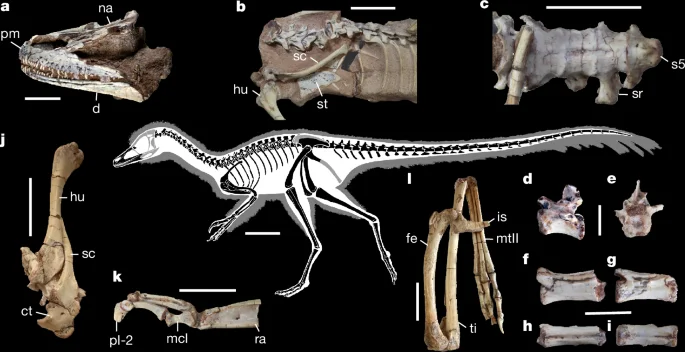
Argentine fossil reshapes alvarezsauroid history, arguing for a Pangaean origin and stable body size
23 hours ago•Source: Nature

The latest paleontology stories, summarized by AI
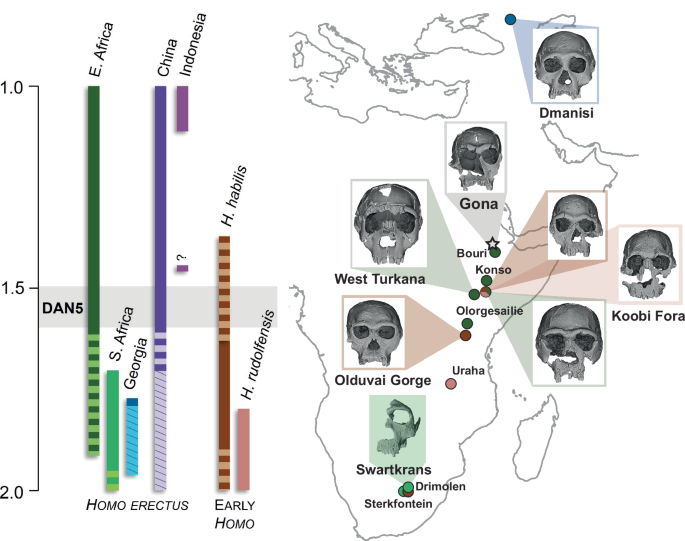
A new reconstruction of the DAN5/P1 cranium from Gona, Ethiopia, reveals a unique combination of early Homo and H. erectus features, suggesting complex population structure and evolution in African Homo during the Early Pleistocene, with implications for understanding the emergence of H. erectus.
Nature•3 months ago
Nature•4 months ago
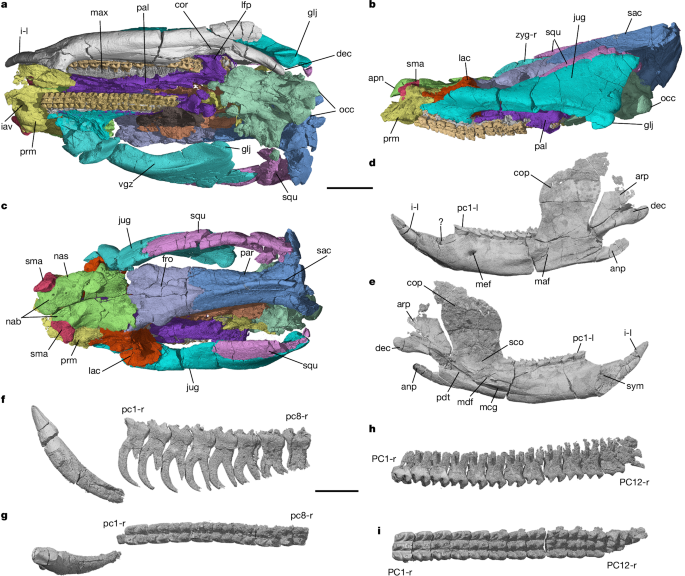
The article discusses the convergent evolution of diverse jaw joints in mammaliamorphs, supported by fossil data, digital reconstructions, and phylogenetic analysis, highlighting evolutionary adaptations in mammalian jaw structures.
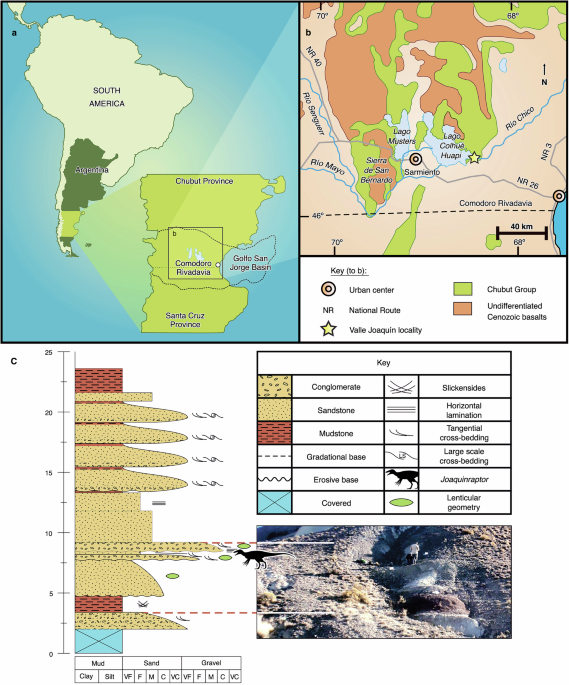
A new Maastrichtian megaraptorid dinosaur from Patagonia, Joaquinraptor casali, provides significant insights into megaraptoran morphology, phylogeny, and paleobiology, representing one of the youngest and most complete specimens of its group, and shedding light on their evolutionary relationships and biology.
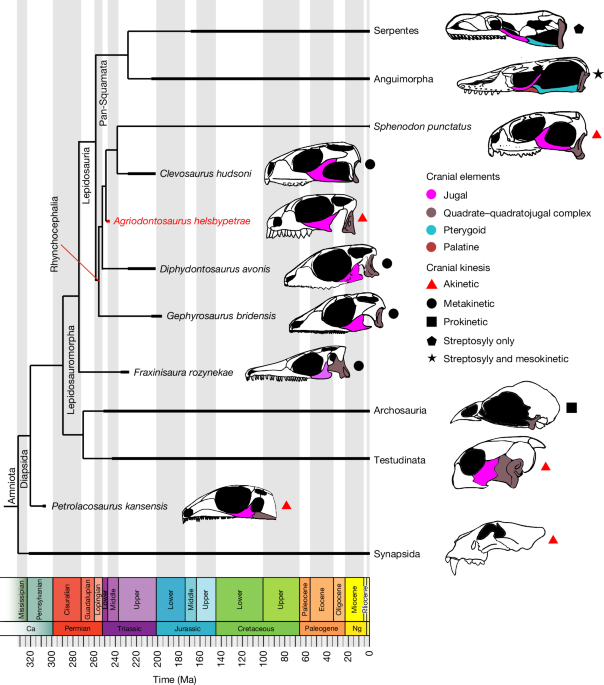
The article describes the discovery of Agriodontosaurus helsbypetrae, the oldest known lepidosaur, which provides new insights into the early evolution of lepidosaur feeding adaptations, skull morphology, and the timing of key evolutionary events in the Triassic period, including the origin of Rhynchocephalia and Lepidosauria.
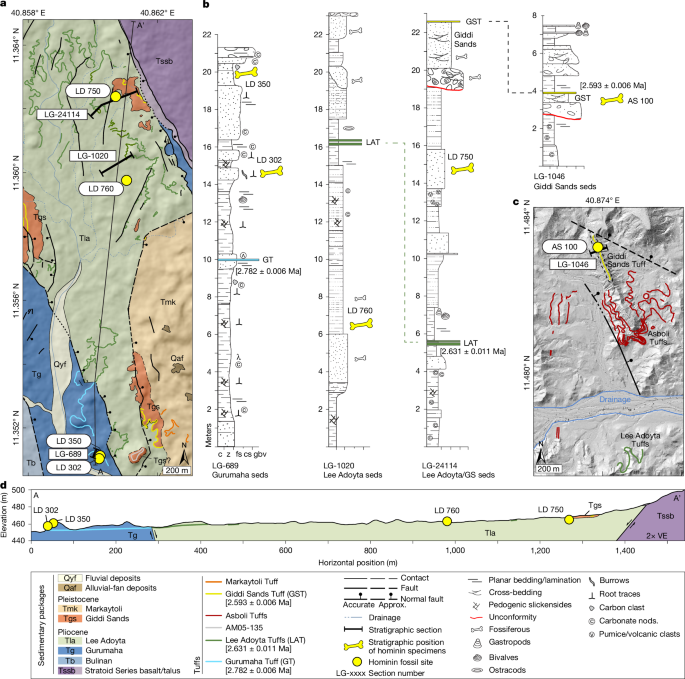
New hominin fossils from Ledi-Geraru, Ethiopia, dating between 3.0 and 2.5 million years ago, reveal the coexistence of early Homo and Australopithecus, challenging previous notions of hominin evolution and diversity in eastern Africa during this period.
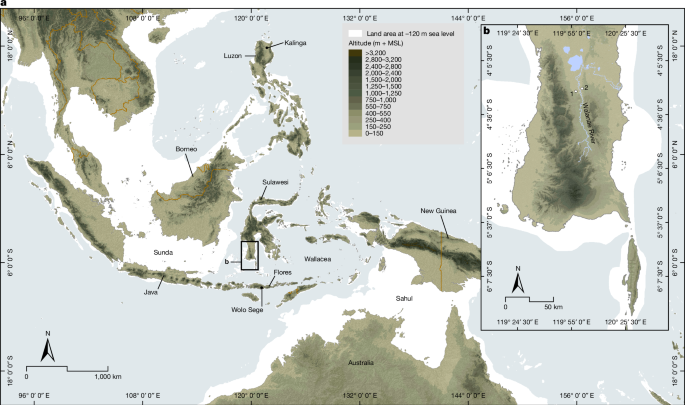
The discovery of in situ stone artifacts at Calio in Sulawesi, dated to at least 1.04 million years ago through palaeomagnetic and US-ESR dating, suggests that hominin presence on Sulawesi may have occurred earlier than previously thought, potentially predating the earliest known occupation on Flores and Luzon.
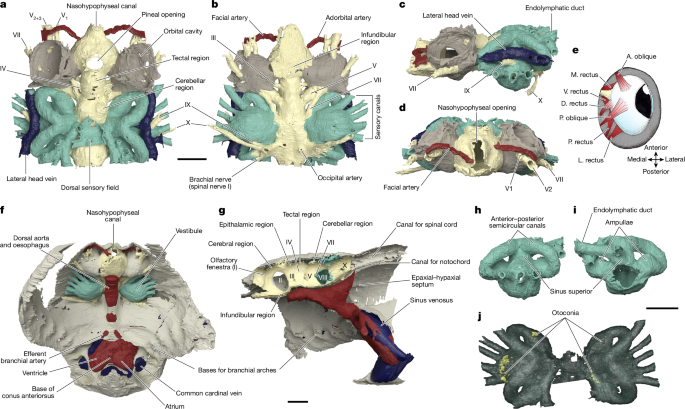
The article presents a novel non-destructive synchrotron imaging study of the fossil Norselaspis glacialis, revealing new insights into the head-trunk interface and circulatory system of early vertebrates, bridging features between jawless and jawed vertebrates, and challenging previous reconstructions of its anatomy.
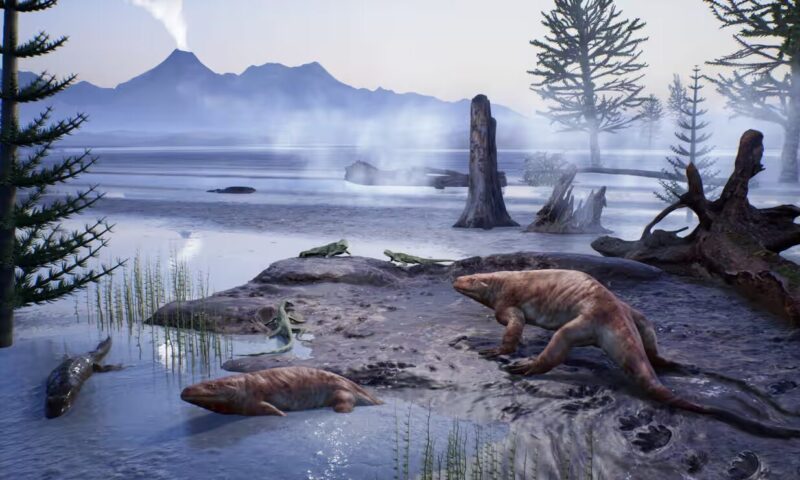
A hiker in the Italian Alps discovered a 280-million-year-old ecosystem, revealing fossilized tracks of prehistoric reptiles, insects, and amphibians from the Permian era. The site, known as "Rock Zero," has provided a wealth of fossils, including plant fragments and raindrop imprints, preserved in fine-grained sediments. This discovery, exposed by melting ice due to rising temperatures, serves as a reminder of the Permian period's rapid global warming and subsequent mass extinction.
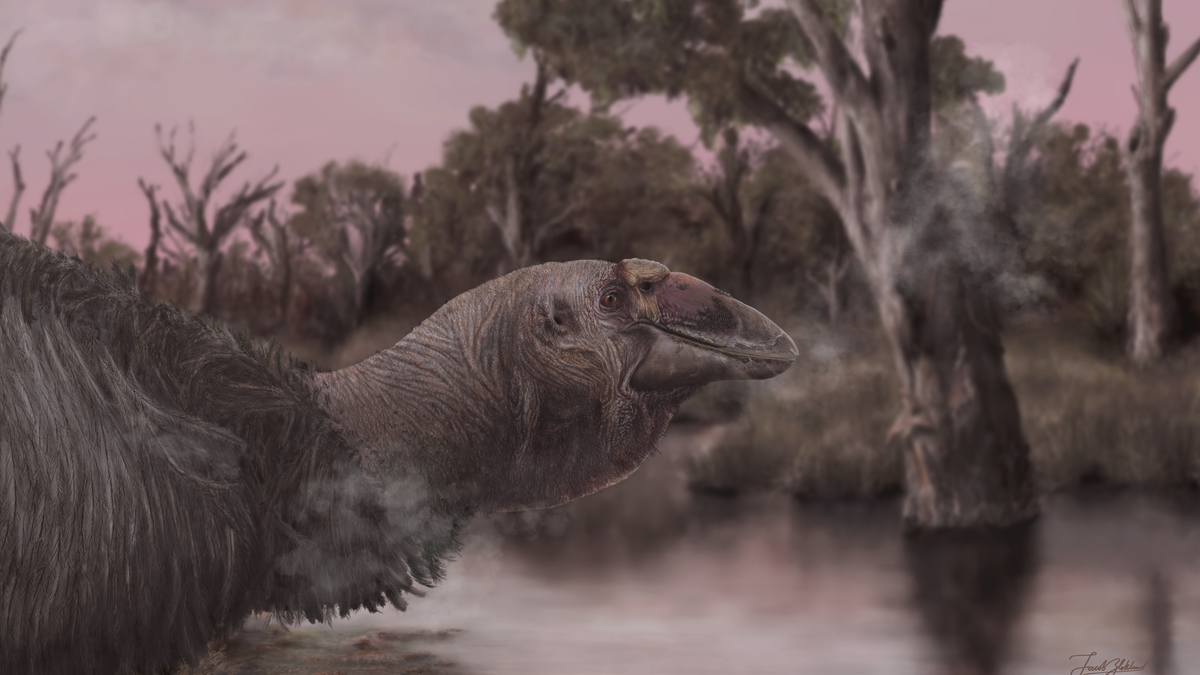
Researchers have studied fossils of Genyornis newtoni, a 500-pound Ice Age bird that went extinct around 45,000 years ago. New findings from South Australia's Lake Callabonna reveal that this bird, nicknamed the 'Giga-Goose,' had a goose-like bill and adaptations for foraging in water, suggesting it lived in semi-aquatic environments. The study, published in Historical Biology, provides new insights into the bird's morphology and ecological niche, although the exact cause of its extinction remains uncertain.
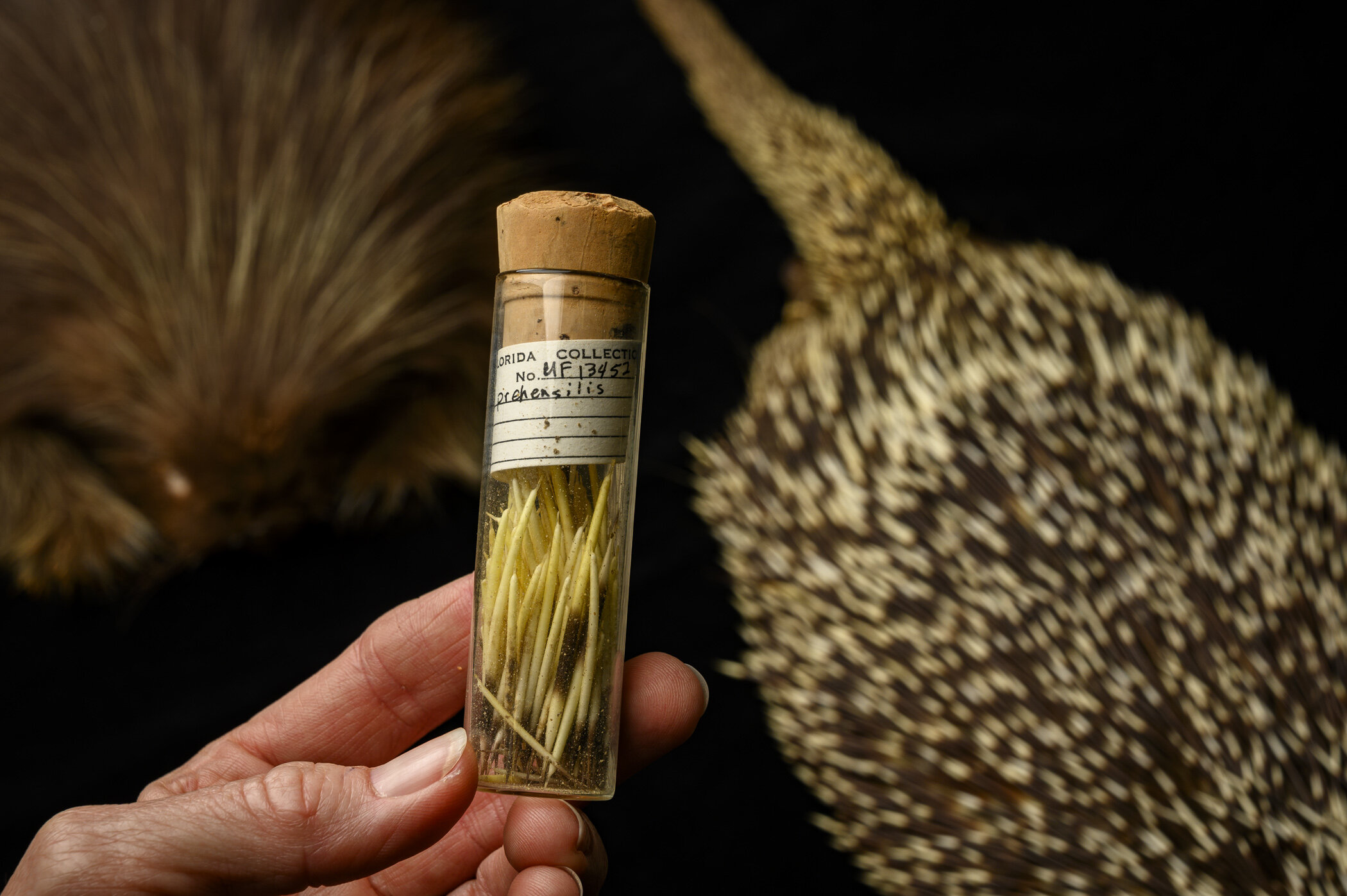
A nearly complete porcupine skeleton found in Florida has helped resolve a long-standing debate about the evolutionary history of North American porcupines. The study, published in Current Biology, reveals that these porcupines have a complex ancestry that likely began before the formation of the Isthmus of Panama. The fossil shows traits of both North and South American porcupines, suggesting a more intricate evolutionary path than previously thought.
A new species of abelisauroid dinosaur, named Koleken inakayali, has been identified in Argentina by a team of paleontologists. The fossilized remains, dated to approximately 70 million years ago, were found in the La Colonia Formation. This bipedal dinosaur had extremely tiny arms and unique skull traits distinguishing it from other species like Carnotaurus sastrei. The discovery suggests greater diversity among abelisaurids and highlights the importance of continued paleontological research to understand the history of life on Earth.