Tag

Topology

All articles tagged with #topology

Russian mathematician solves famous conjecture quietly in 2002

Originally Published 2 months ago — by Live Science

Featured image for Russian mathematician solves famous conjecture quietly in 2002
Source: Live Science

In 2002, Russian mathematician Grigori Perelman quietly published a series of papers that proved the long-standing Poincaré conjecture using Ricci flow, solving a major problem in topology. Despite being offered prestigious awards, he declined them and retreated from public life, leaving a lasting impact on mathematics.

"Unveiling the Inextricable Link Between Quantum Entanglement and Topology"

Originally Published 2 years ago — by Earth.com

Featured image for "Unveiling the Inextricable Link Between Quantum Entanglement and Topology"
Source: Earth.com

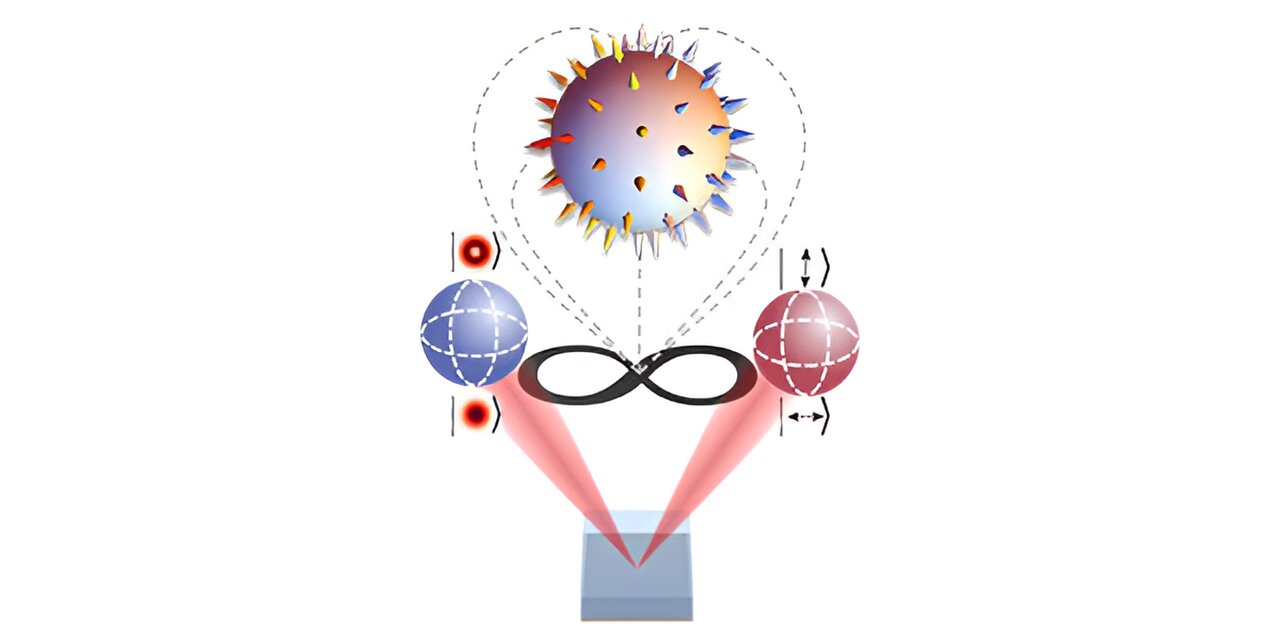
Researchers at the University of the Witwatersrand have achieved a breakthrough in quantum entanglement by manipulating entangled particles without altering their intrinsic properties, demonstrating the potential for practical applications in quantum communication and information processing. The team's novel method involves customizing the shared wave-function of entangled photons, revealing the significance of topology in preserving certain properties of entangled states. This discovery opens the door to new quantum communication protocols and offers a potential encoding mechanism for quantum systems, paving the way for defining new protocols and exploring topological nonlocal quantum states.

"Unveiling the Interconnectedness of Quantum Entanglement and Topology"

Originally Published 2 years ago — by Phys.org

Featured image for "Unveiling the Interconnectedness of Quantum Entanglement and Topology"
Source: Phys.org

Researchers have demonstrated the interconnectedness of quantum entanglement and topology by perturbing pairs of entangled photons without altering their shared properties. This achievement, published in Nature Photonics, reveals the malleability of entangled photons' topology, likened to clay in a potter's hands. The study explores the Skyrmion topology, initially explored in the 1980s, and presents a paradigm shift by showing that this topology can be nonlocal or shared between spatially separated entities. The researchers envision using topology as a framework for classifying entangled states, potentially paving the way for new quantum communication protocols.

"Cracking the Toughest Mathematical Conundrums: 7 Solved Problems"

Originally Published 2 years ago — by Interesting Engineering

Featured image for "Cracking the Toughest Mathematical Conundrums: 7 Solved Problems"
Source: Interesting Engineering

Some of the hardest math problems in history have been solved, including the Poincaré conjecture, which asserts that a closed 3-manifold is topologically homeomorphic to a 3-dimensional sphere. These problems have challenged mathematicians for centuries, but advancements in topology and other mathematical fields have led to their solutions.

"Scientists Disprove Assumptions, Unveiling Topology's Mysteries"

Originally Published 2 years ago — by SciTechDaily

Featured image for "Scientists Disprove Assumptions, Unveiling Topology's Mysteries"
Source: SciTechDaily

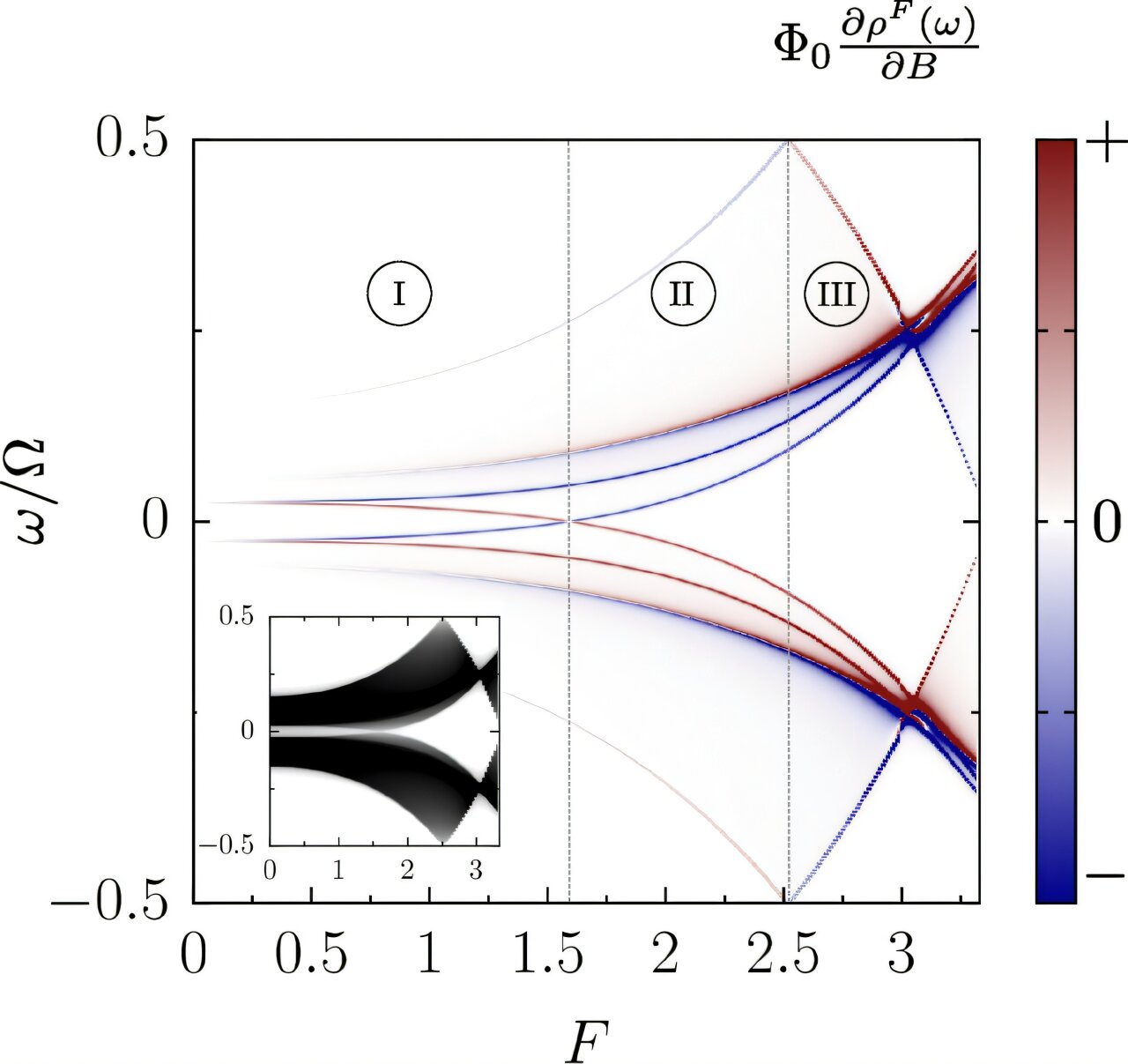
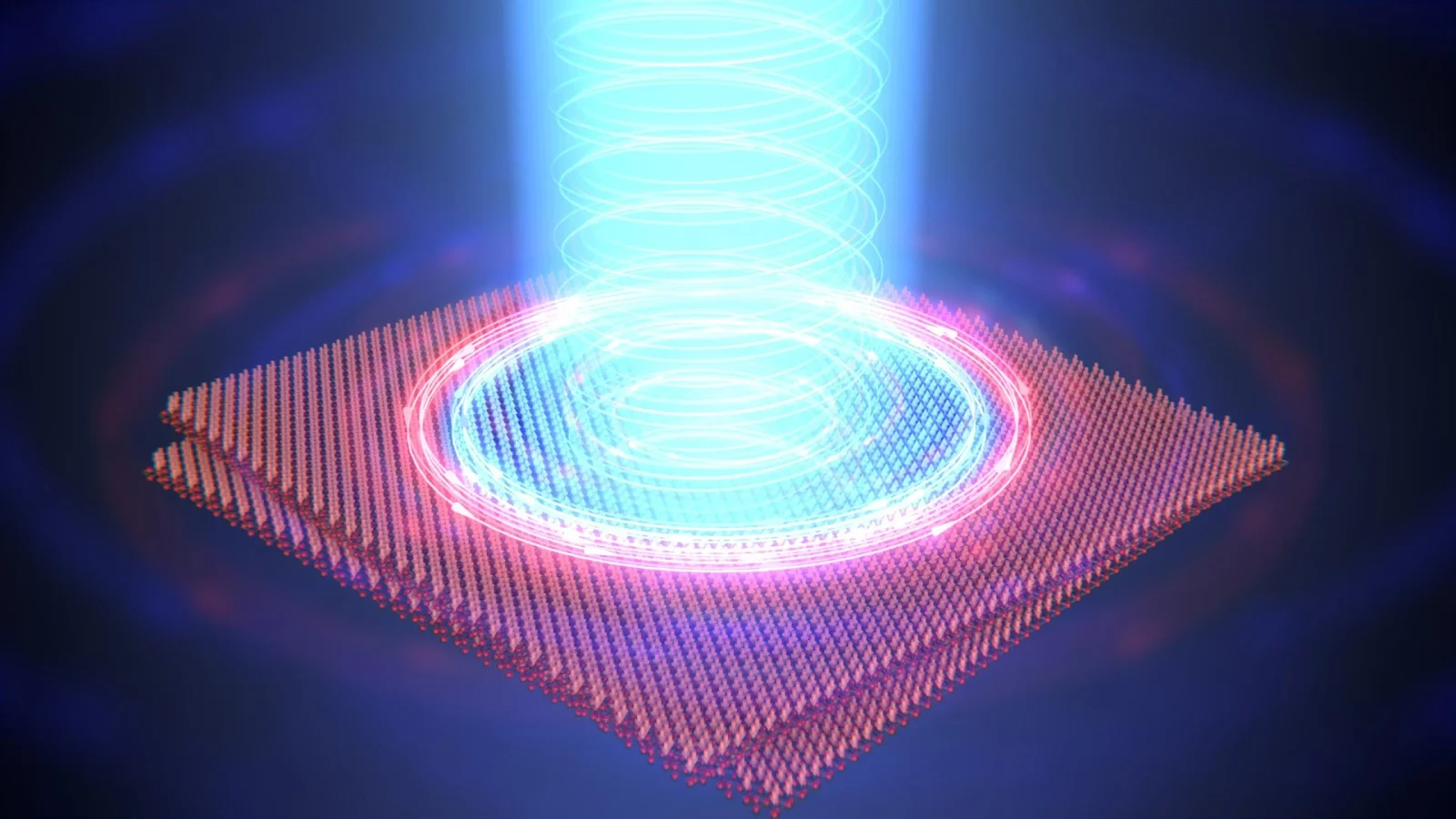
Theoretical physicists at the Max Planck Institute for the Structure and Dynamics of Matter in Germany have conducted the first ab initio investigation of high harmonic generation from topological insulators and found no evidence of universal topological signatures. Their study challenges the assumption that topological information can be extracted from the emitted spectra. Instead, they suggest that non-topological aspects of the material, such as crystal structure and band symmetry, dominate the response. While the researchers do not rule out the existence of topological signatures in high harmonic generation, they call for more complex and robust ideas to measure topology through nonlinear optics.

Electron Spin Measured in Kagome Quantum Materials.

Originally Published 2 years ago — by SciTechDaily

Featured image for Electron Spin Measured in Kagome Quantum Materials.
Source: SciTechDaily

An international research team has successfully measured the electron spin in a new class of quantum materials called "kagome materials" for the first time, potentially transforming how quantum materials are studied. This advancement could pave the way for developments in fields like renewable energy, biomedicine, electronics, and quantum computing. The researchers used advanced experimental techniques, including a synchrotron source, and modern techniques for modeling the behavior of matter to measure electron spin related to the concept of topology. The results obtained could help us learn more about the special magnetic, topological, and superconducting properties of kagome materials.

Frustration-based Metamaterials for Memory and Response

Originally Published 2 years ago — by Nature.com

Featured image for Frustration-based Metamaterials for Memory and Response
Source: Nature.com

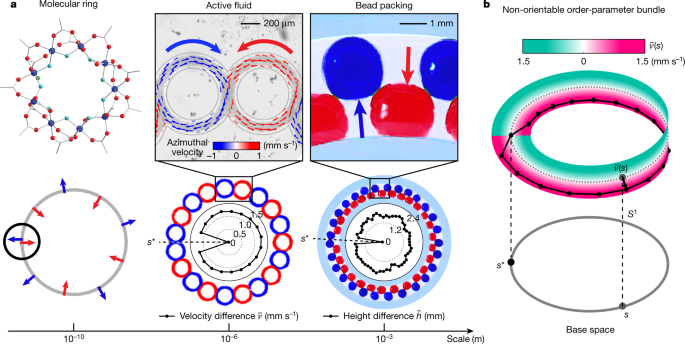
Researchers have discovered non-orientable order and non-commutative response in frustrated metamaterials, which could lead to the development of new materials with unique properties such as memory and topological solitons. The study also revealed the presence of topological defects and exotic mechanics in complex metamaterials, as well as the potential for programming shape using kirigami tessellations. The findings could have implications for a range of fields, from optics to cold-atom fermi-hubbard antiferromagnets.

Universe's Shape: Doughnut, Not Pancake?

Originally Published 2 years ago — by Livescience.com

Featured image for Universe's Shape: Doughnut, Not Pancake?
Source: Livescience.com

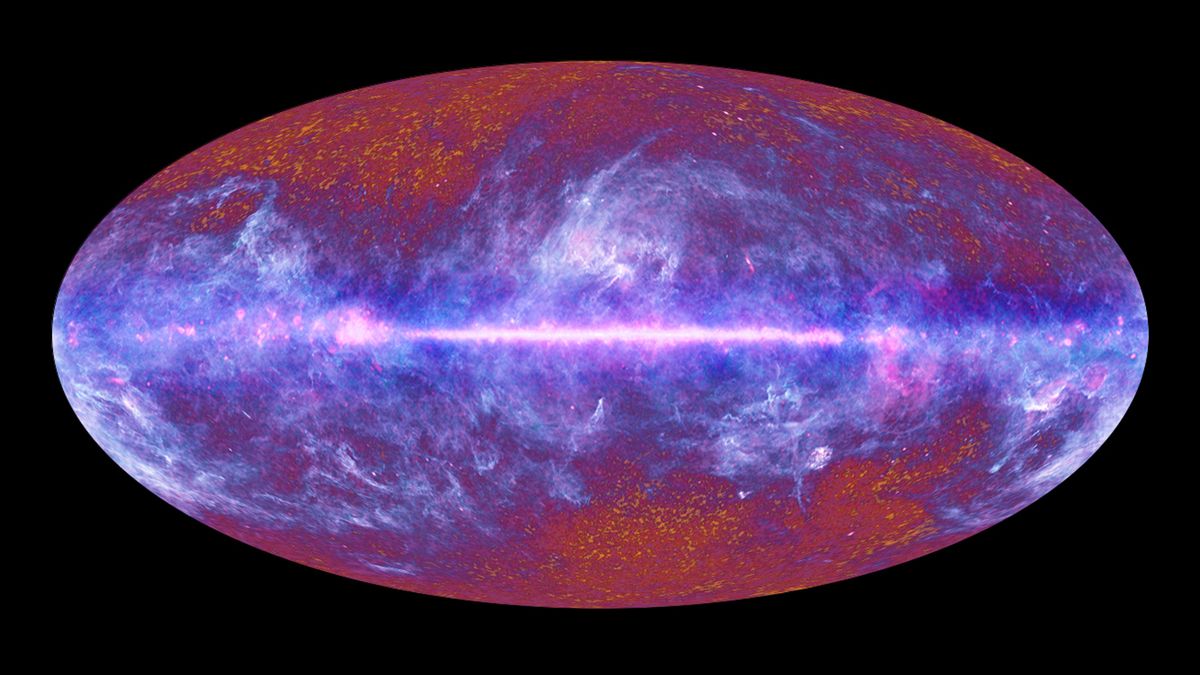
New research suggests that the universe could have a more complicated shape, like a giant doughnut, despite all evidence suggesting it's flat. The study finds that strange patterns found in echoes of the Big Bang could be explained by a universe with a more complicated topology, and astronomers have not fully tested the universe's flatness. While most observations suggest the universe is flat, there are 18 possible geometrically flat, 3D topologies, and a universe with a complicated topology could explain some of the anomalies in the cosmic microwave background.

Universe's Shape: Doughnut, Not Pancake?

Originally Published 2 years ago — by Yahoo Life

Featured image for Universe's Shape: Doughnut, Not Pancake?
Source: Yahoo Life

New research suggests that the universe could be shaped like a doughnut, with a more complicated topology than previously thought. While all observations so far suggest that the universe is flat, strange patterns found in echoes of the Big Bang could be explained by a more complicated shape. Astronomers have not fully tested the universe's flatness, and a universe with a complicated topology could explain some of the anomalies in the cosmic microwave background.