Tag

Cmb

All articles tagged with #cmb

New Research Suggests the Universe Is More Complex and Lopsided Than Previously Thought

Originally Published 7 days ago — by Space

Featured image for New Research Suggests the Universe Is More Complex and Lopsided Than Previously Thought
Source: Space

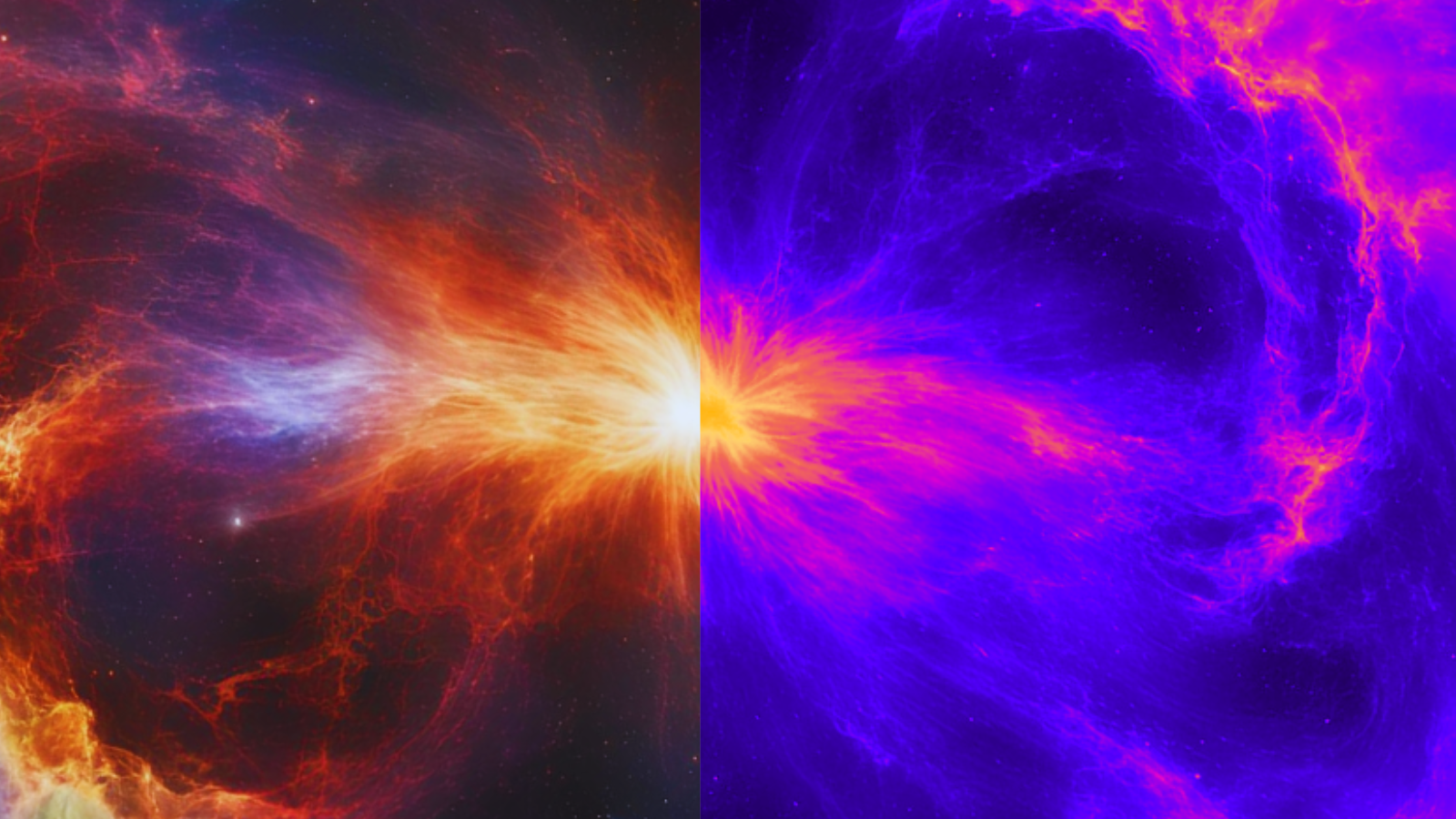
Recent research suggests the universe may be lopsided, challenging the standard cosmological model that assumes it is uniform in all directions, due to discrepancies like the cosmic dipole anomaly which do not align with current theories, prompting a potential overhaul of our understanding of the cosmos.

Universe's Shape: Doughnut, Not Pancake?

Originally Published 2 years ago — by Livescience.com

Featured image for Universe's Shape: Doughnut, Not Pancake?
Source: Livescience.com

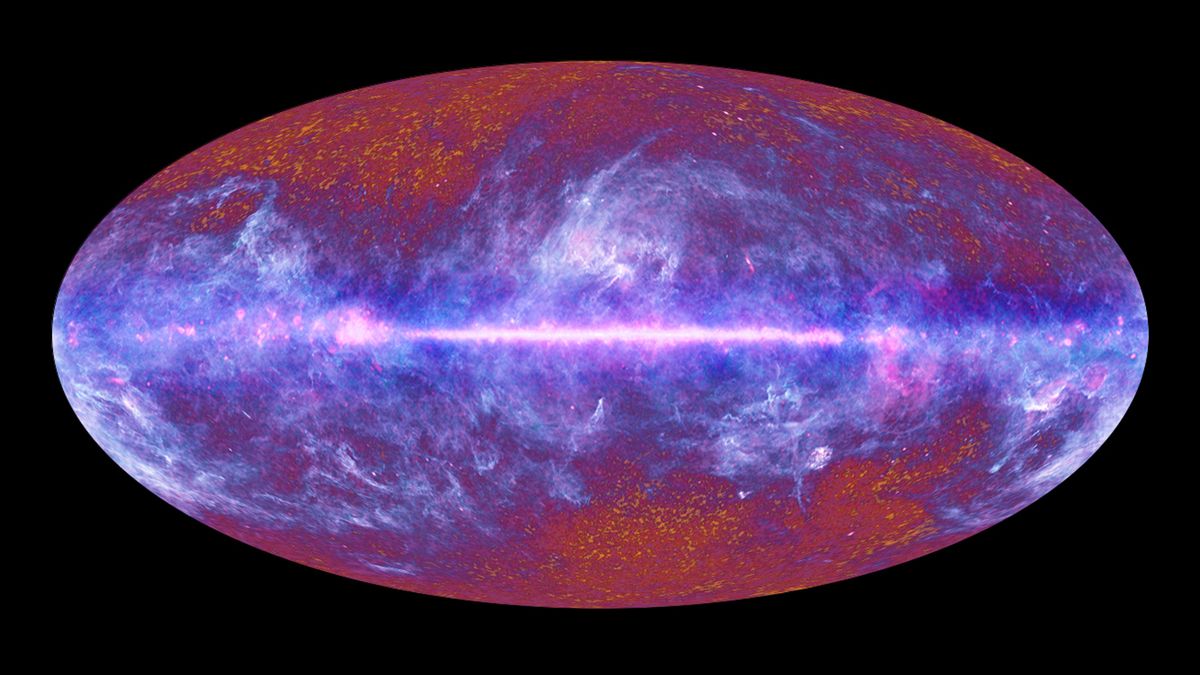
New research suggests that the universe could have a more complicated shape, like a giant doughnut, despite all evidence suggesting it's flat. The study finds that strange patterns found in echoes of the Big Bang could be explained by a universe with a more complicated topology, and astronomers have not fully tested the universe's flatness. While most observations suggest the universe is flat, there are 18 possible geometrically flat, 3D topologies, and a universe with a complicated topology could explain some of the anomalies in the cosmic microwave background.

Unveiling Cosmic Mysteries: Dark Matter and Black Holes in the Universe

Originally Published 2 years ago — by Quanta Magazine

Featured image for Unveiling Cosmic Mysteries: Dark Matter and Black Holes in the Universe
Source: Quanta Magazine

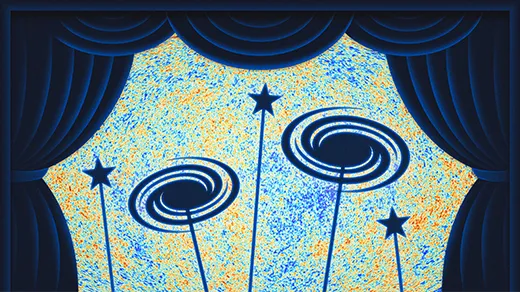
Cosmologists are using the cosmic microwave background (CMB) radiation to map the distribution of both ordinary matter and dark matter in the universe. The CMB light has been stretched, squeezed, and warped by all the matter in its way, leaving detectable imprints on its magnification and color. By examining CMB data taken by the European Space Agency’s Planck satellite and the ground-based Atacama Cosmology Telescope, scientists have been able to measure the alignment of ordinary matter and dark matter, providing estimates for the strength and temperature of the dispersing blasts. These insights are helping to settle some long-standing cosmological mysteries and pose some new ones.