Tag

Sweat

All articles tagged with #sweat

health-and-science7 months ago

Revealing Health Insights Through Sweat Analysis with Wearable Sensors

The podcast discusses how sweat, which contains biomarkers similar to blood, could revolutionize health monitoring through non-invasive, continuous wearable devices, enabling insights into hydration, nutrient levels, kidney health, and more, with Professor John Rogers highlighting recent technological advances in sweat collection and analysis.


health1 year ago

"Sweat Protein: A Potential Cure for Lyme Disease"

A new study published in Nature Communications has identified a genetic variant of a protein found in human sweat, secretoglobin SCGB1D2, that appears to make people more susceptible to Lyme disease. This discovery could potentially lead to the development of a topical cream for preventing Lyme disease in the future. The research found that the mutated version of the protein is linked to a significantly greater risk of developing Lyme disease, and understanding its role could provide insights into treatment resistance and long-term health issues in patients.

health1 year ago

"Sweat Protein Offers Protection Against Lyme Disease"

Researchers at MIT and the University of Helsinki have discovered a protein in human sweat that can protect against Lyme disease, with about one-third of the population carrying a genetic variant associated with the disease. The protein inhibits the growth of the bacteria that cause Lyme disease, and the researchers hope to use it to create skin creams for prevention or as a treatment for infections that don't respond to antibiotics. This finding opens the door to a new approach for preventing Lyme disease and potentially other skin infections, and further research will explore the potential of other secretoglobin proteins in the human body.

health2 years ago

The Link Between Climate Change and Increased Mosquito Bite Risk

Dermatologist Lindsey Zubritsky explains that there are several factors that make some people more attractive to mosquitoes. Mosquitoes are attracted to sweat, higher body temperature, and certain chemicals like ammonia, uric acid, and lactic acid found in sweat. Drinking beer may also make a person more attractive to mosquitoes, although this is debated among experts. Additionally, the type and number of bacteria on a person's skin can affect their attractiveness to mosquitoes. Other factors such as blood type, wearing darker clothing, genetics, and pregnancy may also play a role. Ultimately, some people are simply more likely to be bitten by mosquitoes due to factors beyond their control.

science-and-health2 years ago

The Benefits of Sweating: Why It's a Good Thing

Sweat is a vital bodily function that helps regulate body temperature and prevent overheating. Humans have 2-5 million eccrine sweat glands that secrete sweat onto the skin's surface. Sweat contains more than just salt; it also carries lactic acid, vitamins, hormones, and other substances from the blood. Sweating is a unique cooling mechanism that sets humans apart from other mammals, allowing us to run long distances and hunt effectively. While sweating may be seen as embarrassing or unpleasant, it is a remarkable human superpower that enables us to live in diverse environments and stay alive.

science-and-health2 years ago

"The Fascinating World of Sweat: Unveiling Armpit Transplants and Artificial BO"

Sweat is a fascinating bodily function that humans excel at, with 10 times as many sweat glands as chimpanzees. Sweat can reveal a lot about our bodies, including the presence of substances like caffeine and alcohol. Men and women sweat similar amounts, but a new study suggests that gender can be distinguished by odor alone. Armpit sweat is different from sweat elsewhere on the body, and body odor is created through the interaction of specific skin bacteria and sweat. While antiperspirant deodorants have not changed much in over a century, there are alternative options being explored, such as probiotic deodorants. Artificial sweat is used in various industries for testing purposes. The cause of the historical "sweating sickness" remains a mystery. Sweating does not detoxify the body, and in space, sweat does not evaporate. Fearful sweat has a different chemical composition, and women and dogs can detect it. Early research suggests that sniffing sweat from strangers may help alleviate social anxiety.

health-and-wellness2 years ago

The Truth About Sweating Out Toxins

Sweating primarily serves to cool the body, not to excrete toxins. While sweat can contain trace amounts of various substances, including some toxic ones, the levels are typically too low to pose a health risk. The idea of sweating out toxins is largely a myth perpetuated by the wellness industry. The body's main waste removal systems are the kidneys and liver. Saunas, including infrared saunas, do not have the ability to cleanse the body of toxins. Instead, the best way to reduce exposure to pollutants is to avoid them in the first place and maintain a healthy lifestyle.

health2 years ago

The Surprising Benefits of Stinky Sweat

Contrary to popular belief, stinky sweat may actually serve as a positive signal. While most people try to eliminate body odor, research suggests that the smell of sweat could indicate certain health benefits. The distinct odor may be a sign of a healthy immune system and could potentially help in attracting mates.

healthtech2 years ago

Sweat Sensor Detects Inflammation Markers.

Researchers at Caltech have developed a wearable skin sensor that can wirelessly detect the presence of C-reactive protein (CRP) in human sweat, which is a molecular hallmark of inflammation. The sensor is built upon laser-engraved graphene and contains antibodies that bind to CRP and special molecules capable of generating a small electric current under certain conditions. The sensor also measures the concentration of ions in the sweat, the sweat's pH, and skin temperature to account for variations in sweat compositions from person to person. The technology has implications for practical medical applications and chronic disease management.

health2 years ago

Dermatologists Weigh In on the Benefits of Sweat for Your Skin.

Sweat can have positive effects on the skin, such as flushing out bad bacteria and increasing hydration levels, leading to a healthy glow. However, excessive sweating can cause skin irritation, rashes, and acne formation. It is important to maintain proper hygiene and not strip the skin of its natural oils. Sweat is not the sole agent responsible for a glowing complexion, and those with excessive sweating should consult a dermatologist.

health2 years ago

Sniffing Others' Body Odor May Ease Social Anxiety: Study

A new study from Sweden suggests that exposure to body odor could be an alternative therapy for those suffering from social anxiety. The study found that sweat produced with emotion has an anxiety-reducing effect. The researchers collected sweat from volunteers who watched clips from movies to induce emotions. Next, 48 women who were experiencing social anxiety were exposed to different odors, some of which included the sweat samples, along with mindfulness therapy. The researchers plan to do additional study to confirm these findings.

health2 years ago

Sniffing Others' Sweat May Ease Social Anxiety, Study Shows

Mindfulness therapy combined with exposure to chemo-signals from other people's sweat could be an effective treatment for social anxiety, according to a study presented at the European congress of psychiatry in Paris. The study involved collecting sweat from volunteers and exposing patients being treated for social anxiety to chemo-signals extracted from those samples. The results showed that patients who were exposed to the odour samples responded better to the therapy, with a 39% reduction in anxiety scores after one treatment session.

health2 years ago

Sweat from others may ease social anxiety: research

A new study from the Karolinska Institute in Sweden has found that exposure to other people's body odor, or "chemo-signals," can reduce social anxiety by nearly 40% when combined with mindfulness therapy. The study used sweat samples from volunteers to extract chemo-signals and expose participants to them. The team found that after undergoing one session of mindfulness therapy with the chemo-signals, social anxiety was reduced by about 39%. The researchers are hopeful that their findings could increase the effectiveness of standalone e-health interventions, such as meditation apps.

health2 years ago

Artificial enzyme detects disease hormone in sweat.

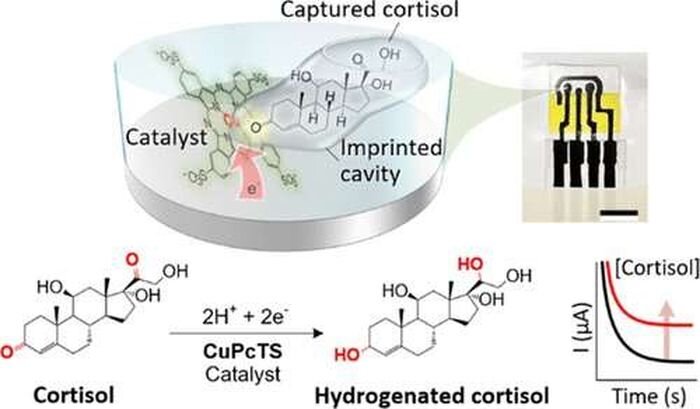
Researchers at Oregon State University have developed a handheld sensor that can detect cortisol levels in sweat within eight minutes. Cortisol is a hormone produced in the adrenal glands and is a marker for many illnesses, including various cancers. The researchers created a stable, robust artificial enzyme capable of sensitive and selective cortisol sensing, which could be easily engineered to detect other specific hormones. The artificial enzyme is a special polymer with tiny spaces shaped to fit only cortisol molecules, surrounded by catalysts that make cortisol react, producing electrical signals. The sensor can detect cortisol levels in sweat within minutes, even when they are typically 10,000 times less concentrated than glucose levels in the blood, opening up new avenues for developing future wearable sensors for health monitoring.