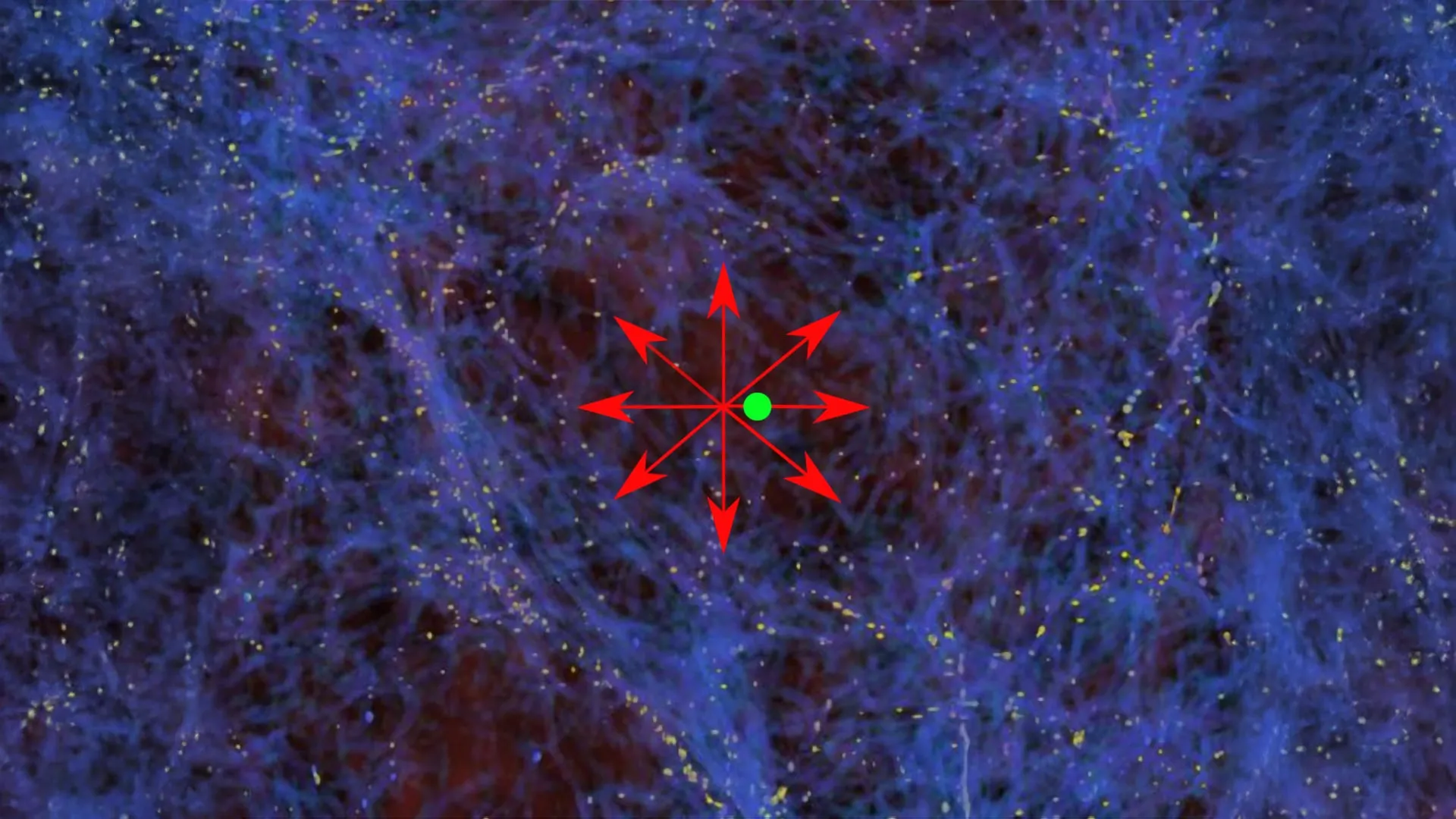
Recent research suggests we may live in a large cosmic void with fewer galaxies, which could explain the faster-than-expected expansion rate of the universe known as the Hubble tension. The study uses baryon acoustic oscillations to support the void hypothesis, indicating that our local universe might be expanding more quickly due to residing in a low-density region, challenging the standard cosmological model.
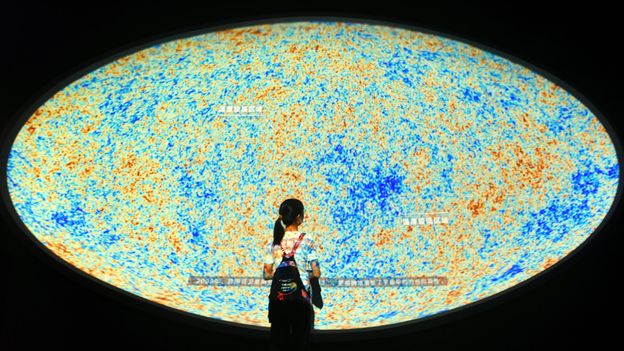
Recent research suggests we may live in a large cosmic void, which could explain the Hubble tension—the discrepancy in the universe's expansion rate—by showing that local measurements are affected by our position in a less dense region, supported by analysis of early universe sound patterns in the cosmic microwave background.
Astronomers propose that Earth resides in a massive, billion-light-year-wide void, which could explain the faster-than-expected expansion rate of the universe locally, potentially resolving the Hubble tension and supporting the universe's estimated age of 13.8 billion years. Evidence from sound waves of the early universe and galaxy distribution supports this theory, though it challenges standard cosmological models.
New research suggests Earth may reside in a vast cosmic void, which could explain the Hubble tension—the discrepancy in measurements of the universe's expansion rate—by indicating we are in a low-density region expanding faster than the rest of the universe. This local void hypothesis is supported by baryon acoustic oscillations data, challenging the standard cosmological model and offering a potential solution to the longstanding problem.
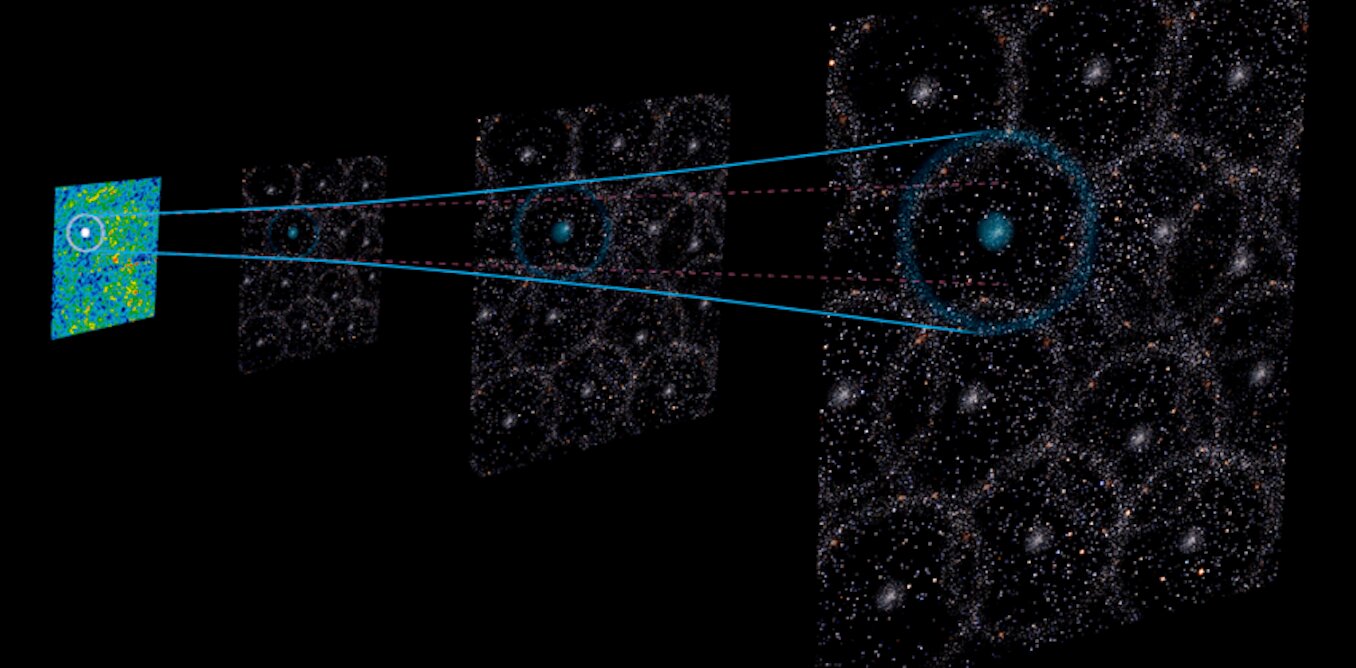
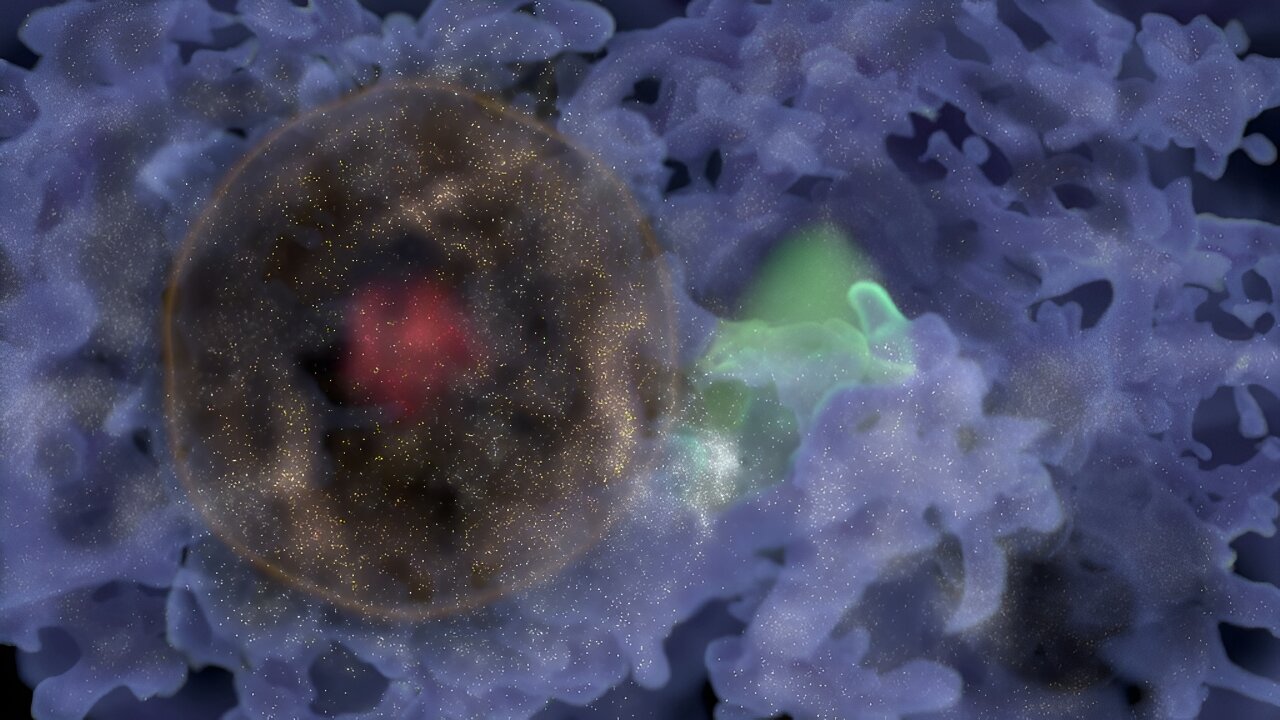
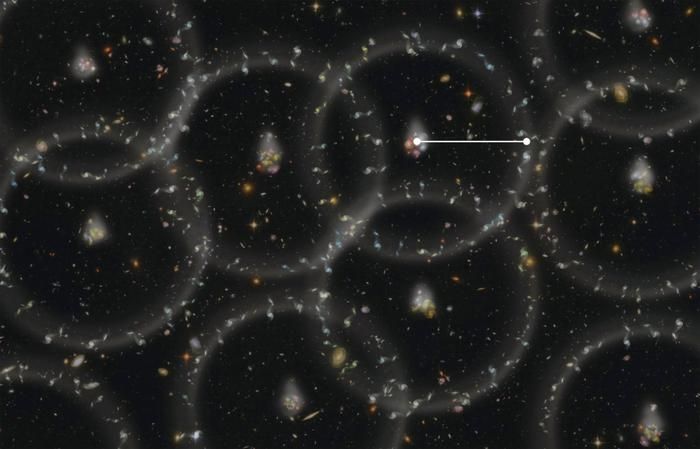
Scientists are studying the primordial soundwaves, known as baryon acoustic oscillations (BAOs), that rippled through the early Universe to gain insights into the mysterious force of dark energy. These soundwaves, formed by the tug of war between gravity and radiation pressure, left a permanent imprint on the distribution of matter in the Universe. By analyzing the BAO patterns, astronomers can measure the effects of dark energy and understand how it has changed over time. Projects like the Bingo radio telescope are being developed to map hydrogen distribution and study BAOs, providing valuable information about the early Universe and cosmological evolution.
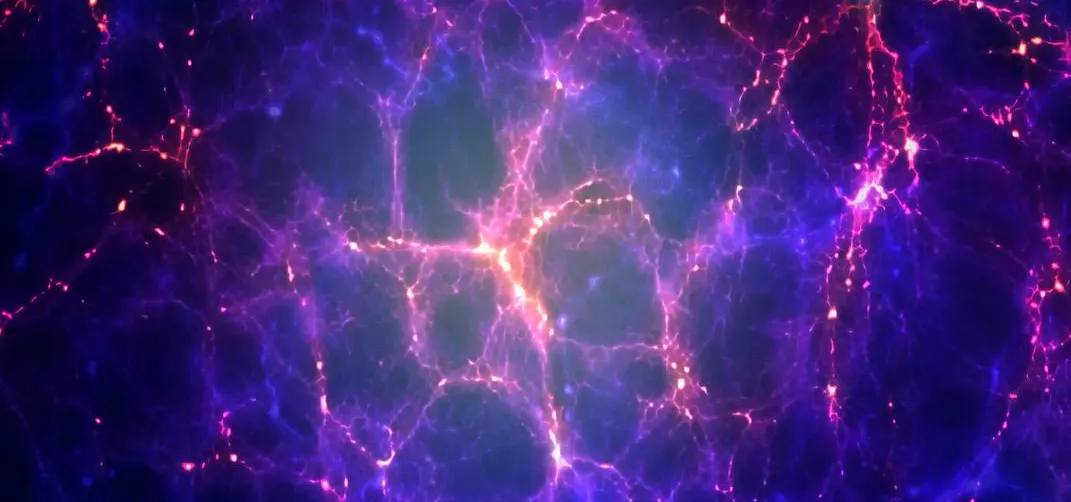
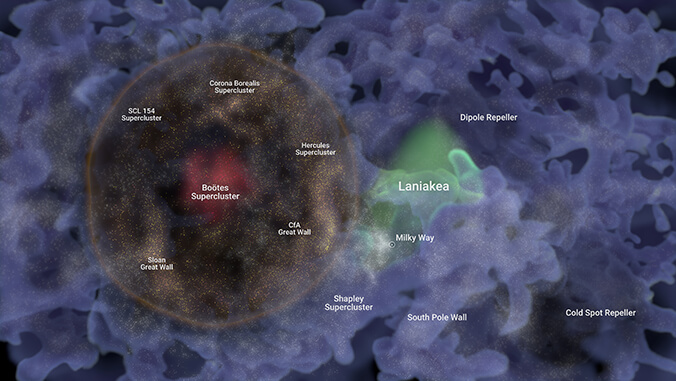
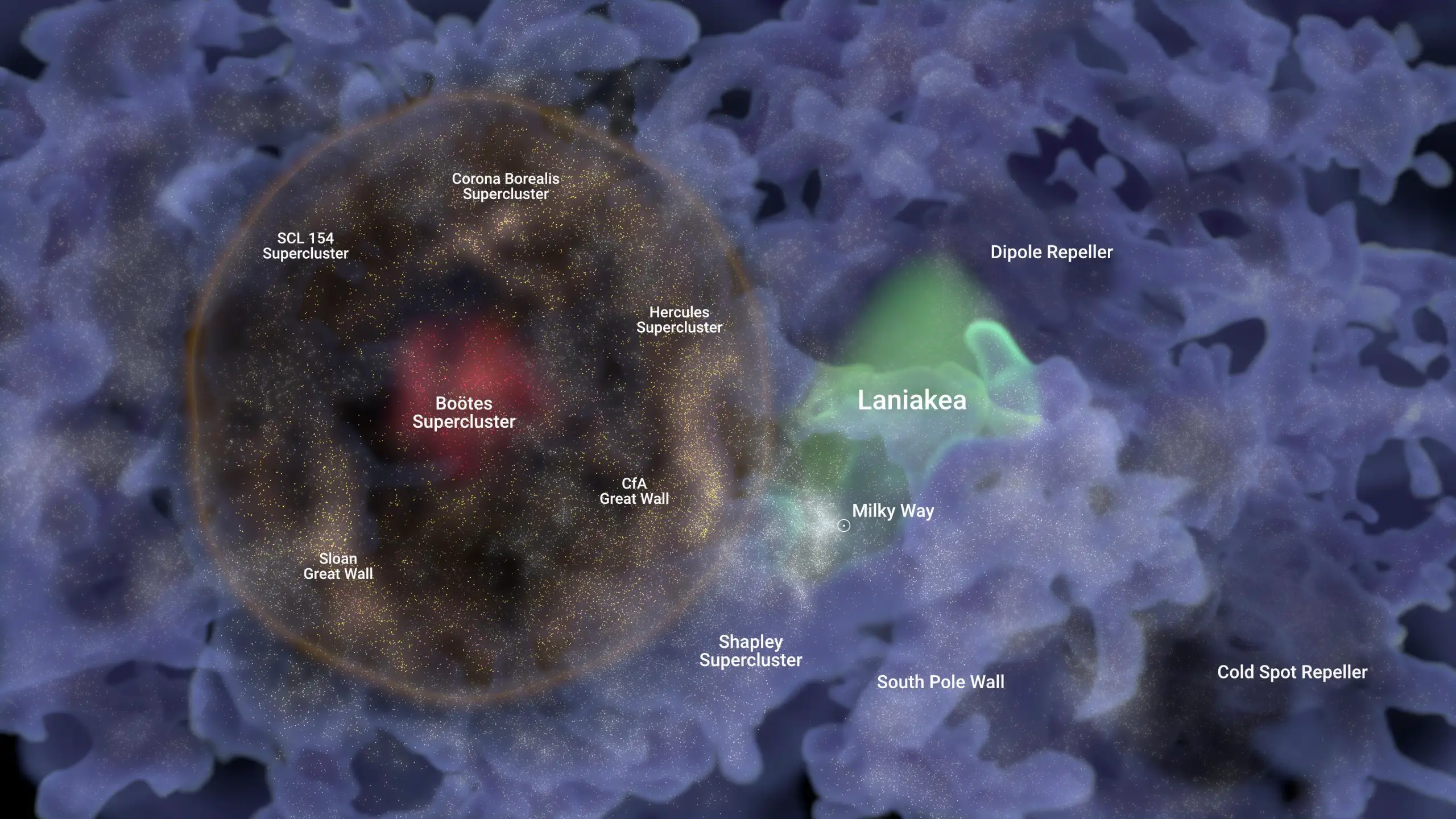
Scientists mapping a web of galaxies have accidentally discovered a vast bubble named Hoʻoleilana, located 820 million light-years from Earth. This structure, larger than the previously discovered Laniākea supercluster, contains previously known superclusters such as the Coma Cluster and the Sloan Great Wall. The diameter of Hoʻoleilana, measuring one billion light-years, exceeds theoretical expectations and is thought to be the result of ripples in the early universe known as Baryon Acoustic Oscillations.
Astronomers have discovered a massive "bubble of galaxies" spanning a billion light years, believed to be a fossilized remnant from just after the Big Bang. The bubble, named Ho'oleilana, is located 820 million light years away from the Milky Way and contains the Bootes supercluster of galaxies. This discovery confirms a phenomenon first described in 1970 and provides insights into the early universe. The finding was published in The Astrophysical Journal and could lead to the identification of more bubbles using advanced telescopes.
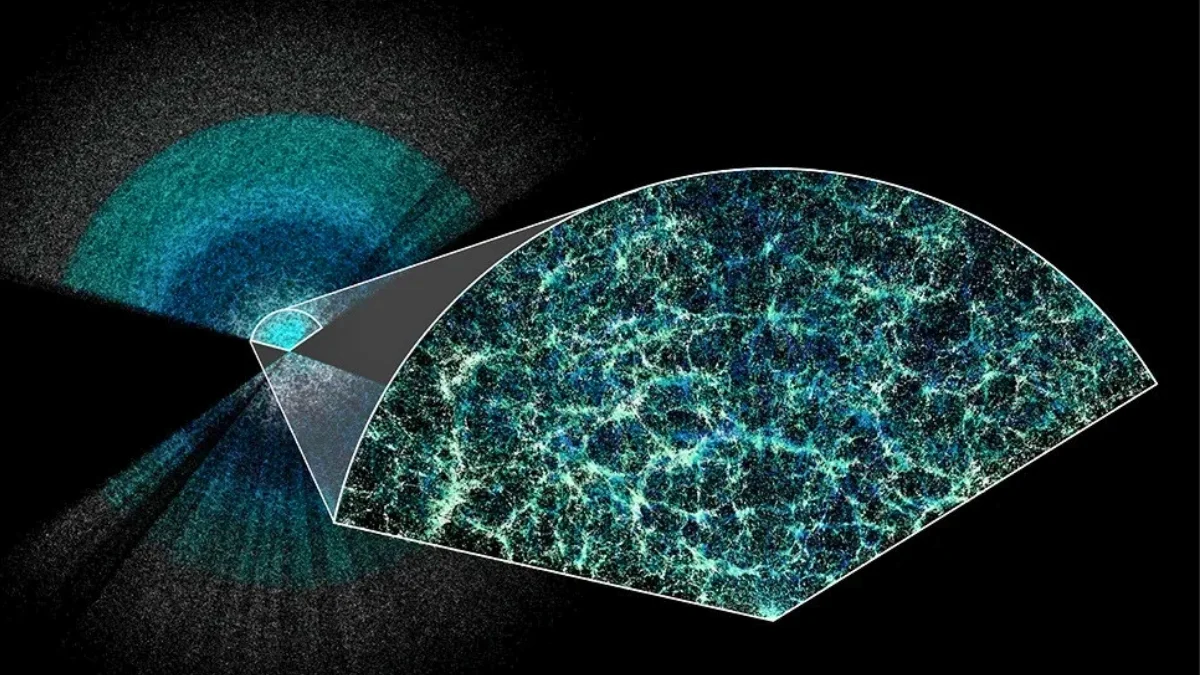
Astronomers have developed a new technique using Baryon Acoustic Oscillations (BAO) to measure cosmic distances with greater precision. By analyzing one million galaxies, the team found that BAOs can be used to accurately map the Universe and determine the separation between galaxies. This method could help resolve the Hubble Tension and provide insights into the expansion of the Universe, Dark Matter, Dark Energy, and the behavior of gravity on large scales.
Astronomers have discovered a massive bubble of galaxies, named Ho'oleilana, located around 820 million light-years from Earth and spanning one billion light-years wide. This cosmic bubble could be a fossilized remnant from the Big Bang, resulting from density ripples known as Baryon Acoustic Oscillations (BAOs). Ho'oleilana is composed of previously identified structures, including superclusters and a void, and its existence challenges theoretical expectations. The discovery could have implications for understanding the formation and evolution of the universe, as well as the rate of its expansion.
Astronomers in Hawaii have discovered a massive bubble of galaxies, named Ho'oleilana, located 820 million light-years from Earth and spanning a billion light-years in diameter. This bubble, considered a fossil-like remnant of the birth of the universe, is larger than theoretical expectations. It was found within the cosmic web of galaxies and is associated with 3D ripples in the early universe known as Baryon Acoustic Oscillations (BAO). The discovery could provide insights into galaxy evolution and the expansion rate of the universe.
Astronomers from the University of Hawaiʻi have discovered an immense bubble called Hoʻoleilana, located 820 million light years from Earth, which is believed to be a fossil-like remnant of the birth of the universe. The bubble, found within a web of galaxies, is a result of 3D ripples in the material of the early universe known as Baryon Acoustic Oscillations. This unexpected finding could provide valuable insights into galaxy evolution and the expansion rate of the universe.
Astronomers have discovered an immense bubble called Hoʻoleilana, located 820 million light years away, which is believed to be a remnant from the birth of the universe. This structure, larger than predicted, offers valuable insights into galaxy evolution and the dynamics of the universe's expansion. The bubble was identified within a web of galaxies using data from the Cosmicflows-4 catalog, and its properties align with the theoretical predictions of baryon acoustic oscillations. The discovery of Hoʻoleilana could enhance scientists' understanding of the effects of galaxy evolution and the standard model of cosmology.
Astronomers from the University of Hawaiʻi have discovered a massive bubble called Hoʻoleilana, located 820 million light years from Earth, which is believed to be a fossil-like remnant of the birth of the universe. The bubble, found within a web of galaxies, is associated with Baryon Acoustic Oscillations (BAO), predicted by the Big Bang theory. The discovery of Hoʻoleilana could provide valuable insights into galaxy evolution and the expansion rate of the universe.
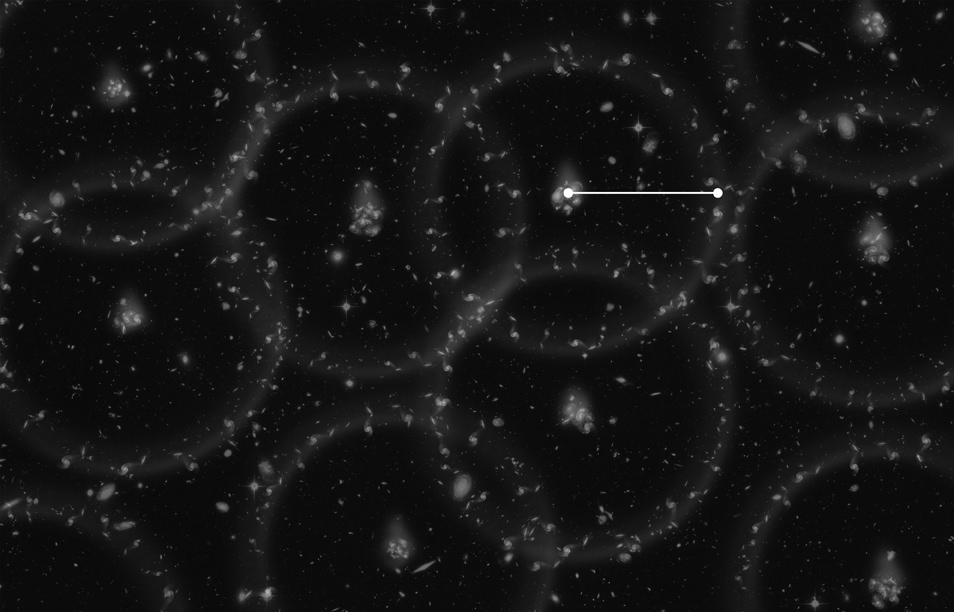
Astronomers have discovered a new method to detect Baryon Acoustic Oscillations (BAOs), which are subtle wrinkles in cosmic matter from the early universe. Traditionally, BAOs have been observed through galaxy clusters, but a new study focuses on galaxy shapes and orientations. By analyzing the stretched orientations of one million galaxies, researchers can identify the presence of BAOs. This method provides a more accurate measurement of cosmic distances and the universe's expansion, potentially shedding light on the mysteries of dark matter and dark energy. The study was published in the journal Nature Astronomy.
Researchers have developed a new method to measure cosmological distances with greater precision by detecting Baryon Acoustic Oscillations (BAO), which are traces of the Big Bang. By analyzing the orientations and density of approximately one million galaxies, anomalies in galaxy orientations were identified as indicators of BAO. This method allows for a more accurate mapping of the universe and provides insights into the history of cosmic expansion, dark matter, and dark energy.