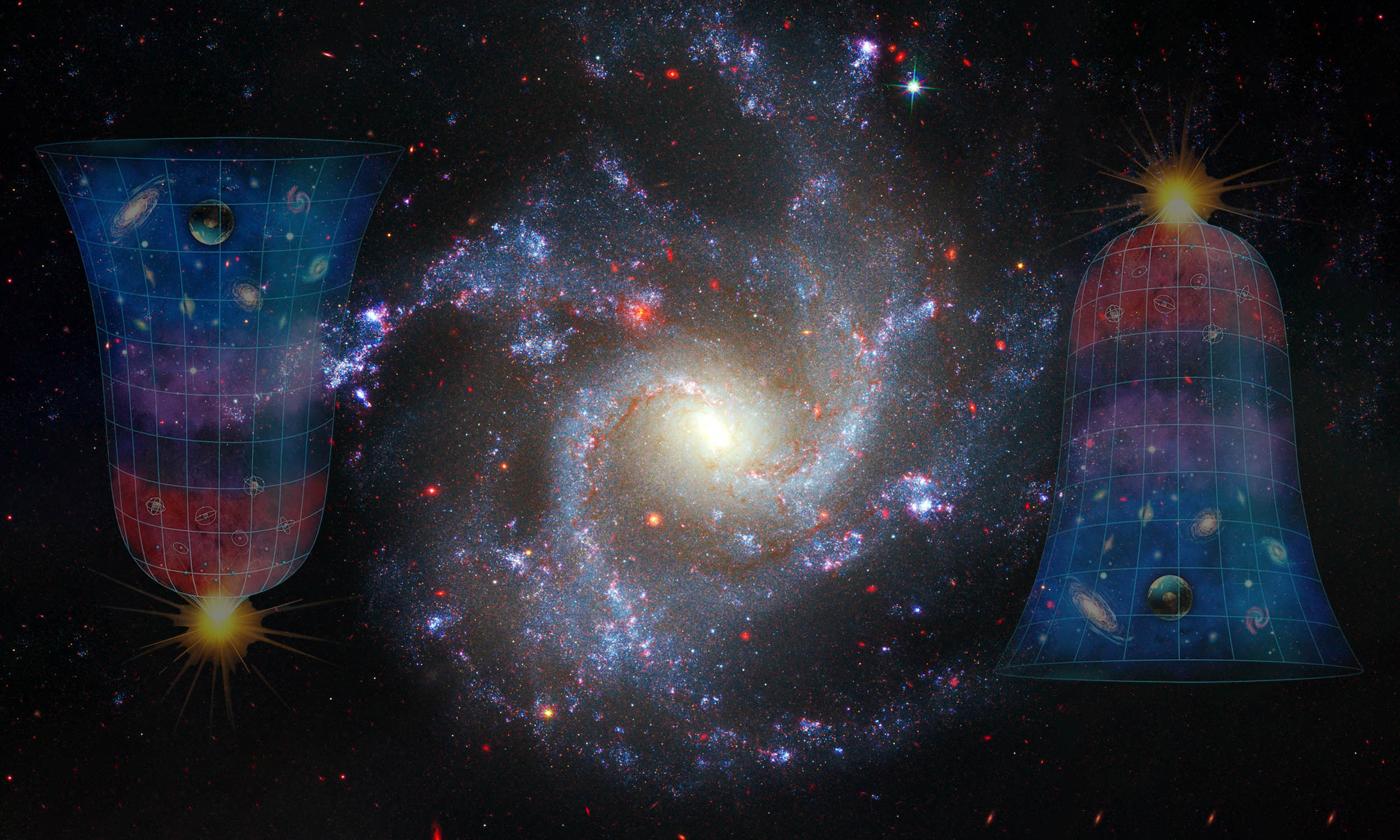
A new study suggests that the accelerated expansion of the universe might be explained by an extension of general relativity called Finsler gravity, potentially eliminating the need for dark energy as the cause.
A new theory proposes that mass may originate from the geometry of unseen, evolving dimensions beyond our familiar four-dimensional spacetime, potentially influencing cosmic expansion and offering an alternative perspective to the Higgs field, though it remains highly speculative and untested.
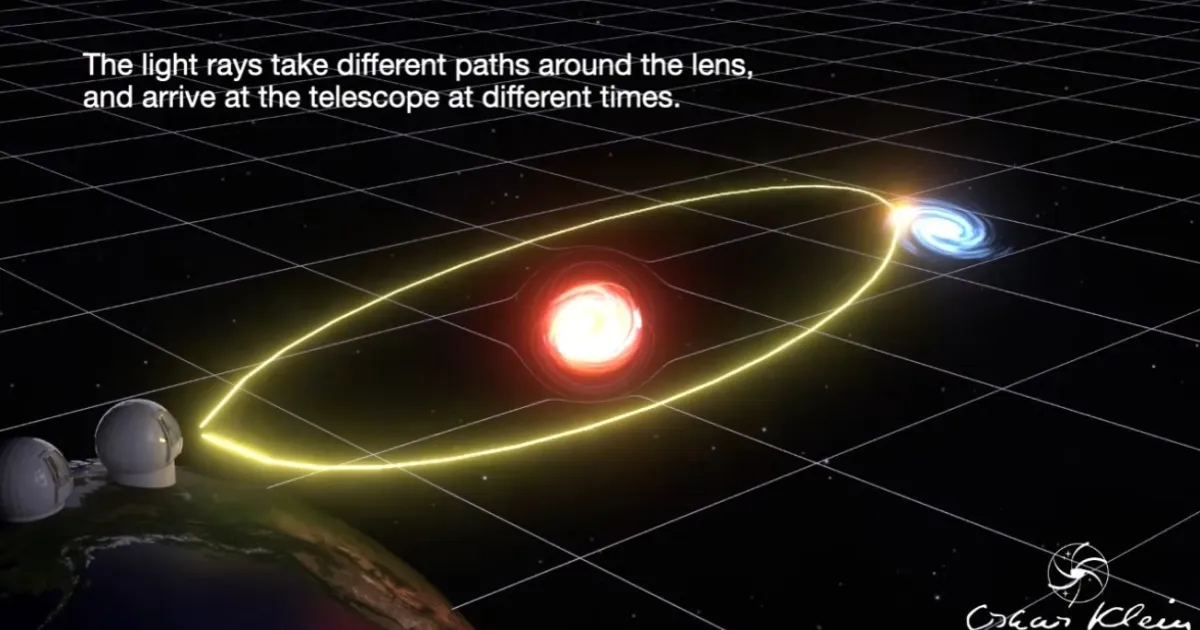
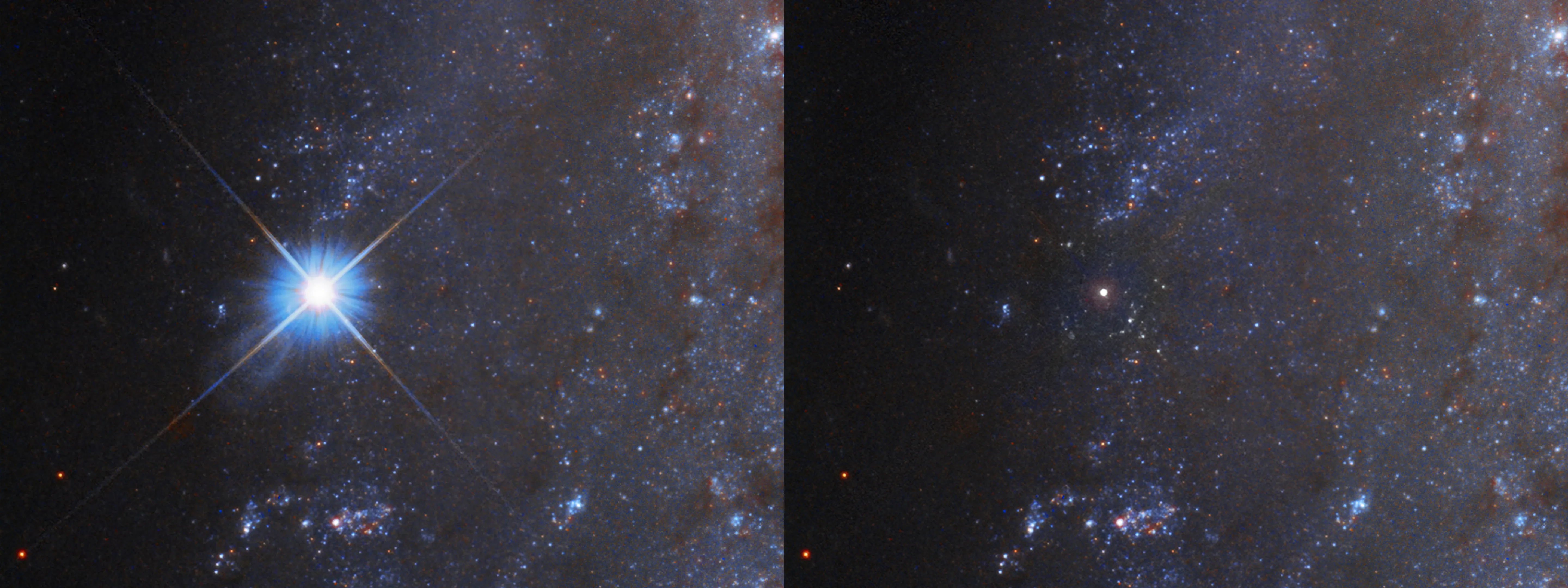
The article discusses the discovery of the brightest-ever lensed supernova, highlighting advancements in astronomy such as gravitational lensing, time-delay measurements, and the capabilities of new observatories like the Vera C. Rubin and JWST, which are revolutionizing our understanding of the universe.
A tiny star in the Andromeda galaxy, V1, played a crucial role in transforming our understanding of the universe by helping establish that Andromeda is a separate galaxy and by contributing to the development of the cosmic distance ladder, which has enabled measurements of the universe's expansion and age. This discovery, along with subsequent observations, has led to insights about the universe's accelerating expansion driven by dark energy, and ongoing efforts aim to resolve discrepancies in the Hubble constant.
Recent studies analyzing data from major sky surveys suggest that dark energy, previously thought to be a constant, may actually be evolving over time, which could significantly alter our understanding of the universe's future and fundamental physics.
Recent studies suggest that dark energy may not be constant over time but could be evolving, with data indicating a decrease in its density over billions of years. This challenges the traditional cosmological constant model and has significant implications for the universe's future, potentially leading to a cold, dark universe rather than catastrophic extremes like the Big Rip or Big Crunch. Future surveys aim to clarify the nature of dark energy and its role in cosmic expansion.
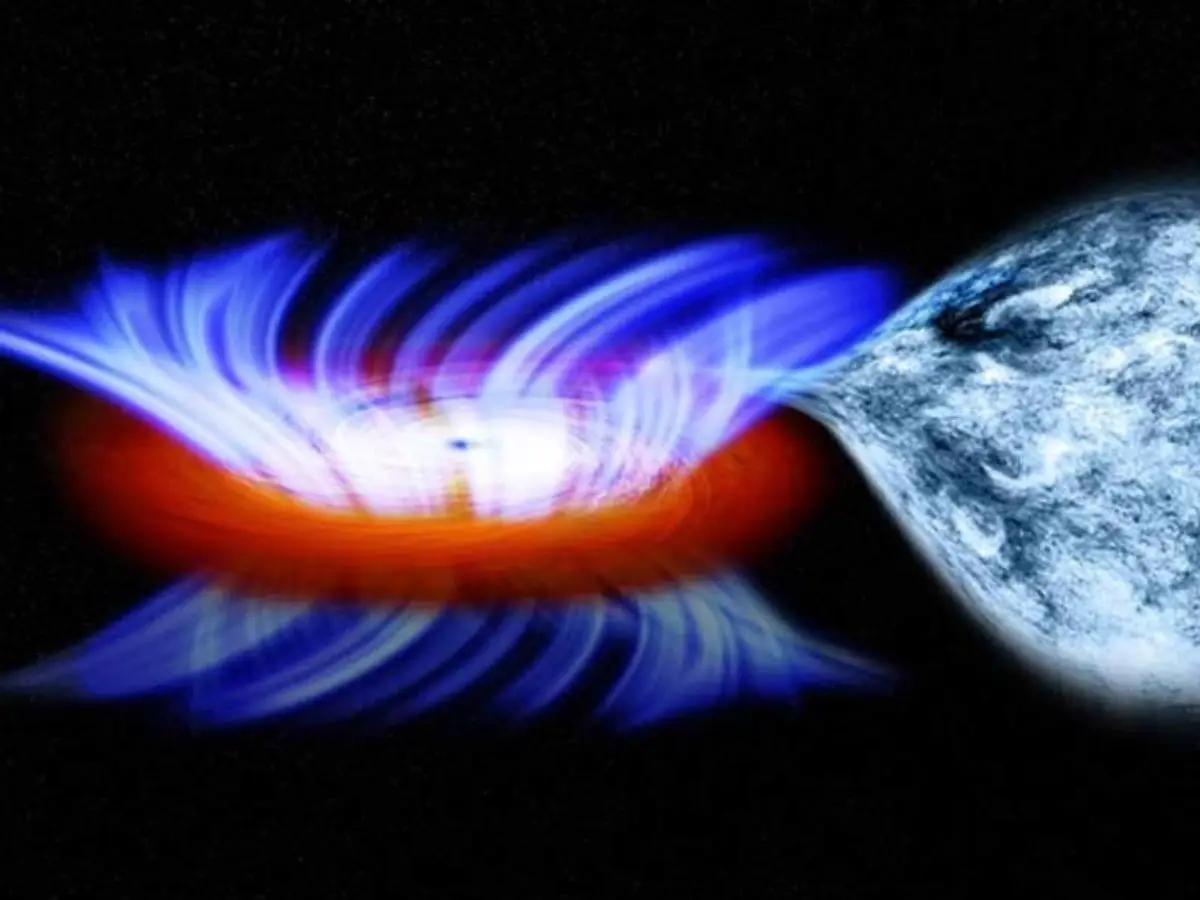
Black holes form from collapsing massive stars and have a strong gravitational pull, but their influence is limited to nearby objects. They do not actively suck in matter from afar, and the universe's expansion and black hole evaporation prevent them from consuming the entire universe. Therefore, black holes are not a threat to the universe as a whole.
NASA's Roman Space Telescope, set to launch by 2027, will conduct surveys to detect distant supernovae and transient objects, helping scientists trace the universe's expansion and study dark energy, especially focusing on the early universe and its evolution over time.
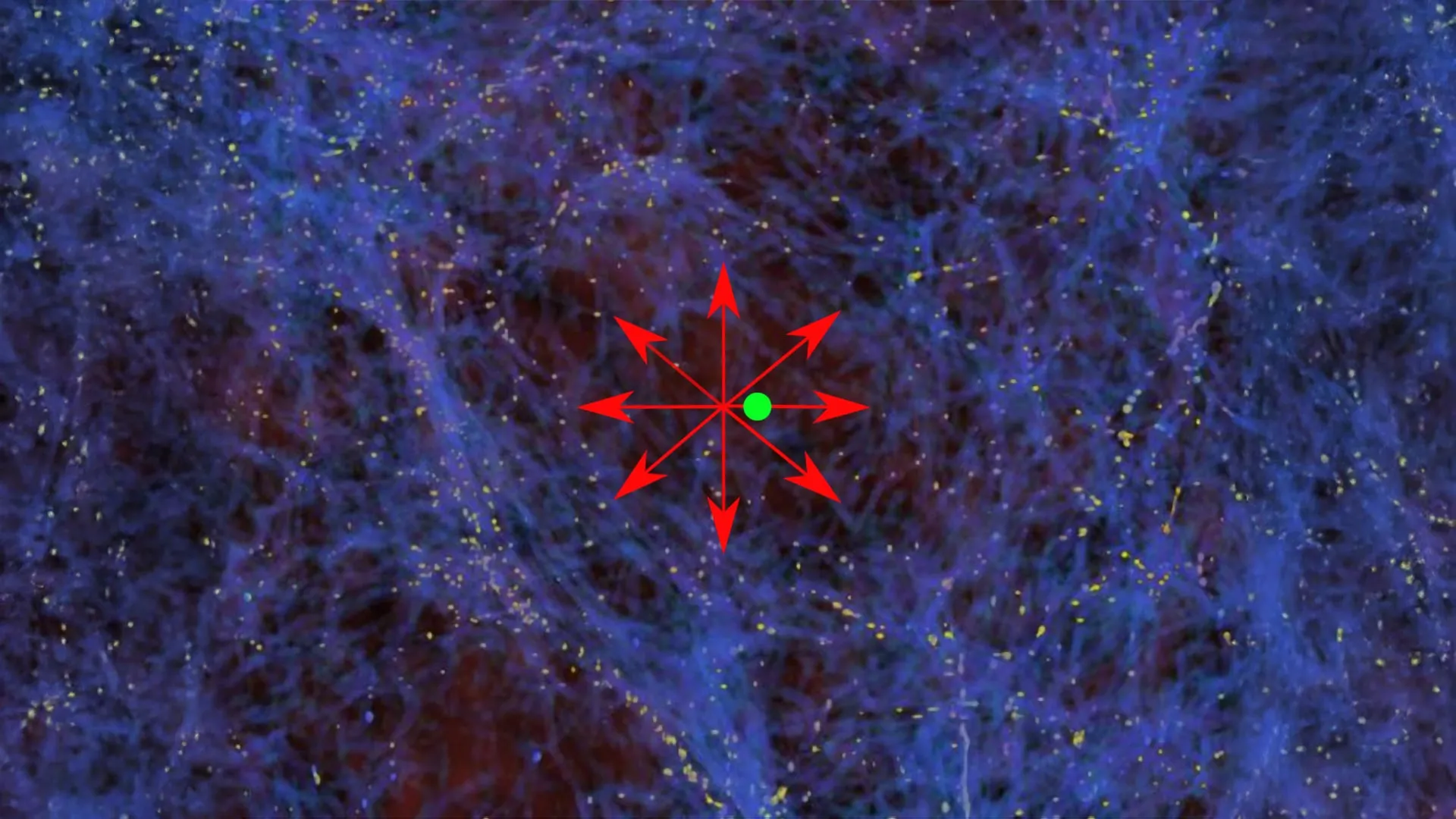
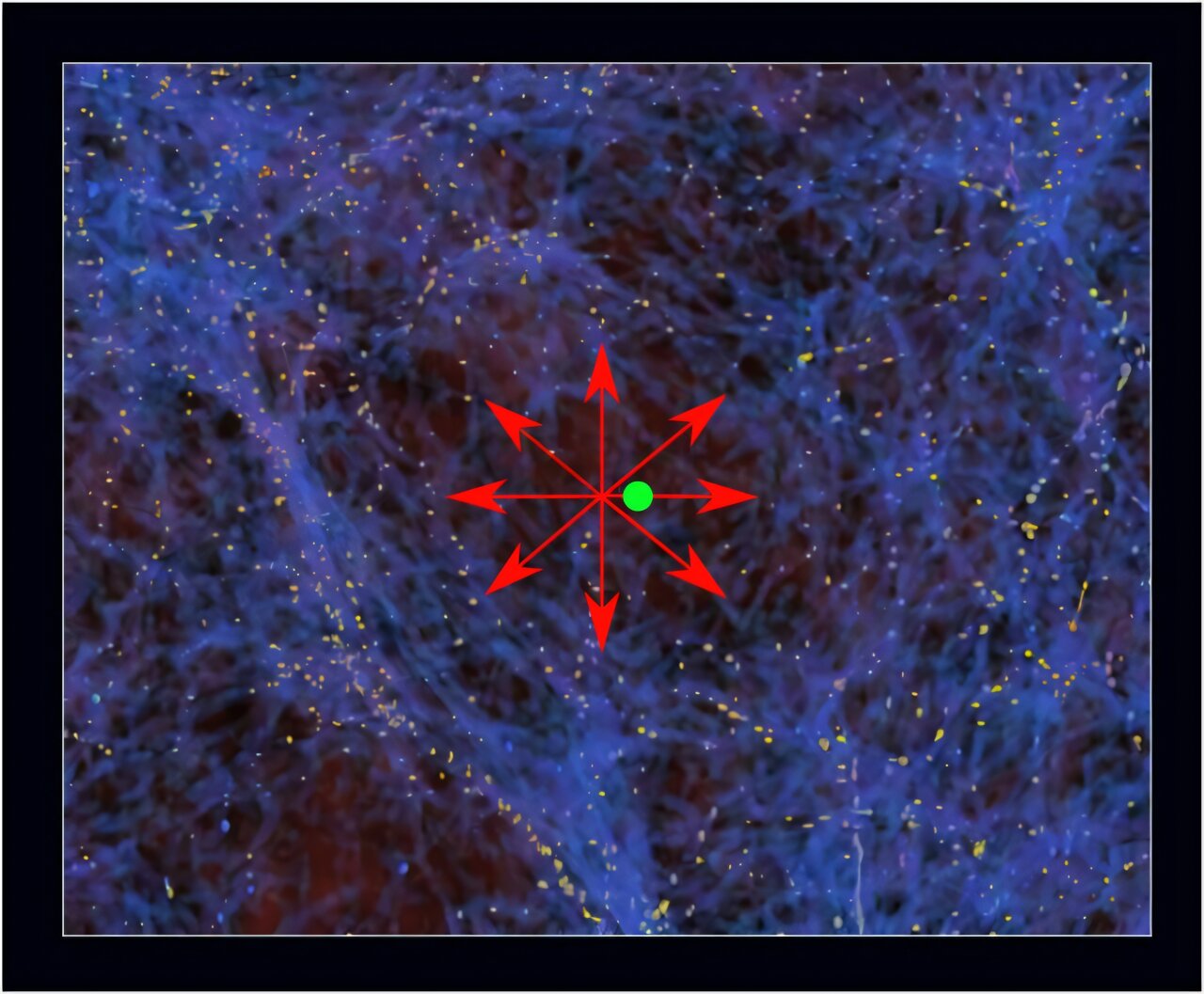
Astronomers propose that Earth resides in a massive, billion-light-year-wide void, which could explain the faster-than-expected expansion rate of the universe locally, potentially resolving the Hubble tension and supporting the universe's estimated age of 13.8 billion years. Evidence from sound waves of the early universe and galaxy distribution supports this theory, though it challenges standard cosmological models.
Scientists propose that Earth and the Milky Way may reside in a large, low-density void, which could explain the discrepancy in the universe's expansion rate known as the Hubble tension. Evidence from baryon acoustic oscillations supports this theory, suggesting our local universe expands faster than expected, potentially resolving key cosmological questions about the universe's age and structure.
Scientists propose that Earth may be inside a large, low-density void, which could explain the discrepancy in measurements of the universe's expansion rate, known as the Hubble tension. Evidence from sound waves of the early universe supports this idea, suggesting our local universe expands faster due to this void, potentially resolving key cosmological questions about the universe's age and structure.
Recent evidence suggests our universe may be rotating, which could explain dark energy and imply it is part of a multiverse, with black holes acting as gateways to other universes. This rotation might also account for the weakening of dark energy observed by scientists, aligning with theories that the universe's angular momentum decreases over time. Further research is needed to confirm these hypotheses.
New data from the James Webb Space Telescope (JWST) confirms previous Hubble Space Telescope findings, suggesting a discrepancy in the measured rate of cosmic expansion, known as the "Hubble tension." This discrepancy indicates that our understanding of the universe's expansion, potentially driven by dark energy, may be incomplete. The JWST's observations align with Hubble's, ruling out measurement errors and pointing to the need for new elements in cosmological models to explain the faster-than-expected expansion of the universe.
The concept of the Universe's edge is explored through the lens of the observable Universe, which spans 93 billion light-years. Our understanding is limited by the speed of light and the nature of cosmic expansion, which causes the observable Universe to grow over time. Theories about what lies beyond include an infinite Universe, a multiverse, curved space, and the possibility of our Universe existing within a black hole. As the Universe expands, some regions become unobservable, challenging our perception of cosmic boundaries and the Universe's ultimate fate.
The James Webb Space Telescope has confirmed previous measurements of the universe's expansion rate, known as the Hubble constant, but discrepancies remain between local and early universe observations, a phenomenon called the "Hubble Tension." This ongoing mystery suggests potential gaps in our understanding of cosmic forces like dark energy and dark matter, prompting scientists to explore new theories and methods, such as gravitational lensing, to resolve the tension. The quest continues to uncover the universe's secrets, with future missions offering hope for new insights.