Scientists using eROSITA data have discovered narrow, tunnel-like plasma structures within the Local Hot Bubble, potentially shaped by ancient supernova explosions, which may connect our solar system to distant regions of the galaxy and support models of interconnected superbubbles in the Milky Way.
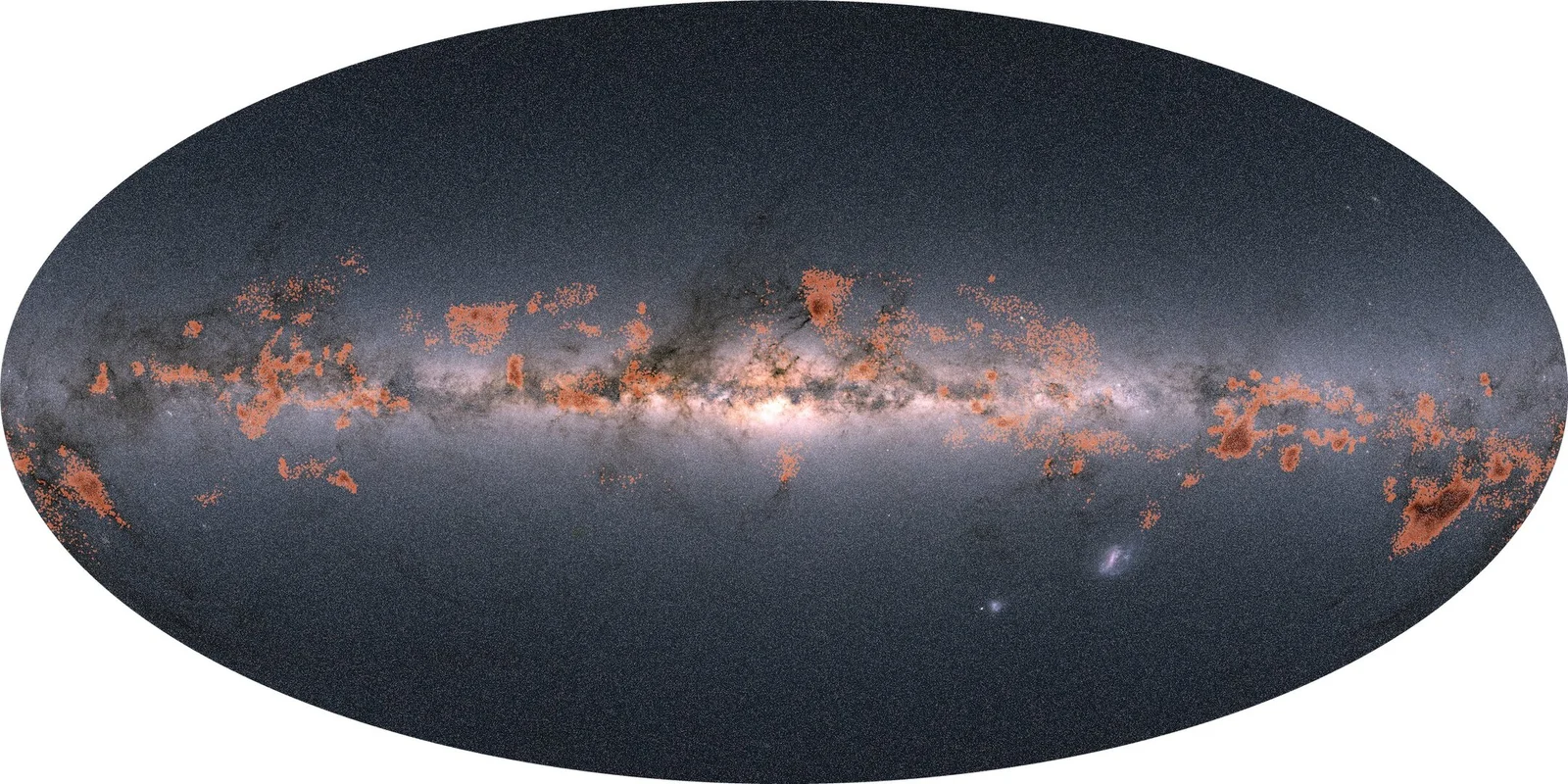
The European Space Agency's Gaia mission has revolutionized our understanding of the Milky Way by mapping billions of stars with unprecedented precision, revealing complex structures, interconnected star clusters, and the dynamic processes shaping our galaxy, including the discovery of star families, tidal tails, and the large-scale interconnectedness of star-forming regions.
Recent observations using the eROSITA telescope have revealed that the Local Hot Bubble surrounding our solar system is an irregular, dynamic structure shaped by multiple supernova explosions and possibly connected to other galactic features through interstellar tunnels, providing new insights into the active and interconnected nature of our galaxy's environment.
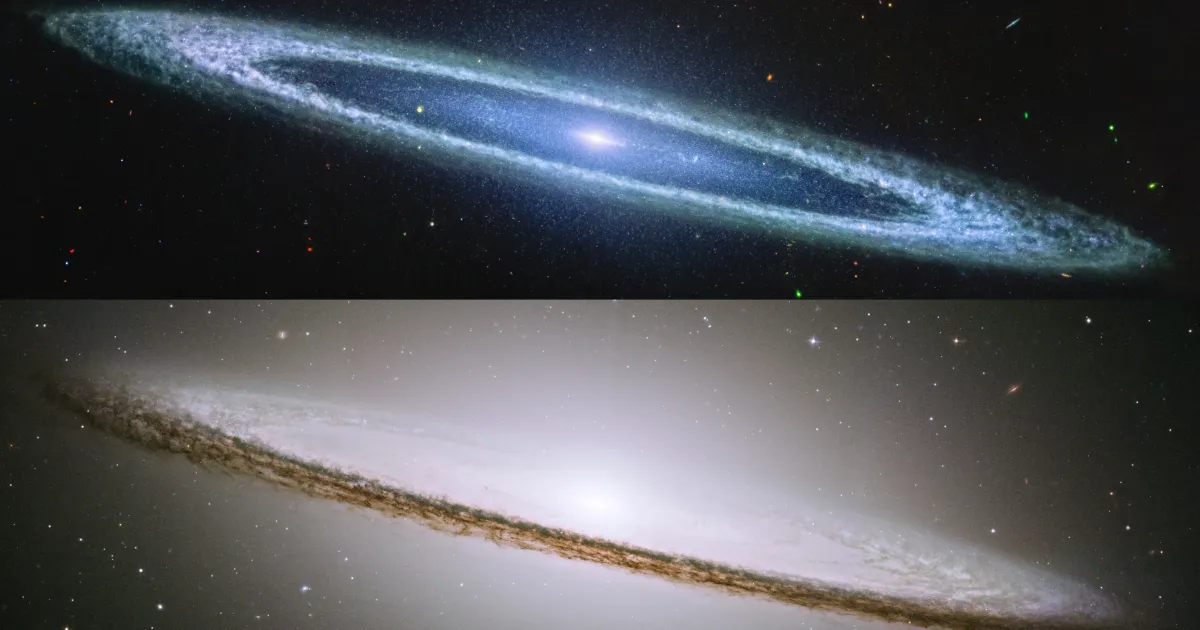
The James Webb Space Telescope (JWST) has provided new insights into the Sombrero galaxy, revealing its outer dust ring as turbulent and clumpy, and highlighting a sparse, dust-depleted inner disk. The galaxy, which combines features of both spiral and elliptical galaxies, contains a supermassive black hole and forms only one solar mass of new stars annually. JWST's advanced capabilities have unveiled details previously unseen, including numerous background galaxies, suggesting the Sombrero galaxy may represent a galactic end-state after consuming its neighbors.
Recent research has uncovered a potential interstellar tunnel within the Local Hot Bubble (LHB), a massive structure formed by supernova explosions near our solar system. This tunnel, discovered using the eROSITA X-ray telescope, may connect the LHB to other superbubbles or nebulae, suggesting a network of interconnected hot gas bubbles in the Milky Way. This finding supports a 1974 theory of a galactic bubble network and could enhance our understanding of the galaxy's structure and evolution, though its practical use for space exploration remains speculative.
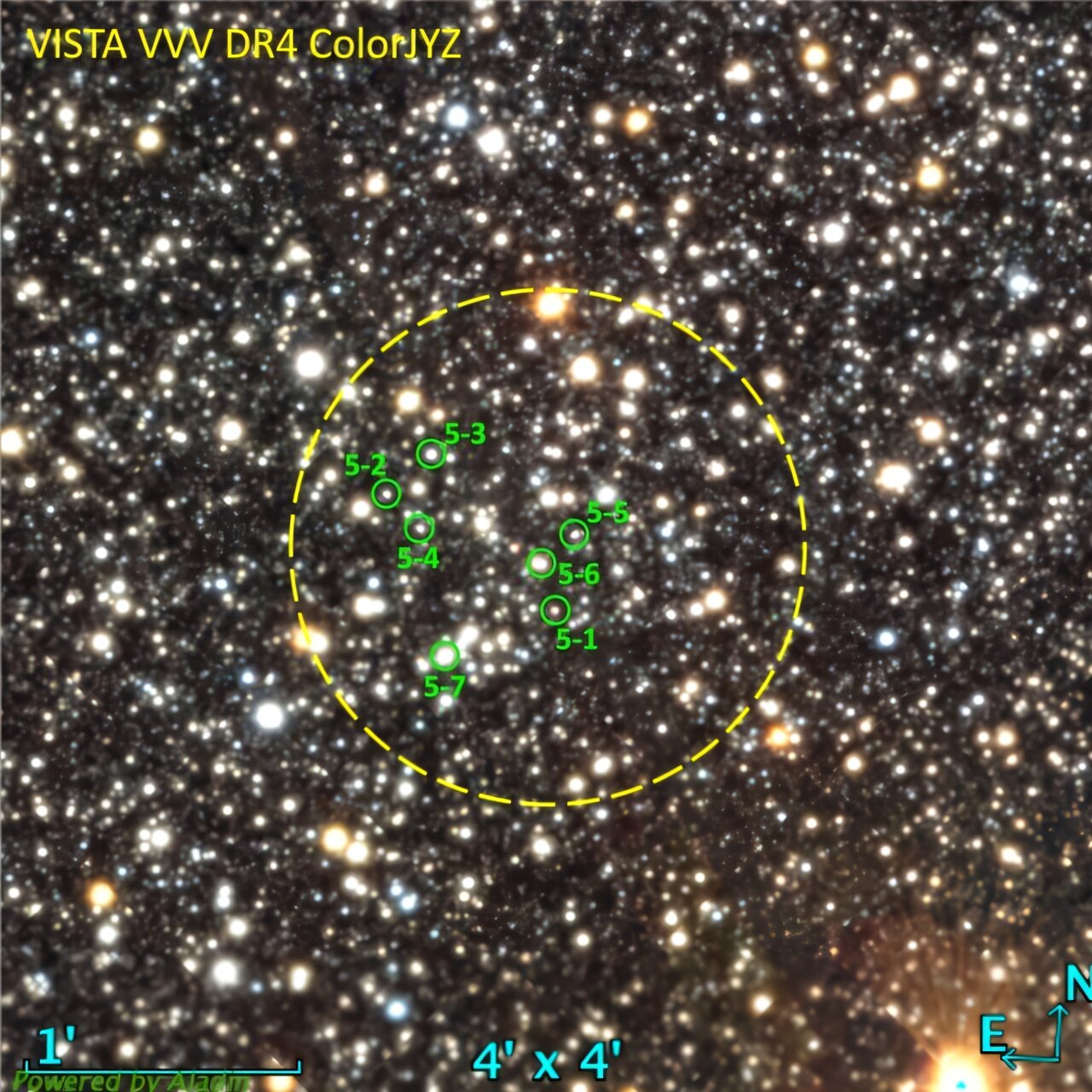
Astronomers using the Gemini-South telescope have discovered that the globular cluster Gran 5, located near the Galactic center, contains two distinct stellar populations with different metallicities. This finding, based on high-resolution near-infrared spectroscopy of seven stars, marks the first detection of such diversity in a low-mass globular cluster. The study suggests that Gran 5 is not linked to the Gaia–Enceladus–Sausage structure but is part of the Galactic bulge or disk, with its metallicity variation possibly due to different evolutionary processes or mass loss.
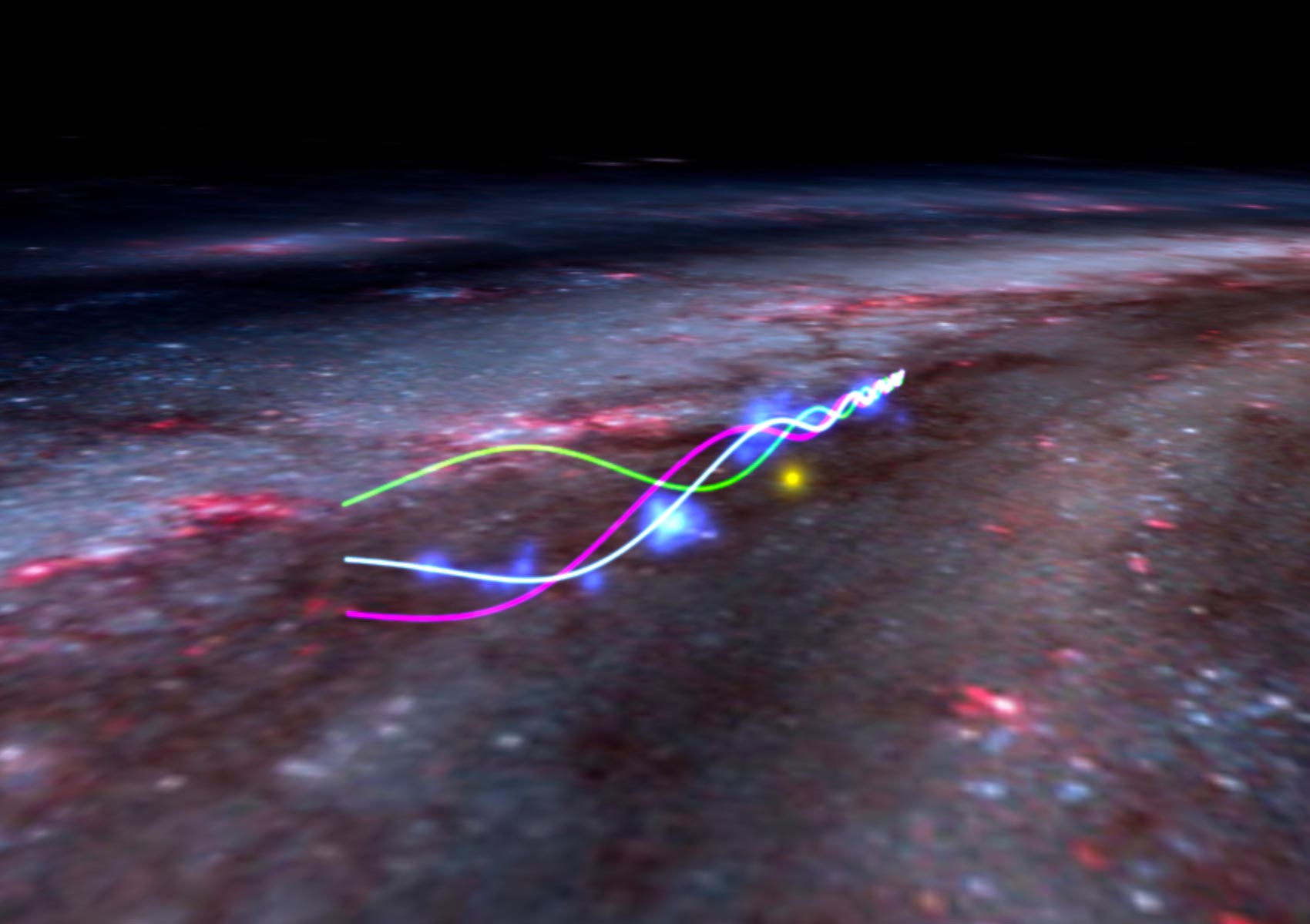
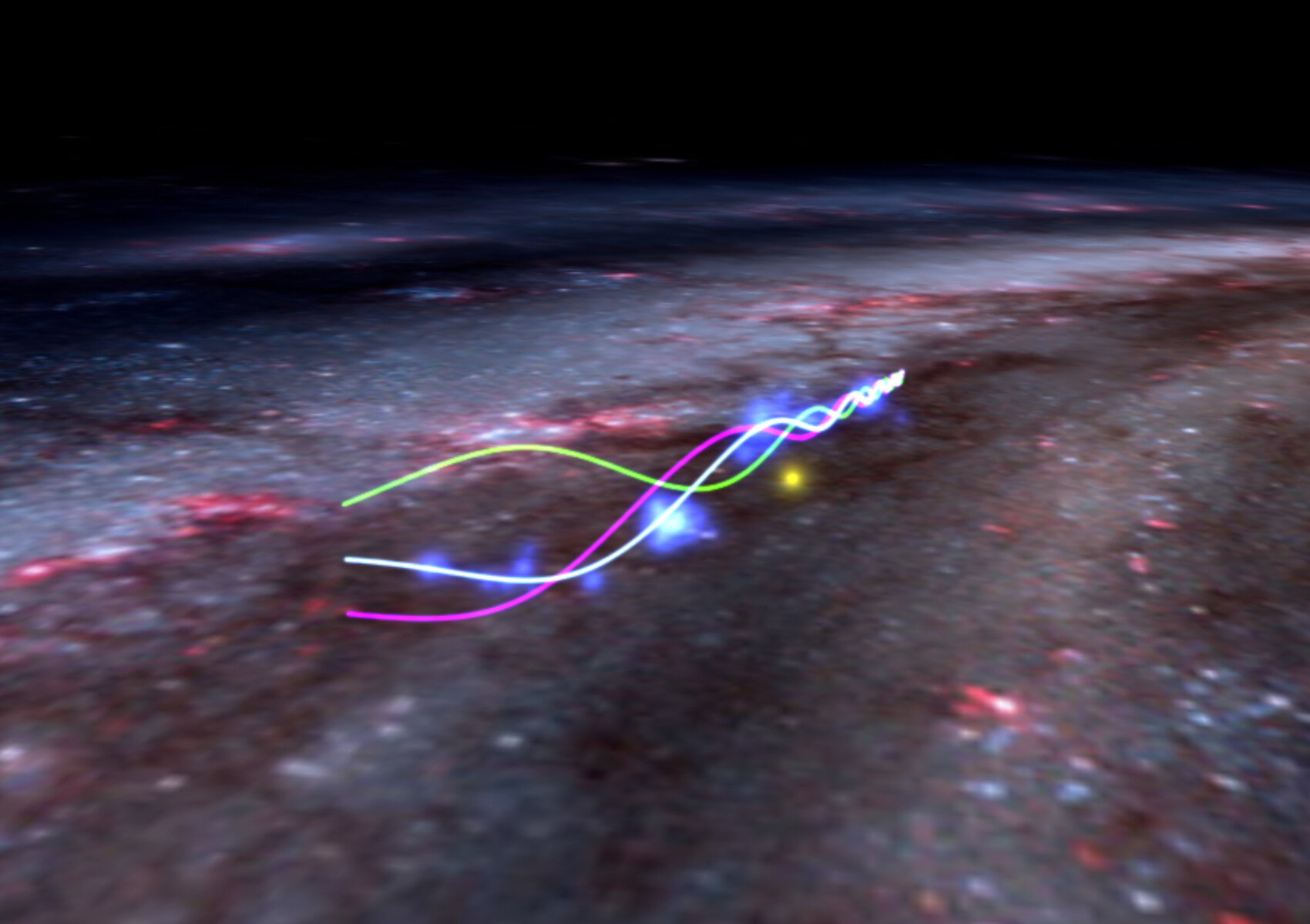
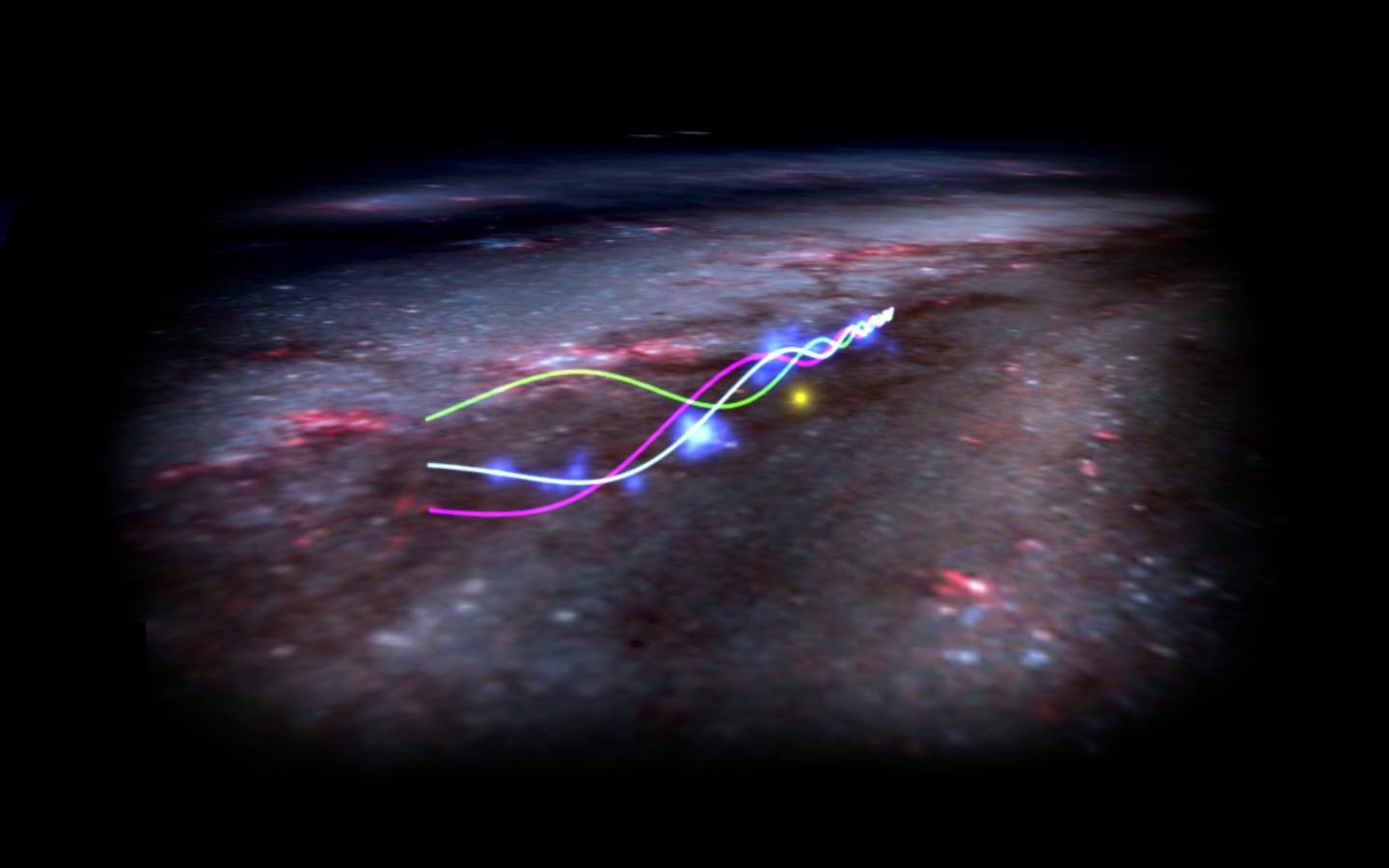
Astronomers have discovered a massive, wave-shaped chain of gaseous clouds in the Milky Way called the Radcliffe Wave, which not only looks like a wave but also moves like one, oscillating through space-time. This structure, located near our sun, is 9,000 light years long and just 500 light years away at its closest point. The discovery raises questions about the cause of the wave and its implications for understanding galactic dynamics, with researchers suggesting theories ranging from supernovae explosions to out-of-galaxy disturbances. The study also indicates that ordinary matter alone is enough to drive the wave's motion, and the oscillation of the Radcliffe Wave could imply that spiral arms of galaxies oscillate in general.
Astronomers have observed the Radcliffe Wave, an enormous wave-shaped chain of gaseous clouds in the Milky Way, oscillating through space-time like a stadium wave, using the motion of baby stars born in the gaseous clouds to trace its movement. This discovery, made possible by combining data from the European Space Agency's Gaia mission and the "3D Dust Mapping" technique, raises questions about the wave's origin and its implications for understanding galactic dynamics, as well as the role of dark matter in its motion.
Astronomers have discovered the Radcliffe Wave, a wave-shaped chain of star-forming clouds stretching across the Milky Way, and believe that our solar system passed through it about 13 million years ago. This structure, which is the largest coherent structure ever seen in our galaxy, is oscillating like a traveling wave. The wave's origin remains a mystery, with possibilities including a dwarf galaxy collision or a sequence of supernovae causing the disturbance. Scientists are now investigating the geological and biological records for signs of Earth being affected by supernova explosions during its transit through the Radcliffe Wave.
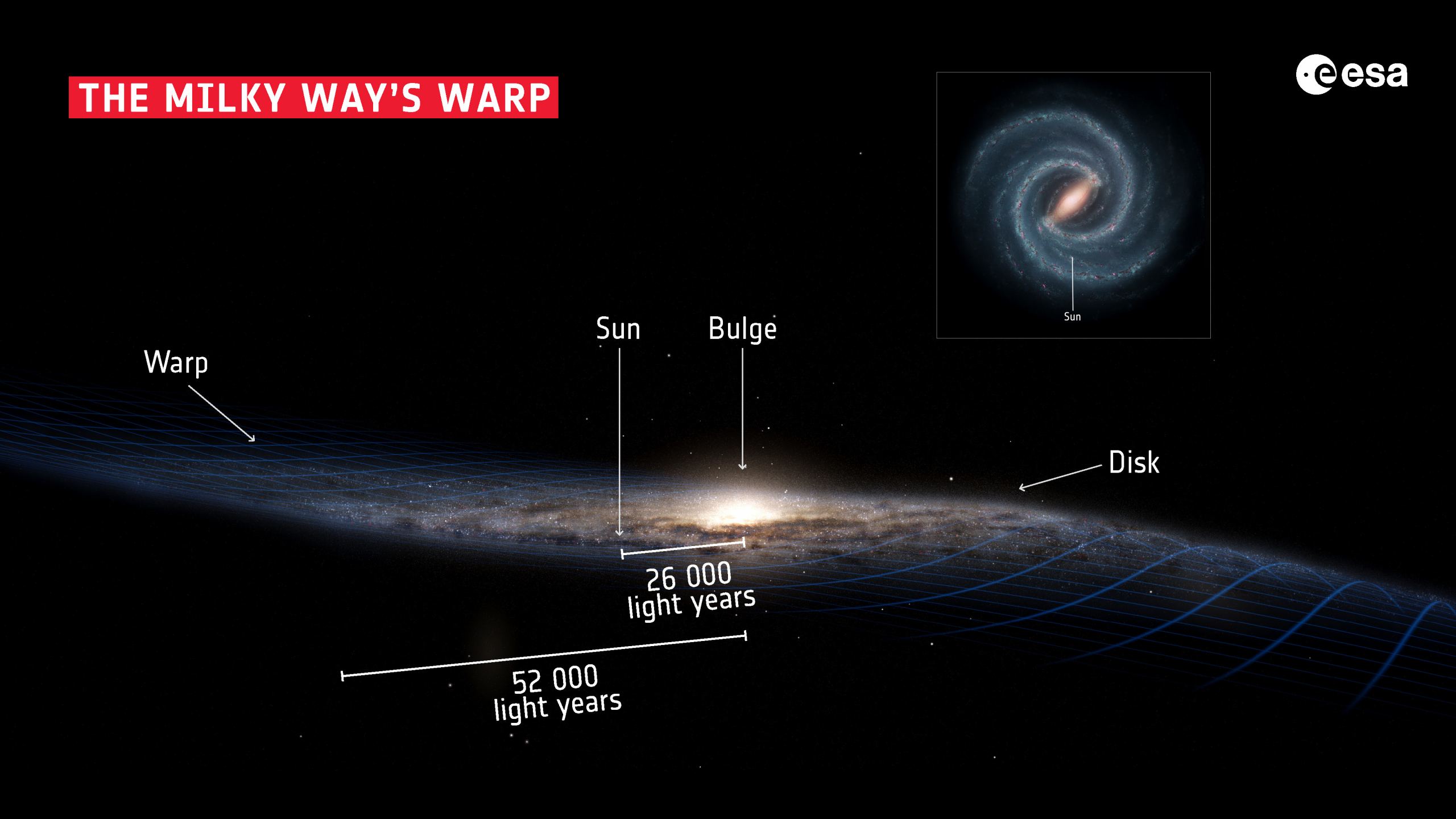
A new study suggests that the warped shape of the Milky Way's disk may be caused by a tilted halo of dark matter. The study used supercomputer simulations to show that the inner region of the dark matter halo can be significantly tilted relative to the galactic plane, which can induce a galactic warp over billions of years. This finding aligns with observations of other galaxies with warped planes, indicating that long-term gravitational interactions between galaxies and their twisted halos may be common. Further research and observations are needed to fully understand the evolution of galaxies like the Milky Way.