Tag

Super Earths

All articles tagged with #super earths

astronomy1 year ago

"Unraveling the Mystery of Exoplanet Size Distribution Through Migration"

Scientists have discovered that the absence of super-Earths and mini-Neptunes in space may be due to planetary migration, with some planets moving toward the hearts of their planetary systems early in their lives. This migration could explain the scarcity of planets between 1.6 and 2.2 times the size of Earth, known as the "radius valley." Research suggests that mini-Neptunes migrating inward develop thick water atmospheres, increasing their radii, while super-Earths lose their atmospheres due to intense radiation, causing them to shrink. These findings could have implications for exoplanet science and the potential existence of water worlds with deep oceans.

astronomy1 year ago

"Unveiling the Mystery of Missing Exoplanets: Simulated Origins and Migrations"

Simulations suggest that the mysterious gap in the size distribution of super-Earths, known as the radius valley, may be explained by the migration of icy planets into the interior of planetary systems, forming thick water vapor atmospheres and making them appear larger, while smaller rocky planets lose their atmospheres, causing their measured radius to shrink. These findings, based on physical computer models, shed light on the formation and composition of planetary systems and could have implications for the search for potentially habitable exoplanets. Further observations with telescopes like the James Webb Space Telescope and the Extremely Large Telescope could provide a test for these simulations.

science-and-astronomy2 years ago

TESS Discovers 16 Super-Earths in NASA's Exoplanet Hunt

NASA's Transiting Exoplanet Survey Satellite (TESS) has potentially discovered eight new exoplanets, all of which are classified as "super-Earths." TESS uses a statistical method to analyze its data and identify anomalies that could indicate the presence of exoplanets. The Validation of Transiting Exoplanets using Statistical Tools (VaTEST) project helped confirm that these transiting events were caused by orbiting exoplanets. Six of the newly discovered exoplanets fall into the "keystone planets" category, which could provide valuable insights into the overall exoplanet population. While these super-Earths are unlikely to be habitable due to their close proximity to their host stars, further study of them could help scientists understand the radius valley concept and the potential for life on other exoplanets.

science-and-technology2 years ago

TESS Discovers Eight New Super-Earths

NASA's TESS spacecraft has validated eight more Super-Earths, bringing the total number of confirmed exoplanets to nearly 400. The Validation of Transiting Exoplanets using Statistical Tools (VaTEST) project combines statistical methods and machine learning to identify these planets from TESS's data. Six of the newly validated planets fall within the "keystone planets" category, which helps explain the radius gap in exoplanet populations. Two of the planets are suitable for further atmospheric study using the James Webb Space Telescope (JWST), with simulations showing potential signs of carbon dioxide, water, and methane. Real observations are needed to confirm these findings.

space2 years ago

"Scientists Reveal Astonishing Secrets of Fiery Lava Worlds"

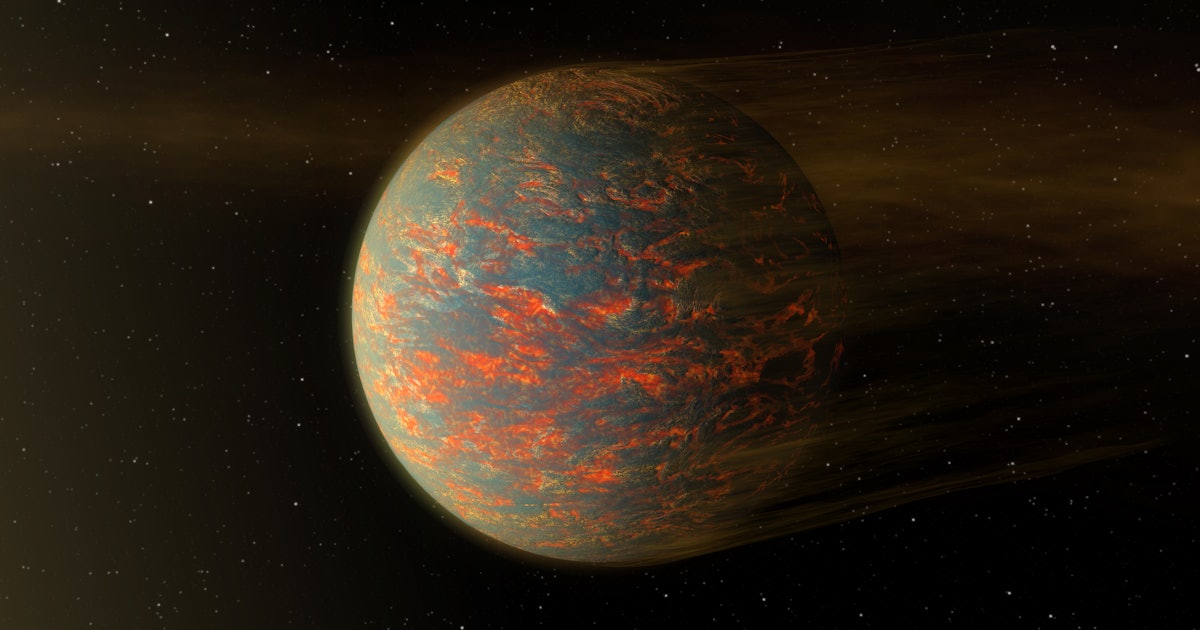
A new study published in The Astrophysical Journal explores the strange and fascinating world of lava planets, which make up almost half of all rocky exoplanets discovered so far. These large lava worlds, unlike anything in our solar system, have seas of liquid magma on their surfaces due to their close proximity to their stars. Although inhospitable to life, these "super-Earths" can provide insights into the early evolution of terrestrial planets. The study reveals three probable types of lava worlds and raises exciting new questions about these unique planets.

science2 years ago

"Exploring the Enigmatic Oceans of Super-Earths: A Potential Haven for Life"

A new study published in Nature Communications suggests that super-Earths, which are more common than Earth-like planets or icy moons, may have the potential for liquid water oceans and therefore the potential for life. While Earth is unique in having liquid water in its warm habitable zone, super-Earths could maintain a thin layer of liquid water at the surface through geothermal and nuclear heating, allowing for the possibility of a rich ocean layer. This discovery expands the potential habitable environments in the universe and increases the likelihood of finding life beyond Earth.

astronomy2 years ago

Discovery of Two Habitable 'Super Earths' Near Proxima Centauri.

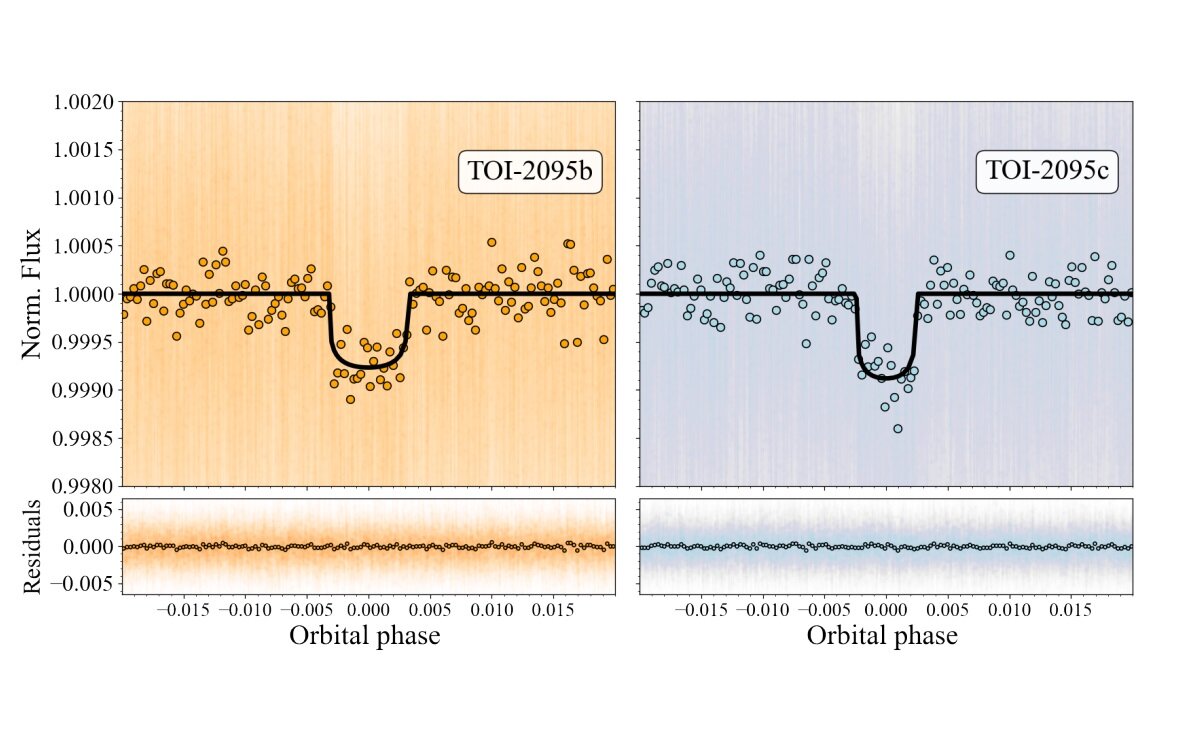
Two new planets, designated TOI-2095 b and TOI-2095 c, have been discovered orbiting a red dwarf star 137 light-years away using NASA's Transiting Exoplanets Survey Satellite (TESS). Both planets are in the habitable zone and have estimated masses of 4.1 and 7.5 Earths, respectively. Future observations with other instruments could help determine the composition of the planets and confirm whether they are rocky worlds or something else.

astronomy2 years ago

The Catastrophic Reality of Super-Earth Planets

The idea of "super-Earth" exoplanets being more habitable than Earth is a myth, as most of these planets are actually mini-Neptunes or stripped planetary cores with thick atmospheres that make them inhospitable to life. The lack of small exoplanets is due to detection sensitivity, and the two primary methods for finding exoplanets are not optimized for finding Earth-sized or smaller worlds. The majority of exoplanets are Neptune-like, possessing large, volatile gas envelopes, and the prospects for habitability are dim. The rocky super-Earths that do exist are likely hot and close to their stars, making them more like Mercury than Earth.

astronomy2 years ago

Nearby star hosts two super-Earths, astronomers find.

Astronomers have discovered two "super-Earth" exoplanets orbiting a nearby M-dwarf star known as TOI-2095 using NASA's Transiting Exoplanet Survey Satellite (TESS). The newfound alien worlds have short orbital periods and are slightly larger than the Earth. The two newly discovered exoplanets are close to the inner edge of the habitable zone of TOI-2095 and their parameters make them attractive targets for further follow-up observations.