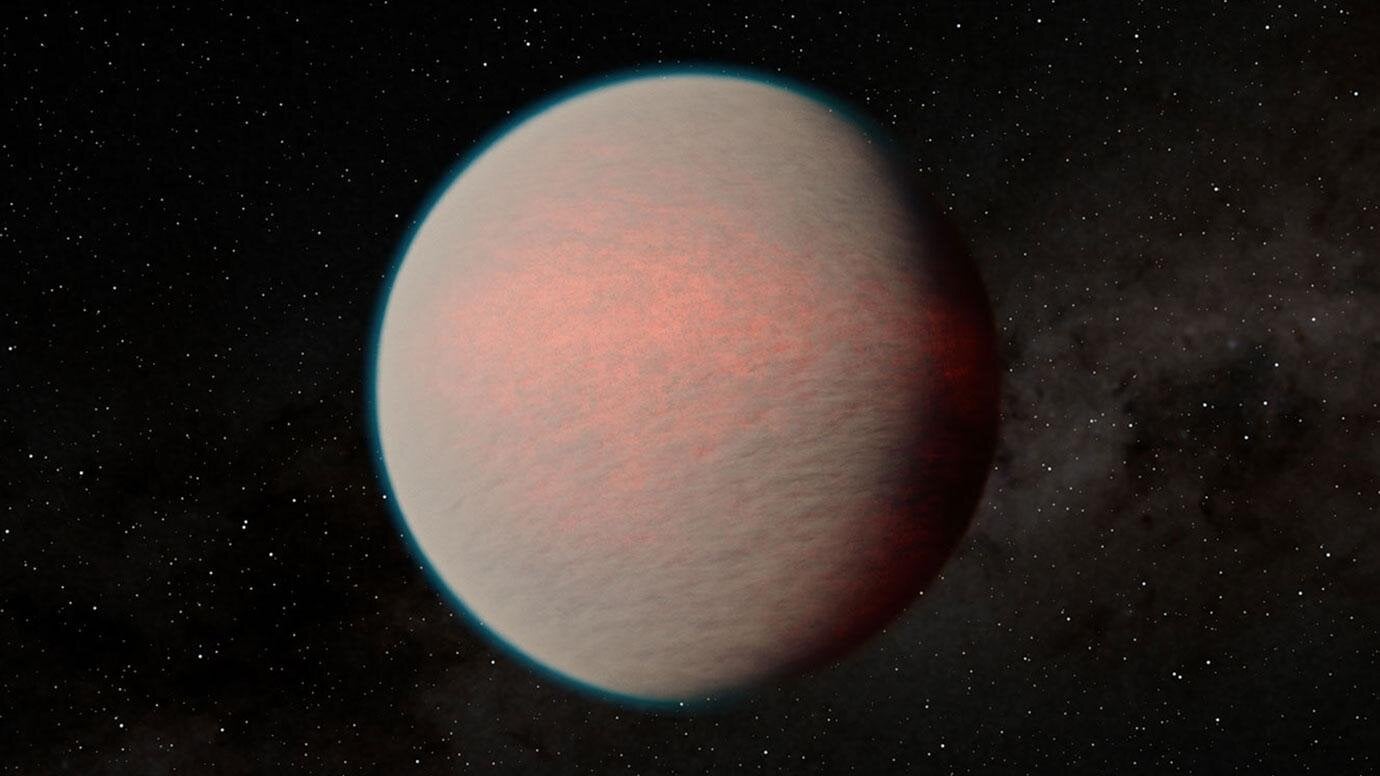
A new study suggests that many mini-Neptunes, previously thought to be covered in magma oceans, may actually have solid surfaces due to high atmospheric pressure compressing their rocky cores, challenging previous assumptions about these common exoplanets.
Scientists have discovered that the absence of super-Earths and mini-Neptunes in space may be due to planetary migration, with some planets moving toward the hearts of their planetary systems early in their lives. This migration could explain the scarcity of planets between 1.6 and 2.2 times the size of Earth, known as the "radius valley." Research suggests that mini-Neptunes migrating inward develop thick water atmospheres, increasing their radii, while super-Earths lose their atmospheres due to intense radiation, causing them to shrink. These findings could have implications for exoplanet science and the potential existence of water worlds with deep oceans.
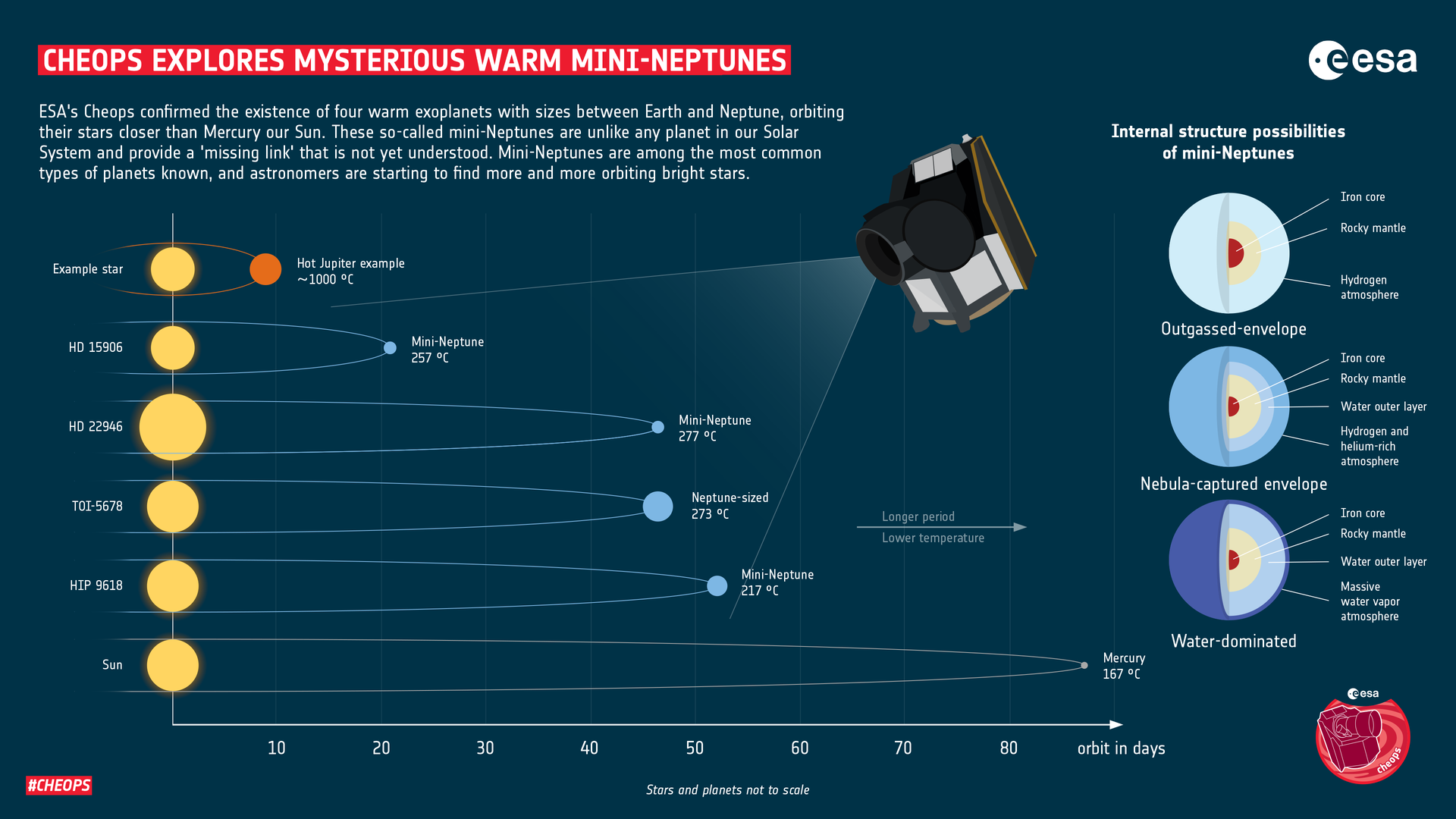
Astronomers have discovered four new "mini-Neptunes" exoplanets using the European Space Agency's exoplanet-hunting spacecraft, CHEOPS, after NASA's Transiting Exoplanet Survey Satellite (TESS) first tipped them off to the presence of these exoplanets. The newly found planets orbit different stars and are around the size of Neptune or slightly smaller, or about two to five times the size of Earth. The mini-Neptunes are farther out from their parent stars than typical hot Jupiters are, and their relatively cool temperatures could mean they still have atmospheres and clouds that the James Webb Space Telescope (JWST) could investigate.
Astronomers have discovered four "mini Neptunes" exoplanets using NASA and ESA satellites, which are smaller and cooler than "hot Jupiters" found throughout the galaxy. These planets provide a "missing link" between Earth twins and Neptune-like planets. Scientists are interested in mini Neptunes to learn more about the evolution of planets, but they still elude experts as they are not sure what they are made of or how they formed. The four exoplanets have orbits of 21 to 53 days around four different stars, and their discovery adds to the growing sample of worlds with longer orbits around their host stars, more like the planets found in our own solar system.
ESA's exoplanet mission Cheops has confirmed the existence of four warm mini-Neptunes orbiting four stars in our Milky Way, providing a 'missing link' between Earth-like and Neptune-like planets. These planets are smaller, cooler, and more difficult to find than hot Jupiters. The discovery of these planets is essential as it brings our sample of known exoplanets closer to the longer orbits that we find in our own Solar System. The composition of mini-Neptunes is still unknown, and further studies are needed to understand how these bodies formed. The newly confirmed exoplanets are perfect candidates for a follow-up visit by the James Webb Space Telescope or ESA's future Ariel mission.
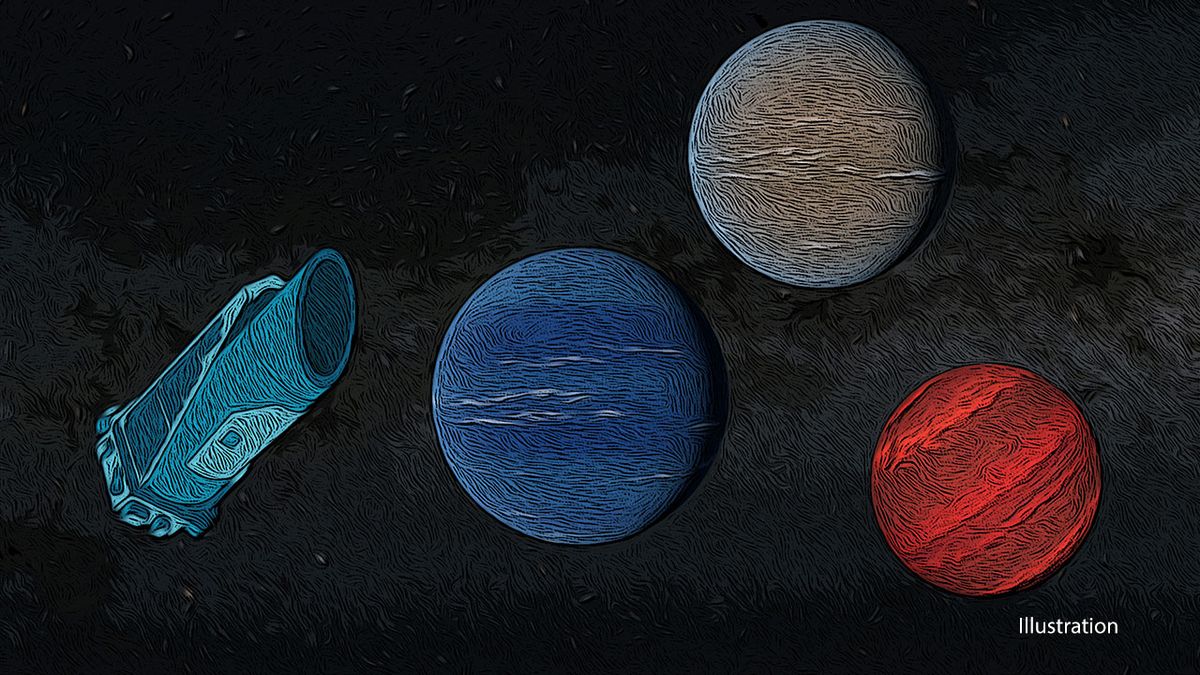
NASA's Kepler Space Telescope discovered two mini-Neptune exoplanets and one candidate planet in its final dataset just before running out of fuel and shutting down in late 2018. The planets were found by a team of astrophysicists and citizen scientists who combed through the last chunk of data that Kepler sent home. The two confirmed planets, K2-416 b and K2-417 b, are smaller than Neptune and are likely uninhabitable due to their hot, tenuous atmospheres. The third candidate planet has not been confirmed yet.