Tag

Suns Atmosphere

All articles tagged with #suns atmosphere

NASA’s Parker Probe Reveals New Details of the Sun's Outer Boundary

Originally Published 27 days ago — by Space

Featured image for NASA’s Parker Probe Reveals New Details of the Sun's Outer Boundary
Source: Space

Scientists have created the first detailed maps of the sun's outer atmosphere boundary, called the Alfvén surface, revealing that it becomes larger, rougher, and more jagged during solar maximum, using data from NASA's Parker Solar Probe and other spacecraft, which helps improve understanding of solar wind and space weather prediction.
NASA’s Parker Probe Reveals Stunning New Details of the Sun

Originally Published 5 months ago — by Indian Defence Review

Featured image for NASA’s Parker Probe Reveals Stunning New Details of the Sun
Source: Indian Defence Review

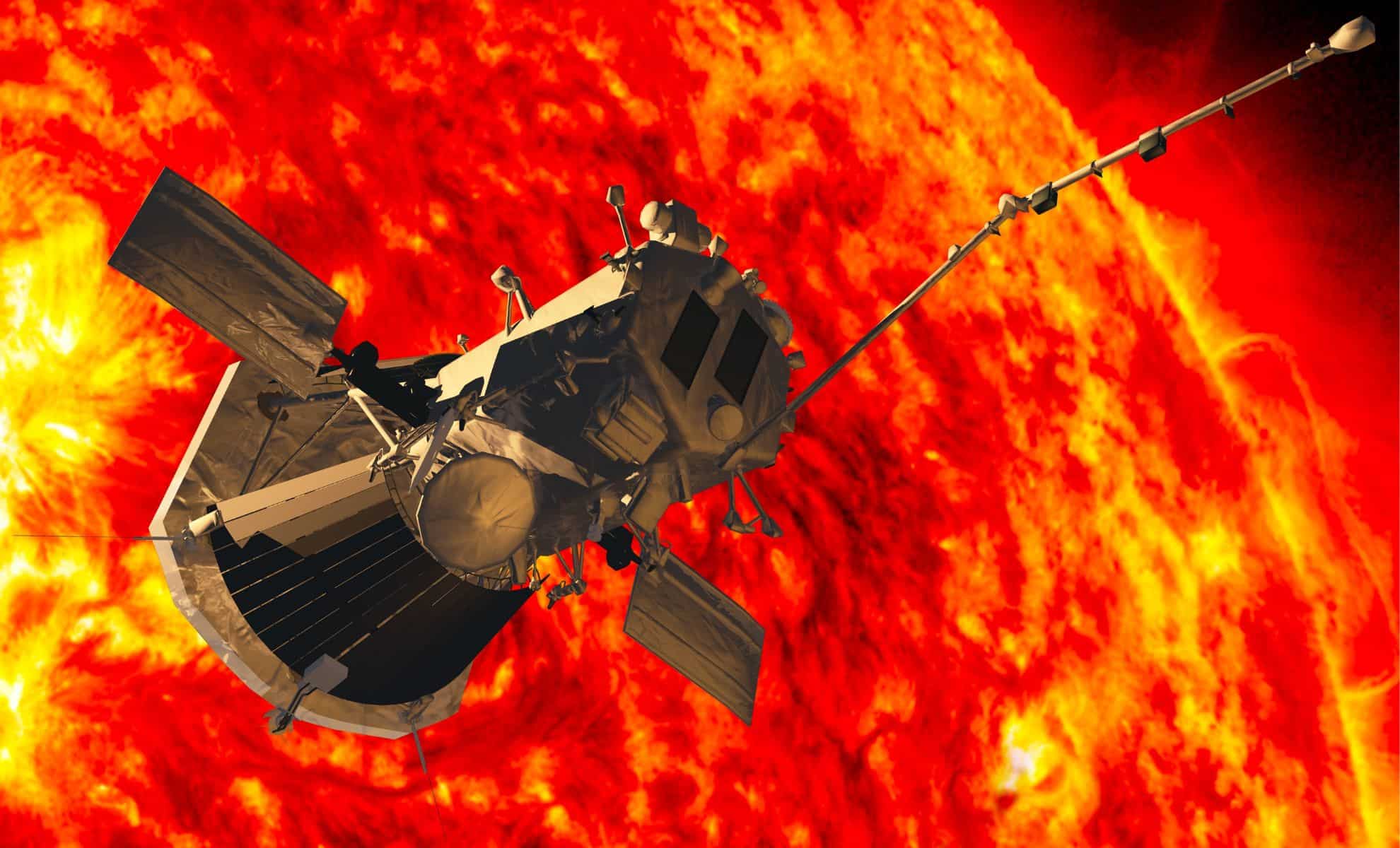
NASA's Parker Solar Probe has provided the closest and most detailed images of the Sun's atmosphere, revealing the origins of solar wind and space weather phenomena, including the behavior of coronal mass ejections and the structure of the solar magnetic field, which are crucial for improving space weather predictions and protecting Earth and space assets.

Photographer Captures Stunning Images of Solar Tornadoes

Originally Published 6 months ago — by National Geographic

Featured image for Photographer Captures Stunning Images of Solar Tornadoes
Source: National Geographic

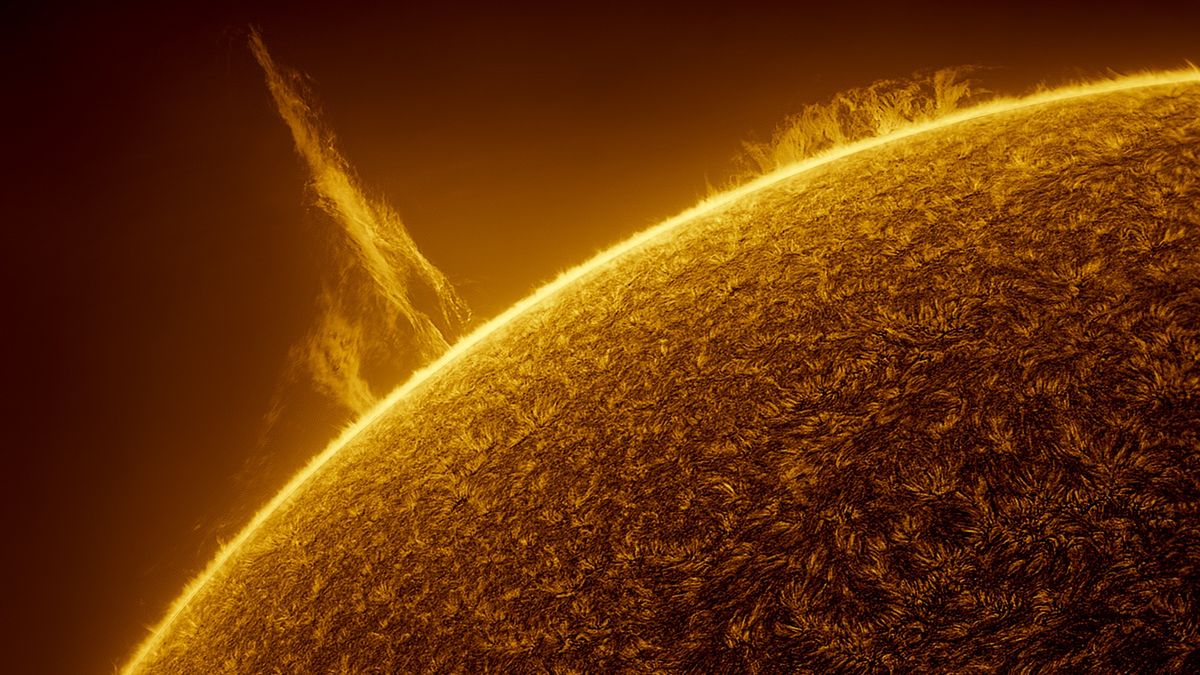
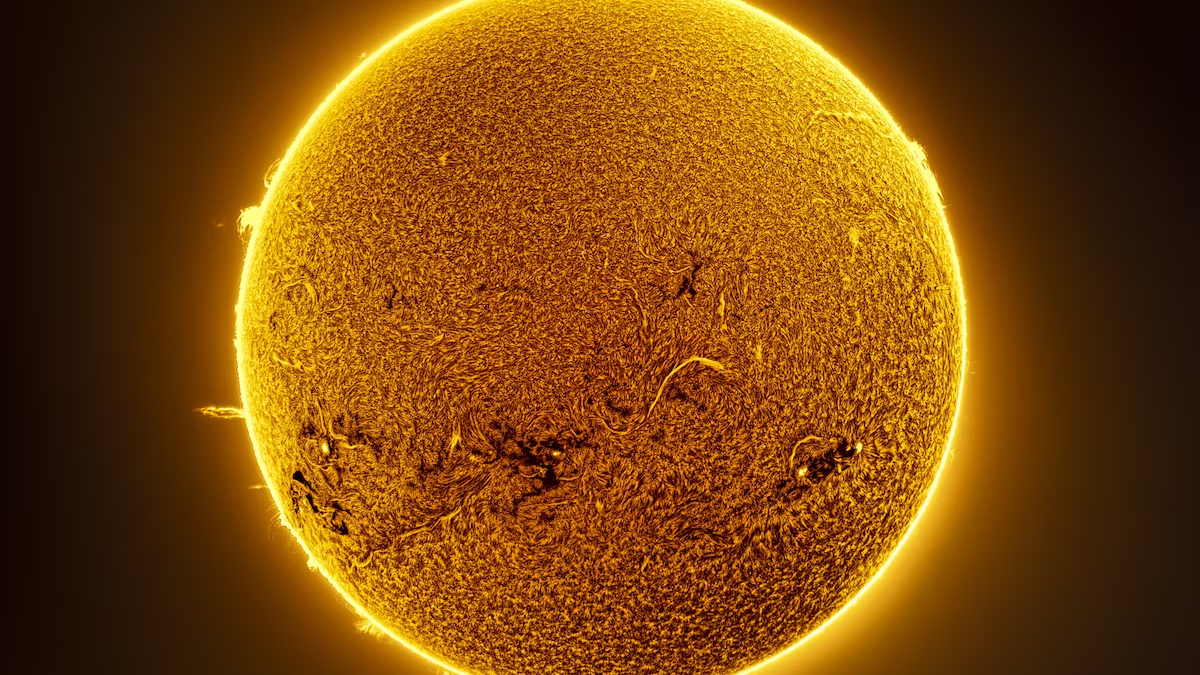
Portuguese astrophotographer Miguel Claro captured stunning images of solar phenomena, including solar tornadoes, prominences, and storms, showcasing the sun's dynamic and complex atmosphere, with some events like solar storms impacting Earth and producing auroras.

"Unveiling the Mystery: NASA's Discovery of Enormous Pink 'Flames' During Total Solar Eclipse"

Originally Published 1 year ago — by Livescience.com

Featured image for "Unveiling the Mystery: NASA's Discovery of Enormous Pink 'Flames' During Total Solar Eclipse"
Source: Livescience.com

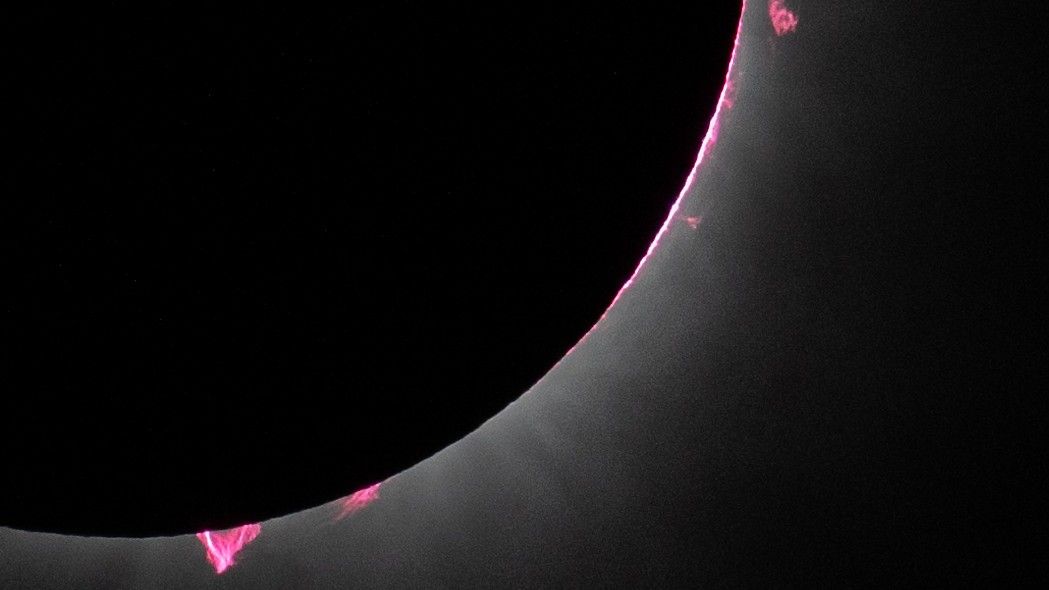
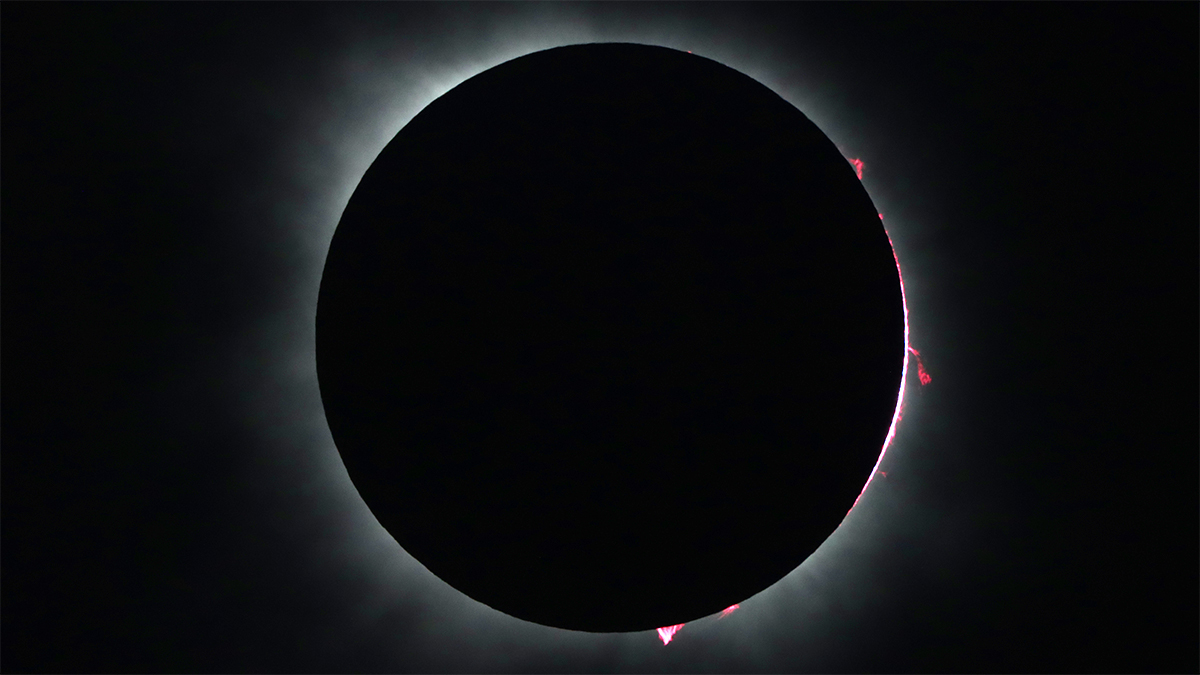
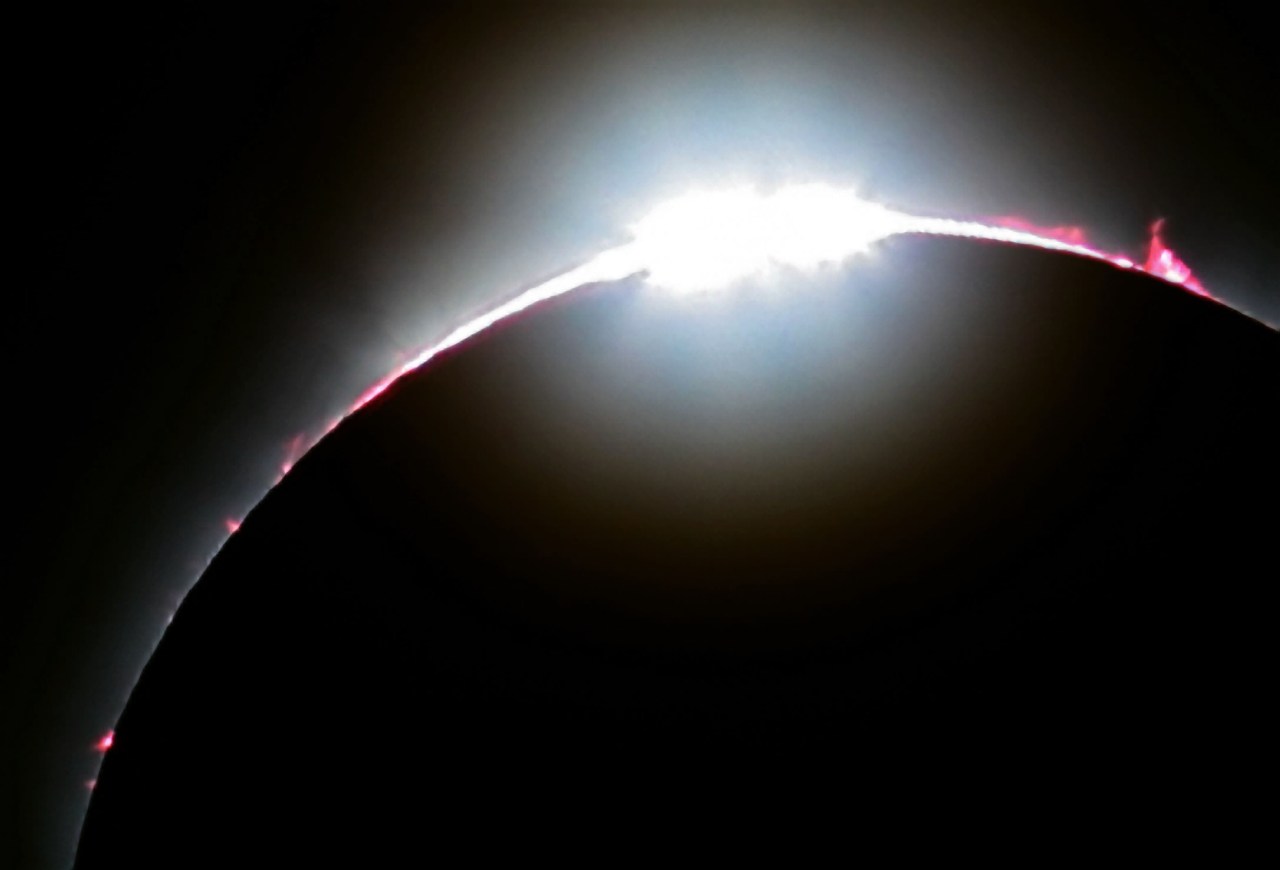
During the total solar eclipse on April 8, 2024, NASA captured a rare image showing pink towers of plasma, known as solar prominences, erupting from the sun's surface. These structures, which are not solar flares, are large and often looping towers of plasma that stand anchored on the sun's surface for weeks or months. The pinkish hue of the prominences comes from the sun's hydrogen emitting a reddish light at high temperatures, and their visibility from nearly 93 million miles away highlights their incredible size. This phenomenon is just one of the many beautiful and elusive occurrences visible during a total solar eclipse.

"Unveiling the Mystery of the Red Blobs During the Total Solar Eclipse"

Originally Published 1 year ago — by NBC DFW

Featured image for "Unveiling the Mystery of the Red Blobs During the Total Solar Eclipse"
Source: NBC DFW

The red blotchy areas around the sun during the recent total solar eclipse were solar prominences, which are eruptions of plasma extending from the sun's surface along its magnetic field. Unlike solar flares and CMEs, prominences are anchored to the sun and have no impact on Earth. Solar flares are bursts of X-rays and energy that can cause disruptions to satellites and communications, while CMEs are slower and can lead to auroras when their charged particles interact with the Earth's atmosphere.

"Unveiling the Mysteries: Scientists' Goals for US Total Solar Eclipse"

Originally Published 1 year ago — by Phys.org

Featured image for "Unveiling the Mysteries: Scientists' Goals for US Total Solar Eclipse"
Source: Phys.org

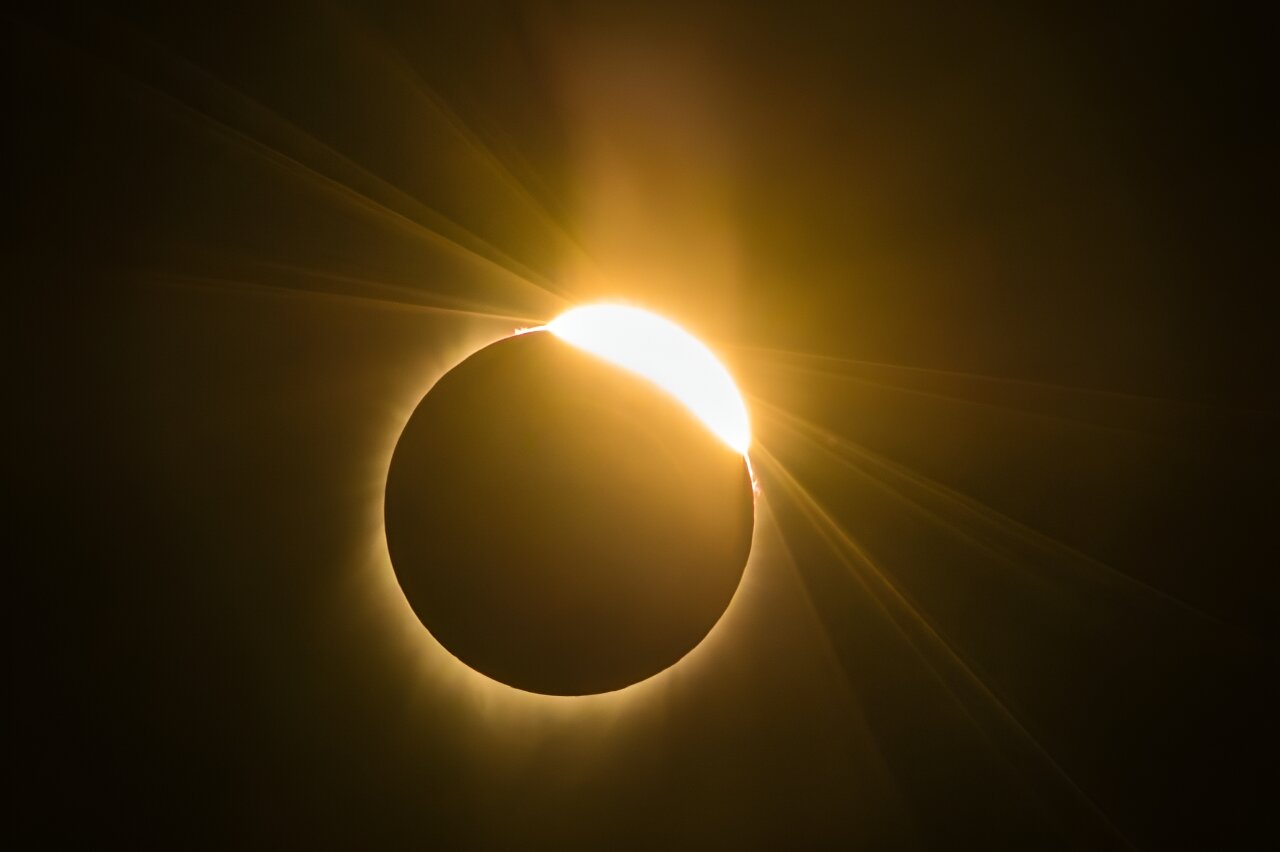
Scientists are gearing up to study the upcoming total solar eclipse in the US, hoping to gather data on the sun's atmosphere, Earth's ionosphere, animal behaviors, and human reactions. The eclipse, occurring near the peak of the sun's 11-year cycle, presents a rare opportunity to observe the sun's corona and its effects on Earth's upper atmosphere. Researchers also aim to study animal behaviors and human reactions, including the potential impact on political divisions, while engaging citizen scientists in various projects to capture the event's sights and sounds.

"Parker Solar Probe Captures Unprecedented Footage of Sun's Turbulent Vortex"

Originally Published 1 year ago — by Mashable

Featured image for "Parker Solar Probe Captures Unprecedented Footage of Sun's Turbulent Vortex"
Source: Mashable

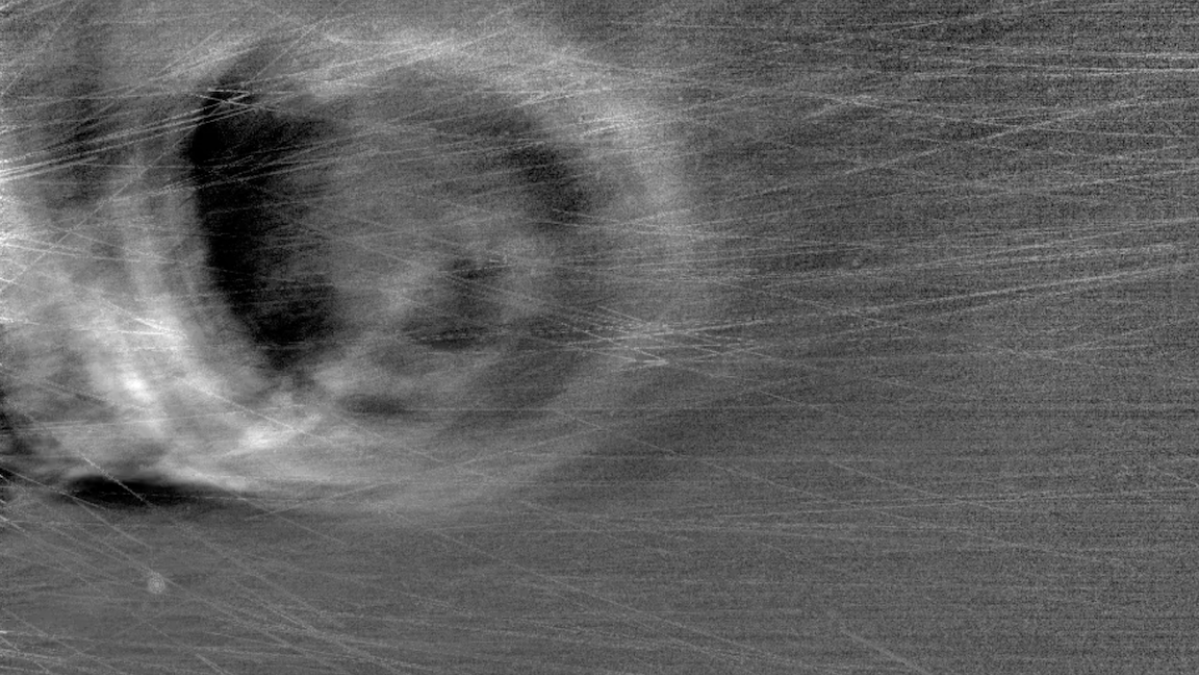
NASA's Parker Solar Probe captured footage of "vortex-like structures" in the sun's outer atmosphere, caused by a coronal mass ejection interacting with the solar wind. This discovery provides new opportunities to understand and predict CMEs, which can disrupt communications and electrical grids on Earth. The spacecraft, equipped with a 4.5-inch-thick carbon heat shield, will continue its dives into the sun's corona, reaching speeds of 430,000 miles per hour later this year.

"NASA Scientists Study Burning Sky During Eclipse"

Originally Published 1 year ago — by KXAN.com

Featured image for "NASA Scientists Study Burning Sky During Eclipse"
Source: KXAN.com

NASA scientists are gearing up to study the sun's atmosphere during the upcoming total solar eclipse, which will provide a rare opportunity to observe the lower atmosphere of the sun. Understanding the sun's atmosphere is crucial due to its impact on space weather and its effects on Earth. The eclipse will also facilitate citizen science experiments, including launching balloons to study the atmosphere as the shadow moves across, providing valuable insights into both the sun's atmosphere and our own.

Unveiling the Sun's Atmosphere: Solar Orbiter's Camera Hack Reveals Unprecedented Views

Originally Published 2 years ago — by Space.com

Featured image for Unveiling the Sun's Atmosphere: Solar Orbiter's Camera Hack Reveals Unprecedented Views
Source: Space.com

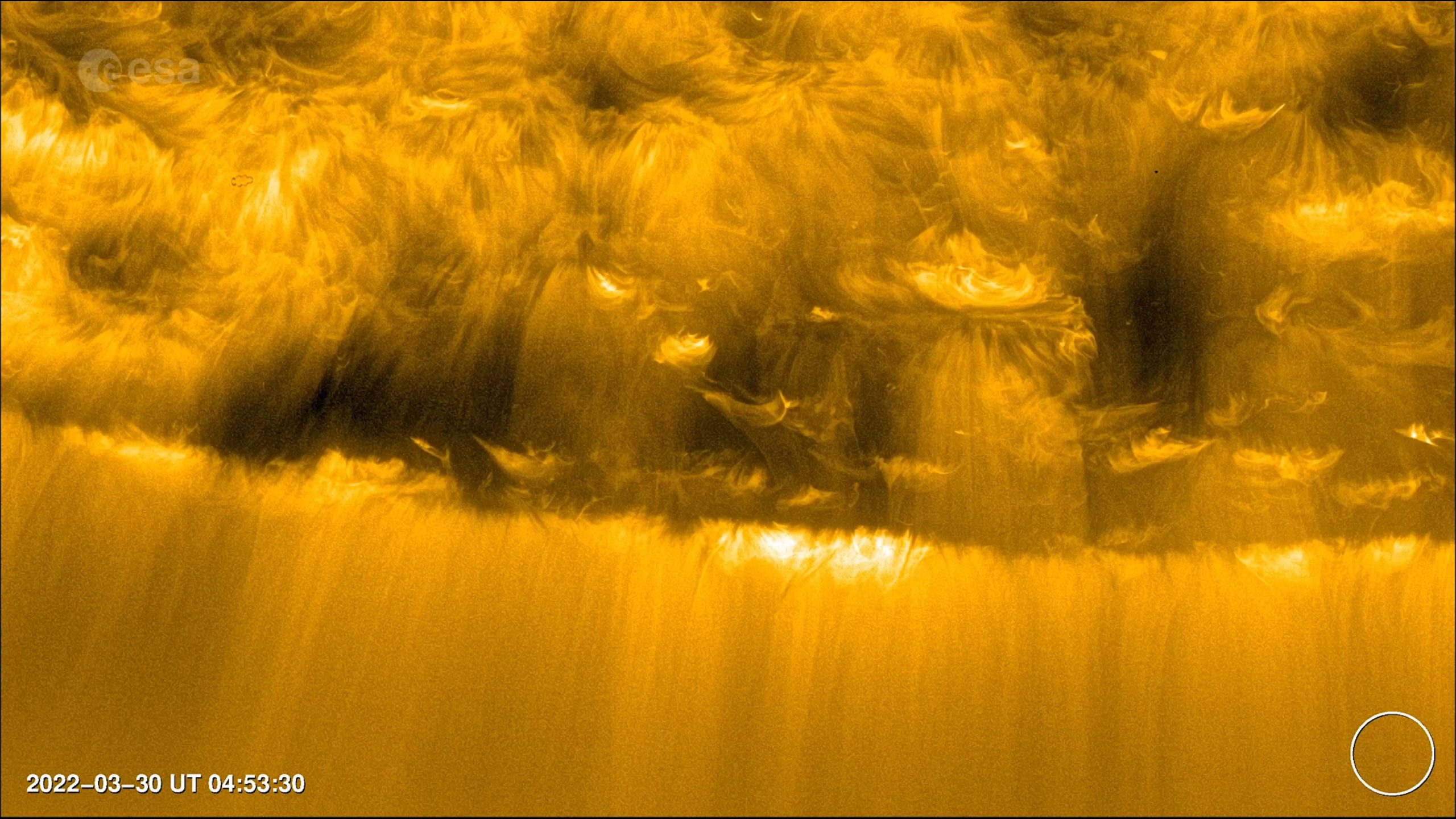
Scientists have discovered a new way to explore the sun's atmosphere using a simple hack on the European Solar Orbiter spacecraft's Extreme Ultraviolet Imager (EUI) camera. By modifying the camera's shutter, researchers were able to capture clear images of the faint solar atmosphere, allowing for the study of intriguing phenomena at the boundary between the sun's atmosphere and its surface. This new imaging mode provides a closer look at the sun's polar regions, which could help scientists understand the forces driving the sun's magnetic field and the generation of sunspots, solar flares, and eruptions.

Solar Orbiter's Camera Hack Reveals Hidden Depths of the Sun's Atmosphere

Originally Published 2 years ago — by European Space Agency

Featured image for Solar Orbiter's Camera Hack Reveals Hidden Depths of the Sun's Atmosphere
Source: European Space Agency

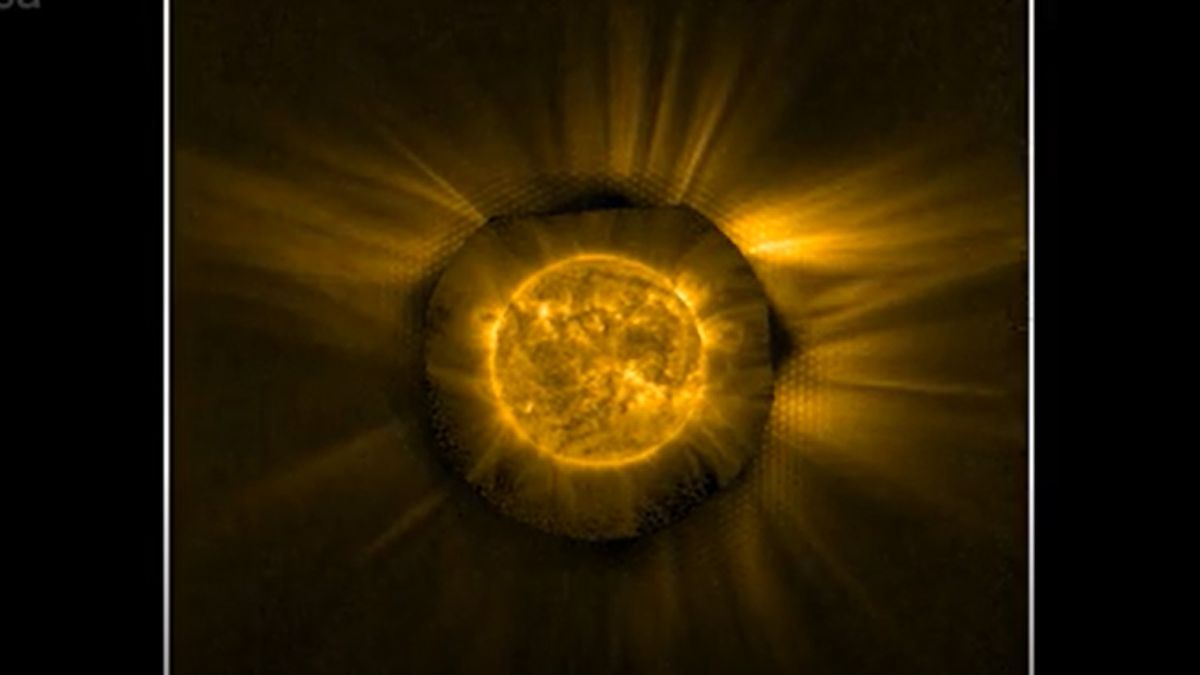
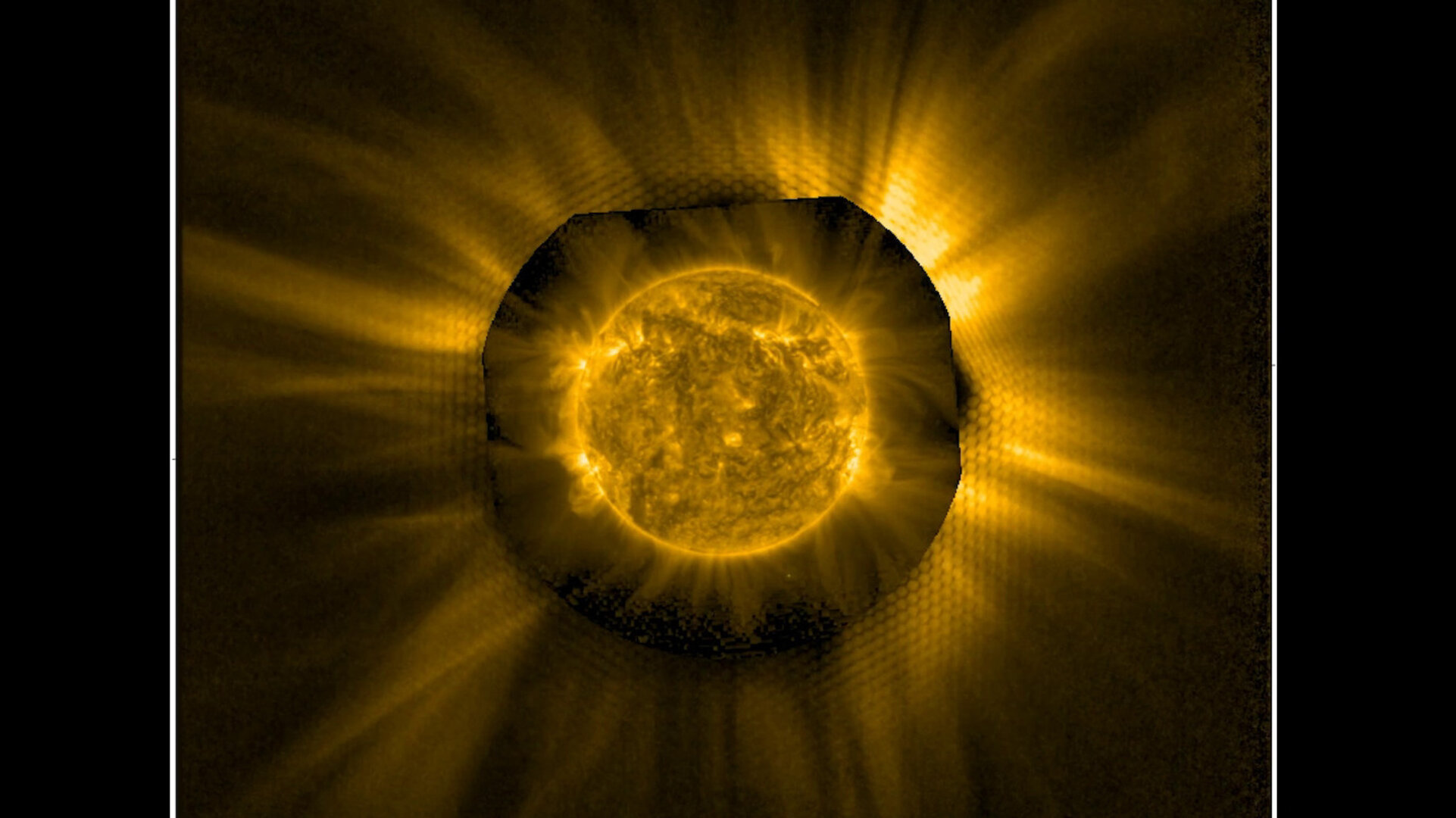
Scientists have successfully used a "hack" to modify Solar Orbiter's EUI camera, allowing it to capture high-resolution images of the Sun's atmosphere at extreme ultraviolet wavelengths. By adding a small protruding "thumb" to the camera's safety door, the modified instrument can now see deeper into the Sun's corona, revealing previously unexplored regions. This new mode of operation, known as the occulter mode, has the potential to influence future solar instruments for upcoming missions and offers the opportunity to study the changing magnetic structures and physics in this little-explored region.

Solar Orbiter Uncovers Tiny Jets Fueling Solar Wind

Originally Published 2 years ago — by SciTechDaily

Featured image for Solar Orbiter Uncovers Tiny Jets Fueling Solar Wind
Source: SciTechDaily

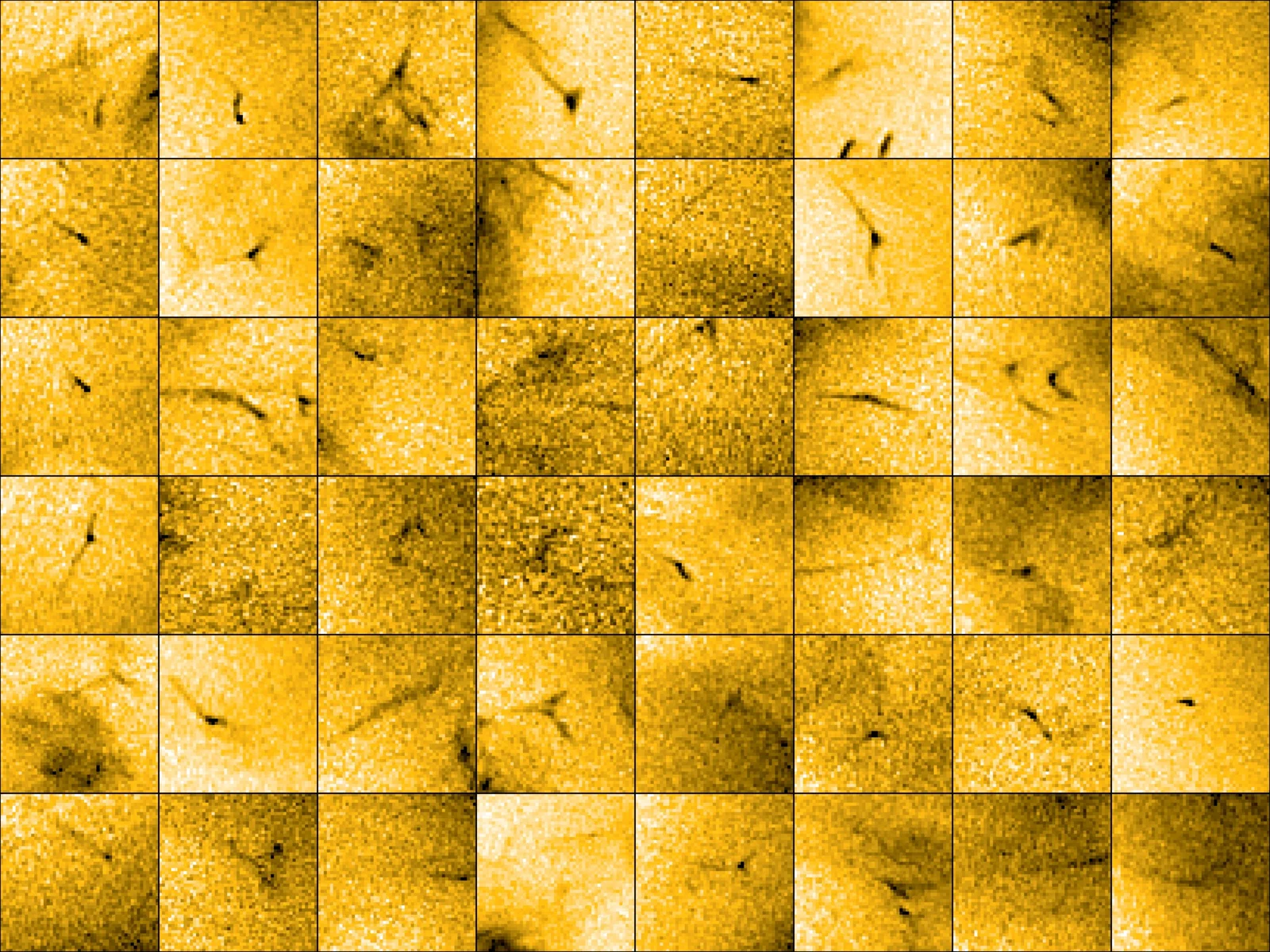
The Solar Orbiter spacecraft has discovered tiny jets of material escaping from the Sun's outer atmosphere, challenging traditional beliefs about the origin of the solar wind. Each jet lasts between 20 and 100 seconds and expels plasma at high speeds. These findings could have implications for understanding the solar wind's generation and other stars' atmospheres.

Solar Orbiter's Discovery: Tiny Jets Unveil the Power Behind Solar Winds

Originally Published 2 years ago — by Phys.org

Featured image for Solar Orbiter's Discovery: Tiny Jets Unveil the Power Behind Solar Winds
Source: Phys.org

The Solar Orbiter spacecraft has discovered a multitude of tiny jets of material escaping from the sun's outer atmosphere, which could be the source of the solar wind. Each jet lasts between 20 and 100 seconds and expels plasma at around 100 km/s. These findings challenge the assumption that the solar wind is produced only in a steady continuous flow and suggest that it may originate as a highly intermittent outflow. The energy associated with each individual jet is small, but their ubiquity implies that they contribute significantly to the solar wind. Further observations from different perspectives and latitudes are expected to provide more insights into this fundamental astrophysical process.

"Spectacular Solar Tornado Captured in Mesmerizing Space Video"

Originally Published 2 years ago — by Space.com

Featured image for "Spectacular Solar Tornado Captured in Mesmerizing Space Video"
Source: Space.com

Astrophotographer Miguel Claro captured a stunning solar tornado in motion above the sun's atmosphere. The tornado, caused by solar magnetic fields twisting in a spiral, was captured in a 4K high-resolution solar movie comprising 290 images over the course of about two hours. The footage shows the evolution of the giant plasma shape, which grew in size during the photo session. The video also captured a possible coronal mass ejection, a stream of charged particles from the sun.