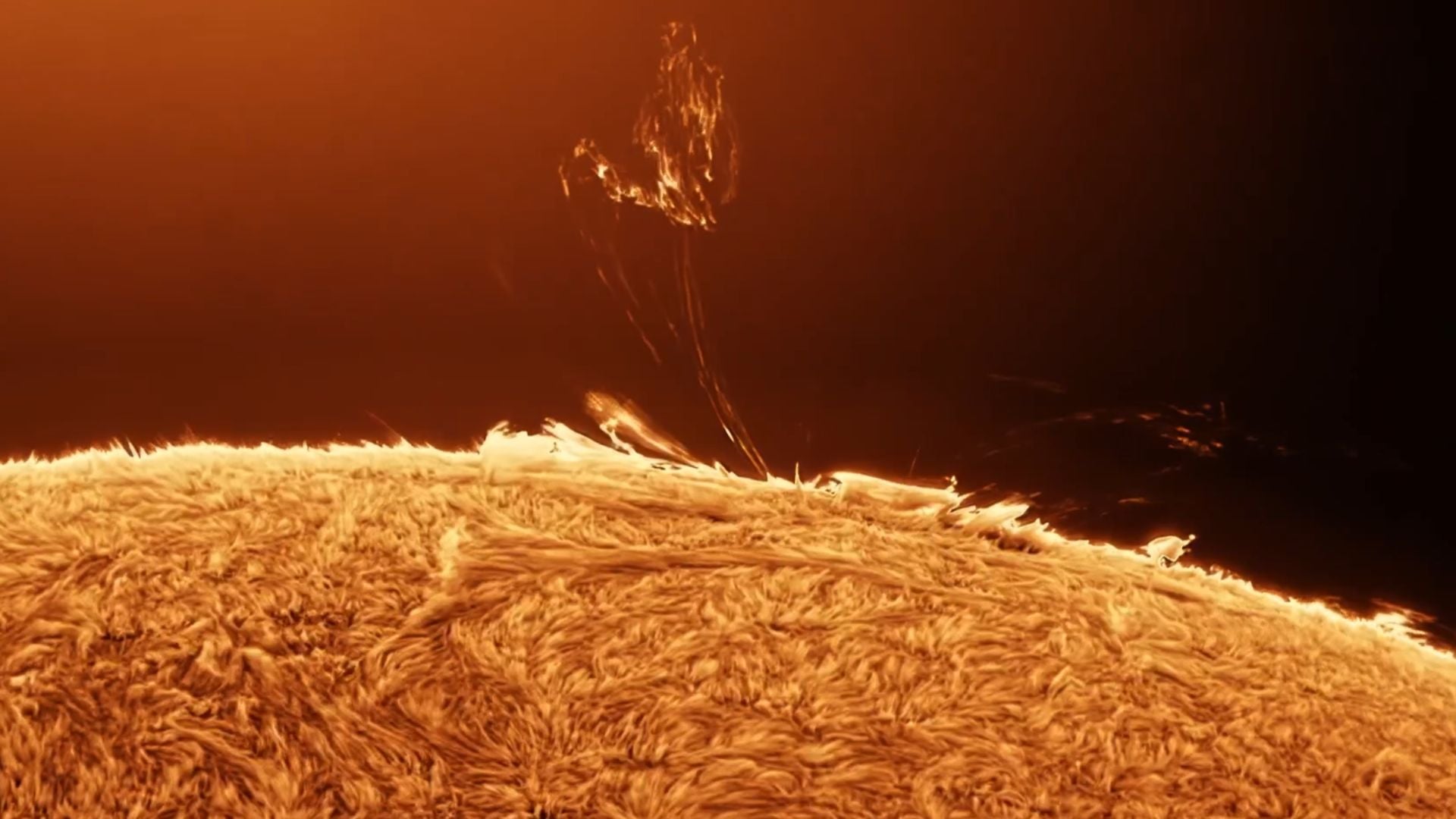
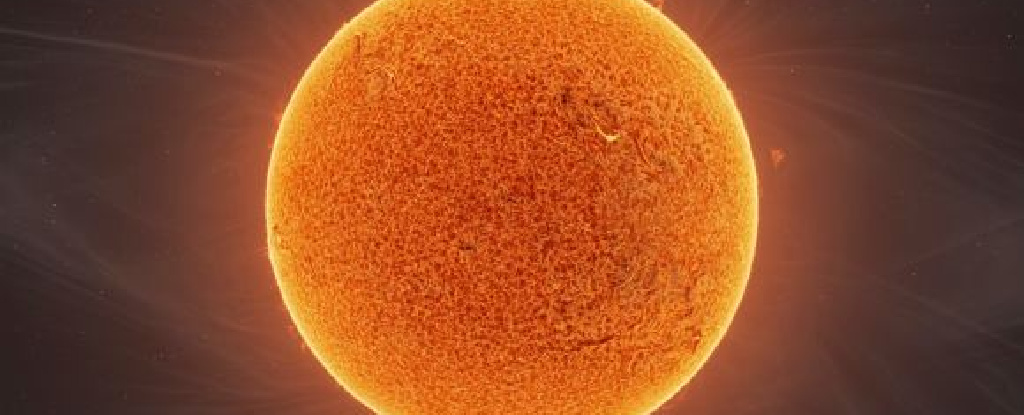
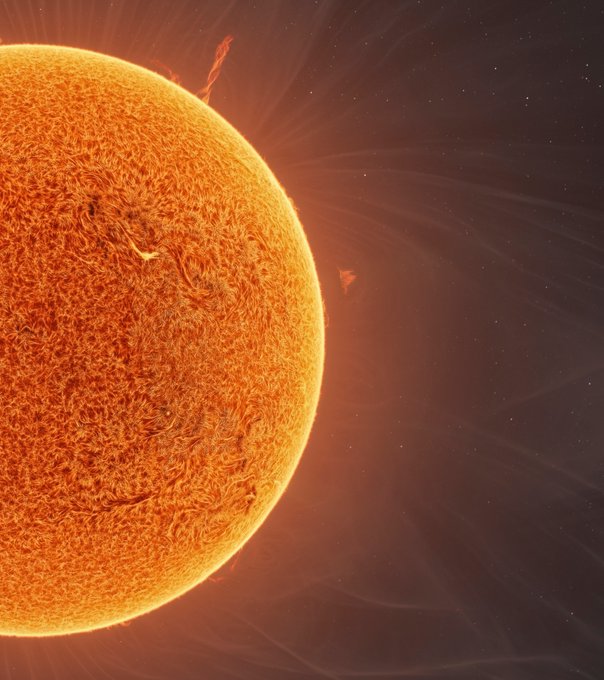
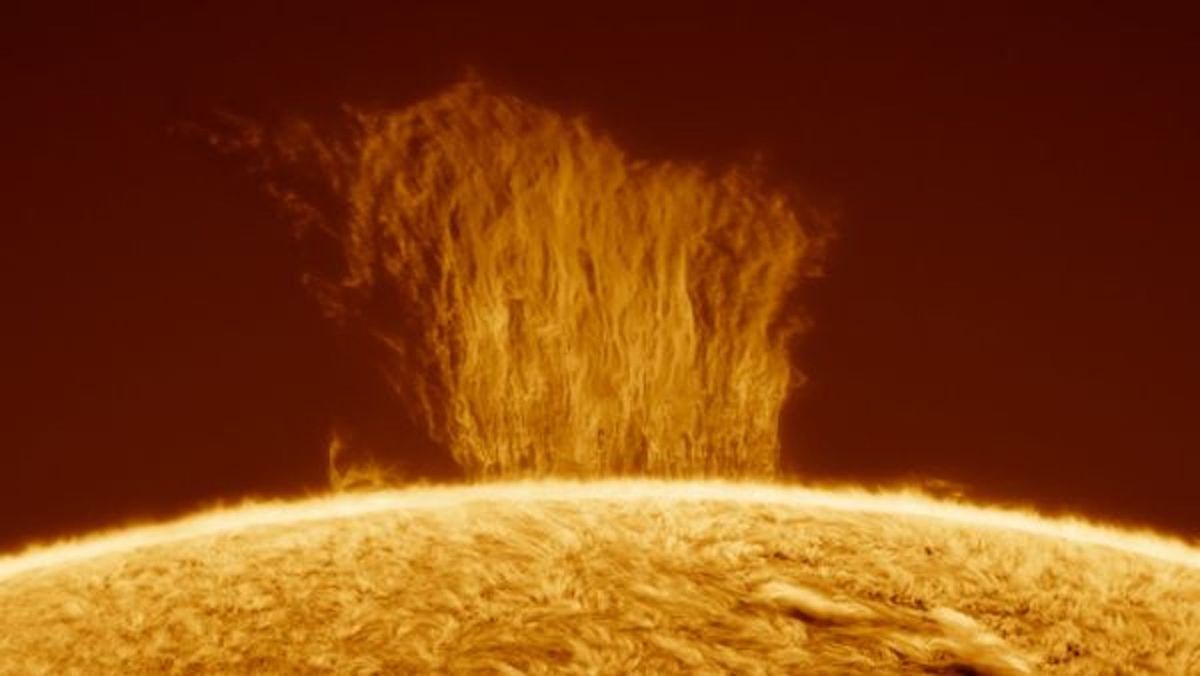
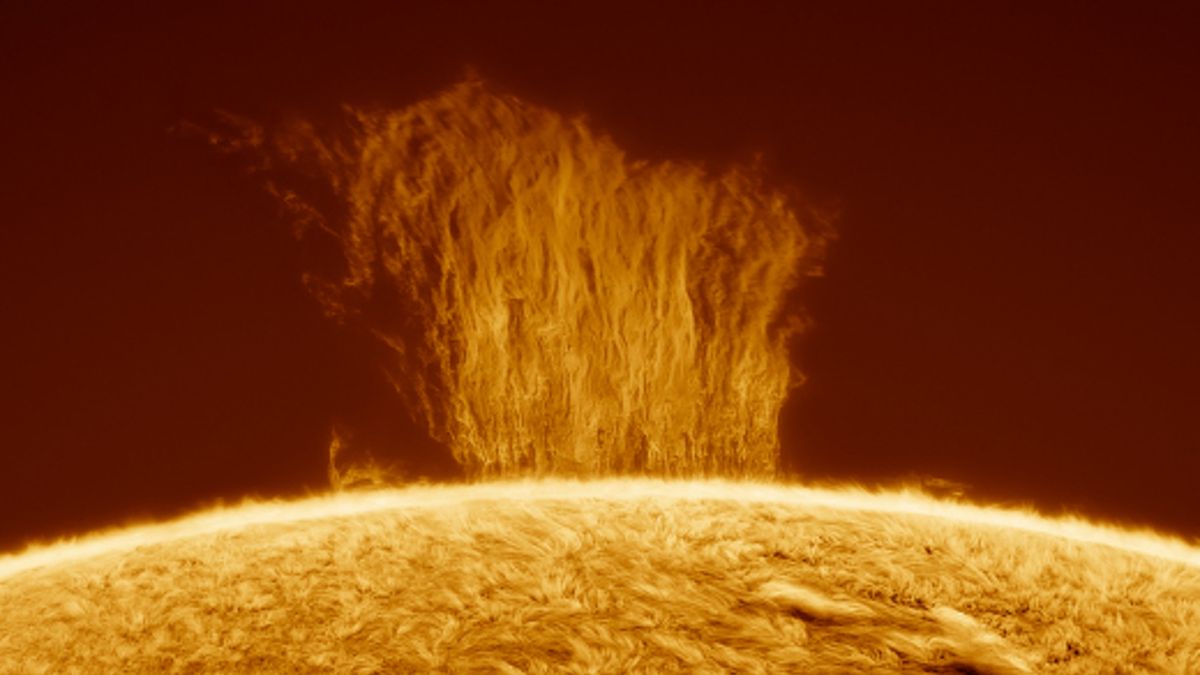
Astrophotographer Mark Johnston captured detailed footage of a solar prominence, a large plasma structure extending from the sun's surface, showcasing the dynamic magnetic environment of the sun with high-resolution imaging.
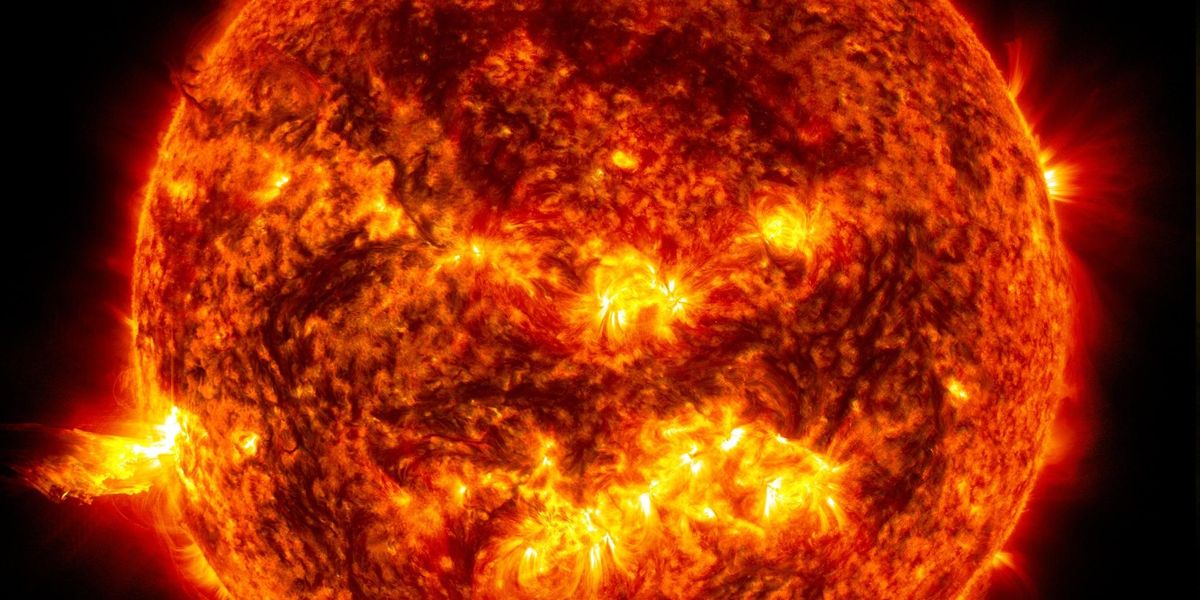
A rare simultaneous capture shows a giant solar tornado and a massive plasma eruption on the sun, both caused by magnetic field disturbances, with the tornado reaching over 80,000 miles high and the prominence spanning about 200,000 miles, highlighting the sun's dynamic activity during its solar maximum phase.
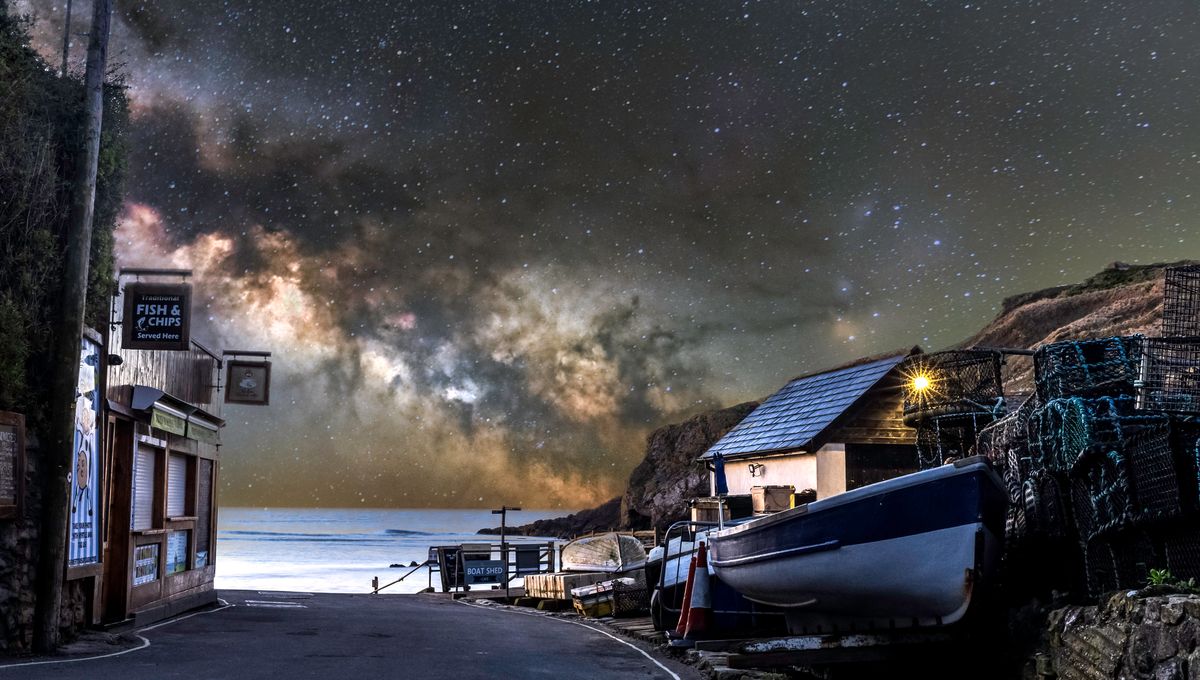
The article highlights the shortlisted entries for the Astronomy Photographer of the Year, showcasing stunning images of celestial phenomena such as nebulae, solar prominences, and a total solar eclipse, with the overall winner to be announced in September.
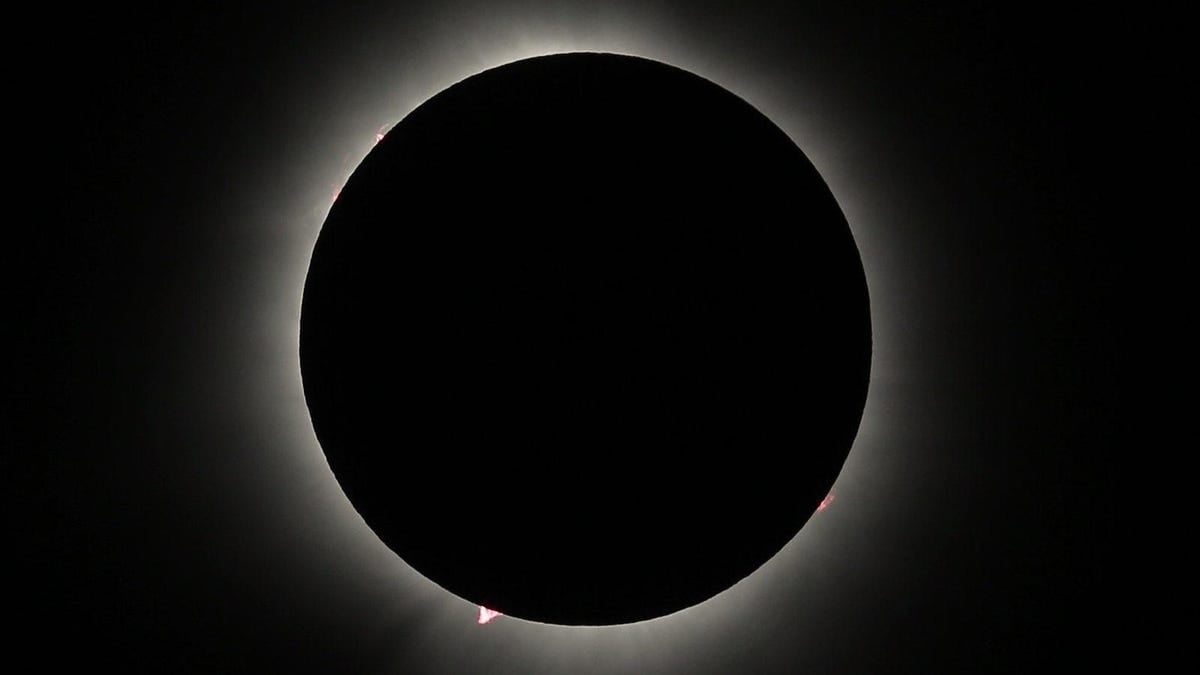
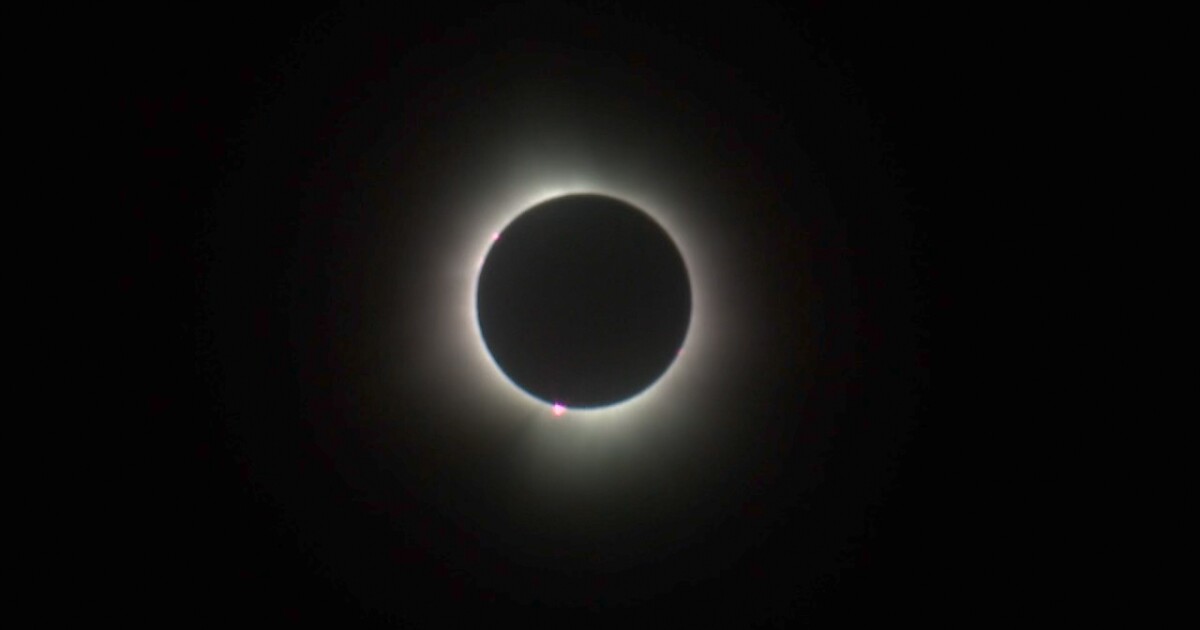
During the recent total solar eclipse, observers were treated to the sight of bright red dots along the Sun's perimeter, which were actually solar prominences—reddish or pinkish structures extending from the Sun's edge. These prominences, composed of plasma and anchored to the Sun's surface, are distinct from solar flares and are a result of the Sun's dynamic phase during its 11-year cycle. Astronomers eagerly anticipate studying these features during eclipses, and the recent event provided a rare opportunity for ground-based observers to witness these stellar phenomena firsthand.
During Monday's total solar eclipse, the Baily's Beads effect occurred before Northeast Ohio turned dark, and a rare red burst known as a solar prominence was visible at the bottom of the moon during totality, caused by plasma bursting out from the sun's surface, a phenomenon typically unseen with the naked eye. This occurrence was described as a gift from nature by meteorologist Trent Magill.
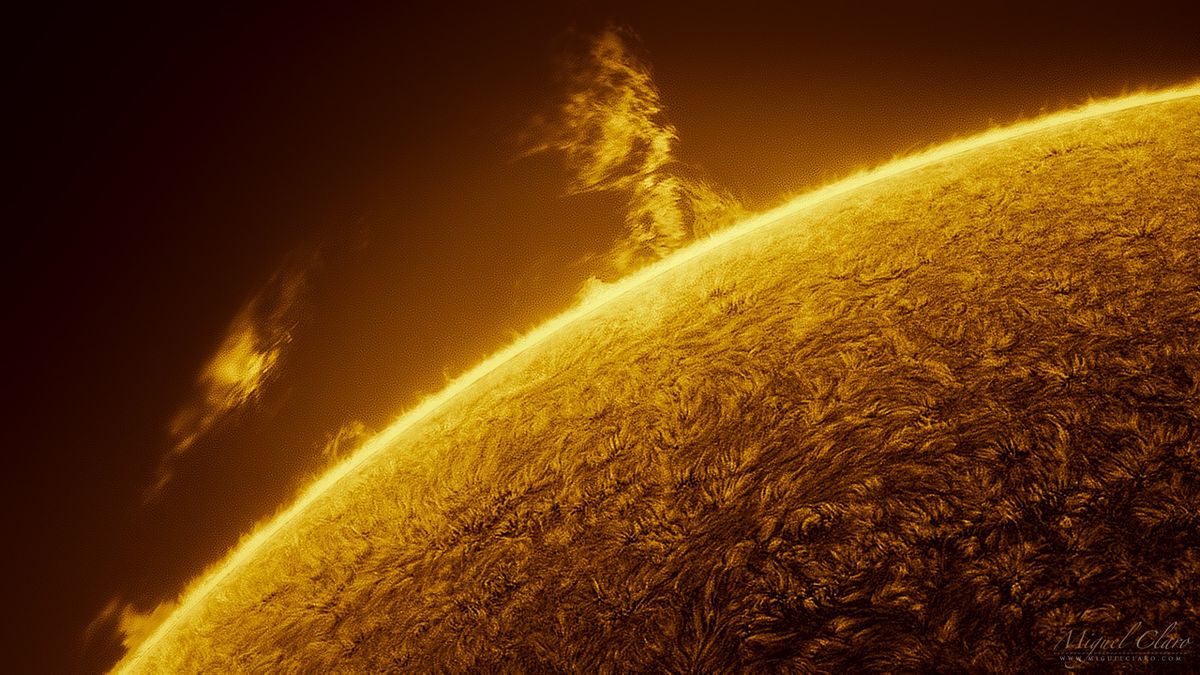
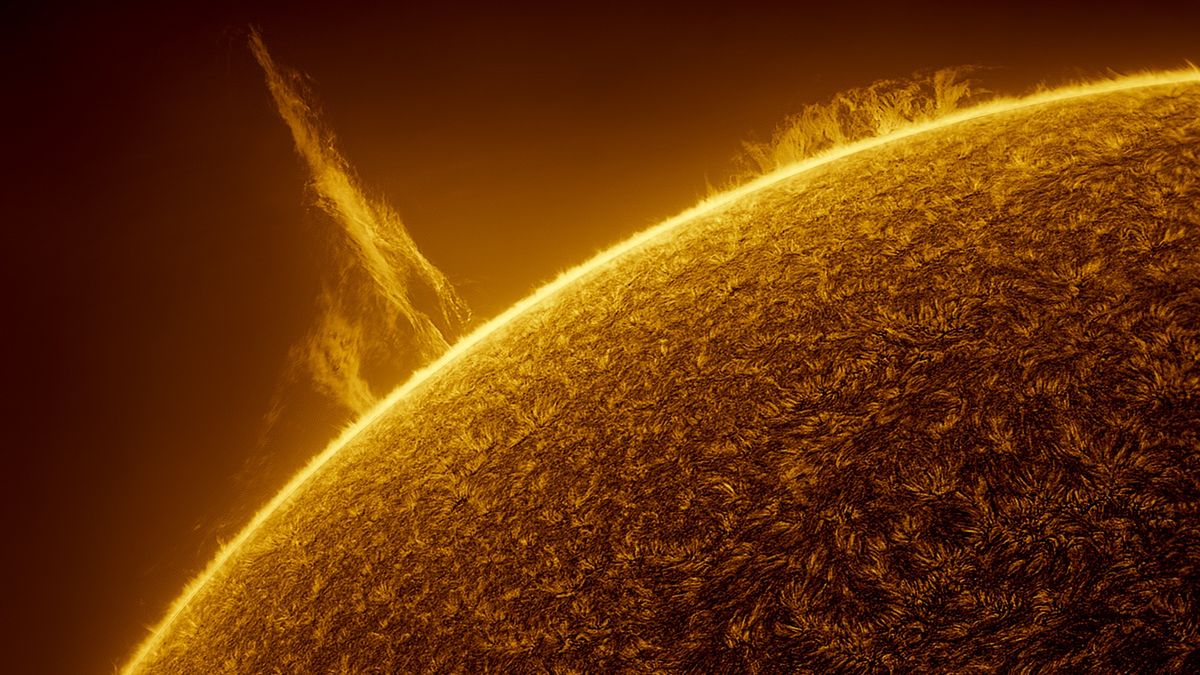
Astrophotographer Miguel Claro captured incredible footage of a gigantic solar prominence on Feb. 22, 2022, as it blasted a large coronal mass ejection (CME) into space. The prominence, a large loop of plasma flowing along twisted magnetic fields on the sun's surface, appeared so tall that dozens of Earths could fit inside it. Claro's high-resolution solar movie, comprising around 2 hours and 15 minutes, was captured from the Dark Sky® Alqueva region of Portugal. With a total solar eclipse approaching on April 8, 2024, he advises taking precautions when photographing the sun, emphasizing the danger of looking directly at it without the right equipment.
Scientists have observed a section of the sun breaking away from the surface and circulating around the star's north pole like a massive polar vortex. The cause of this phenomenon is unclear, but it may be related to the reversal of the sun's magnetic field and a known occurrence when the sun reaches a 55-degree latitude in its 11-year solar cycle. Solar physicists are intrigued by this behavior and are seeking to understand why it only happens once and then reappears in the same region years later.
Scientists have observed a section of the sun breaking away from the surface and circulating around the star's north pole like a massive polar vortex. The cause of this phenomenon is unclear, but it may be related to the reversal of the sun's magnetic field and a known occurrence when the sun reaches a 55-degree latitude in its 11-year solar cycle. Solar physicists are intrigued by this behavior and are seeking to understand why it only happens once and then reappears in the same region years later.
Astrophotographer Miguel Claro captured a stunning solar tornado in motion above the sun's atmosphere. The tornado, caused by solar magnetic fields twisting in a spiral, was captured in a 4K high-resolution solar movie comprising 290 images over the course of about two hours. The footage shows the evolution of the giant plasma shape, which grew in size during the photo session. The video also captured a possible coronal mass ejection, a stream of charged particles from the sun.
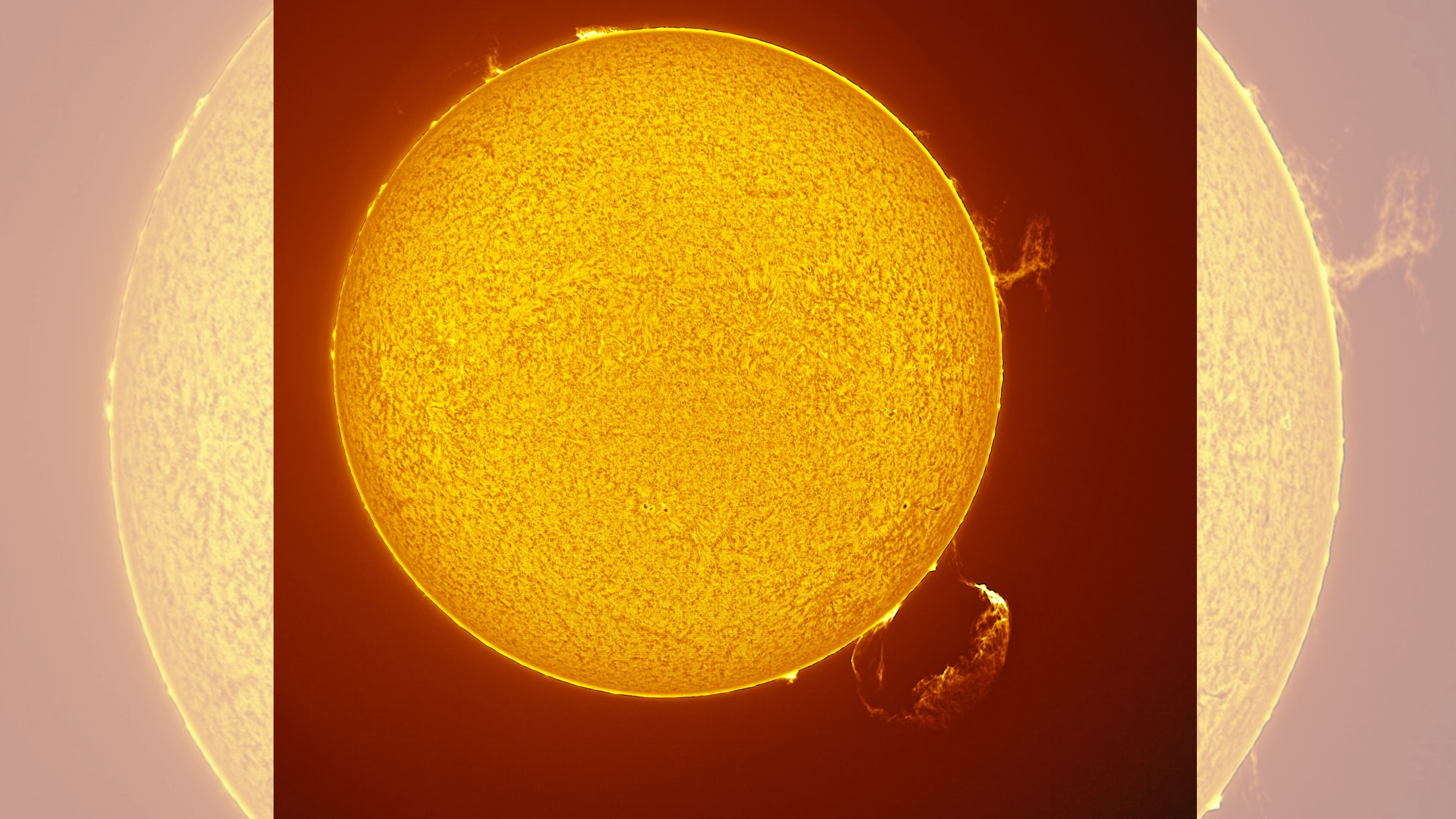
Amateur astrophotographer Andrew McCarthy captured a video of a tornado-like solar prominence on the Sun's surface, which was raining moon-sized gobs of incandescent material. McCarthy imaged the sequence using a modified telescope that can observe the Sun's atmosphere in hydrogen-alpha band using hundreds of thousands of images over a few hours. The solar prominence is a mass of plasma caught in a magnetic loop, drawing it away from the photosphere and over a hundred thousand miles into space. McCarthy collaborated with colleague Jason Guenzel to produce a 140-megapixel still image of the Sun with the tornado visible in the upper portion of the image.
Amateur astrophotographer Andrew McCarthy captured a video of a tornado-like solar prominence on the Sun's surface using a modified telescope that can observe the Sun's atmosphere in hydrogen-alpha band. The feature was a mass of plasma caught in a magnetic loop, drawing it away from the photosphere and over a hundred thousand miles into space. McCarthy collaborated with colleague Jason Guenzel to produce a 140 megapixel still image of the Sun with the tornado visible in the upper portion of the image. The Sun has layers just like the Earth and other celestial objects, including the photosphere, chromosphere, solar prominence, and corona.
Astrophotographer Eduardo Schaberger Poupeau captured an image of a polar crown prominence (PCP), also known as a plasma waterfall, on March 9 using specialized camera equipment. The plasma wall rose 62,000 miles above the solar surface and traveled downwards at speeds of up to 22,370 mph. PCPs occur near the sun's magnetic poles and are of interest to solar physicists and nuclear physicists. PCPs could become more frequent and intense as the sun ramps up to a peak in its 11-year solar cycle known as the solar maximum.
Astrophotographer Eduardo Schaberger Poupeau captured an image of a polar crown prominence (PCP), an enormous wall of plasma falling towards the solar surface at impossibly fast speeds after being ejected near the sun's south pole. The plasma wall rose 62,000 miles above the solar surface, as tall as eight Earths stacked on top of one another. PCPs occur near the sun's magnetic poles and are similar to normal solar prominences, but they often collapse back towards the sun because the magnetic fields near the poles are much stronger. The plasma within PCPs travels downwards at speeds of up to 22,370 mph, much faster than the magnetic fields should allow based on experts' calculations.