Netflix's drama 'Steve,' starring Cillian Murphy, is a chaotic yet compelling film set in the 1990s about a reform school principal navigating a tumultuous 24 hours, praised for Murphy's powerful performance despite its chaotic execution and mixed emotional impact.
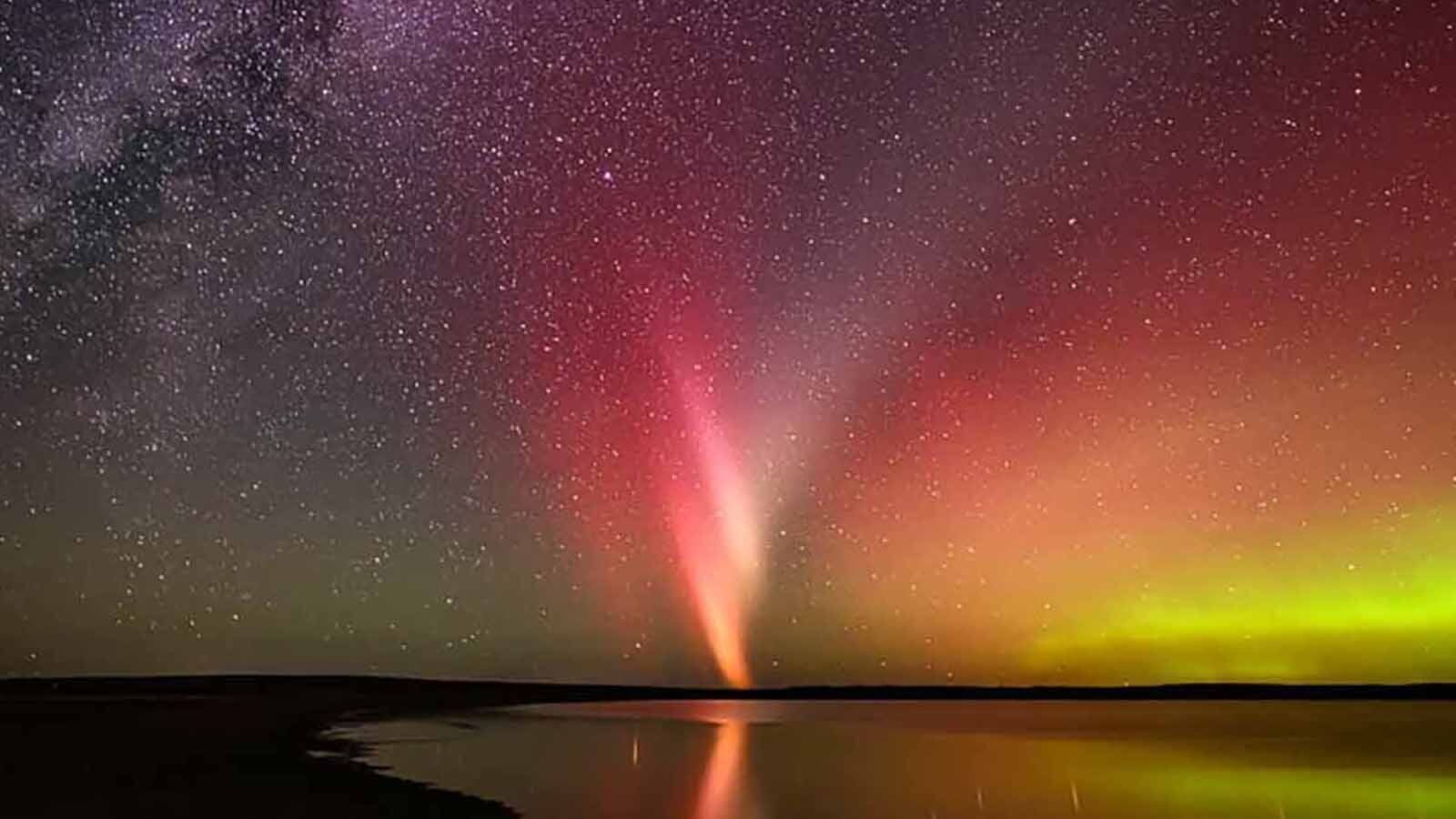
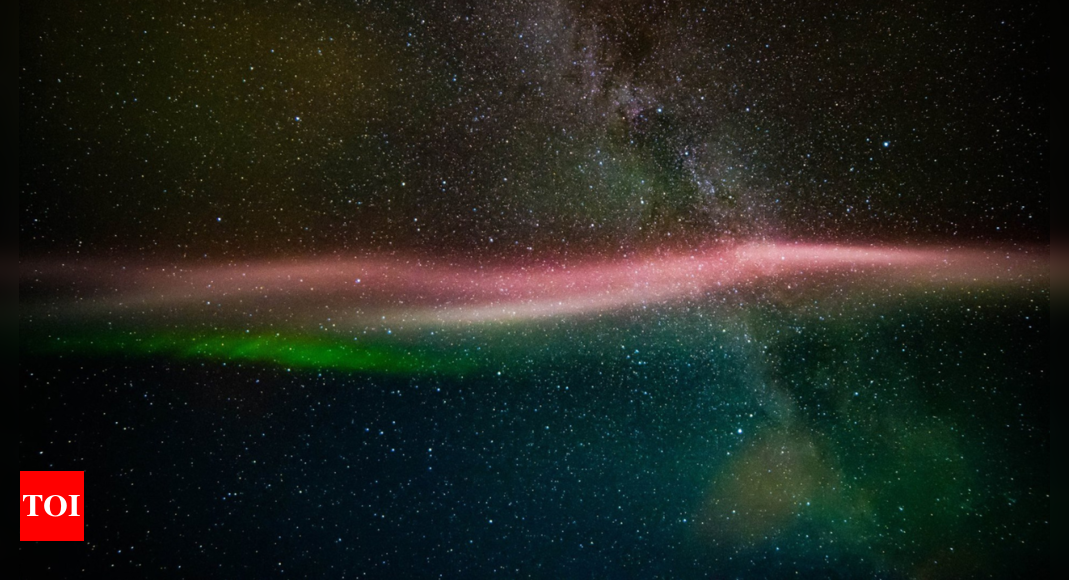
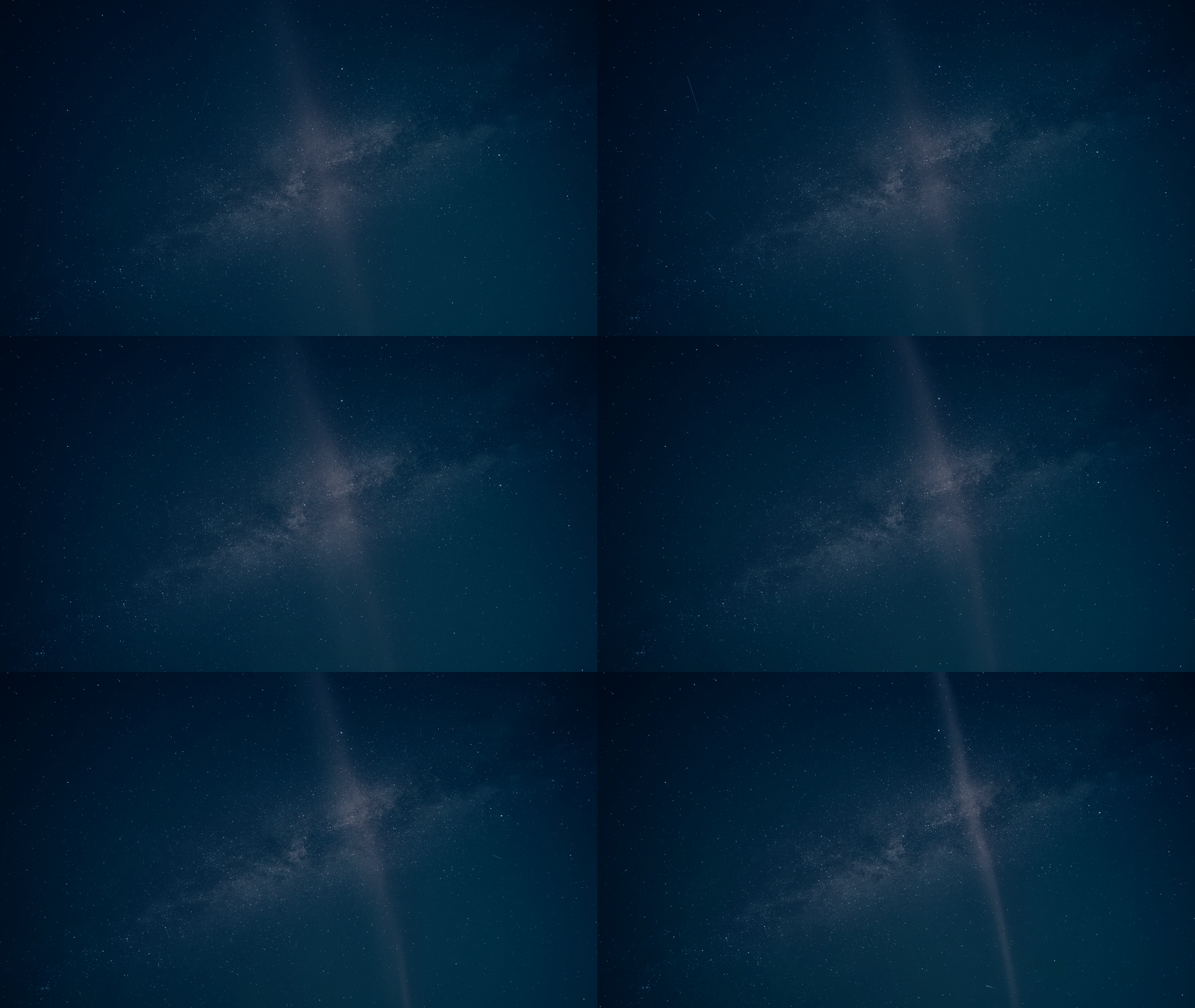
A rare and spectacular atmospheric phenomenon called STEVE, a ribbon of super-hot plasma, was observed during a strong aurora in Wyoming, visible for over 30 minutes and captured by local enthusiasts, highlighting its infrequent and mysterious nature linked to intense solar activity.
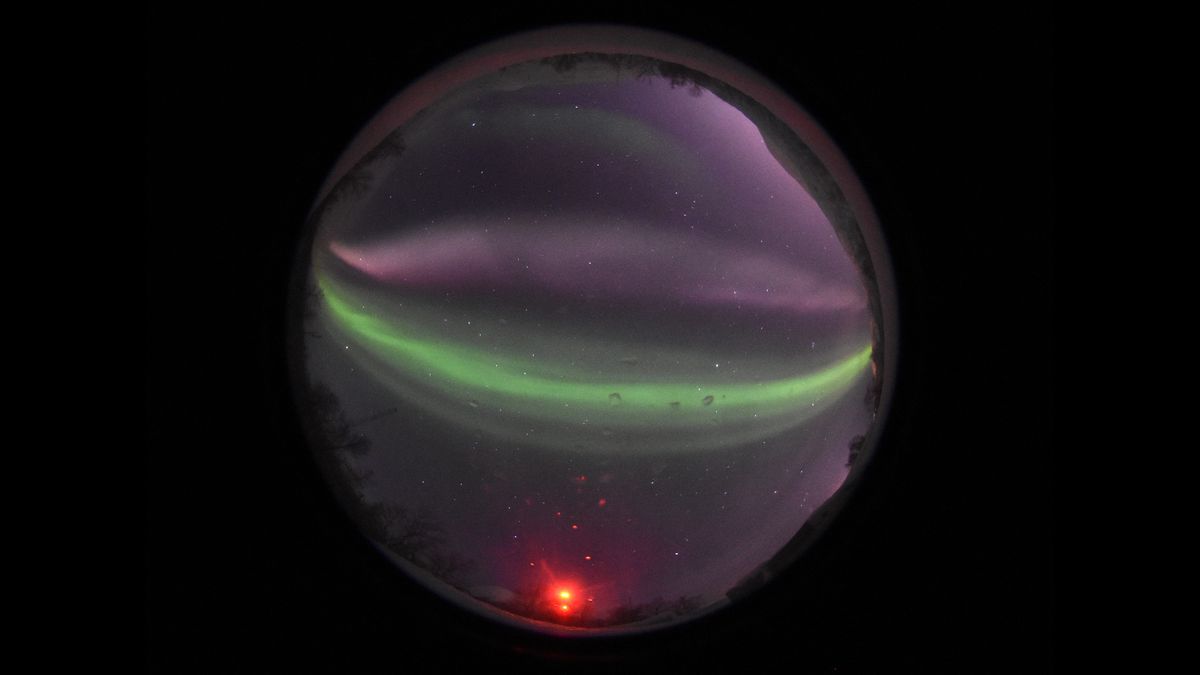
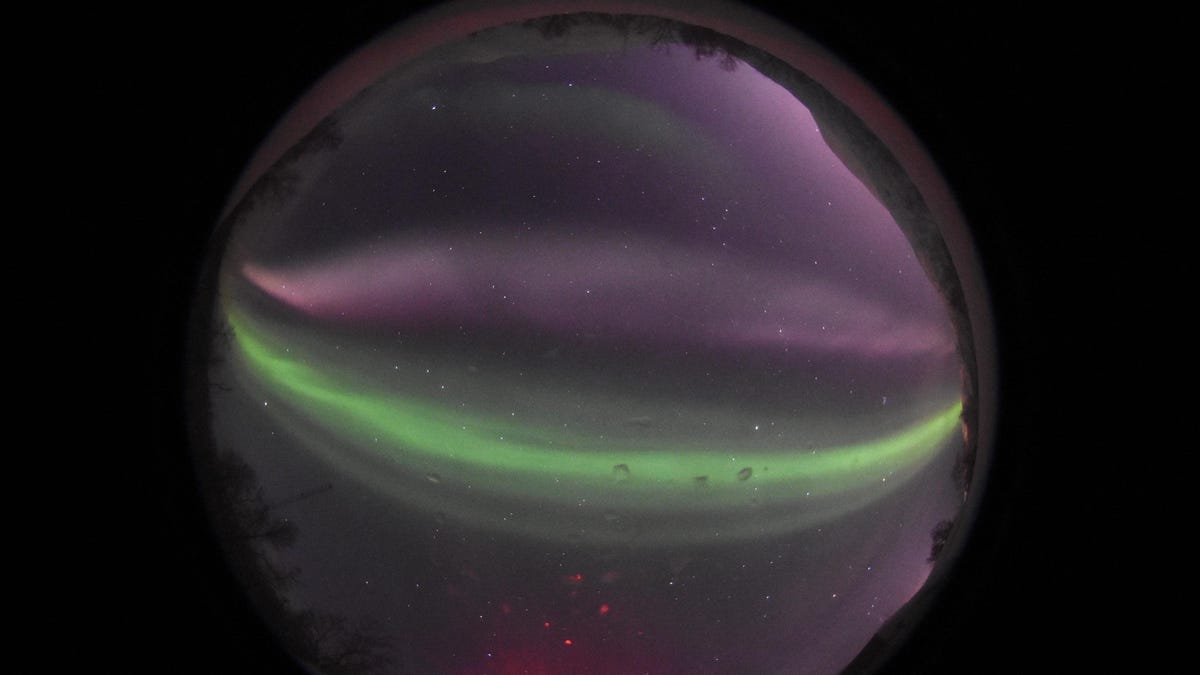
Researchers have discovered a "secret twin" to the purple skyglow phenomenon known as STEVE, which appears in the predawn hours and flows eastward, opposite to STEVE's westward flow. This finding was made using data from European Space Agency's Swarm satellites and images from a Norwegian research station. The twin phenomenon, like STEVE, involves a ribbon of charged gas but had not been visually observed until now.
Scientists have discovered a twin to the aurora-like phenomenon STEVE, moving in the opposite direction. Found in archival data from Norway, this new finding adds to the mystery of STEVE, which is a fast-moving stream of hot gas distinct from traditional auroras. The discovery was made with the help of citizen scientists, highlighting the collaborative effort in understanding atmospheric phenomena.
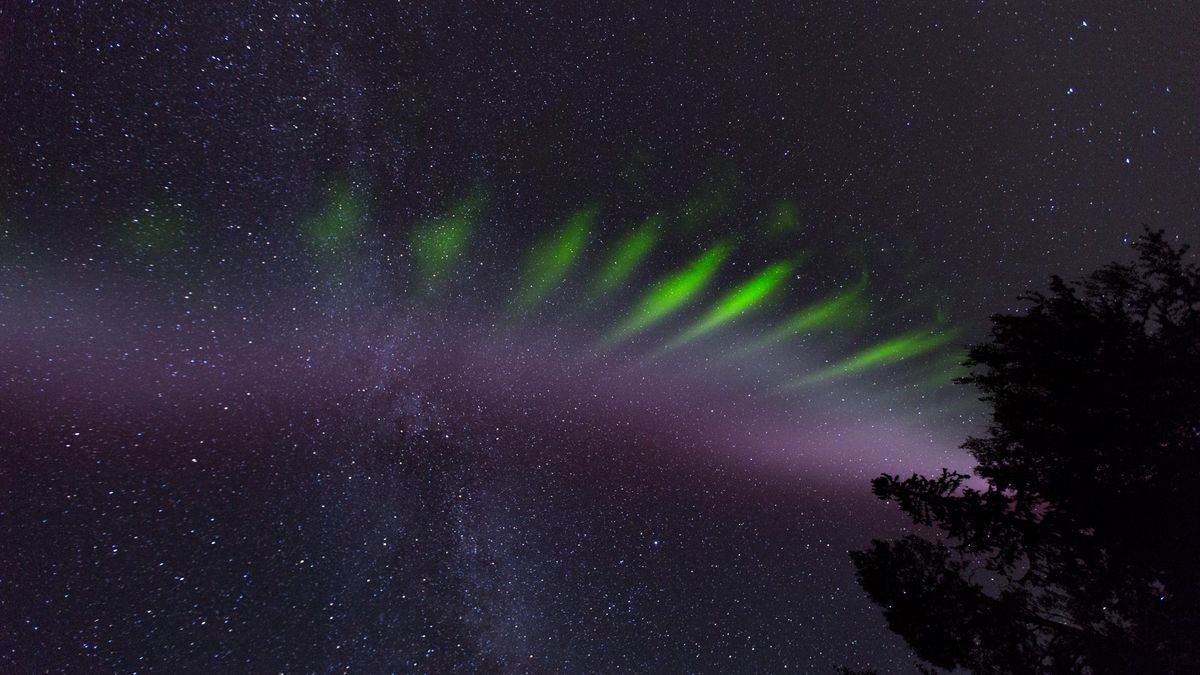
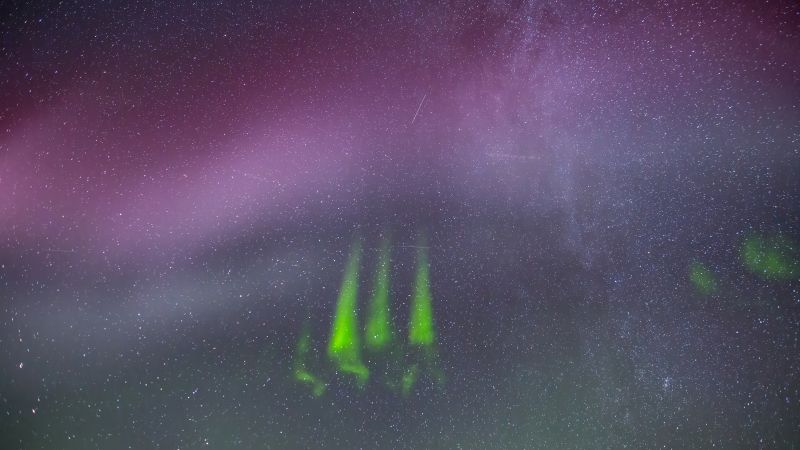
A recent study suggests that the phenomenon known as STEVE (Strong Thermal Emission Velocity Enhancement) and the accompanying picket fence-like streaks of light are produced by low-altitude electric fields parallel to Earth's magnetic field, rather than by the same processes that create auroras. These unique light displays occur at lower latitudes and emit different colors than auroras. The study's findings could help researchers understand unknown physical processes in Earth's atmosphere, and future research aims to measure the strength and direction of the electric and magnetic fields by launching a rocket through these phenomena.
Scientists have long been puzzled by the enigmatic glow known as STEVE and its accompanying picket fence, which appear in Earth's sky and were previously thought to be related to auroras. However, a new study led by physicist Claire Gasque proposes that STEVE and the picket fence are not auroras at all, but rather produced by electric fields parallel to magnetic field lines at lower latitudes. This discovery challenges our understanding of Earth's atmosphere, magnetosphere, and the physics involved. Further research and direct testing are needed to fully comprehend these phenomena and their implications.
Scientists have proposed a new physical explanation for the mysterious phenomena known as Steve and the picket fence, which resemble auroras but have distinct characteristics. These phenomena occur at lower latitudes and emit a different color spectrum than traditional auroras. The proposed explanation involves electric fields parallel to Earth's magnetic field, which could produce the unique emissions. Researchers are planning to launch rockets to measure the electric and magnetic fields associated with these phenomena, providing valuable insights into the chemistry and physics of Earth's upper atmosphere and magnetosphere.
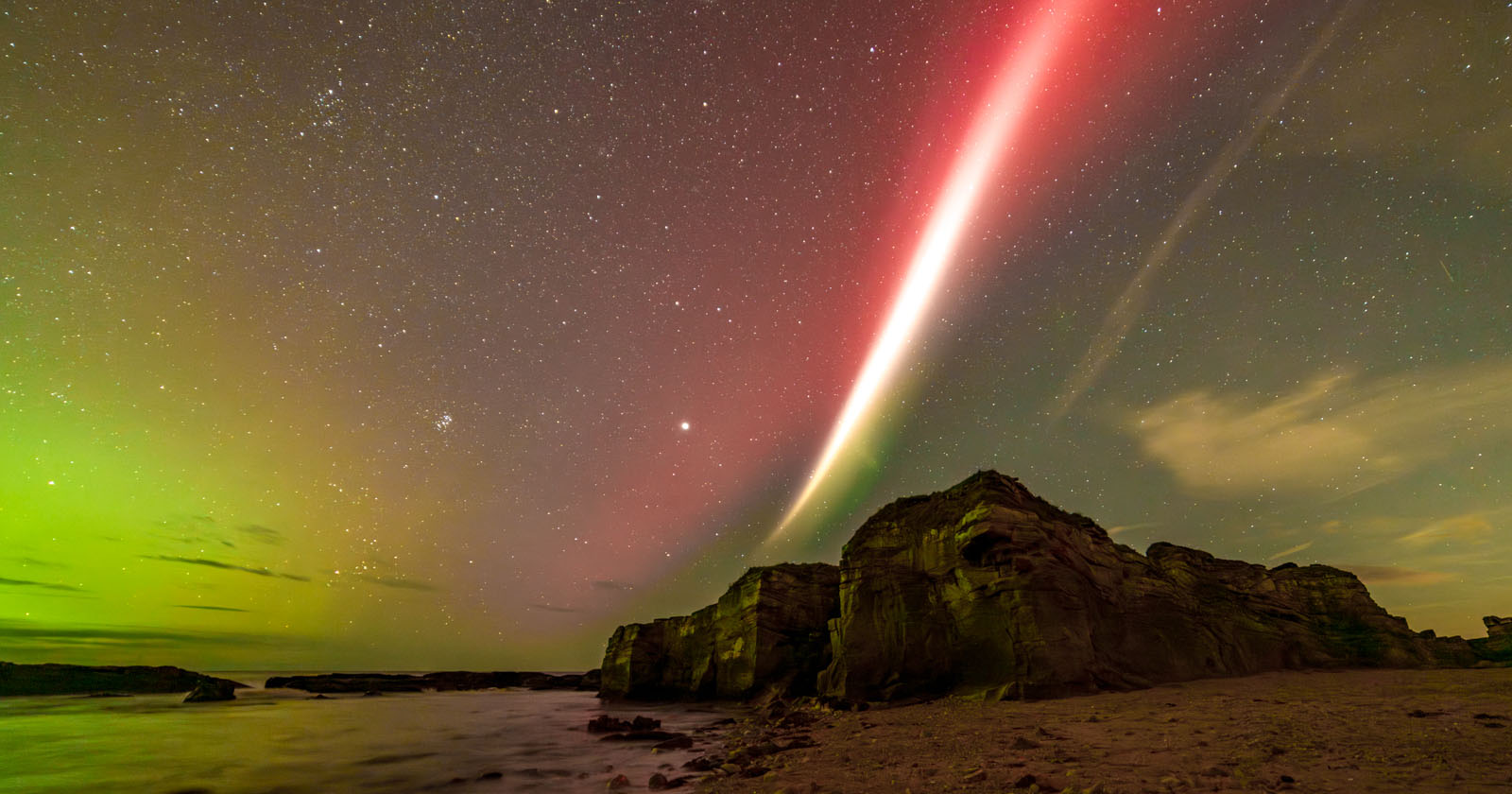
British photographer Stephen Pemberton, also known as NorthernPixl, captured a rare combination of auroras, the Milky Way, and the phenomenon known as STEVE (Strong Thermal Emission Velocity Enhancement) in a single night of photography. The photographer initially dismissed the bright white trail passing in front of the Milky Way as an aircraft, but upon closer inspection, realized it was a rare sight. NorthernPixl's images showcase the vibrant colors of the auroras and the unique contrast created by STEVE. Astrophotography is a challenging field, but NorthernPixl's determination and passion have led to stunning results.
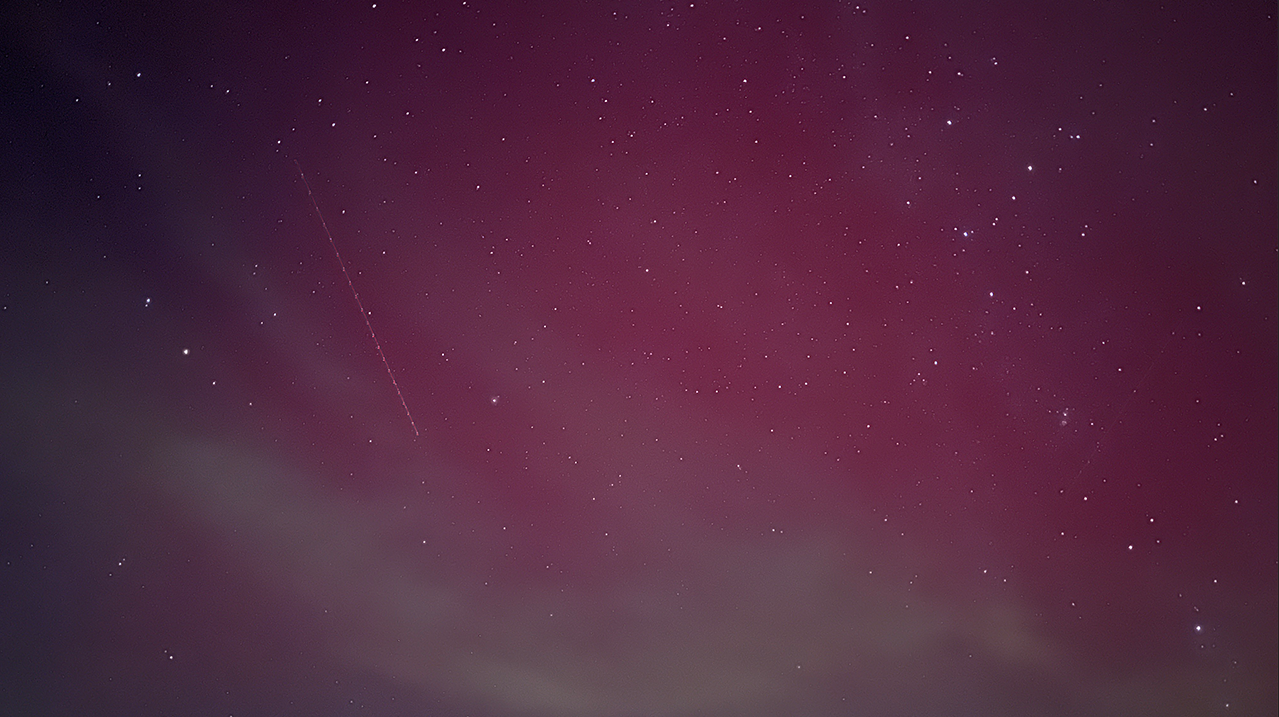
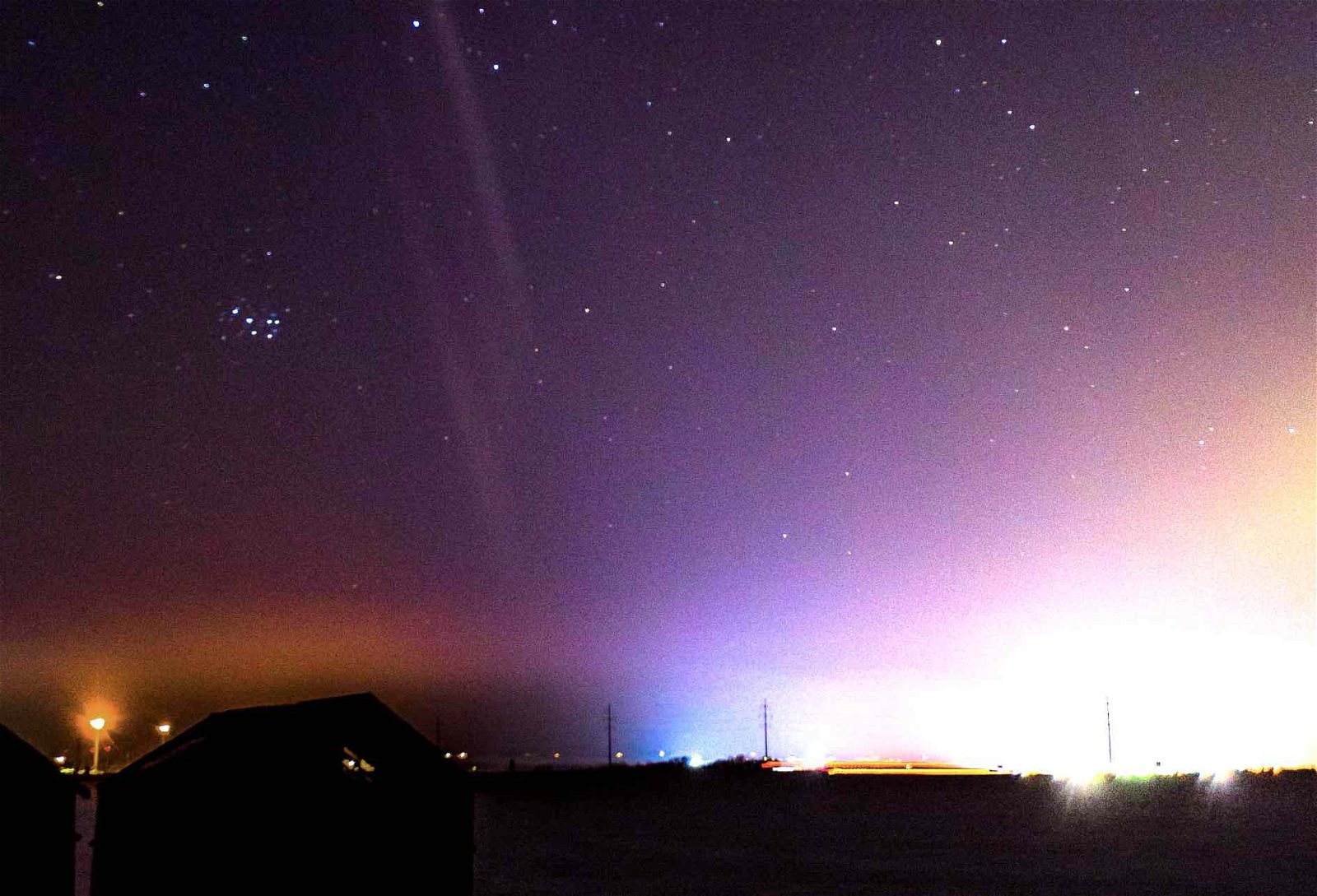
A Kansas man captured photos of a strange reddish-pink light in the sky, which experts believe could be part of a rare atmospheric event. The light could be attributed to either an aurora display, Stable Auroral Red (SAR) arcs, or Strong Thermal Emission Velocity Enhancement (STEVE). While an aurora is unlikely, SAR arcs, which are separate from typical auroras, are a possible explanation. SAR arcs are considered a rare night sky phenomenon that occurs during intense geomagnetic storms.
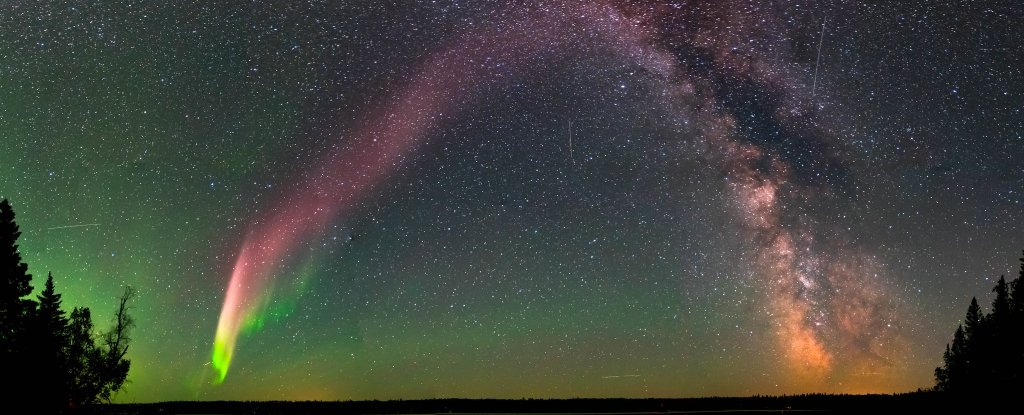
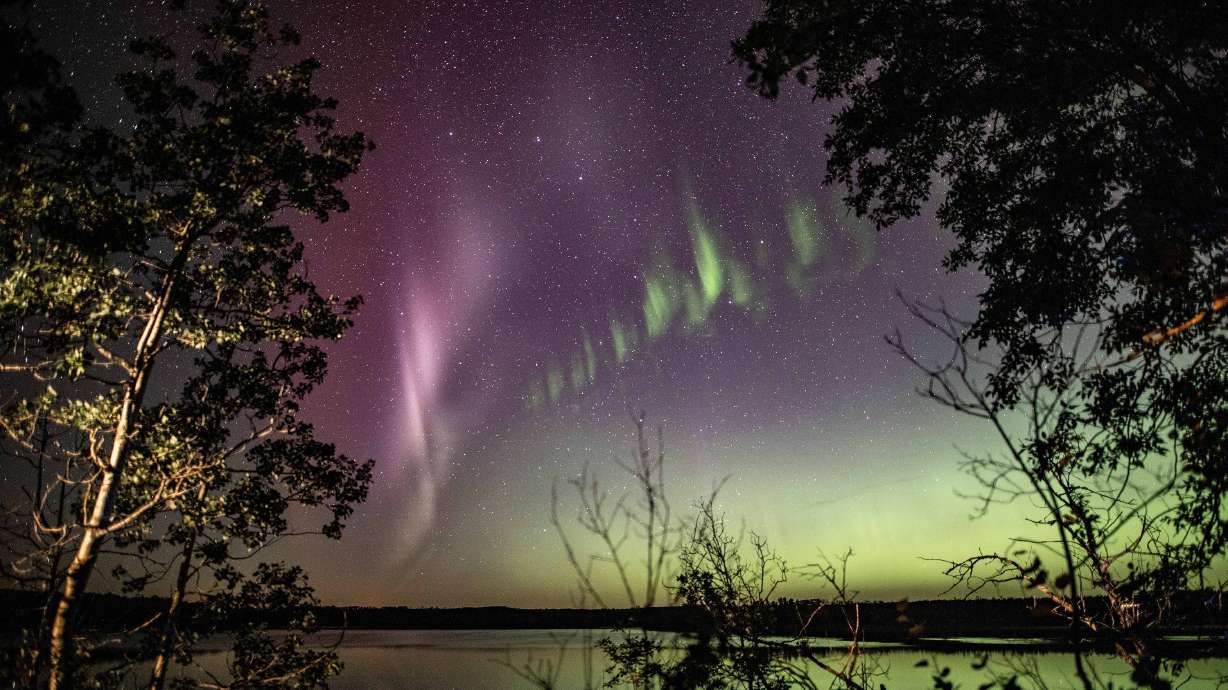
With increased solar activity, a rarely seen light display called Steve has become more visible in the northern and southern latitudes. Unlike aurorae, Steve appears further south and can be seen as a purple and green light ribbon in the sky. It lasts for 20 minutes to an hour and sometimes has a "picket fence" appearance. Steve is associated with auroras but is not classified as one. New research suggests that Steve's streaks occur when charged particles are heated up high in the atmosphere, outside the auroral zone.
A rare light phenomenon known as "Steve" has been captivating skywatchers in the Northern Hemisphere. Initially misidentified as a proton arc, Steve is visually distinct from auroras and appears closer to the equator, characterized by a purple-pink arch accompanied by green, vertical stripes. The phenomenon was named "Steve" after a pub meeting among scientists and aurora chasers, and it stands for Strong Thermal Emission Velocity Enhancement. Steve is more likely to be observed during periods of enhanced solar activity, such as the equinoxes, and typically appears between evening and midnight.
Steve, a rare light spectacle that appears closer to the equator than auroras, has been captivating observers in the Northern Hemisphere. Initially misidentified as a proton arc, Steve was given its name during a meeting at a Canadian pub by a group of citizen scientists. Scientists later discovered that Steve is a visual manifestation of subauroral ion drift (SAID), a narrow flow of charged particles in Earth's upper atmosphere. While visually different from auroras, Steve is made up of similar components and appears as a streak of mauve-colored light accompanied by distinctive green bands. As Earth enters a period of enhanced solar activity, or solar maximum, more opportunities to witness Steve at low latitudes are expected.
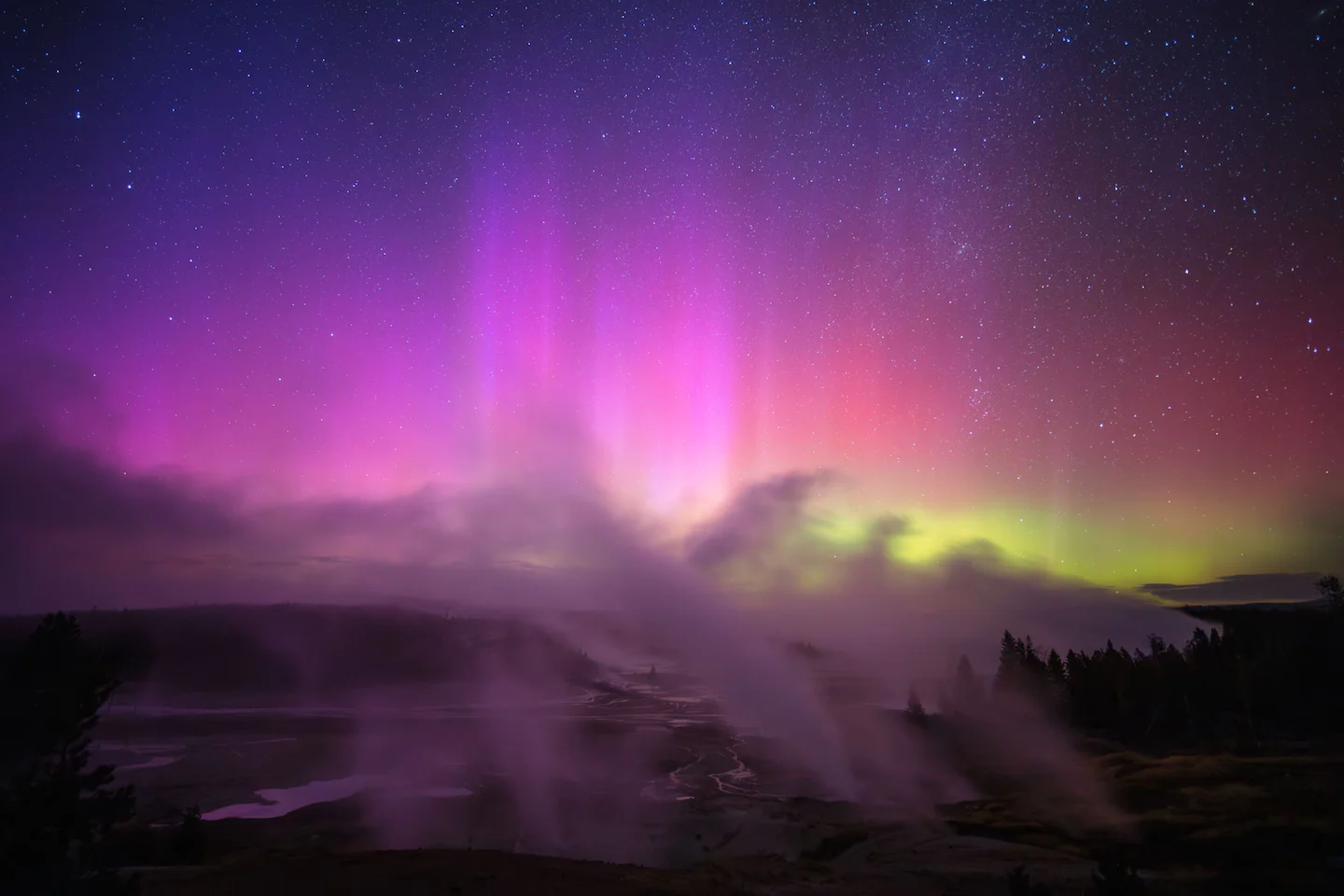
Sky watchers around the world witnessed a stunning display of the aurora borealis, with colorful lights flashing across the night sky in North America, Europe, and Australia. Additionally, an unusual phenomenon known as STEVE, an elongated band of green and purplish light caused by a ribbon of plasma in the atmosphere, was also observed. The display was a result of two coronal mass ejections (CMEs) impacting Earth's magnetic field, leading to a G3 geomagnetic storm. The event was visible at lower latitudes than usual, with sightings primarily reported in the northern British Isles.
STEVE, or Strong Thermal Emission Velocity Enhancement, is an atmospheric phenomenon similar to the aurora but distinct from it. It is a streak of purplish light that appears in conjunction with the aurora and is created by heated gas in the upper atmosphere. STEVE was discovered by citizen scientists in Canada between 2015 and 2016 and has since been studied by researchers. It is less frequently observed than the aurora and occurs during geomagnetic storms. The name STEVE is a backronym derived from the original nickname given to the phenomenon by amateur aurora chasers.
The northern lights, also known as the aurora, put on a dazzling display across the United States, including states like Minnesota, Michigan, Wyoming, and even as far south as Virginia, Colorado, Oklahoma, and Missouri. Sightings were also reported in Canada, the Netherlands, Norway, Ireland, and France. The lights were caused by a coronal mass ejection from the sun, which disturbed Earth's magnetic shield and excited nitrogen and oxygen molecules in the atmosphere, resulting in the release of photons of light. Some lucky observers even spotted a rare natural light phenomenon called STEVE. The activity is expected to decrease, but the aurora may still be visible in high latitudes.