Researchers have uncovered the atmospheric chain reaction that triggers lightning, showing how strong electric fields in thunderclouds accelerate electrons, produce X-rays, and initiate electron avalanches leading to lightning strikes, while also explaining the occurrence of gamma-ray flashes without visible lightning.
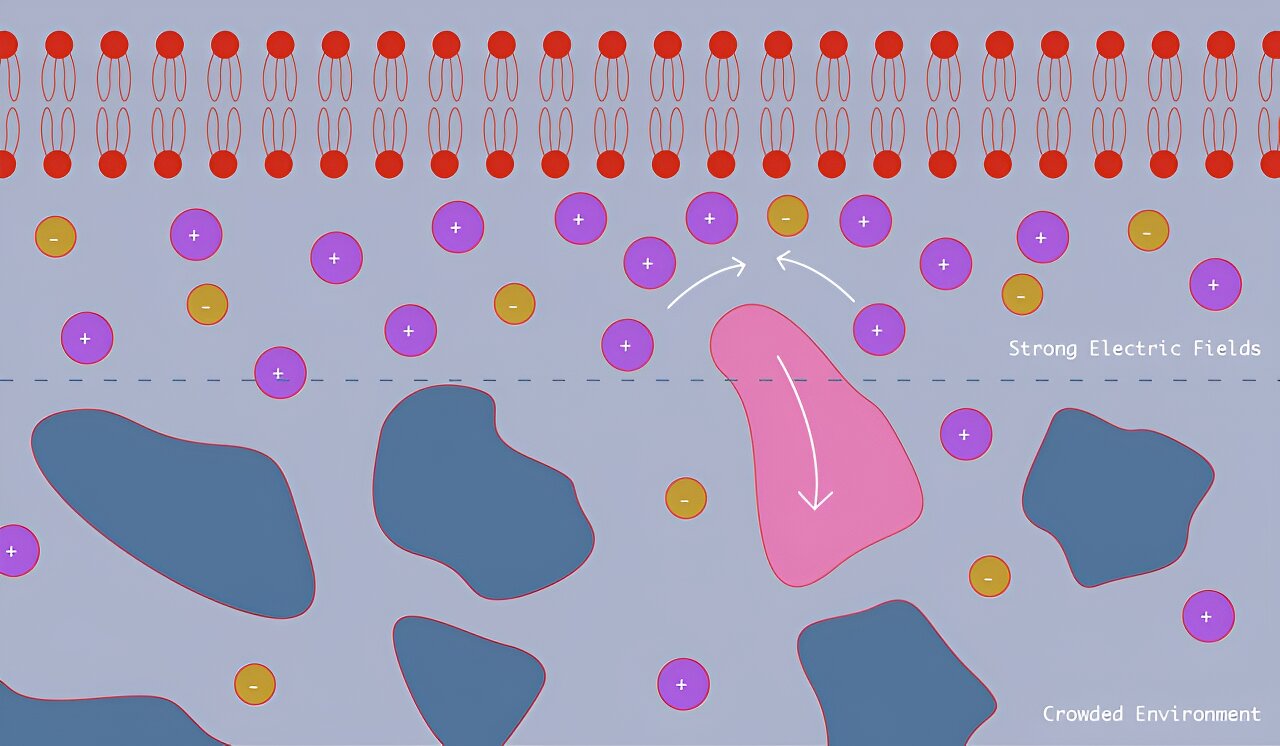
Scientists have confirmed that cell membranes generate powerful electric field gradients that repel nano-sized particles, affecting uncharged nanoparticles and potentially influencing the effectiveness of drug treatments targeting cells. The discovery, published in the Journal of the American Chemical Society, provides the first direct evidence of the electric fields' role in repulsion and has implications for drug design and delivery. Understanding the behavior of molecules near cell membranes is crucial in medical science, as proteins in the membrane are frequent drug targets, and the cell membrane's effect on sorting molecules by size and charge could make a difference in cellular functions.
Scientists have long been puzzled by the enigmatic glow known as STEVE and its accompanying picket fence, which appear in Earth's sky and were previously thought to be related to auroras. However, a new study led by physicist Claire Gasque proposes that STEVE and the picket fence are not auroras at all, but rather produced by electric fields parallel to magnetic field lines at lower latitudes. This discovery challenges our understanding of Earth's atmosphere, magnetosphere, and the physics involved. Further research and direct testing are needed to fully comprehend these phenomena and their implications.
Scientists have been intrigued by the peculiar aurora-like phenomena known as "Steve" and the picket fence phenomenon. Claire Gasque, a graduate student in physics at the University of California, Berkeley, has proposed a new explanation for these phenomena, suggesting a physical mechanism different from traditional auroras. Gasque's research focuses on the behavior of electric fields in the upper atmosphere, suggesting that parallel electric fields might produce the unique color spectrum observed in the picket fence phenomenon. Gasque and her team have proposed launching rockets to measure electric and magnetic fields within these phenomena, aiming to validate their hypotheses and deepen our understanding of the upper atmosphere's chemistry and physics.
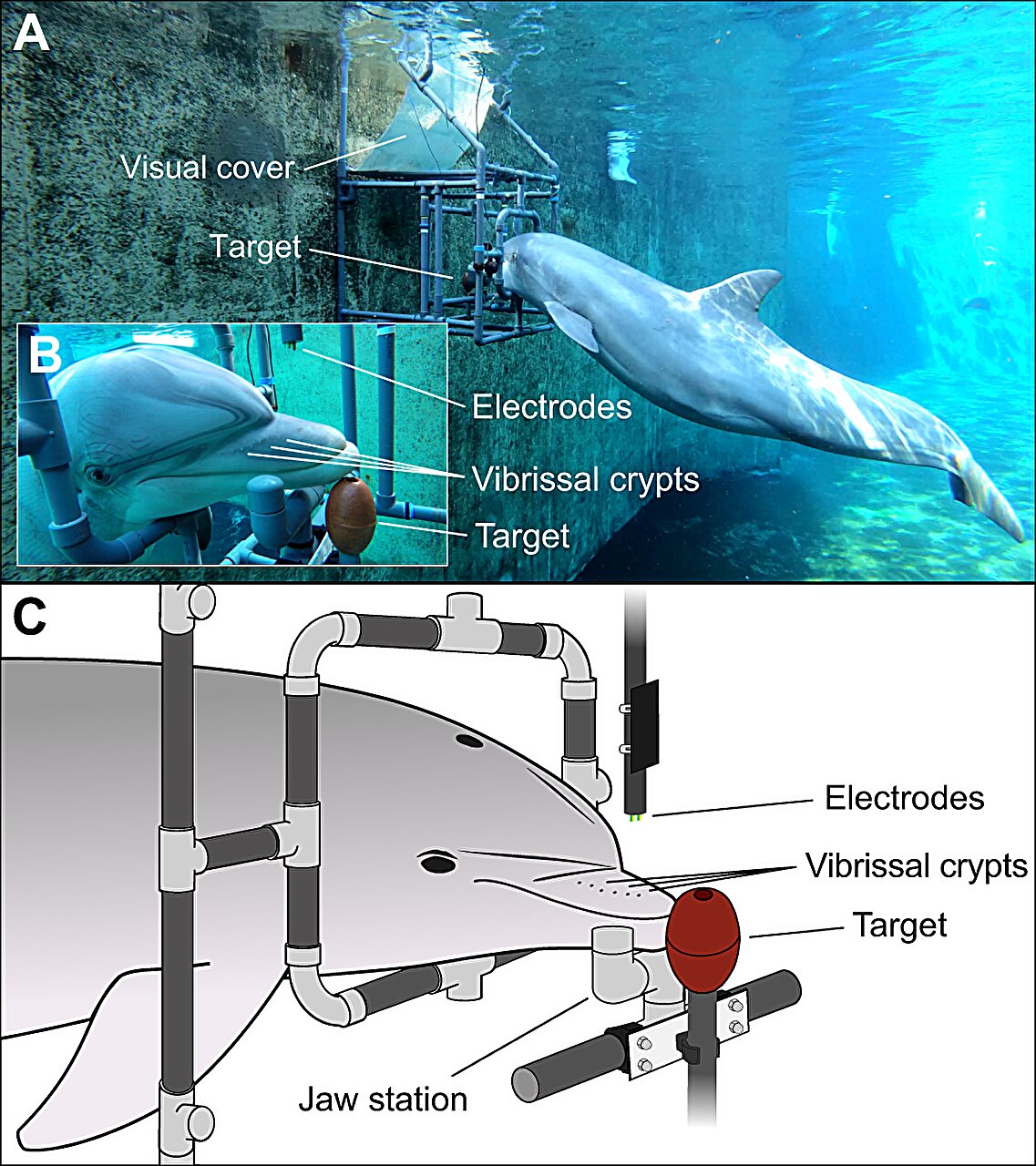
A study has found that bottlenose dolphins are more sensitive to electric fields than platypus, making them one of the few known mammals with this ability. The dolphins were tested and found to detect electric direct current (DC) fields as weak as 2.4 microvolts per centimeter. This suggests that electroreceptivity may play a more important role in dolphins' survival than previously thought. The study also revealed that dolphins are less adept at detecting alternating current (AC) fields. The researchers believe that dolphins use echolocation to detect prey at a distance and electric fields for close-range work.
A study conducted by bio-scientists from the University of Rostock and Nuremberg Zoo has found evidence that bottlenose dolphins can sense electric fields. The researchers tested the ability of two captive bottlenose dolphins to detect a small electric field and found that both dolphins were able to sense DC fields with 90% accuracy. This ability likely helps dolphins detect and capture prey, as well as navigate using the Earth's electric field.
Scientists have discovered that dolphins have the ability to sense electric fields, which may assist them in hunting and navigating the ocean. The researchers found that the pits left by whiskers on dolphins' jaws contain nerve endings that can perceive electricity with enough sensitivity to help the dolphins detect prey or hidden fish. This ability, similar to that of sharks, could aid in close-range hunting. Additionally, dolphins may use their electrosensitivity to navigate and potentially detect changes in the Earth's magnetic field. Understanding dolphin senses better could help protect these animals in the future.
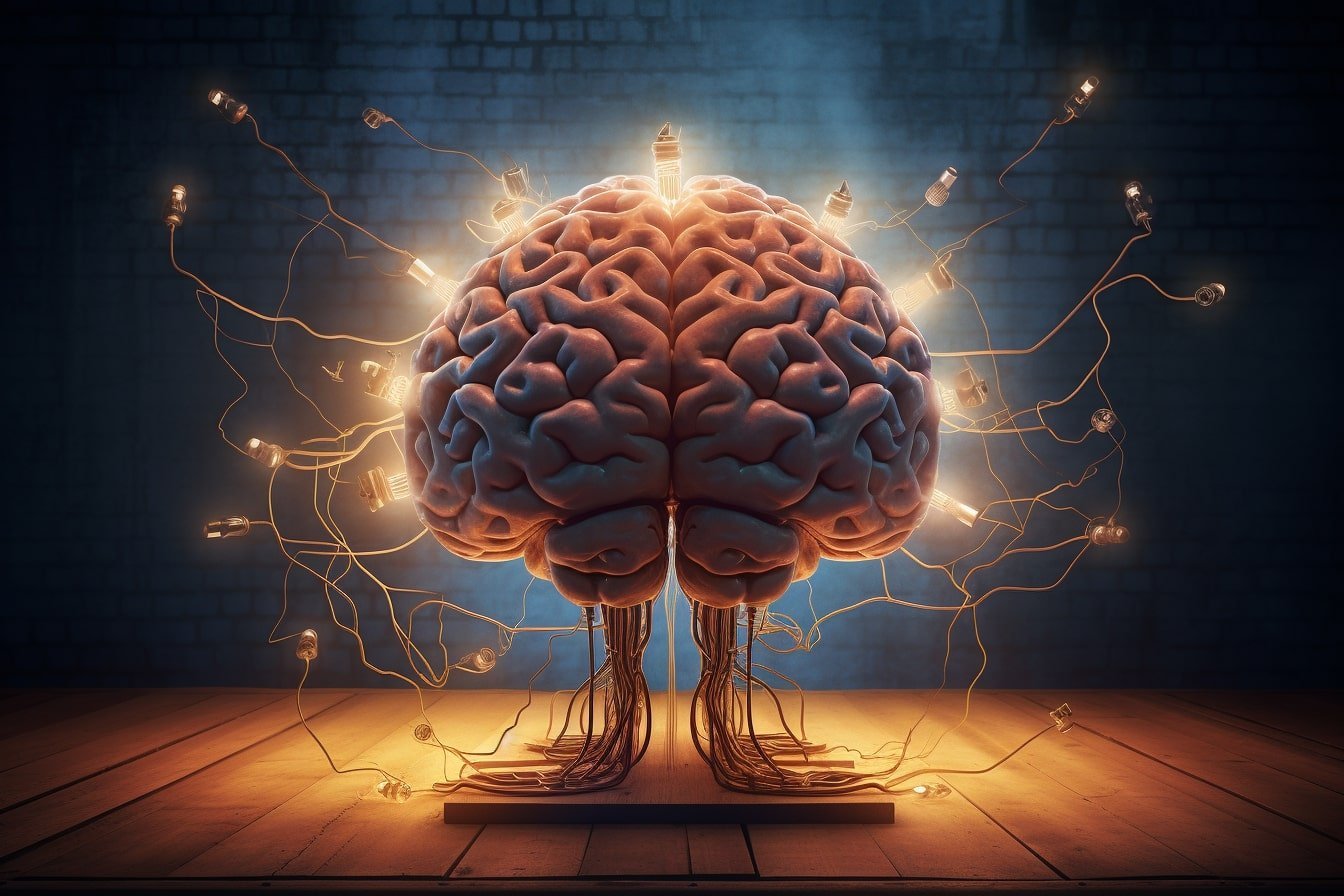
Electric fields, generated by neural activity, play a crucial role in coordinating brain functions, akin to a conductor leading an orchestra. As animals engaged in working memory games, the researchers observed that information across two vital brain regions was coordinated by the emerging electric field. This field was seen to direct neural activity, influencing voltage fluctuations across the neurons’ membranes. The findings illuminate a crucial understanding of the brain’s workings, potentially improving the design of brain-controlled prosthetics.
A new study published in Cerebral Cortex suggests that electric fields play a crucial role in coordinating brain circuits and networks involved in memory encoding. The study found that the electric field generated by the underlying electrical activity of neurons coordinated the information across key brain regions during working memory tasks. This electric field appeared to drive neural activity and influence the fluctuations of voltage across neurons' membranes. The findings could have implications for understanding brain-computer interfaces and developing treatments for mental health conditions by manipulating electrical fields to alter faulty circuits.
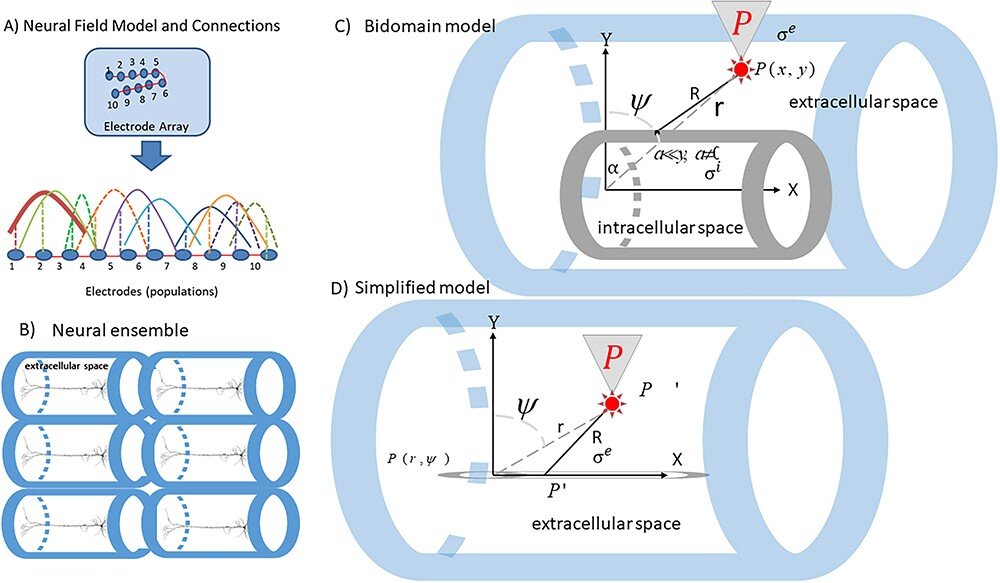
Electric fields generated by the collective electrical activity of neurons play a crucial role in coordinating information across key brain regions, according to a recent study. These fields, known as ephaptic coupling, influence the spiking of neurons and their signaling to other neurons, ultimately shaping the brain's functional networks. The findings have implications for understanding memory encoding and could impact the development of brain-computer interfaces and brain-controlled prosthetics.
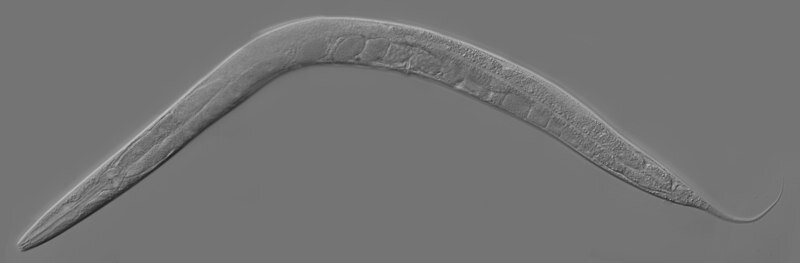
Japanese scientists have discovered that nematodes (C. elegans) use electric fields to leap from the bottom of Petri dishes to the lid and even onto bumblebees. The worms rely on a type of phoresy to achieve range and use a behavior known as "nictation" to attach to passing larger animals. Unlike snails and bugs, flying insects like bumblebees naturally accumulate charge during flight, producing an electric field. The researchers found that the worms only lept to the other electrode when the charge was applied and moved at an average speed of 0.86 meters per second.
Researchers from the University of Toronto, Dalhousie University, Iowa State University, and Peking University have used electric fields to control the motion of material defects in zinc sulfide crystals. The study provides direct evidence of dislocation dynamics controlled by a non-mechanical stimulus, which has been an open question since the 1960s. The researchers observed dislocations moving back and forth while changing the direction of the electric field. The electric-field-controlled dislocation motion may be used to enhance the mechanical reliability and formability of semiconductors and reduce defect density in semiconductors, insulators, and aged devices.
Researchers have discovered that microscopic Caenorhabditis elegans worms can use electric fields to "jump" across Petri plates or onto insects, allowing them to glide through the air and attach themselves onto naturally charged bumblebee chauffeurs. The worms jump at an average speed of .86 meters per second, which increases with electric field intensity. This research makes the connection that winged insects naturally accumulate charge as they fly, producing an electric field that C. elegans can travel along.