Tag

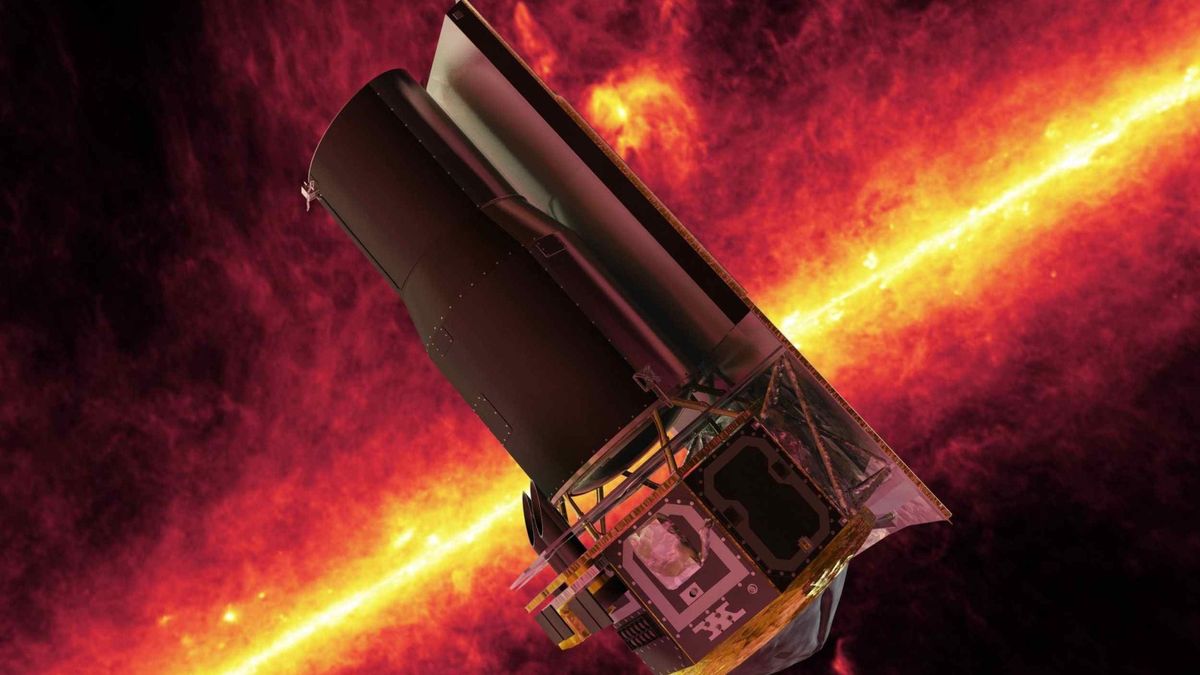
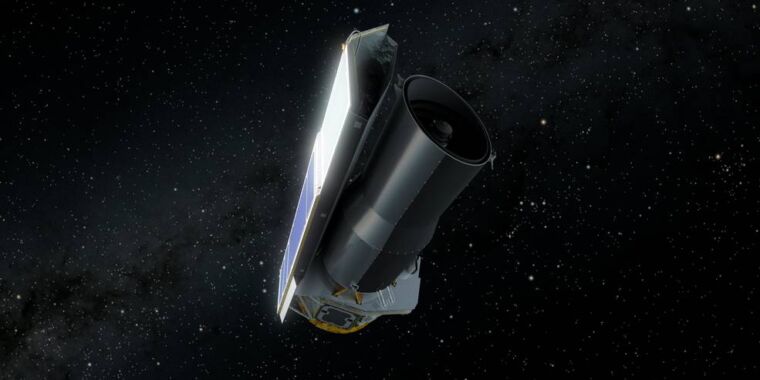
Spitzer Space Telescope

All articles tagged with #spitzer space telescope

science1 year ago

Chandra Maps Hazardous Zones for Planet Formation in Star Clusters

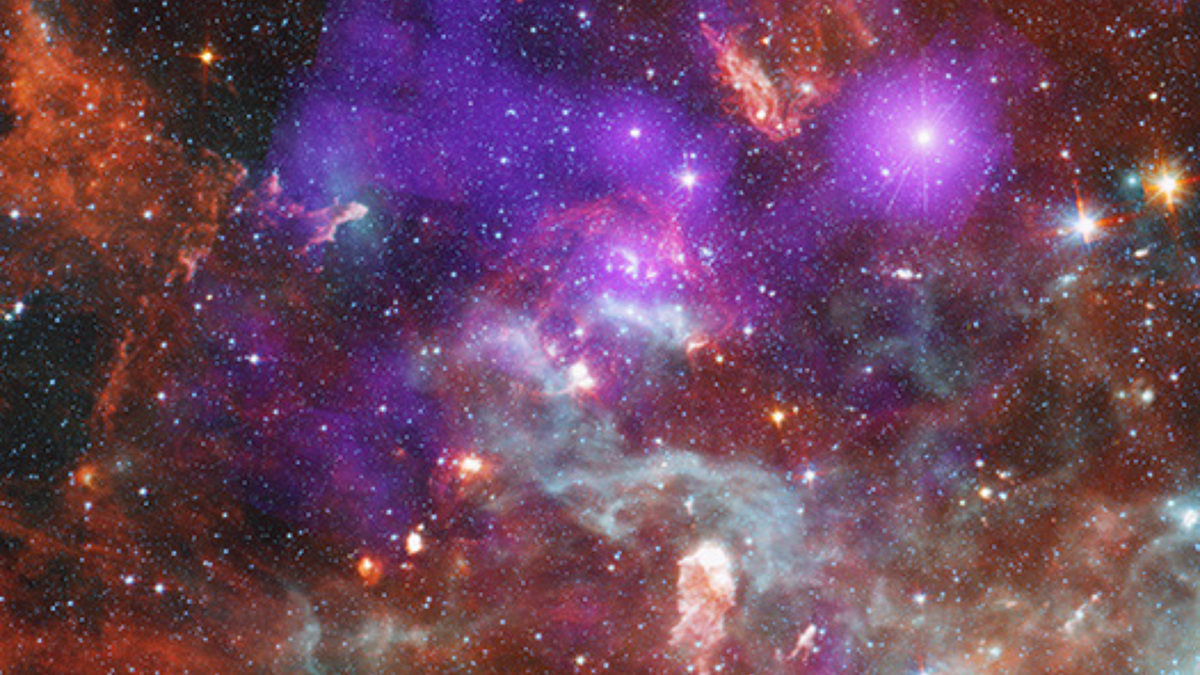
NASA's Chandra X-ray Observatory and the retired Spitzer Space Telescope have identified 'danger zones' for planet formation around young stars in the Cygnus OB2 star cluster. These zones are characterized by high-energy ultraviolet and X-ray radiation from massive stars, which can rapidly dissipate protoplanetary disks, hindering planet formation. The study found that in densely packed regions with intense radiation, the presence of protoplanetary disks drops significantly, making these areas less conducive to planet formation.

science-and-technology1 year ago

NASA's Spitzer Unveils Andromeda's Black Hole Feeding Patterns

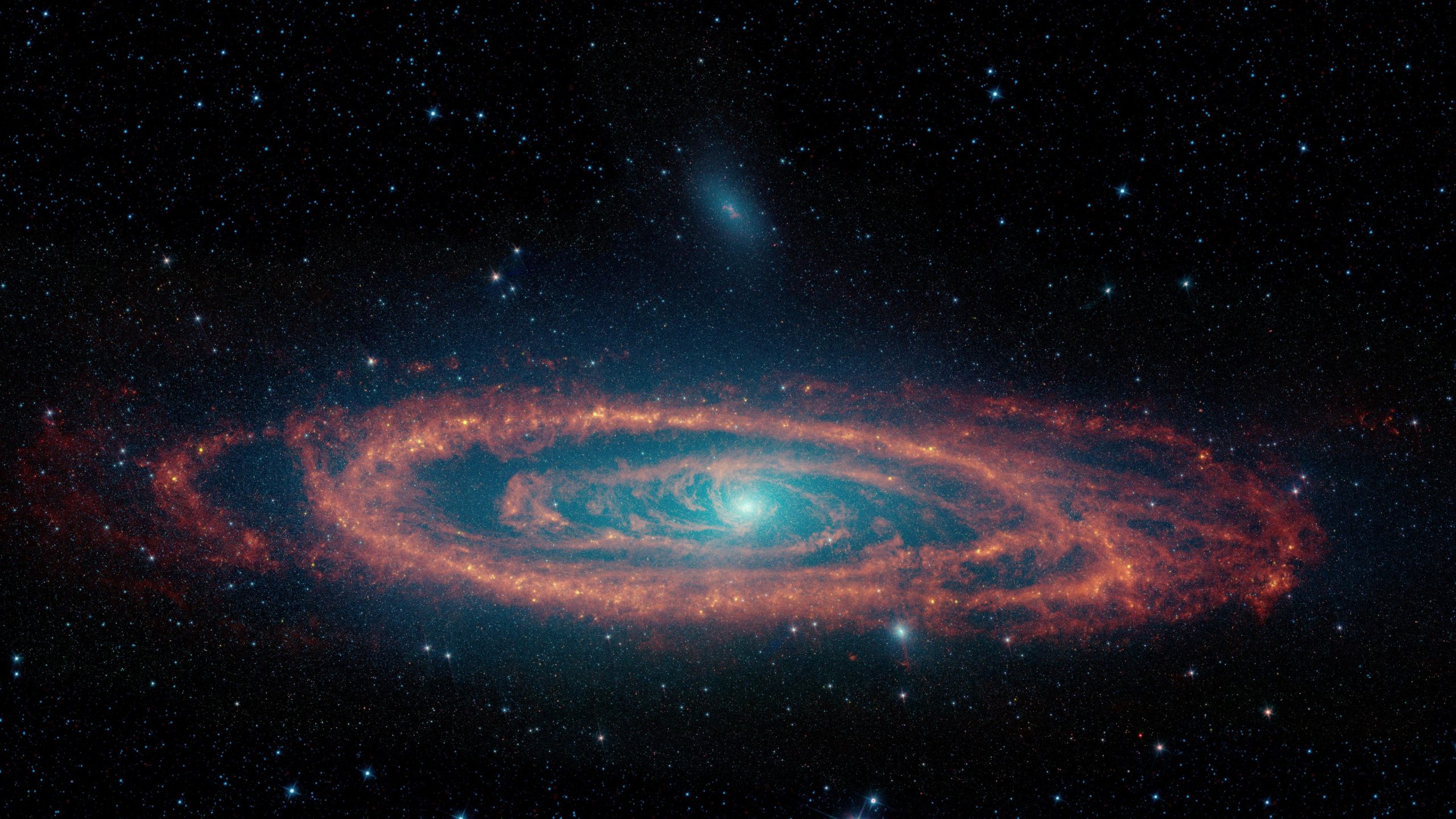
NASA's Spitzer Space Telescope images reveal streams of dust feeding the supermassive black hole in the Andromeda galaxy, explaining how these black holes can consume material steadily without significant light fluctuation. Computer models and archival data support the finding that a small, continuous flow of gas and dust feeds the black hole, maintaining its "quiet" eating habits.

astronomy1 year ago

"Unveiling the Mysteries of Tidally Locked Super-Earths"

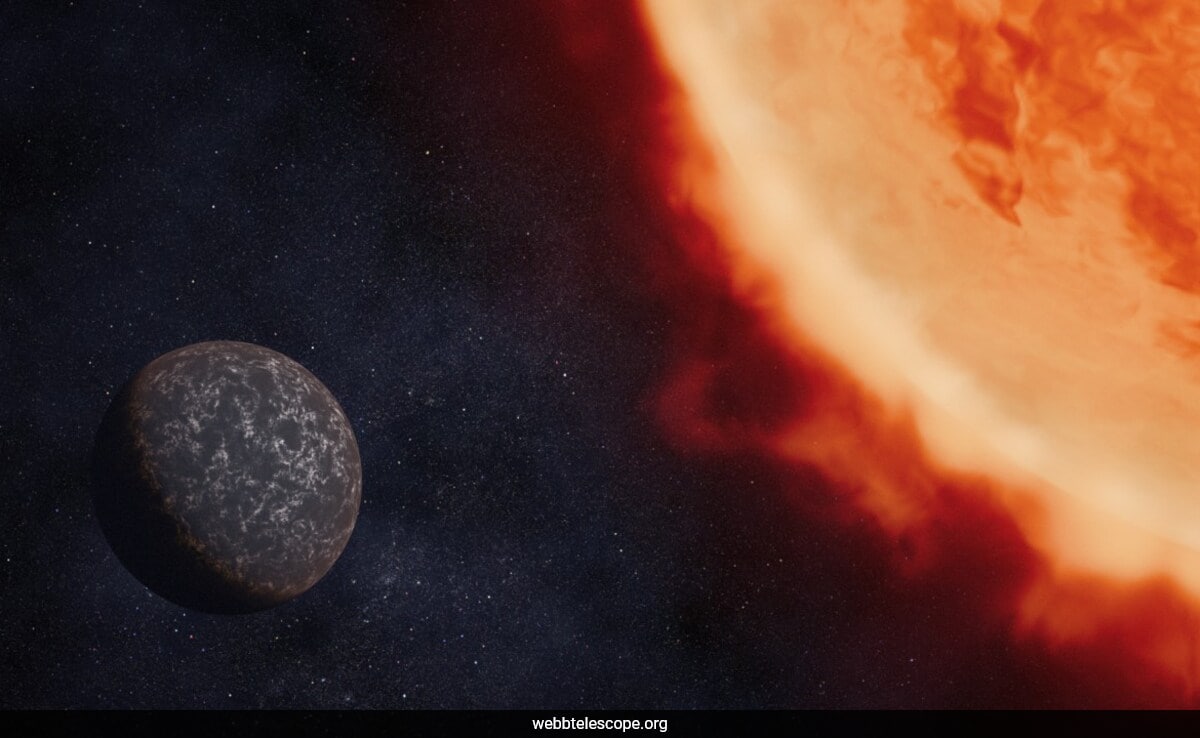
Astronomers have confirmed the existence of a tidally locked exoplanet, LHS 3844 b, orbiting an M-type star, shedding light on exoplanet mysteries. This discovery, detailed in The Astrophysical Journal, suggests that such phenomena may be common in our galaxy. By studying the planet's temperature using the Spitzer Space Telescope, researchers found evidence that LHS 3844 b is tidally locked, with one side in permanent sunshine and the other in perpetual darkness, similar to the Moon's relationship with Earth.

astronomy2 years ago

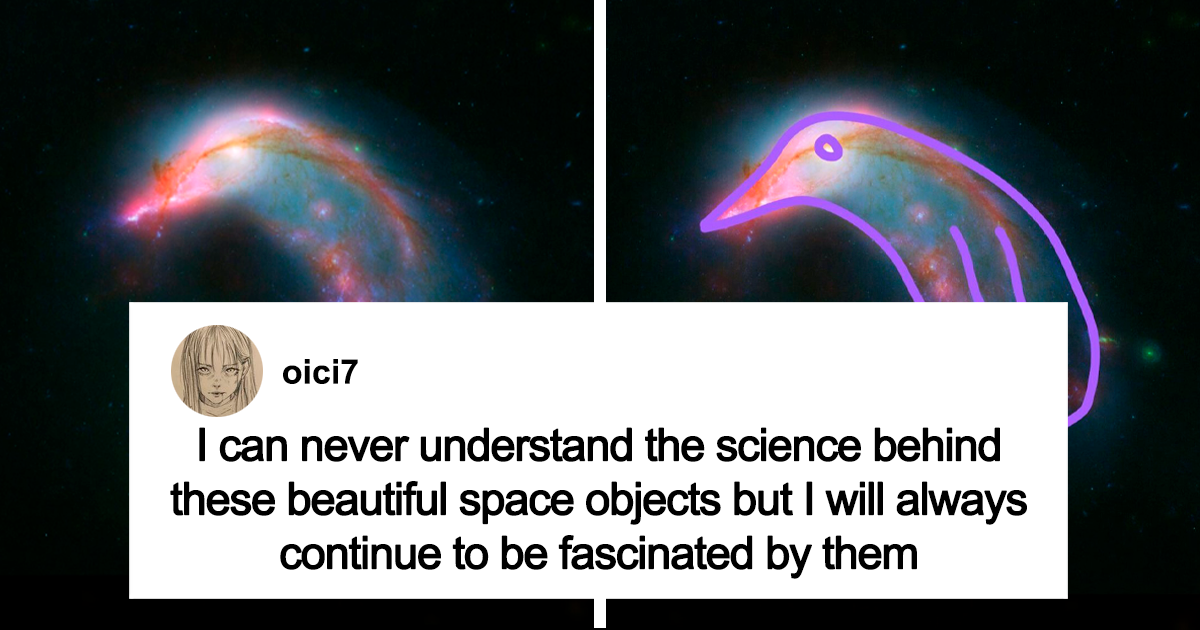
"Adorable Galaxies: NASA's Penguin and Egg-Shaped Wonders Revealed"

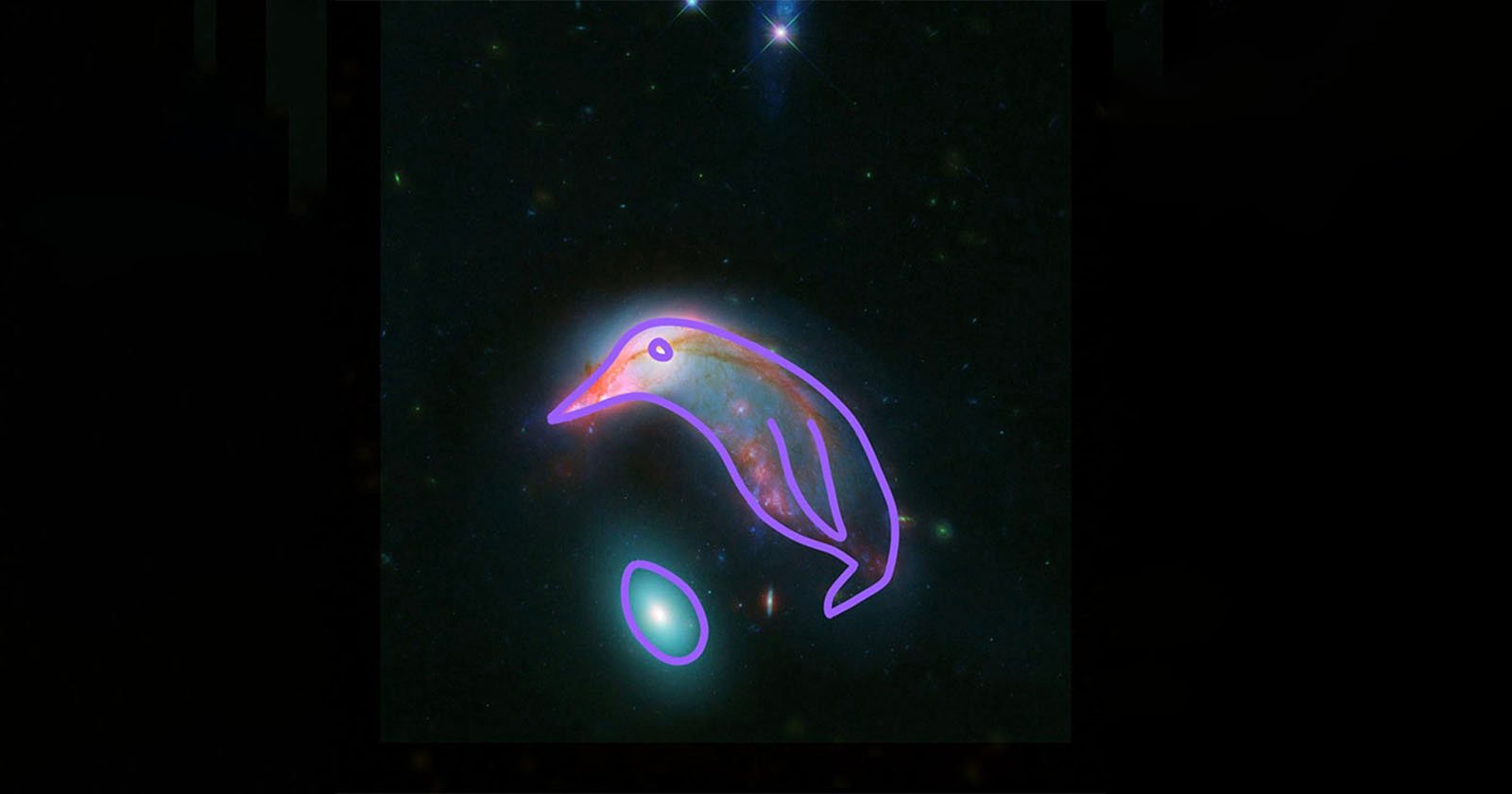
NASA shared an image of ARP 142, a pair of galaxies resembling a penguin and an egg, taken by the Hubble and Spitzer space telescopes, located 23 million light-years from Earth. The "penguin" galaxy, NGC 2936, shows new stars and gas strands, while the "egg" galaxy, NGC 2937, appears featureless with older stars. The image helps astronomers understand the life cycles of galaxies, and the James Webb Space Telescope may provide even greater clarity in the future.

astronomy2 years ago

"NASA's Playful Side: Adorable Penguin and Egg-Shaped Galaxies Revealed in New Photos"

NASA has released images of two galaxies, collectively known as Arp 142, which resemble a penguin and an egg. The galaxies, captured by the Hubble and Spitzer space telescopes, are located 23 million light-years away. The "penguin" galaxy, NGC 2936, shows visible distortion due to its mix of features, while the "egg" galaxy, NGC 2937, appears featureless. NASA suggests that over time, gravity will bring the two galaxies closer together until they merge into one, a process that likely occurred in the history of most large galaxies.

astronomy2 years ago

Volcanic exoplanet found using Spitzer and TESS data.

Using data from Spitzer and TESS, scientists have discovered an Earth-sized exoplanet, LP 791-18 d, that could potentially be covered with volcanoes. The planet is located in the constellation Crater, approximately 90 light-years away from Earth, and is tidally locked to its star. The gravitational pull of a neighboring exoplanet, LP 791-18 c, is causing an increase in volcanic activity on LP 791-18 d. The team believes that the planet's volcanism and location within the habitable zone means that the formation of an atmosphere is possible, and the temperatures on the night side of LP 791-18 d could be low enough for water to condense on the planet's surface.

astronomy2 years ago

Fiery Volcanic Exoplanet Discovered in Habitable Zone

LP 791-18 d, an Earth-sized exoplanet located approximately 90 light-years away, has been discovered by a team of scientists led by researchers at the University of Montreal. The planet is potentially hospitable to life and may be carpeted with volcanoes, undergoing volcanic outbursts as often as Jupiter’s moon Io. LP 791-18 d was found and studied using data from NASA’s TESS and the Spitzer Space Telescope. The planet is tidally locked, meaning it has one side that permanently faces its star, while the other is in continuous darkness. This, along with the significant amount of volcanic activity suspected across the planet, would enable LP 791-18 d to sustain an atmosphere and allow water to condense on its night side.

astronomy2 years ago

Exoplanet with Volcanoes and Potential for Liquid Water Discovered

A newly discovered exoplanet, LP 791-18d, orbiting a small star about 90 light-years from Earth, has a radius and mass very similar to Earth's, suggesting it also has a rocky composition. Based on what we know of the star, it can potentially contain liquid water. And, based on the forces exerted by nearby planets, it's likely to have very active geology, potentially including volcanoes. The exosolar system at the star LP 791-18 was first discovered by the Transiting Exoplanet Survey Satellite (TESS).

space2 years ago

Exoplanet with Volcanoes and Perpetual Darkness May Host Alien Life

Astronomers have discovered an Earth-sized exoplanet, LP 791-18 d, orbiting a star beyond our solar system that is likely covered with volcanoes and does not rotate. The planet is in the Milky Way, about 86 light-years away from our own solar system. The planet may also hold water, and one side remains in permanent night, which scientists said could "plausibly" allow for water condensation. The planet was discovered using NASA's Transiting Exoplanet Survey Satellite (TESS) and the retired NASA Spitzer Space Telescope. The larger planet near LP 791-18 d has been approved for further study using the James Webb Space Telescope.

astronomy2 years ago

Astronomers Discover Earth-Size Planet Covered in Volcanoes

Astronomers have discovered an Earth-sized exoplanet, LP 791-18 d, believed to be highly volcanic, potentially sustaining an atmosphere and allowing for water condensation on its cooler side. It orbits a small red dwarf star approximately 90 light-years away, sitting on the edge of the habitable zone. The planet's volcanic activity could be as frequent as Jupiter's moon Io, the most volcanically active body in our solar system. The discovery was made using data from NASA's TESS and Spitzer Space Telescope, and future studies are planned using the James Webb Space Telescope.

spaceflight2 years ago

Private company proposes daring mission to revive NASA's Spitzer telescope.

The US Space Force has awarded Rhea Space Activity $250,000 to explore the possibility of resurrecting NASA's Spitzer Space Telescope, which was shut down in 2020 after 17 years of research. The proposed "Spitzer Resurrector" mission would launch in 2026 and voyage to the silent telescope, which is two astronomical units from Earth. Rhea's tech would "restart Spitzer, confirm that it has been restored it to its original performance capabilities, and remain nearby to act as a high-rate data relay to Earth, thus restoring Spitzer to its full efficiency."

space2 years ago

Private company proposes mission to revive retired space telescopes.

Rhea Space Activity, a small space technology company, has won a $250,000 grant from the US Space Force to study a robotic rescue mission for NASA's Spitzer Space Telescope, which was deactivated in January 2020. The "Spitzer Resurrector" mission would be a small spacecraft that could fit into a 1-meter-by-1-meter box and be ready to launch as soon as 2026. The spacecraft would fly around the telescope to characterize its health, establish communications, and relay information back and forth between the ground and telescope, allowing scientists to restart observations. Rhea Space Activity is seeking full funding for a mission expected to cost about $350 million.