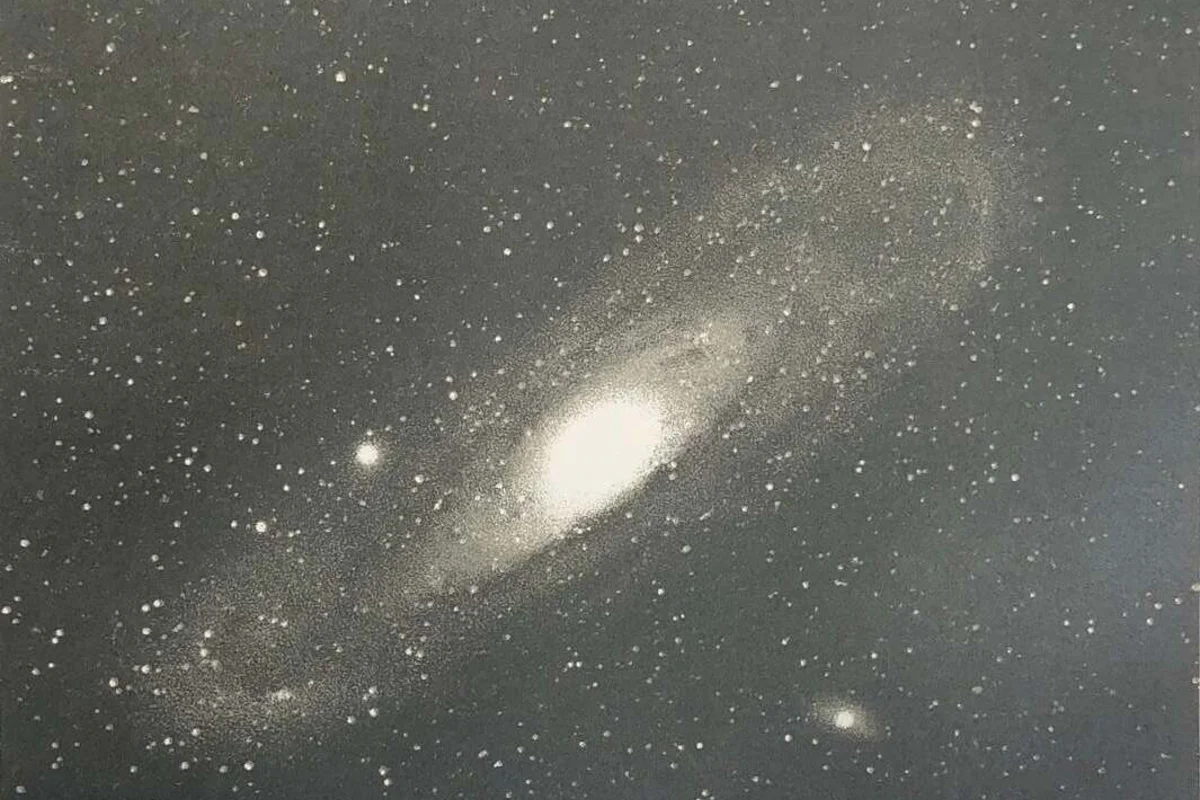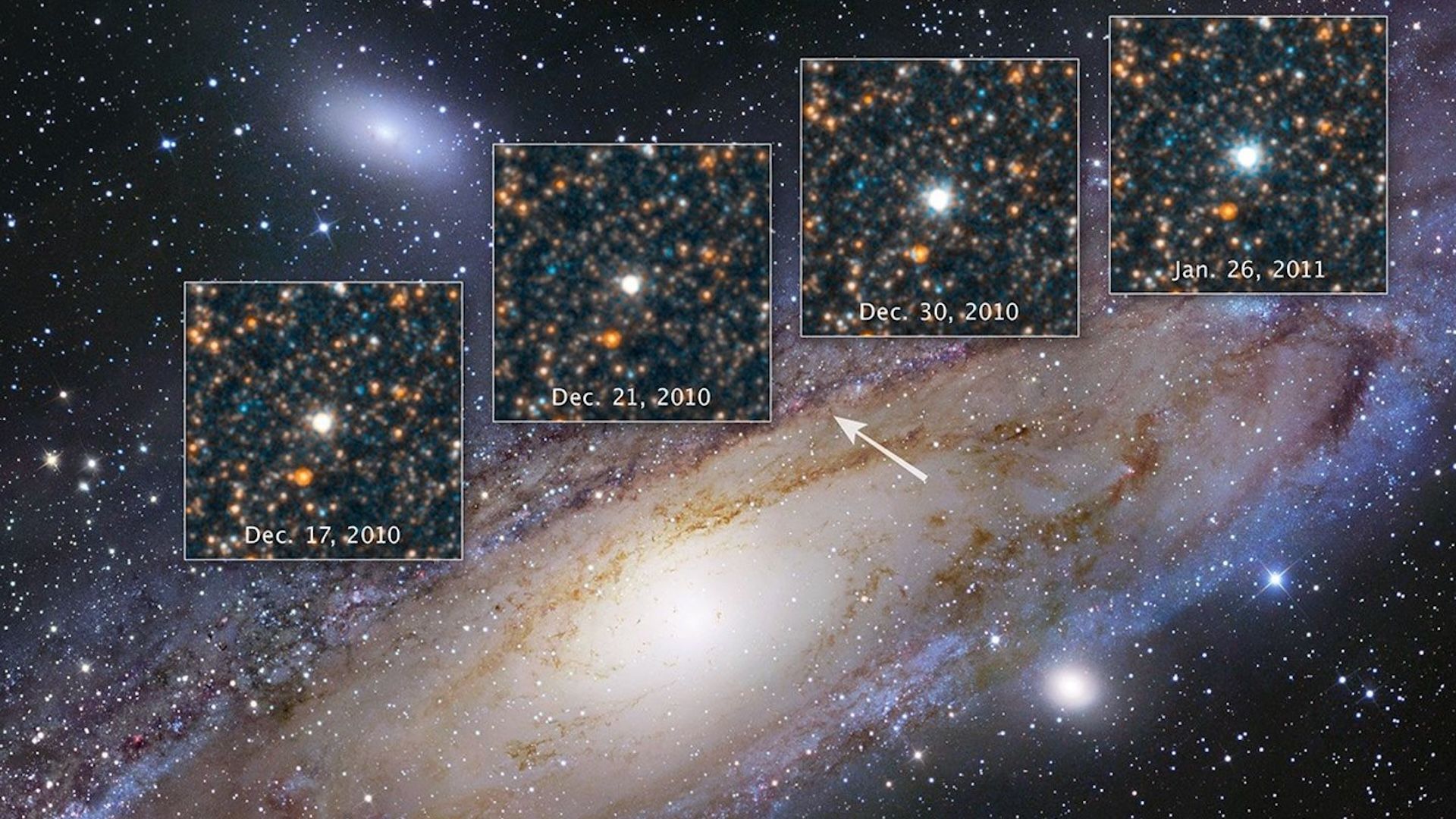
In 1923, Edwin Hubble discovered a variable star in the Andromeda galaxy, which helped prove that it was a separate galaxy from the Milky Way and enabled the calculation of the universe's vastness and expansion rate, leading to the foundational understanding of an expanding universe and the Hubble constant.
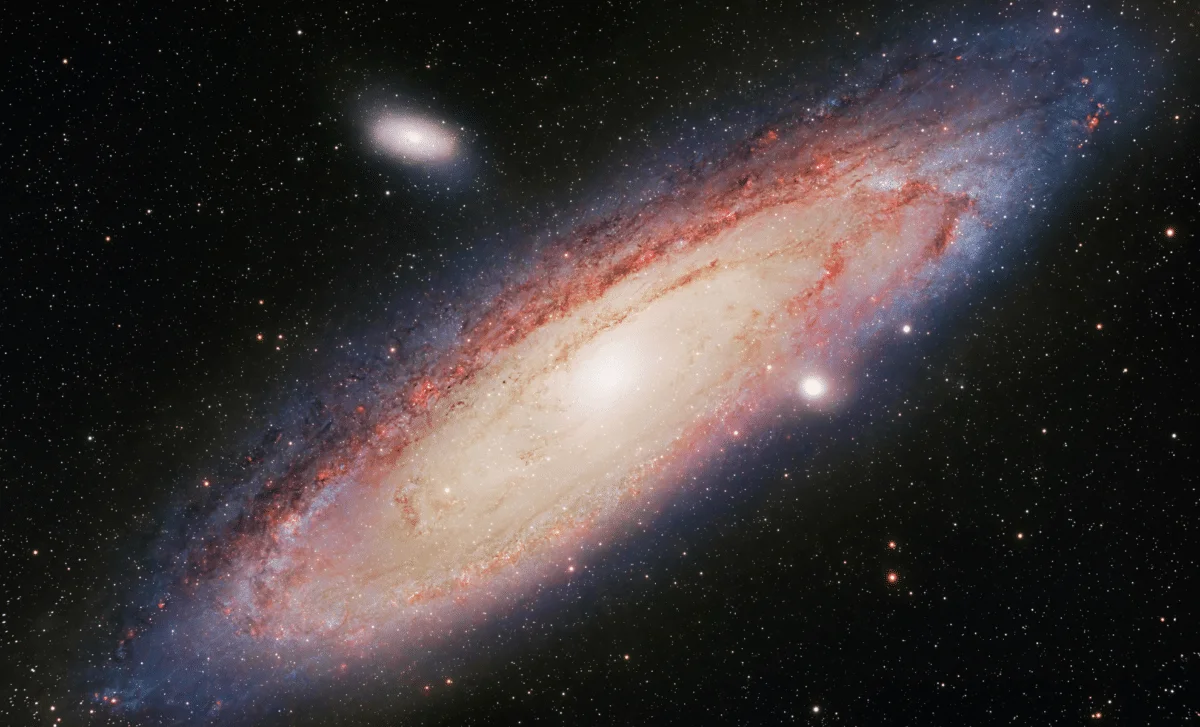
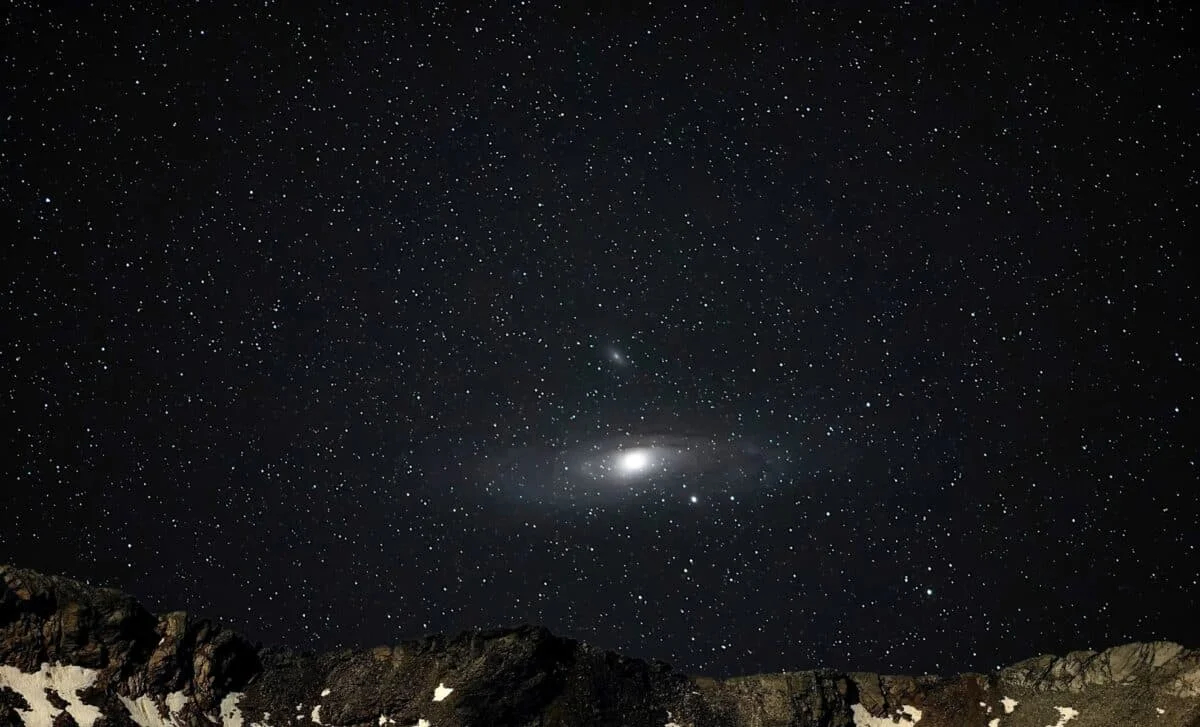
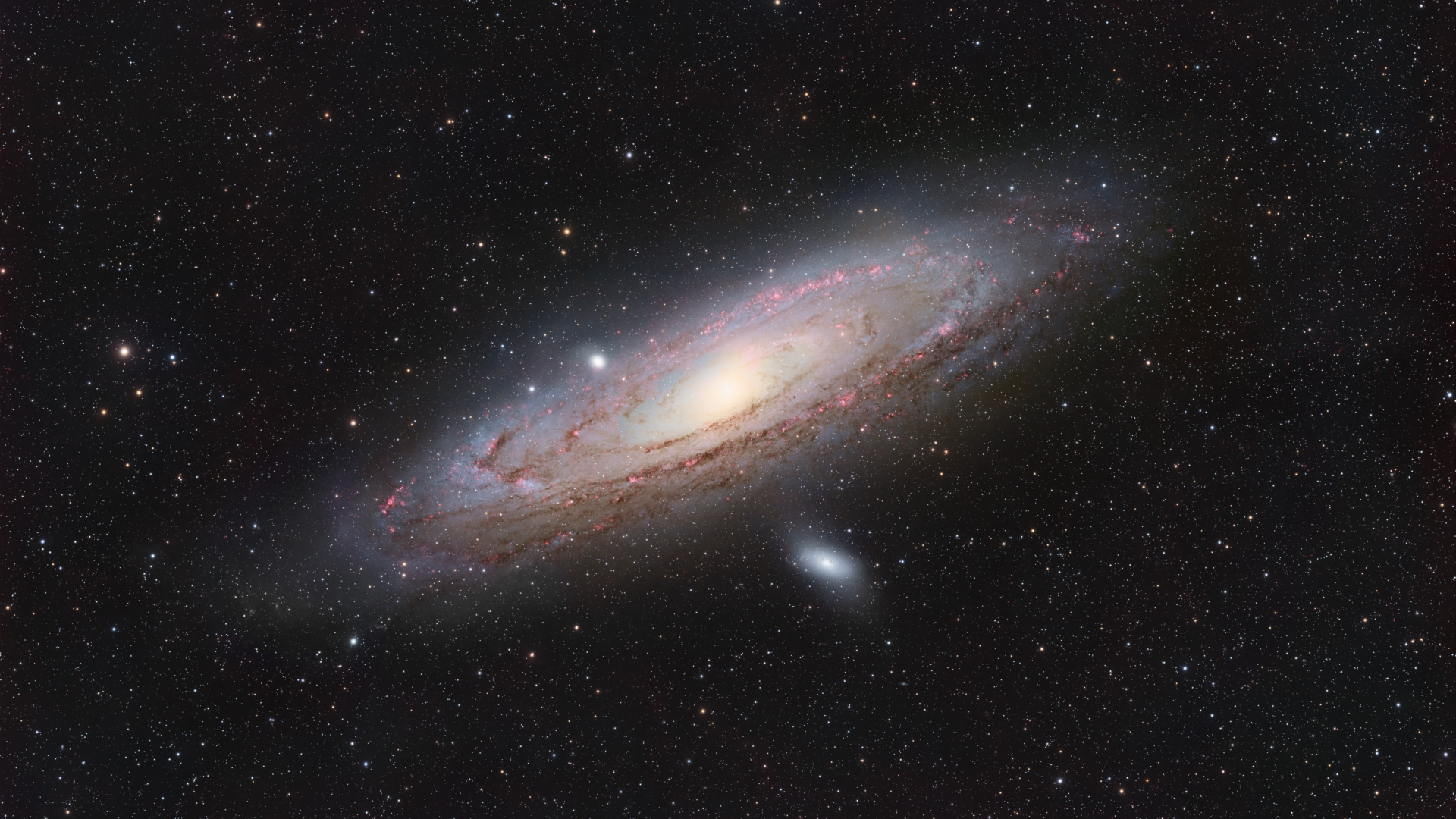
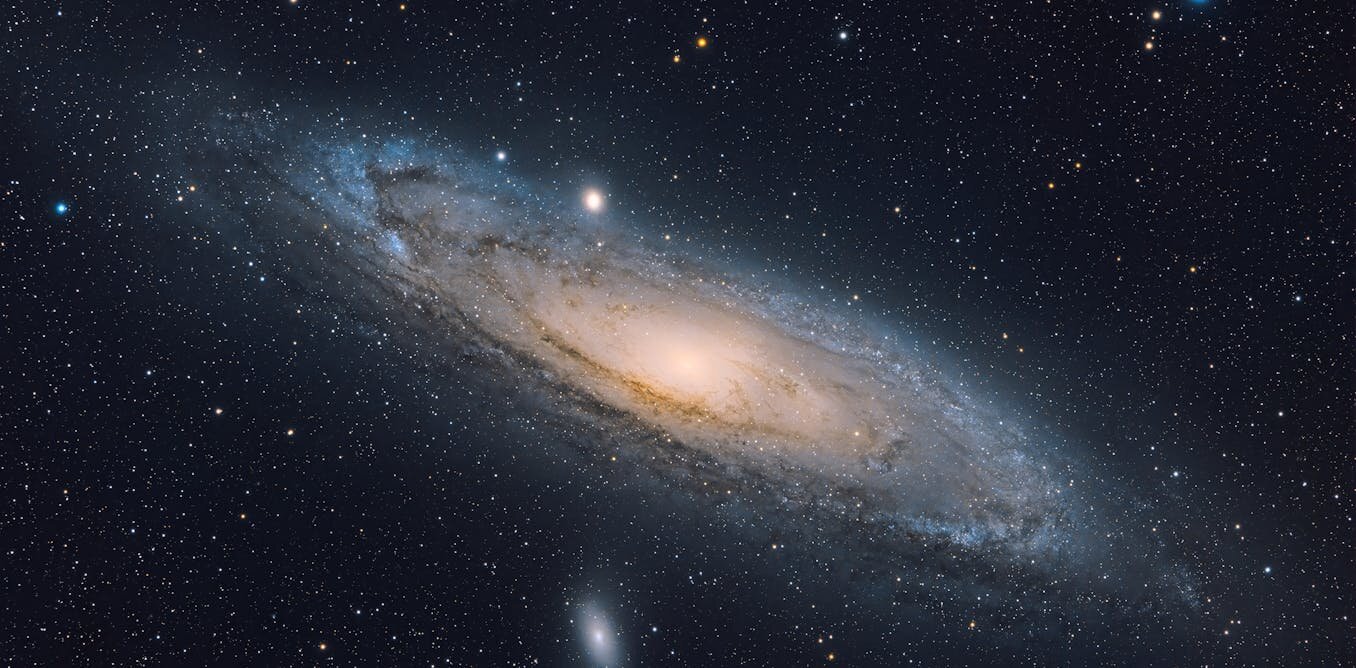
Astrophotographer Ronald Brecher captured a detailed image of the Andromeda galaxy, revealing its spiral arms, dust lanes, and neighboring galaxies, using a high-powered telescope over 38 hours from Canada, highlighting the galaxy's beauty and the vastness of space.
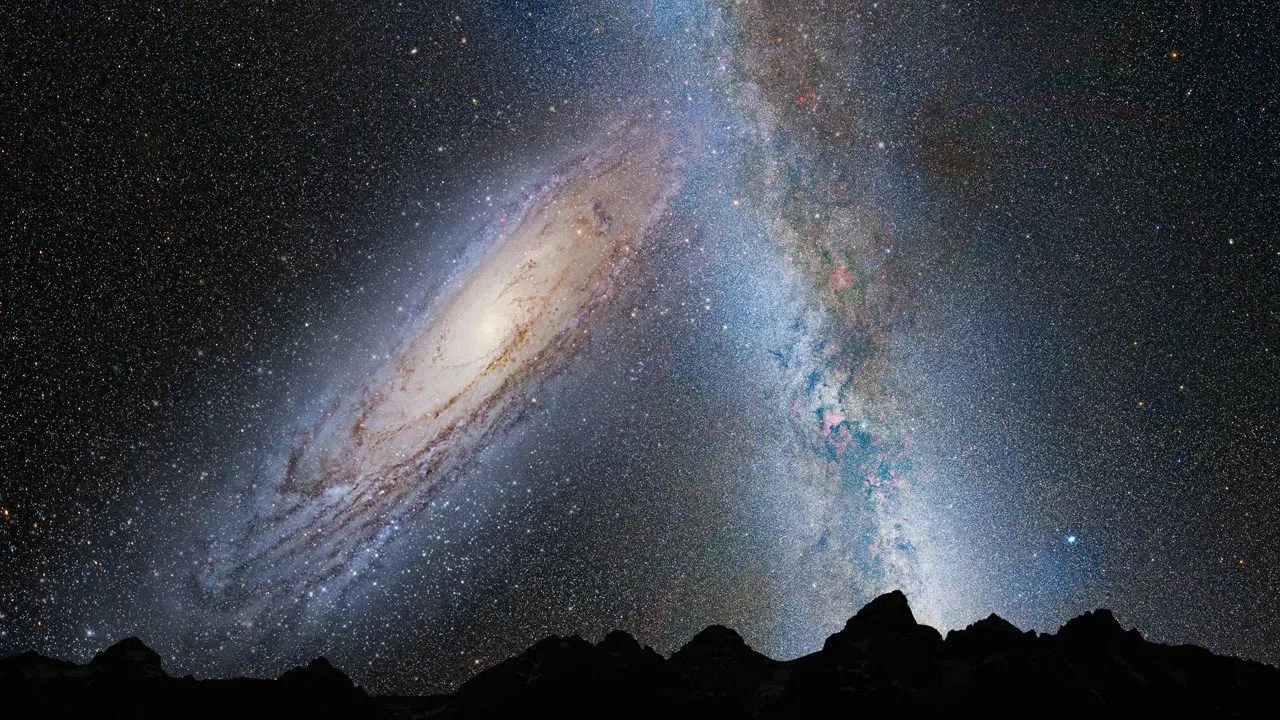
In about four billion years, the Milky Way will merge with the Andromeda galaxy, and while Voyager 1 and 2 will drift in interstellar space long after their power supplies fail, their survival through the collision is uncertain, with risks from stellar encounters, interstellar dust, gravitational deflections, and structural degradation, though they may persist as scattered remnants or debris, symbolizing humanity's first interstellar artifacts.
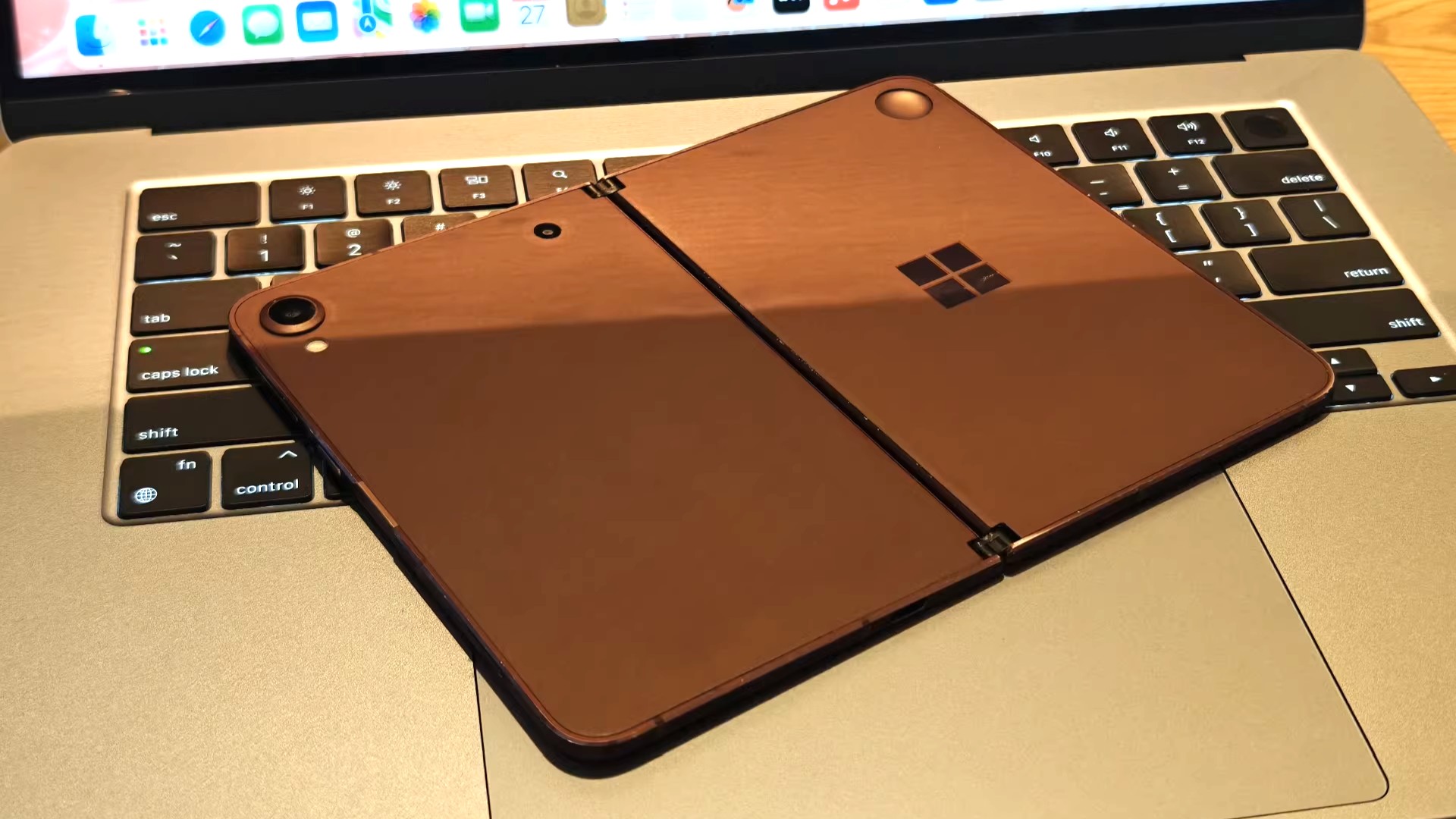
Microsoft's canceled dual-screen device, originally codenamed Andromeda, was a Windows Phone-based prototype designed as a digital pocket notebook with features like inking, a back camera, and wireless charging, but was scrapped in 2018. New images reveal the hardware and software that showcased Microsoft's early vision for a Windows-based dual-screen device, which ultimately evolved into the Android-powered Surface Duo.
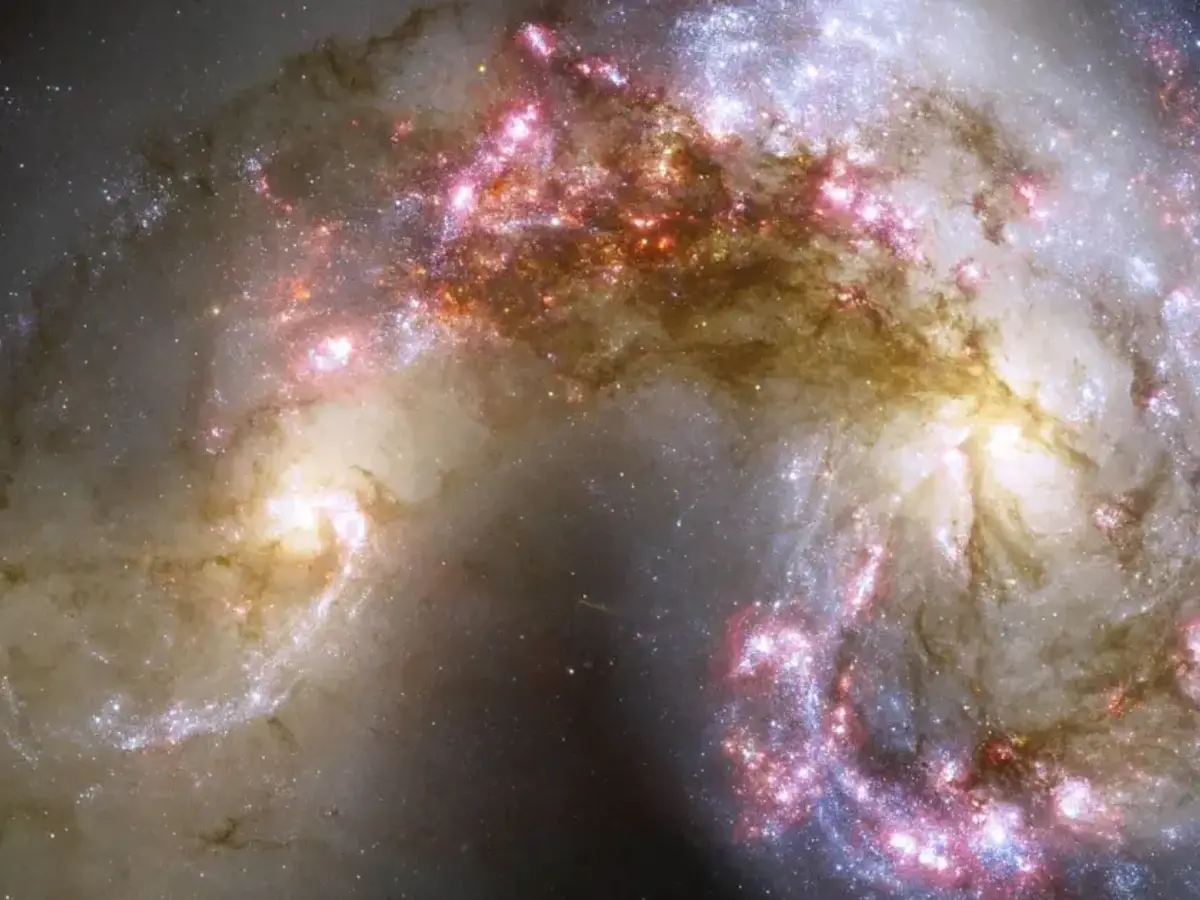
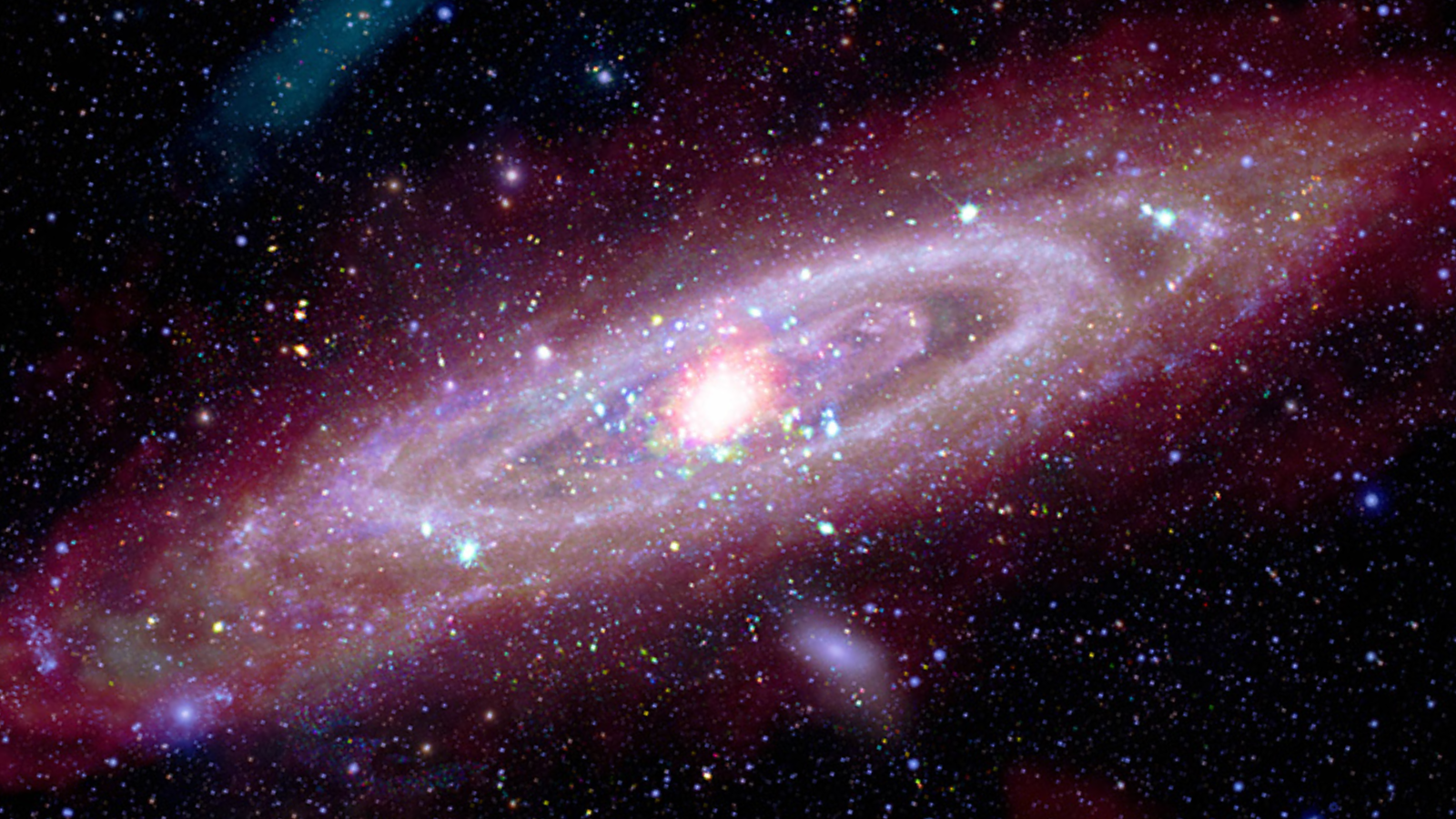
NASA's Chandra X-ray telescope, in collaboration with other space and ground-based observatories, has produced a stunning new multi-wavelength image of the Andromeda galaxy, highlighting its high-energy phenomena and its role in the discovery of dark matter, a breakthrough attributed to astronomer Vera C. Rubin.
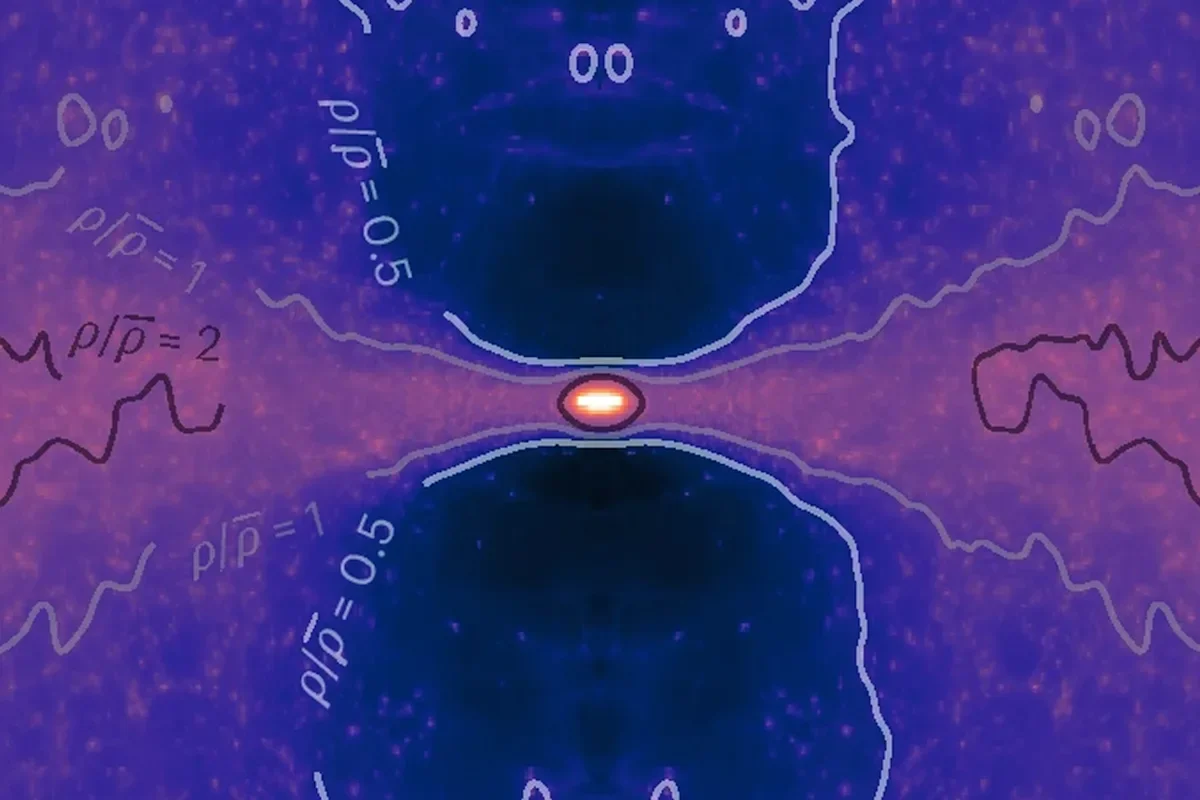
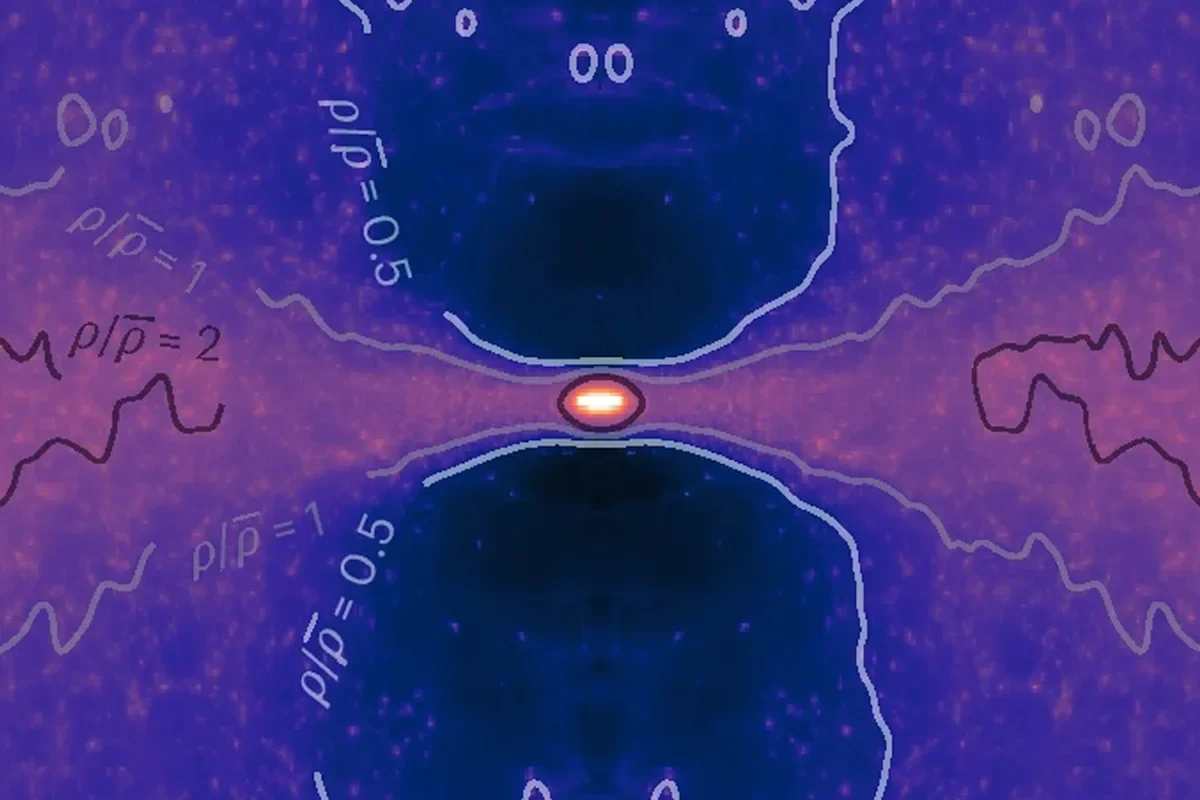
Recent research suggests there is only about a 50% chance that the Milky Way will collide with Andromeda within the next 10 billion years, challenging previous assumptions of an inevitable collision, due to uncertainties in measurements and gravitational influences of nearby galaxies.
A new study suggests that the likelihood of the Milky Way colliding with the Andromeda galaxy within the next 5 billion years is less than 2%, based on recent observational data and simulations, indicating such a collision is far less certain than previously thought.
New research suggests that the long-anticipated collision between the Milky Way and Andromeda galaxies may not happen within the next 10 billion years, with updated data and models indicating only a 50/50 chance of merger, and possibilities that they might pass each other at a safe distance or miss entirely.
A new study suggests there's only about a 50% chance the Milky Way will collide with Andromeda in the next 10 billion years, challenging previous assumptions by accounting for measurement uncertainties and gravitational influences of nearby galaxies, indicating the galaxy's distant future may be more peaceful than once thought.
A new study suggests there is a 50-50 chance that the Milky Way will collide with the Andromeda galaxy within the next 10 billion years, a less certain and more distant timeline than previously thought, based on updated astronomical observations and simulations.
Recent research suggests that the likelihood of the Milky Way colliding and merging with the Andromeda galaxy in the next 10 billion years is only about 50%, a significant decrease from previous near certainty estimates, due to new data and more comprehensive modeling of galactic interactions.
The Milky Way and Andromeda galaxies, the two largest in the Local Group, orbit a common center of mass and are on mostly radial orbits toward each other. This will eventually lead to a collision and merger into a single elliptical galaxy in about 4.5 billion years. The Local Group is also moving towards the Virgo Cluster, but will not reach it due to the universe's expansion.
NASA's Spitzer Space Telescope images reveal streams of dust feeding the supermassive black hole in the Andromeda galaxy, explaining how these black holes can consume material steadily without significant light fluctuation. Computer models and archival data support the finding that a small, continuous flow of gas and dust feeds the black hole, maintaining its "quiet" eating habits.
Hypervelocity stars, capable of traveling at speeds exceeding 1,000 kilometers per second, may be escaping from the Milky Way and heading towards the Andromeda galaxy. This intergalactic exchange of stars is a prelude to the eventual collision between the Milky Way and Andromeda, which is predicted to occur in roughly 5 billion years. The study suggests that some hypervelocity stars originating from Andromeda may already be migrating towards the Milky Way, potentially altering our galaxy's composition in the distant future.
In about 4 billion years, the Milky Way will collide with the Andromeda galaxy, forming "Milkdromeda" or "Milkomeda." During the collision, the supermassive black holes at the center of each galaxy will merge, and there's a 50% chance that the solar system will be pushed three times farther from the galactic core. Ultimately, the collision will make Earth too hot for liquid water to exist, leading to the end of all terrestrial life on the planet.