Scientists have scanned the interstellar object 3I/ATLAS for alien signals using the Green Bank Telescope but found no evidence of artificial radio emissions, supporting the idea that it is a natural comet. Despite ongoing investigations and some anomalies noted by Avi Loeb, current data suggest 3I/ATLAS is likely a natural icy body rather than an alien probe.

Recent research suggests that advanced civilizations could reside near the galactic core, utilizing black holes for time dilation to expand their lifespan and exploration capabilities, which may explain why we haven't detected them and offers new avenues for SETI efforts.
Scientists suggest that galaxies with high radio emissions could harbor advanced civilizations, but such galaxy-spanning ETIs are extremely rare, with less than 1 in 100,000 large galaxies potentially hosting them. The research uses models to set upper limits on the prevalence of these civilizations based on radio observations, and proposes expanding searches to other frequencies and technosignatures beyond radio waves.
In 2008, Earth sent a message to the exoplanet Gliese 581c, which is about 21 light-years away, and the message is expected to arrive in 2029. The message included images of celebrities and Earthlings, with the hope of making contact if extraterrestrial life exists. The earliest possible reply could be in 2050, but the likelihood remains uncertain, making it a fascinating but speculative endeavor.
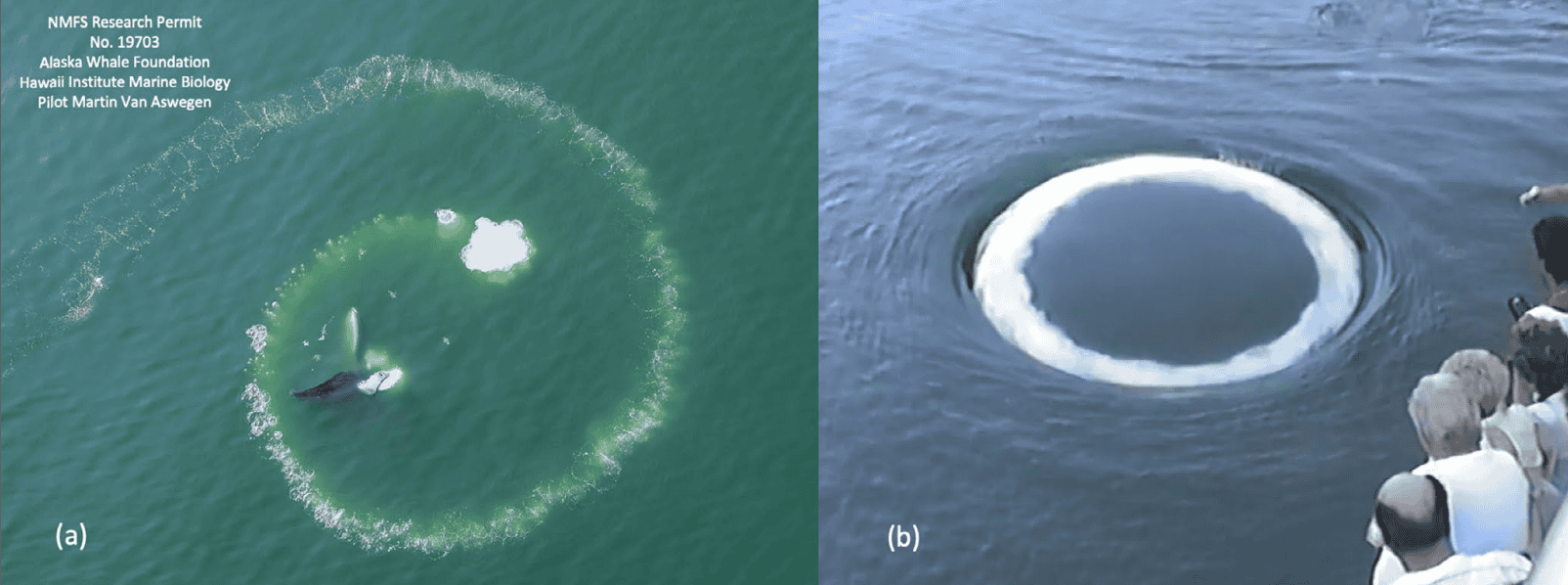
Scientists have discovered that humpback whales create smoke ring-like bubbles as a playful and possibly communicative gesture towards humans, which could provide insights into how extraterrestrial civilizations might attempt contact, supporting the idea that intelligent non-human species use curiosity and friendly interactions to communicate.
Scientists have observed humpback whales creating symmetrical bubble rings during peaceful encounters with humans, suggesting a possible form of communication or playful interaction, which may offer insights into non-verbal intelligence and interspecies signaling.
Researchers from the SETI Institute and UC Davis have observed humpback whales creating bubble rings in a manner that may indicate intentional communication, potentially offering insights into non-human intelligence and serving as a terrestrial analog for understanding extraterrestrial communication.
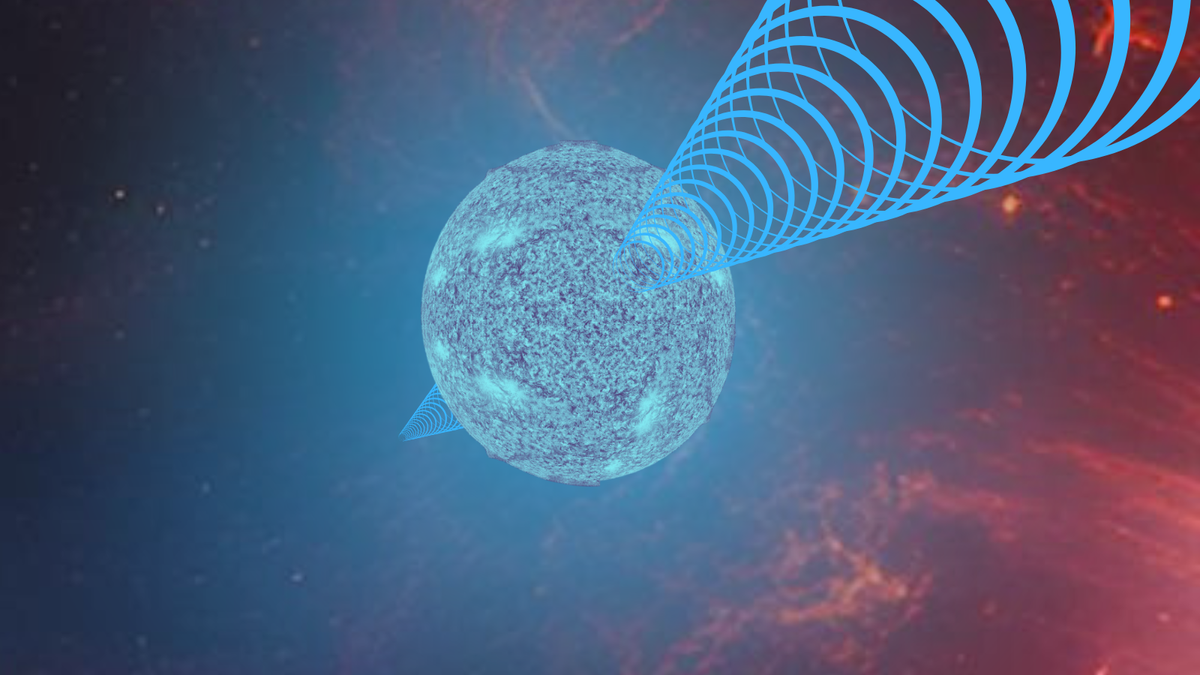
Using data from the now-collapsed Arecibo radio telescope, SETI scientists have studied how pulsar signals are distorted by the interstellar medium, revealing that current models of the universe may need revision. This research, led by Sofia Sheikh, highlights the importance of archived data and its role in understanding cosmic phenomena like gravitational waves. The findings suggest that galactic structures, such as the Milky Way's spiral arms, influence these distortions, which could refine gravitational wave detection methods.
Scientists from the SETI Institute have used archival data from the now-collapsed Arecibo Observatory to study how signals from pulsars, rapidly spinning neutron stars, are distorted as they travel through space. The research focused on diffractive interstellar scintillation (DISS), revealing that pulsar signal bandwidths are wider than current models suggest, indicating a need to revise models of the interstellar medium. This study highlights the ongoing scientific value of Arecibo's data, even after its destruction, in understanding galactic structures and phenomena like gravitational waves.
Researchers from the University of California Davis, led by Dr. Brenda McCowan, have achieved a groundbreaking 20-minute dialogue with a humpback whale named Twain using AI and advanced underwater technology. This interaction, part of the Whale-SETI project, highlights the potential for interspecies communication and has implications for the search for extraterrestrial intelligence. The project employs AI to analyze whale vocalizations, aiming to understand complex communication systems and draw parallels with potential extraterrestrial signals, supported by the Templeton Foundation Diverse Intelligences Program.
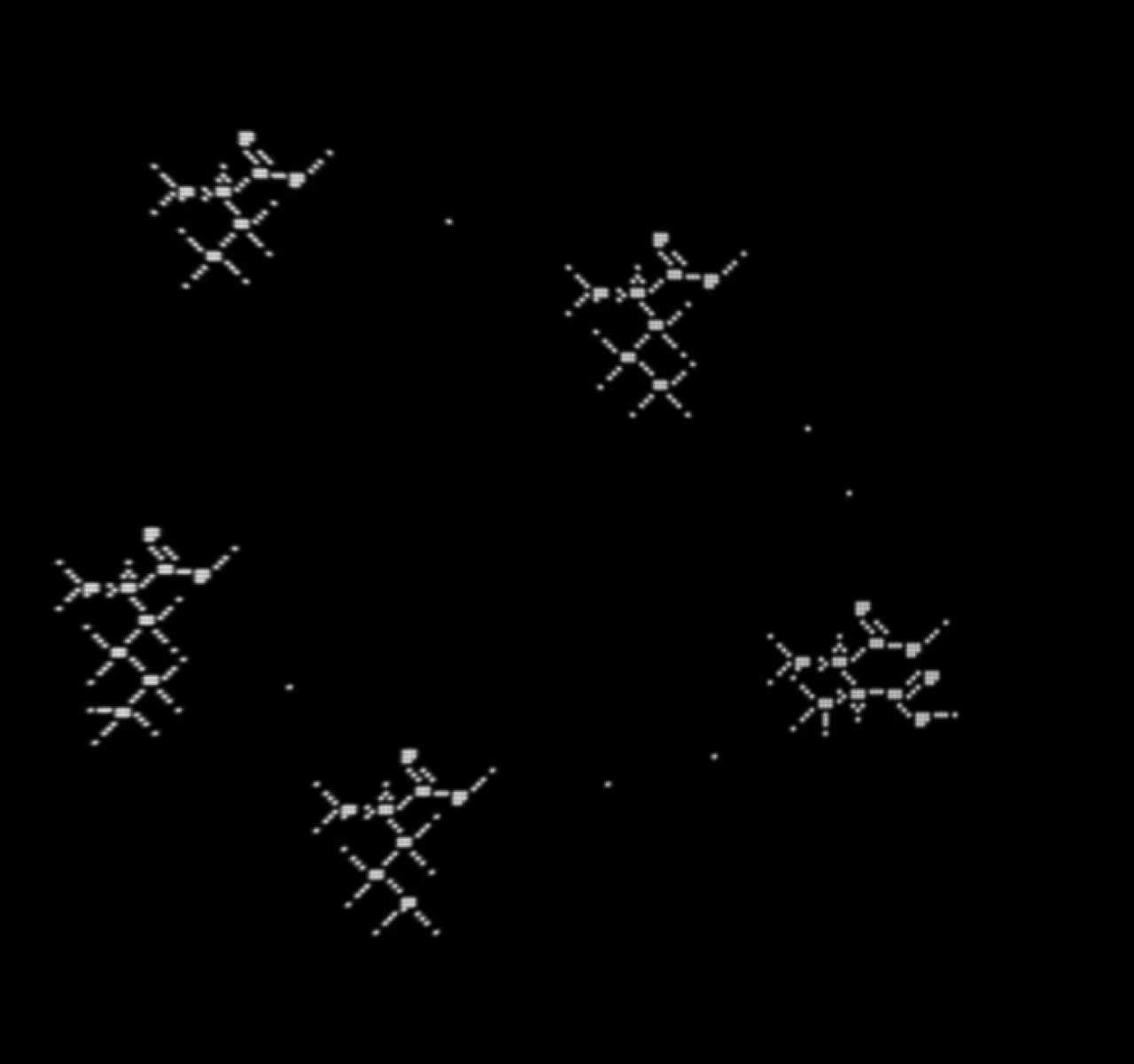
A father-daughter team successfully decoded a simulated alien-like message sent by a European Mars orbiter, which was part of a project by the SETI Institute to prepare for potential extraterrestrial communication. The message, extracted by 5,000 citizen scientists, was a video depicting the cellular formation of five amino acids. The project aims to explore how humanity might interpret and find meaning in a real message from space, sparking global discussion on our place in the universe.
In 1974, the Arecibo Observatory in Puerto Rico sent the first intentional interstellar message, known as the Arecibo Message, towards the Messier 13 star cluster, 25,000 light-years away. Created by astronomer Frank Drake with input from Carl Sagan, the message aimed to announce humanity's presence in the cosmos. Despite its symbolic nature and the slim chance of a response, the transmission sparked discussions on interstellar communication and the risks of contacting extraterrestrial life. The Arecibo Observatory, which collapsed in 2020, remains a significant part of humanity's quest to answer whether we are alone in the universe.
A simulated alien-like signal sent from Mars by the SETI Institute was decoded by a father-daughter team, revealing a message representing amino acids, the building blocks of life. The project, designed to mimic receiving an extraterrestrial message, involved global citizen scientists and took nearly a year to decipher. The meaning of the message remains open to interpretation, with suggestions ranging from a simple 'hello' to a representation of panspermia. The project highlights the challenges of interpreting potential extraterrestrial communications.
Carl Sagan, renowned for his work on the 'Cosmos' series, left a lasting scientific legacy that extends beyond his popular media presence. He made significant contributions to planetary science, astrobiology, and the study of climate change, while also advocating for nuclear disarmament and the search for extraterrestrial intelligence. Despite being overlooked by the National Academy of Sciences, Sagan's work continues to inspire scientists and promote critical thinking. His 90th birthday in 2024 serves as a reminder of his enduring impact on science and society.
A team including a UC Davis professor and a scientist from SETI has had a 20-minute "conversation" with a humpback whale in the wild, leading to breakthroughs in understanding non-human intelligence communication. The study suggests that studying humpback whales can help develop "intelligence filters" for the search for extraterrestrial intelligence. The researchers observed turn-taking and matching of rhythm during the exchange, indicating cohesion and bonding. The team also plans to study humpback whale communication through bubble rings. This research challenges the assumption that narrow-band radio signals are the only way to make contact with extraterrestrial intelligence.