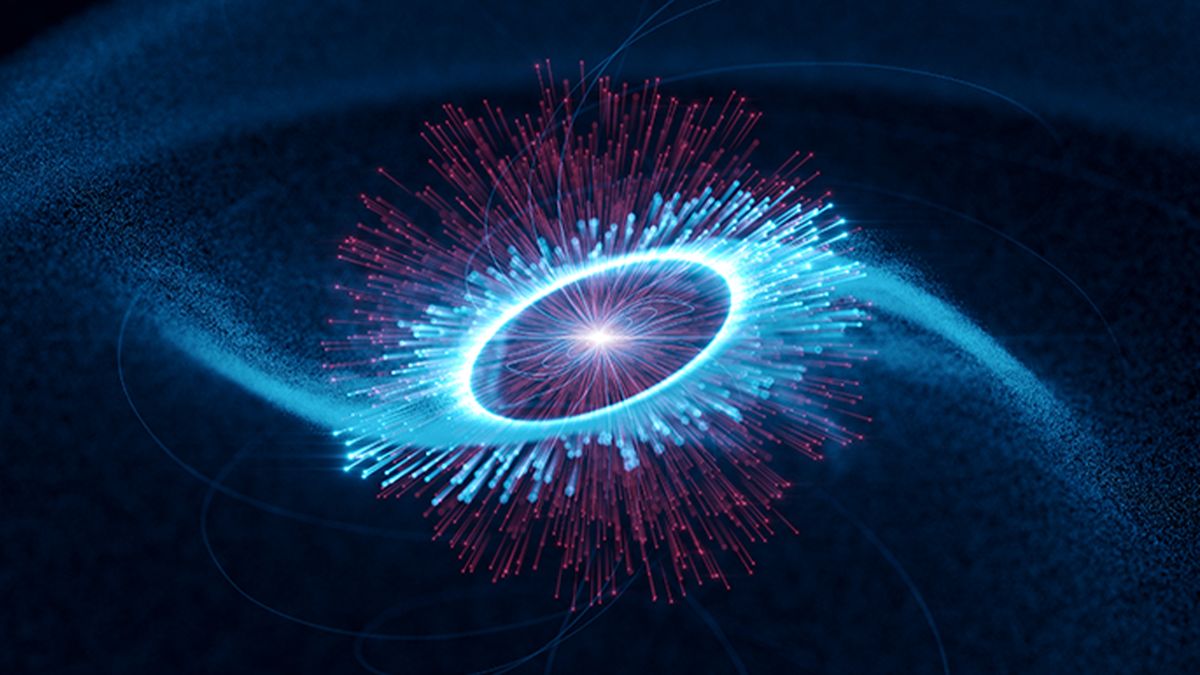
Using data from the now-collapsed Arecibo radio telescope, SETI scientists have studied how pulsar signals are distorted by the interstellar medium, revealing that current models of the universe may need revision. This research, led by Sofia Sheikh, highlights the importance of archived data and its role in understanding cosmic phenomena like gravitational waves. The findings suggest that galactic structures, such as the Milky Way's spiral arms, influence these distortions, which could refine gravitational wave detection methods.
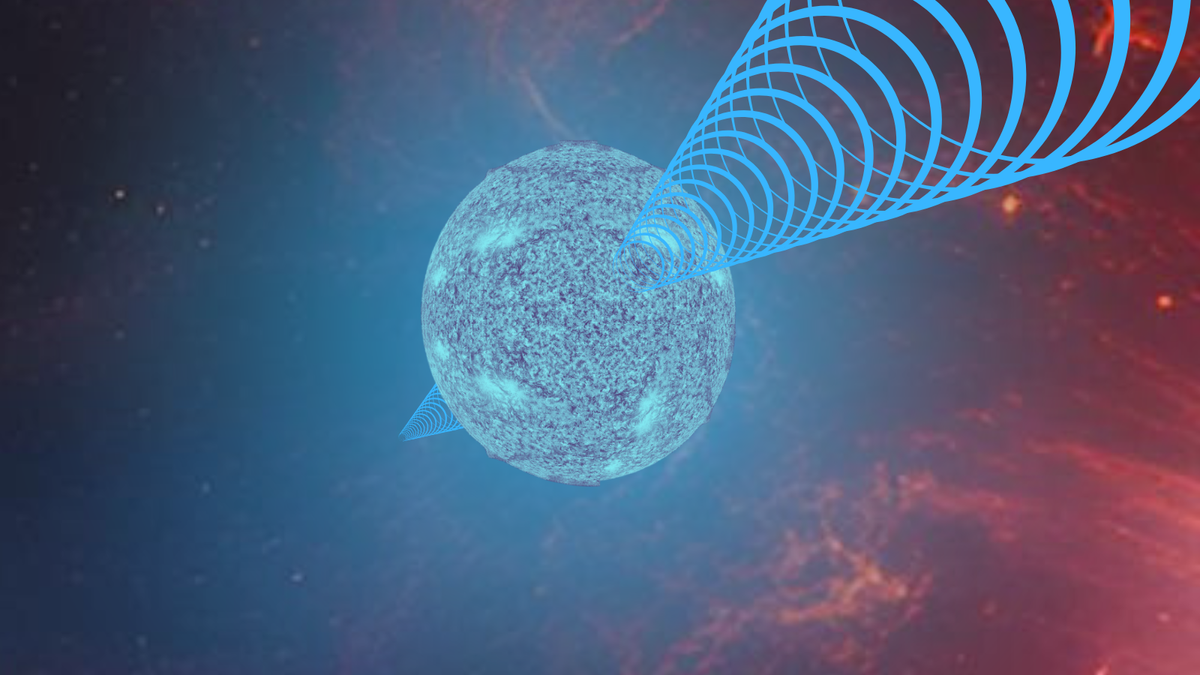
Scientists from the SETI Institute have used archival data from the now-collapsed Arecibo Observatory to study how signals from pulsars, rapidly spinning neutron stars, are distorted as they travel through space. The research focused on diffractive interstellar scintillation (DISS), revealing that pulsar signal bandwidths are wider than current models suggest, indicating a need to revise models of the interstellar medium. This study highlights the ongoing scientific value of Arecibo's data, even after its destruction, in understanding galactic structures and phenomena like gravitational waves.
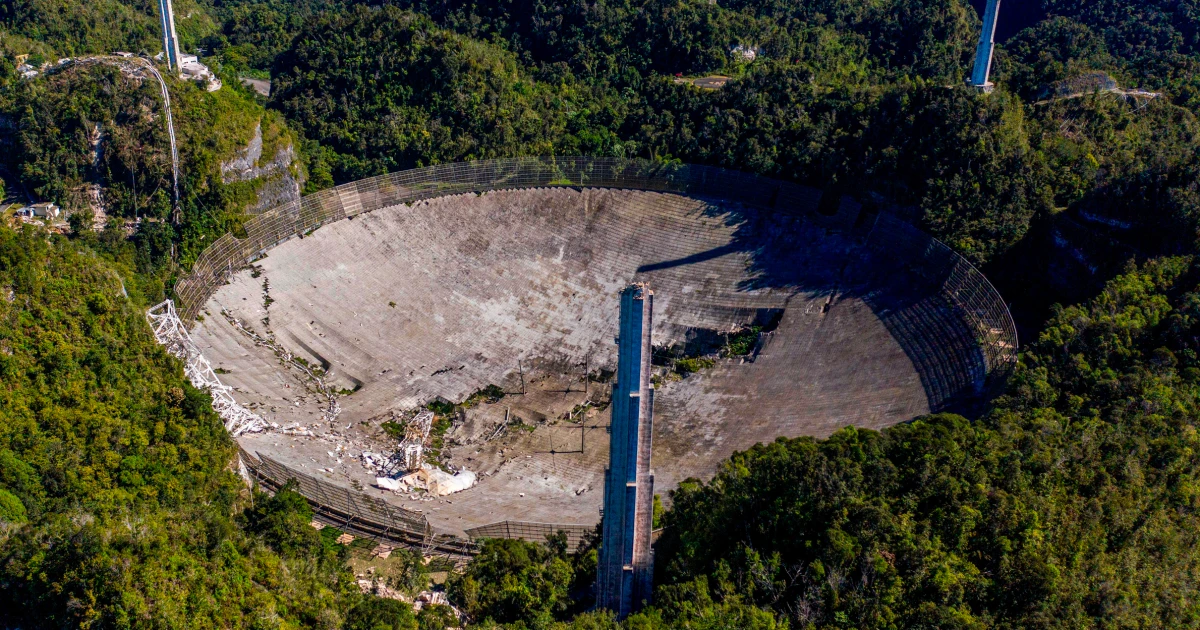
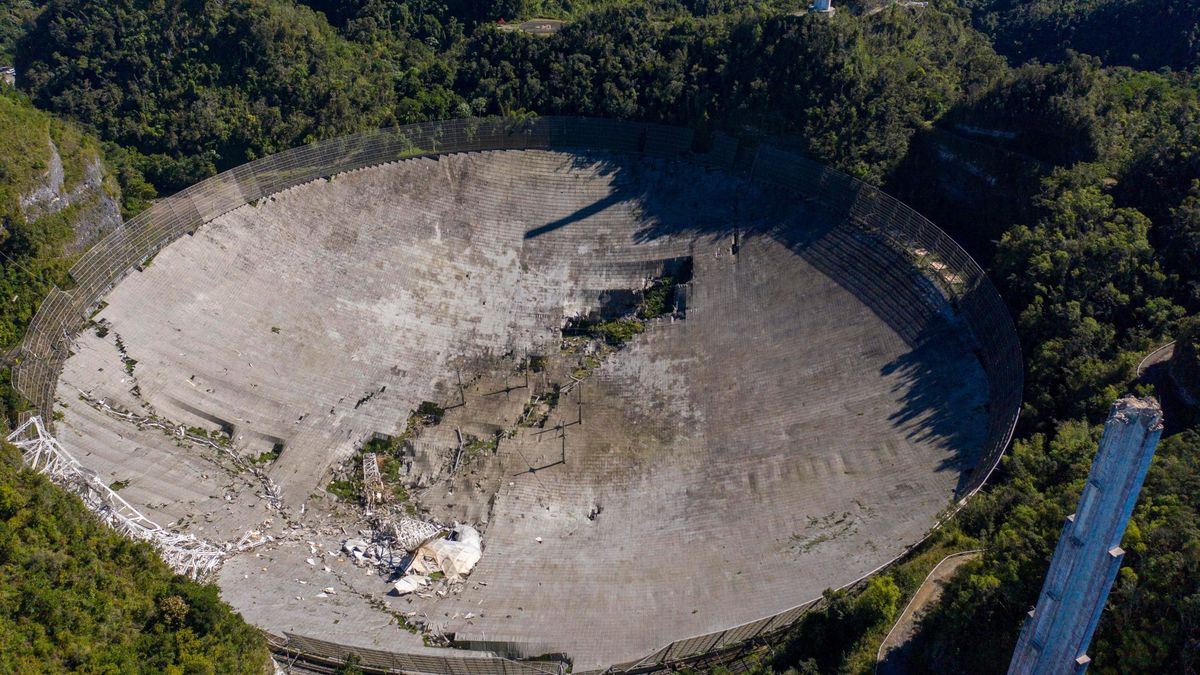
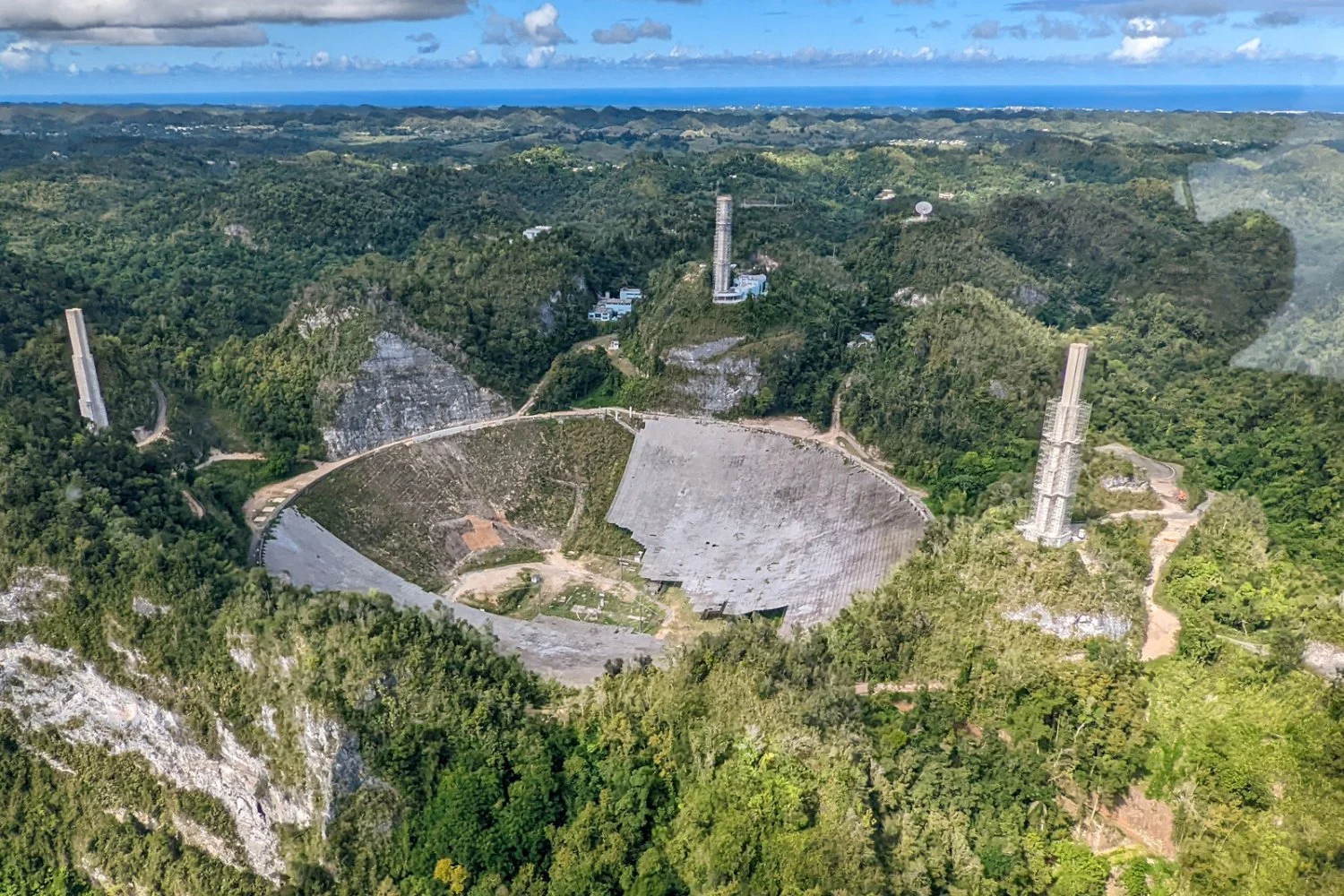
A report by the National Academies of Sciences, Engineering, and Medicine has identified "zinc creep" as the cause of the Arecibo Observatory's radio telescope collapse in Puerto Rico. The zinc-filled sockets supporting the steel cables failed, leading to the platform's fall. The report suggests low-current electroplasticity may have accelerated the zinc's deformation. Recommendations include further study of the remaining components and better monitoring of aging facilities. The telescope, once a key research tool, will not be rebuilt, but a $5 million education center is planned for the site.
The collapse of the Arecibo Observatory in 2020 was primarily caused by long-term zinc creep-induced failure of the telescope's cable spelter sockets, as detailed in a report by the National Science Foundation and the University of Central Florida. The structural failure began after Hurricane Maria in 2017, which subjected the telescope to unprecedented stress. Despite inspections and delayed repairs, the hidden degradation of cable mechanisms was not identified, leading to the eventual collapse. The site will be transformed into an educational center, Arecibo C3, to inspire future astronomers.
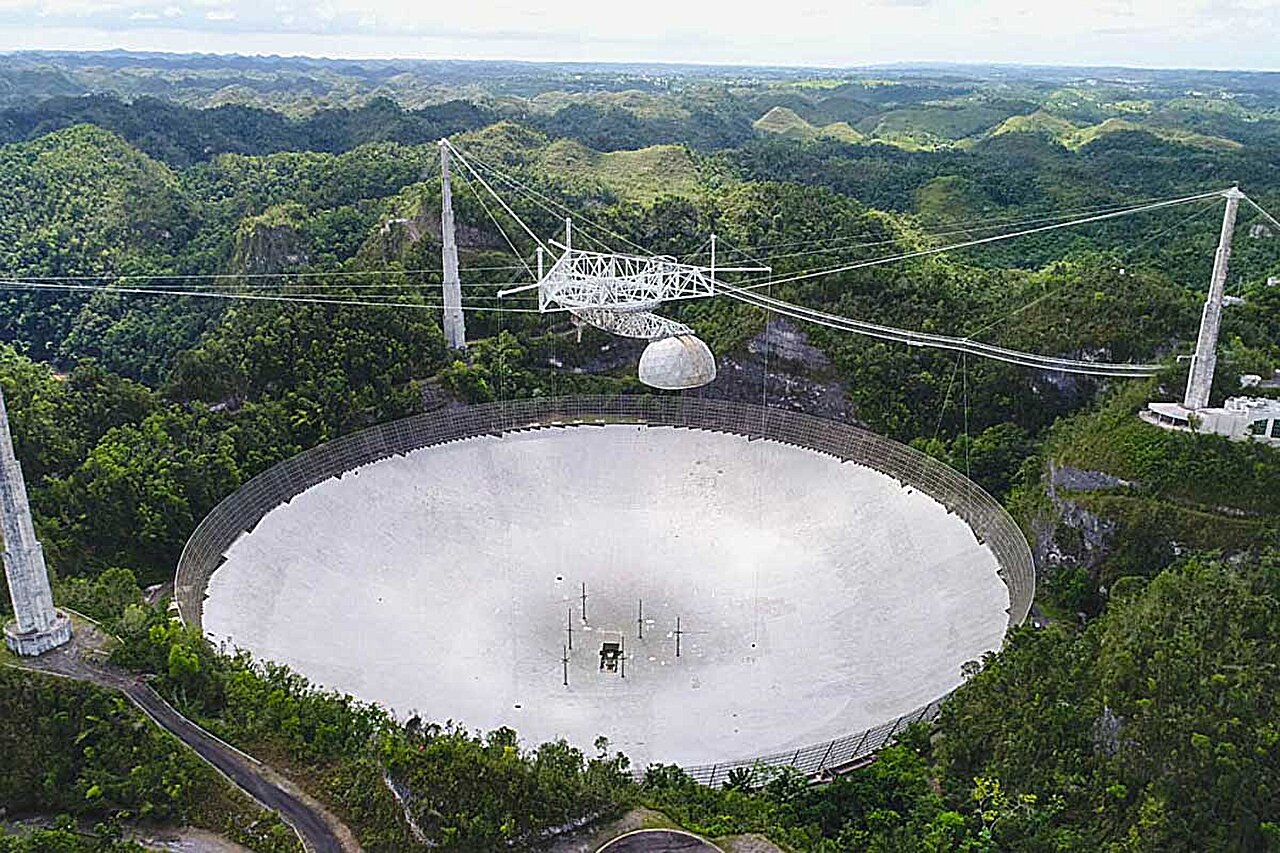
The Arecibo Observatory in Puerto Rico, once the world's largest radio telescope, collapsed in December 2020 due to weakened infrastructure from zinc creep-induced failure in cable sockets and damage from Hurricane Maria. A recent report by the NSF and the University of Central Florida attributes the collapse to these factors, compounded by delayed and misdirected repairs. The observatory, known for significant astronomical discoveries, will be transformed into an education center focused on science, computing, and community.
The Arecibo Observatory in Puerto Rico, once the world's largest radio telescope, collapsed in December 2020 due to weakened infrastructure from zinc creep-induced failure in cable sockets and damage from Hurricane Maria. A recent report by the NSF and the University of Central Florida attributes the collapse to these factors, compounded by delayed repairs. The observatory, known for significant astronomical discoveries, will be transformed into an education center focused on science, computing, and community.
The Arecibo Observatory's collapse in December 2020 was caused by decayed zinc in cable sockets and damage from Hurricane Maria, according to a report by the National Academies of Sciences. The report highlights "unprecedented and accelerated long-term zinc creep" as the root cause, with the failure sequence beginning 39 months prior. The observatory, a key site for radio astronomy, will be transformed into a STEM education center, though it will no longer collect radio data.
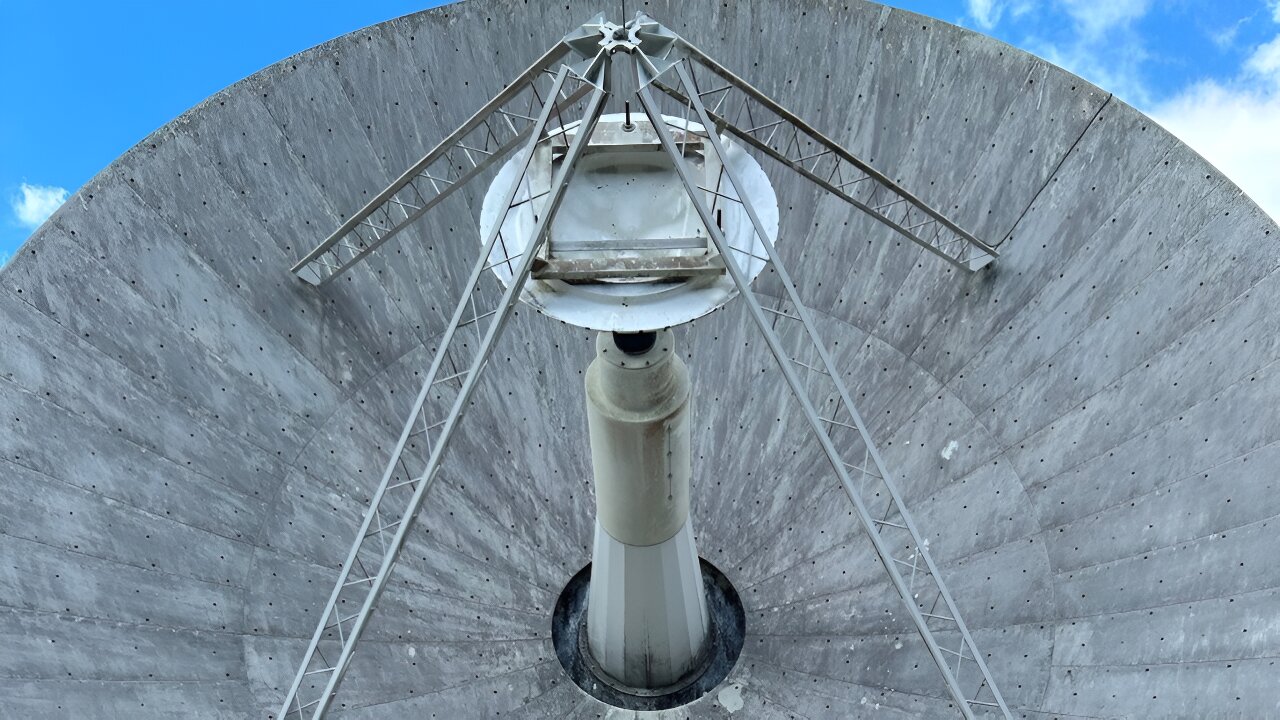
The Arecibo Observatory's 12-meter telescope has been upgraded with a new cooled receiver system that operates at a wider bandwidth and cryogenic temperatures, allowing for improved space observations. Recent tests have shown its capabilities in detecting emissions from dark molecular clouds, observing pulsars, and capturing images of solar flares. These upgrades are expected to expand the telescope's potential for future research and educational projects.
A recent study has failed to replicate two key papers on fruit flies' ability to sense magnetic fields, raising doubts about this long-held belief. This finding could have implications for scientists' understanding of the mechanism behind magnetic sensing, which is a major question in sensory biology. Additionally, the Arecibo Observatory in Puerto Rico has shut down due to funding exhaustion and no clear plan for its future, leaving scientists uncertain about the fate of the iconic facility.
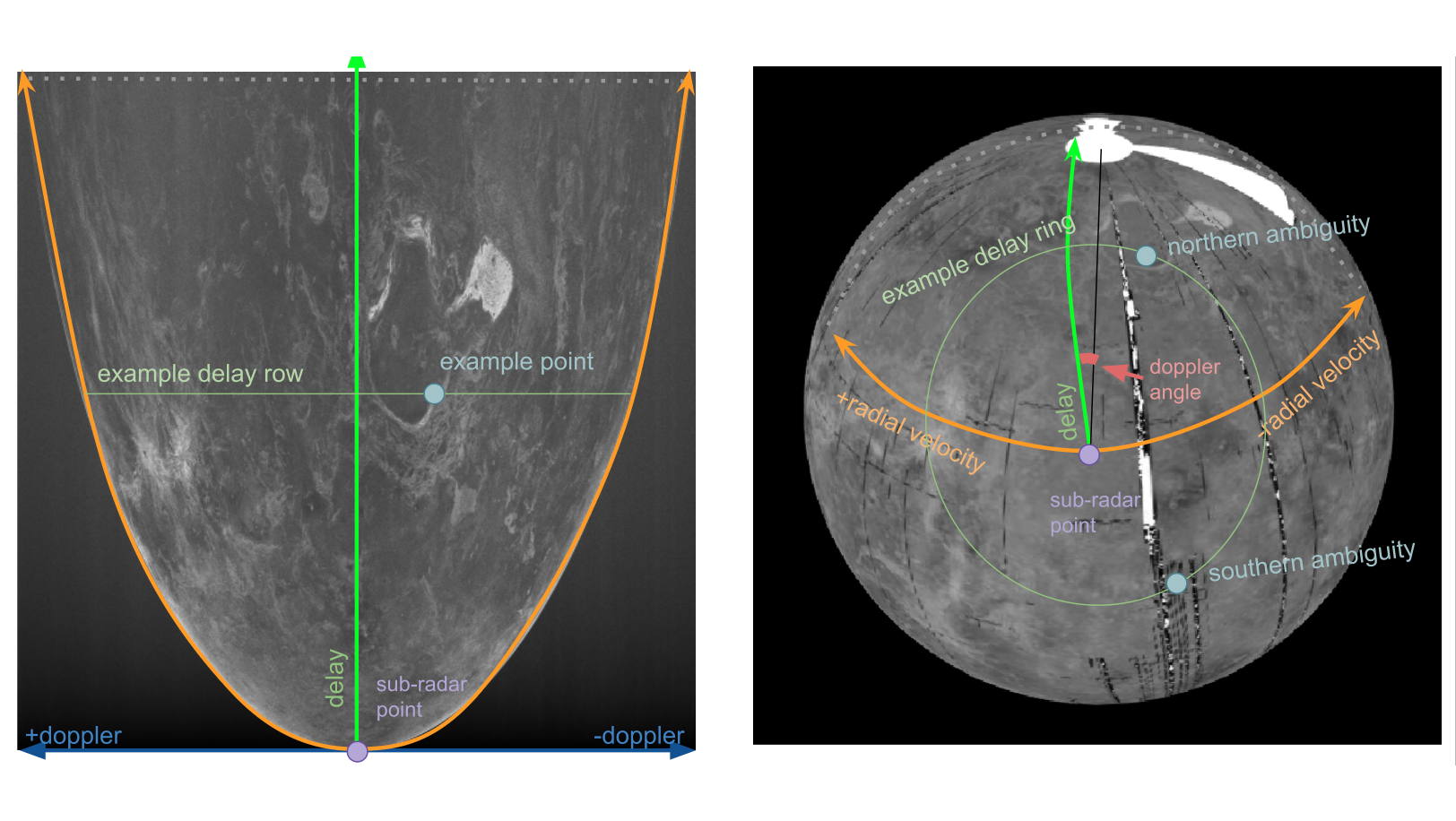
Nathaniel Fairfield, also known as thandal, used publicly available uncalibrated delay-doppler images of Venus collected by the Arecibo Observatory to estimate the planet's rotation and axis tilt. By aligning and calibrating the raw data, Fairfield found that Venus's revolution appears to be slightly speeding up and his estimates of the orbital axis were within 0.01 degrees of the International Astronomical Union's values. The complex signal processing involved mapping the data onto the Venus geoid and using surface features to estimate rotational speed and tilt. This research is important for better planning future missions.