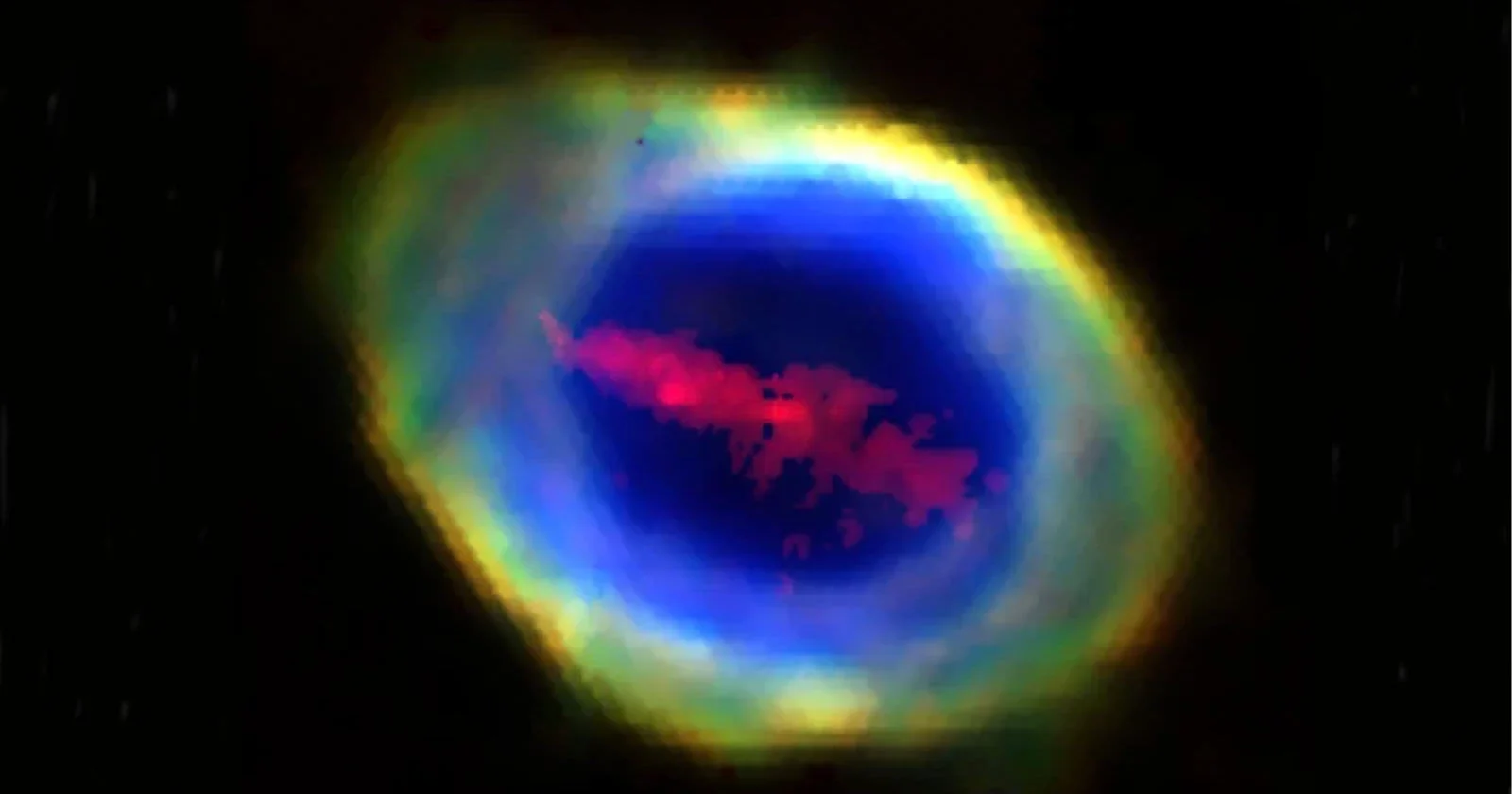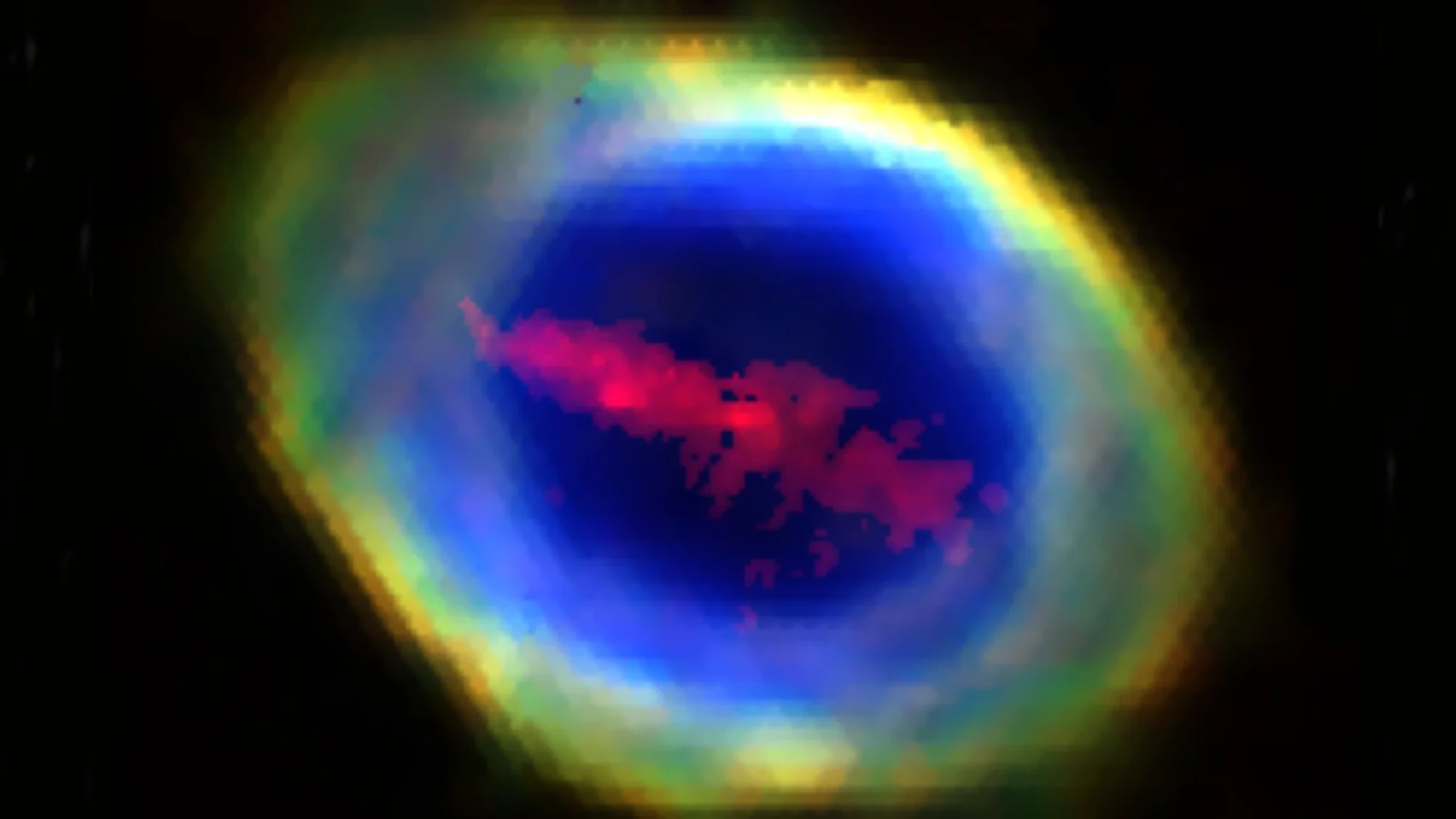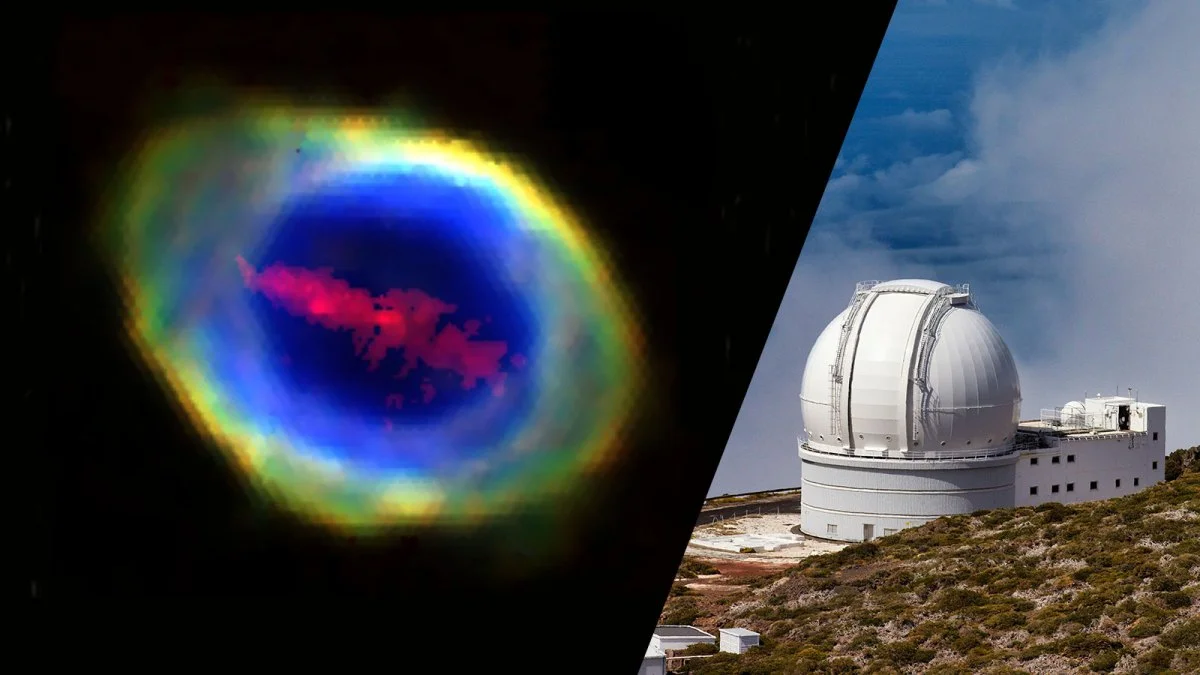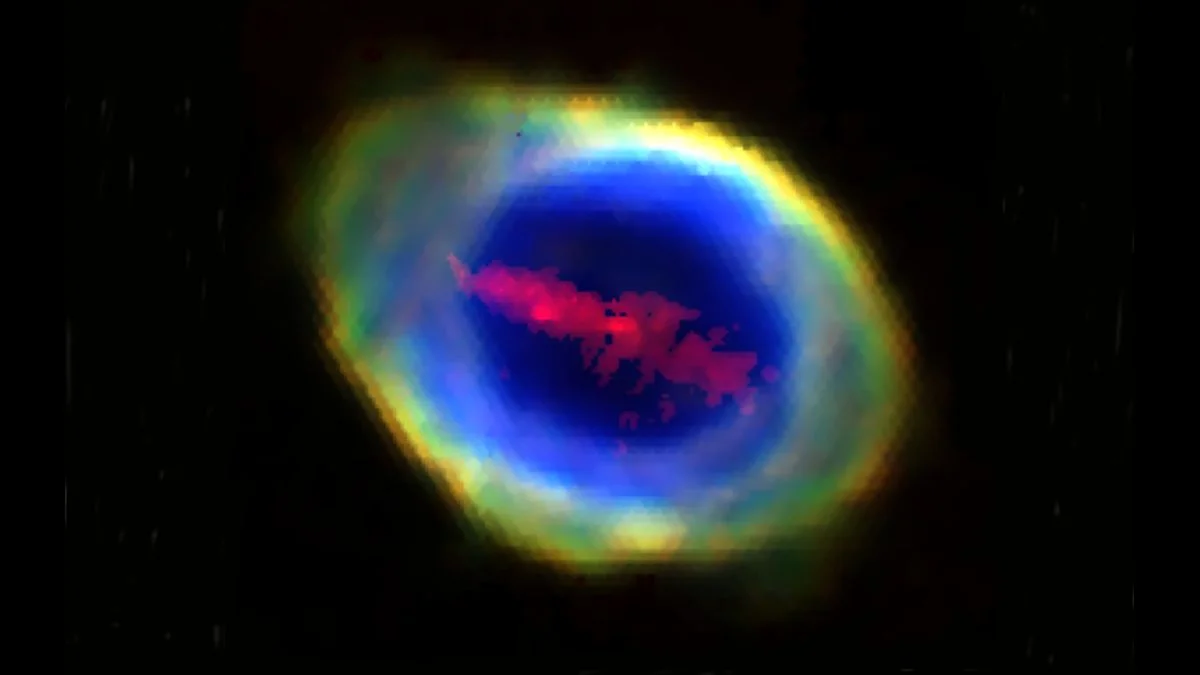
Scientists using the James Webb Space Telescope discovered a rare dust disk around the white dwarf in the Ring Nebula, raising questions about potential second-generation planet formation and the star's companions, providing new insights into the death of medium-sized stars.
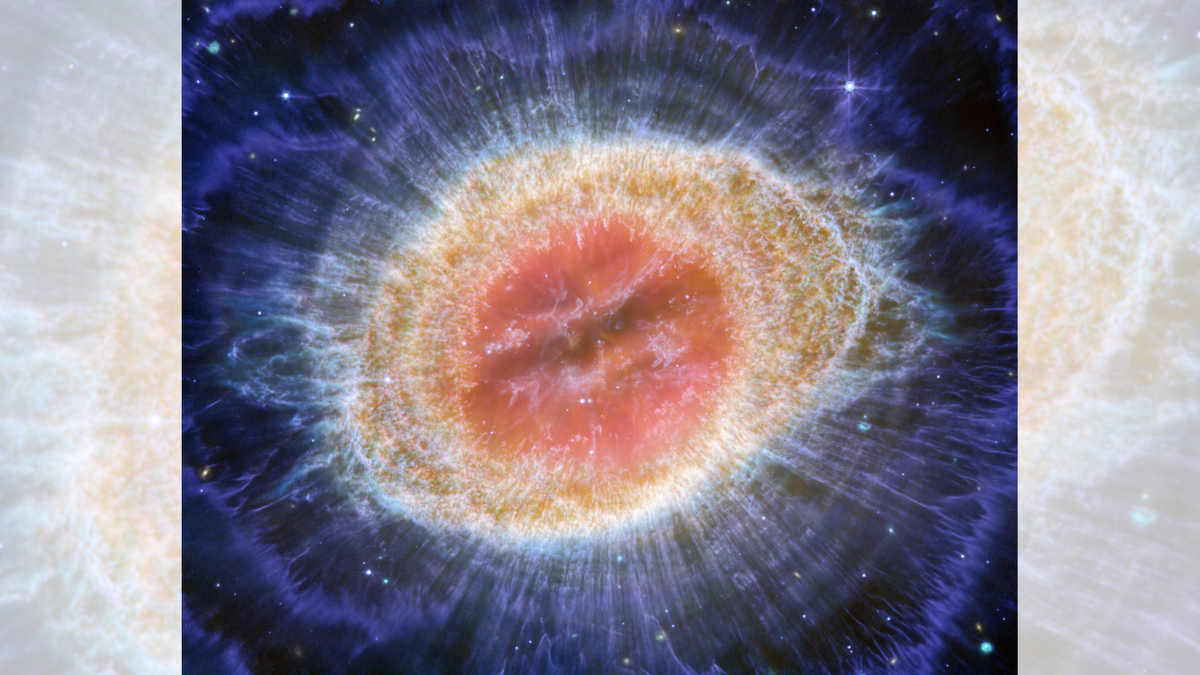
The James Webb Space Telescope (JWST) has captured stunning new images of the Ring Nebula, revealing intricate details and suggesting the presence of a companion star. The images show concentric arcs beyond the main ring, believed to be formed by the interaction of the central star with a low-mass companion. The Webb images also display dense hydrogen gas globules and polycyclic aromatic hydrocarbon (PAH) inside the nebula. Curious spikes outside the ring, visible in the infrared, may be due to molecules forming in the shadows. The findings provide valuable insights into stellar evolution and the elements released by stars into the universe.
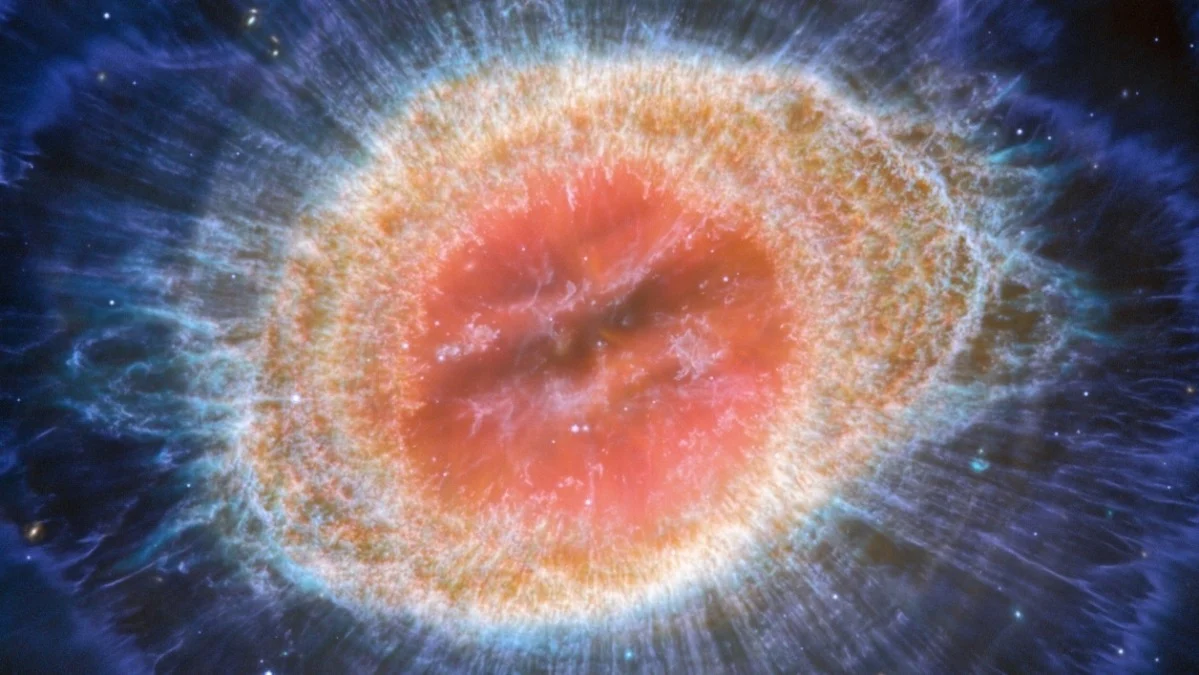
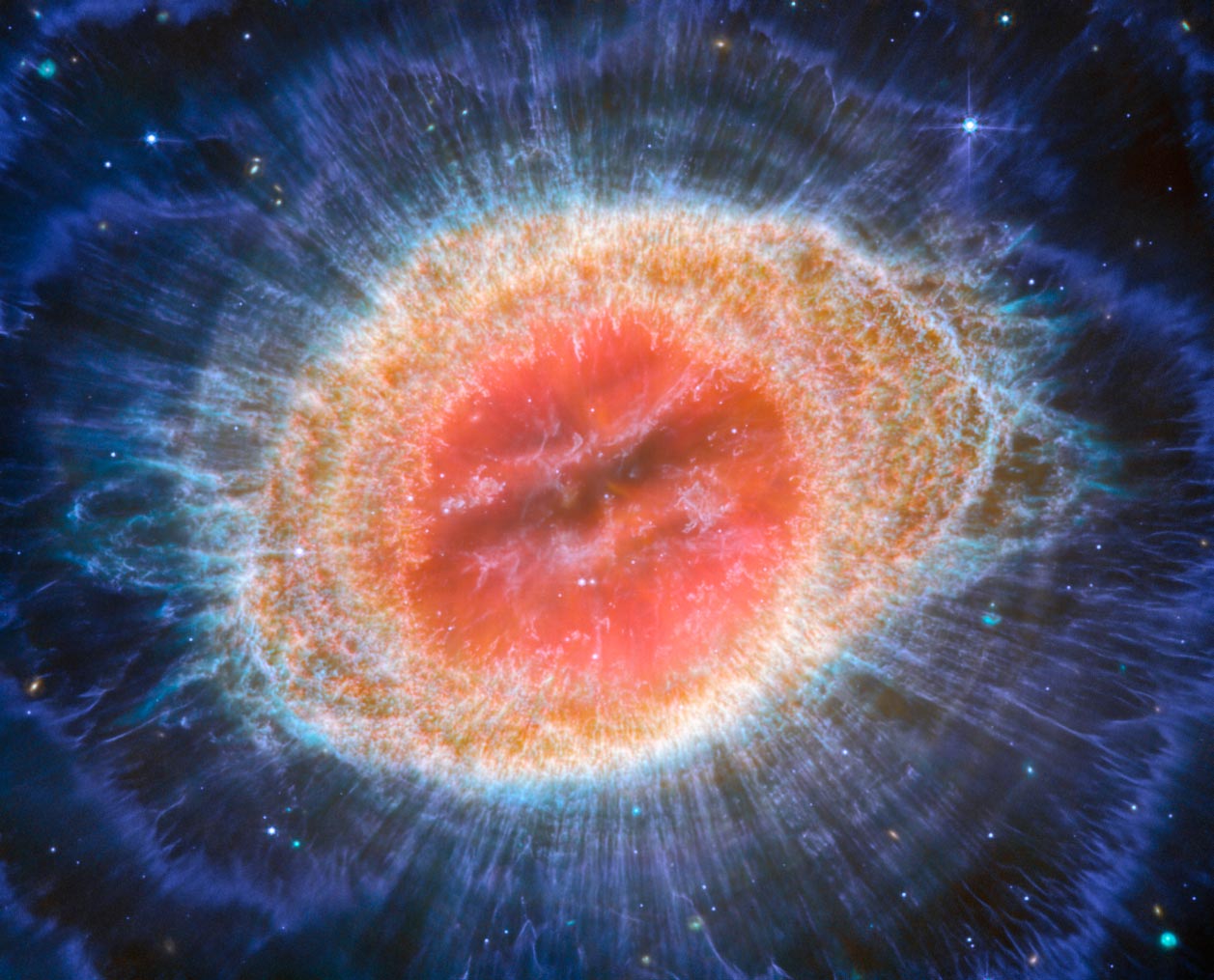
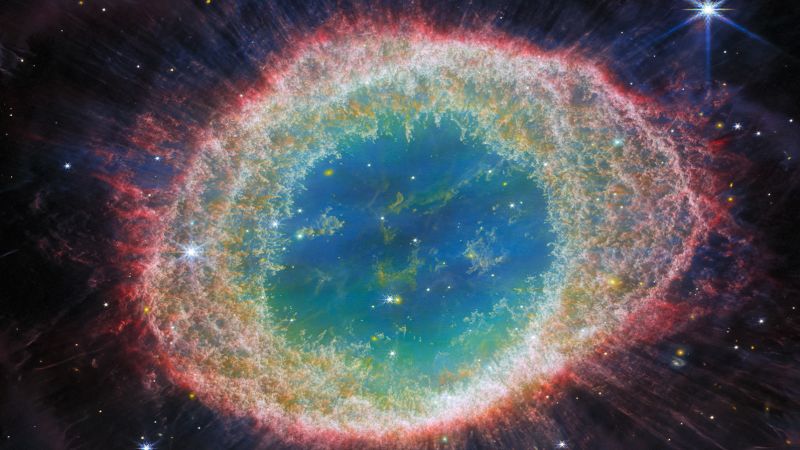
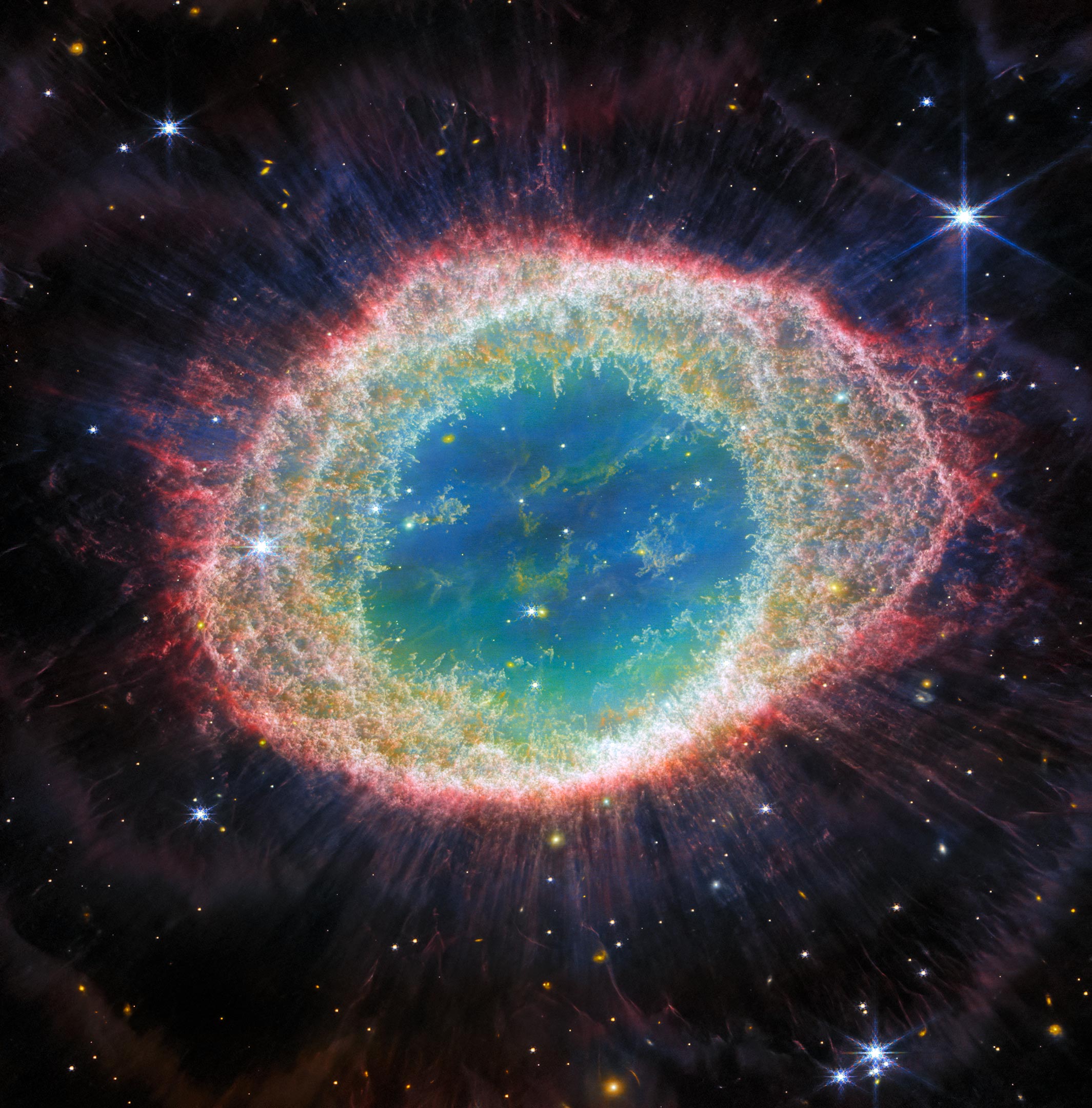
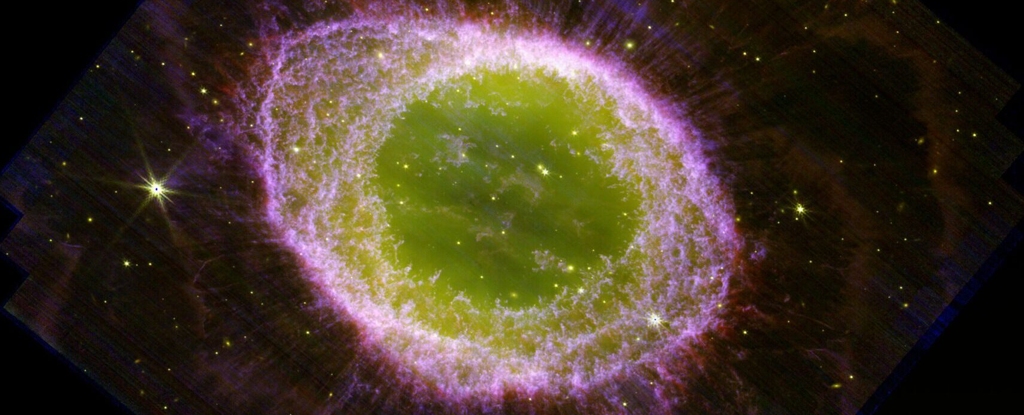
NASA's James Webb Space Telescope has captured uniquely detailed images of the Ring Nebula, a massive cloud of cosmic gas and dust that houses the remnants of a dying star. The images, taken with the Mid-Infrared instrument, reveal intricate structures of the final stages of the star's life. The telescope's observations have provided new insights into the formation of the nebula, including the presence of dense molecular hydrogen gas clumps and unexpected carbon-bearing molecules. The images also show regularly-spaced concentric features in the faint molecular halo surrounding the bright ring, shedding light on the shedding of the star's outer layers.
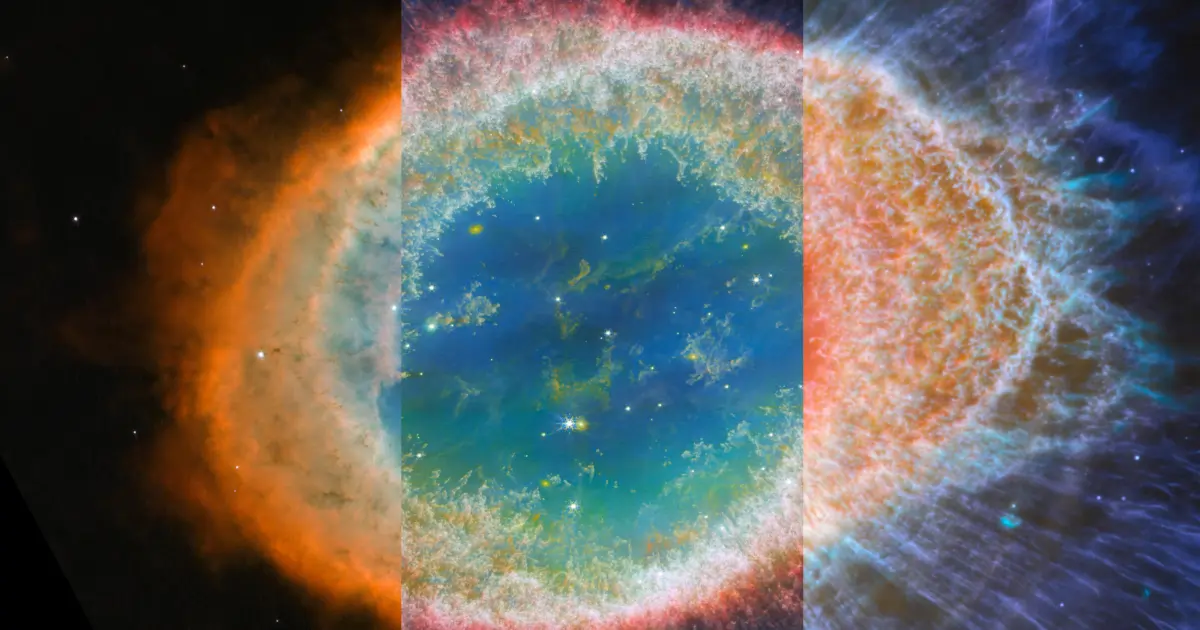
The James Webb Space Telescope has captured stunning new images of the Ring Nebula, revealing intricate details of the planetary nebula. The images, taken in different wavelengths of infrared light, show the complex structure of the nebula and its surrounding halo. Astronomers believe that the presence of concentric features within the halo suggests the existence of a companion star in the system, shaping the outflow of the dying star's atmosphere. These unprecedented images provide valuable insights into the evolution of planetary nebulae and the lifetime of stars.
The James Webb Space Telescope (JWST) has provided unprecedented views of the Ring Nebula, the closest planetary nebula to Earth. JWST's high-resolution cameras have revealed approximately 20,000 dense knots of gas inside the nebula, intricate details of the inner filaments, and roughly 10 concentric arcs rich in hydrocarbons surrounding the main "ring" feature. The infrared imaging capabilities of JWST have allowed for a more accurate and detailed understanding of the structure and composition of the Ring Nebula.
NASA's James Webb Space Telescope has captured unprecedented detail of the Ring Nebula, a planetary nebula formed by a dying star shedding its outer layers. The telescope's NIRCam revealed intricate filament structures within the inner ring. Additionally, NASA's upcoming Psyche mission, set to launch in October, is highlighted in a video series showcasing the team behind the mission. The mission aims to explore a metal-rich asteroid and provide insights into the formation of rocky planets. Astronomers using NASA's Chandra X-ray Observatory and ESA's XMM-Newton have studied material from a star torn apart by a giant black hole, revealing it to be one of the most massive stars ever observed being destroyed by a black hole. The Nancy Grace Roman Space Telescope team has begun integrating and testing the spacecraft's harness, which functions as the telescope's nervous system, enabling communication between its instruments and monitoring its functions.
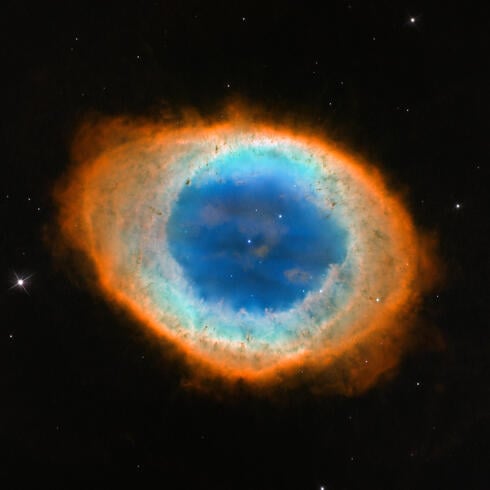
The James Webb Space Telescope has captured stunning new images of the Ring Nebula, revealing intricate details of the inner and outer regions of the nebula's ring. The images, taken using JWST's Mid-Infrared Instrument and Near Infrared Camera, offer more detail than previous images taken by the Hubble Space Telescope. The Ring Nebula, located around 2,000 light-years away in the constellation Lyra, is a popular target for amateur astronomers during the summer months.
The James Webb Space Telescope has captured unprecedented detailed images of the Ring Nebula, revealing intricate details of its filament structure and concentric features. The images provide insights into the composition and evolution of the nebula, which is formed by a dying star throwing off its outer layers. The Ring Nebula, also known as M57 and NGC 6720, is located approximately 2,500 light-years away from Earth.
The James Webb Space Telescope (JWST) has captured stunning images of the Ring Nebula, a dying star located 2,750 light-years away. The high-resolution images reveal intricate details of the nebula's expanding shell and the inner region around the central white dwarf. Scientists hope that studying the Ring Nebula with the JWST will provide insights into the processes of stellar evolution and the elements released into the cosmos. The observations have already uncovered unexpected complexity and the presence of large, carbon-based molecules whose origin is currently unknown.
The Webb Space Telescope has captured stunningly detailed images of the Ring Nebula, showcasing its intricate and ethereal beauty in unprecedented detail. The images provide scientists and the public with a mesmerizing view of this celestial wonder, shedding light on the complex processes that shaped this cosmic masterpiece and offering insights into the life cycles of stars. The high-resolution images reveal the inner region around the central white dwarf in exquisite clarity, allowing researchers to study how planetary nebulae form and evolve.
The James Webb Space Telescope has captured unprecedented details of the iconic Ring Nebula, located in the Lyra constellation about 2,600 light-years from Earth. The new image reveals never-before-seen structures within the colorful nebula, which is the remnants of a dying star shedding its outer layers into space. Astronomers are excited about the high-resolution images that provide insights into the star's life history, chemical makeup, and the formation and evolution of planetary nebulae.
The famous Ring Nebula has been captured in stunning new clarity by NASA's James Webb Space Telescope, revealing intricate details and vibrant colors. The image, processed by Roger Wesson, showcases the expanding shell and inner region around the central white dwarf. Planetary nebulae, once thought to be simple objects, are proving to be more complex with numerous clumps of gas and filaments. The Ring Nebula is located in the Lyra constellation and can be observed by amateur astronomers. The nebula is the result of a dying star shedding its outer layers into space, and it is still expanding at a rate of over 43,000 miles per hour.
The James Webb Space Telescope has captured stunning new images of the Ring Nebula, revealing unprecedented detail of the planetary nebula in the constellation Lyra. The images showcase the intricate details of the nebula's expanding shell and the inner region around the central white dwarf. Astronomers can use these images to study how planetary nebulae form and evolve, providing insights into stellar evolution and the elements released into the cosmos. The nebula was ejected only about 4,000 years ago from a dying star located approximately 2,600 light-years from Earth.
The James Webb Space Telescope has captured mesmerizing images of the Ring Nebula, showcasing the end stages of a dying star's life. Located 2,600 light-years away, the nebula provides valuable insights into the life cycles of stars. The images reveal intricate details of the nebula's expanding colorful shell and the inner region around the central white dwarf. Scientists believe these observations will enhance their understanding of cosmic events and the formation and evolution of planetary nebulae.
The James Webb space telescope has captured stunning images of the Ring Nebula, showcasing the final stages of a dying star's life. The high-resolution images reveal the intricate structure of the nebula's expanding shell and the inner region around its central white dwarf. These planetary nebulae, formed when dying stars eject their outer envelopes, provide valuable insights into the complex processes of star formation and the elements they release into the cosmos.