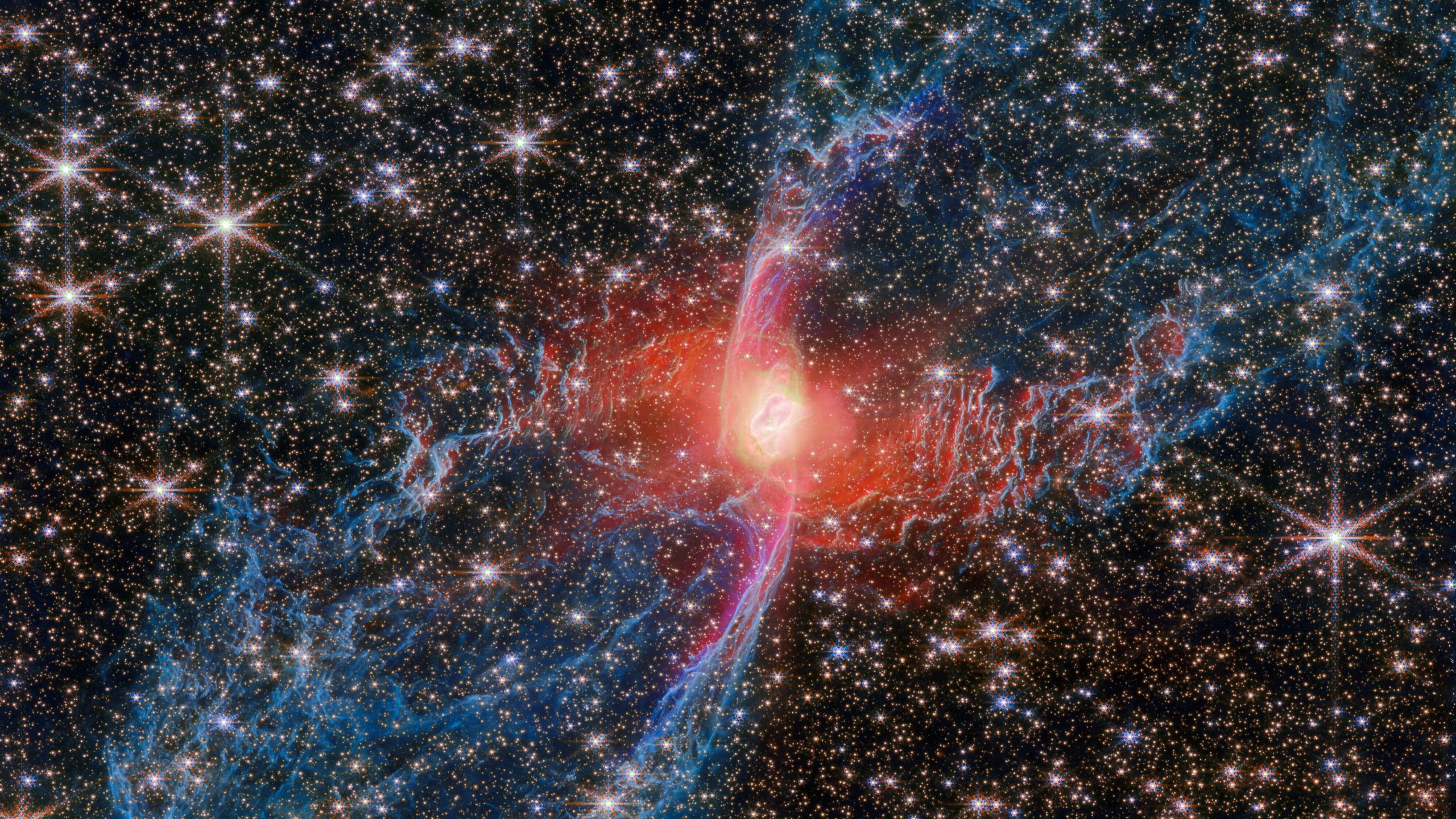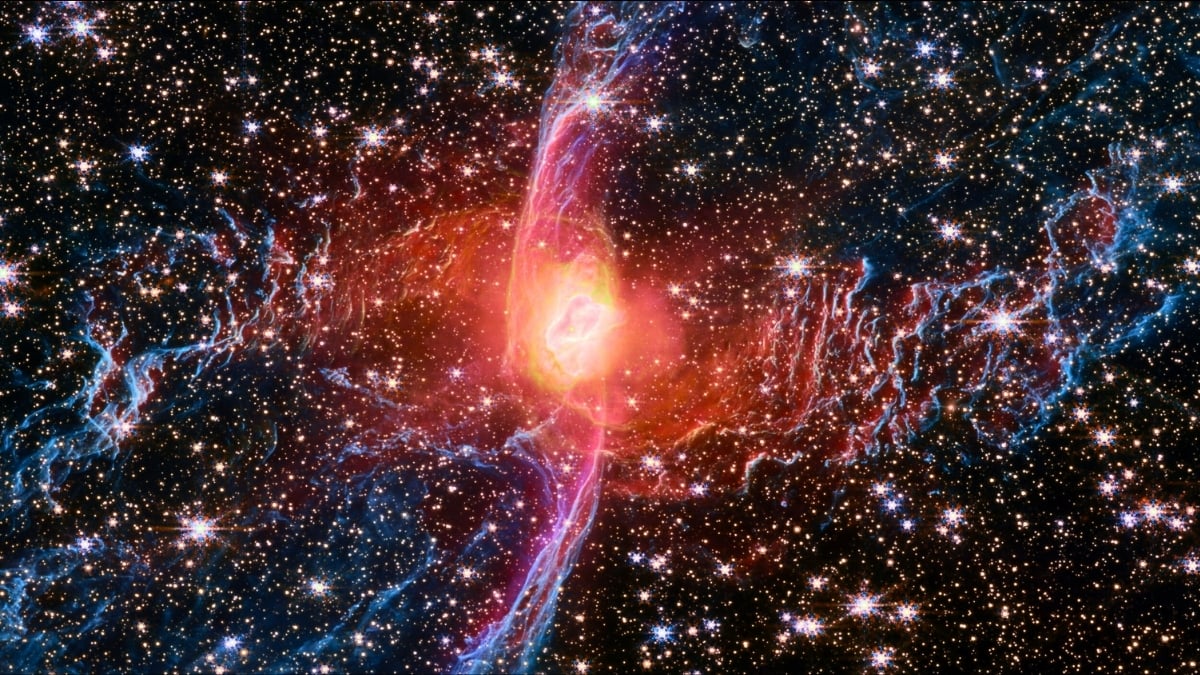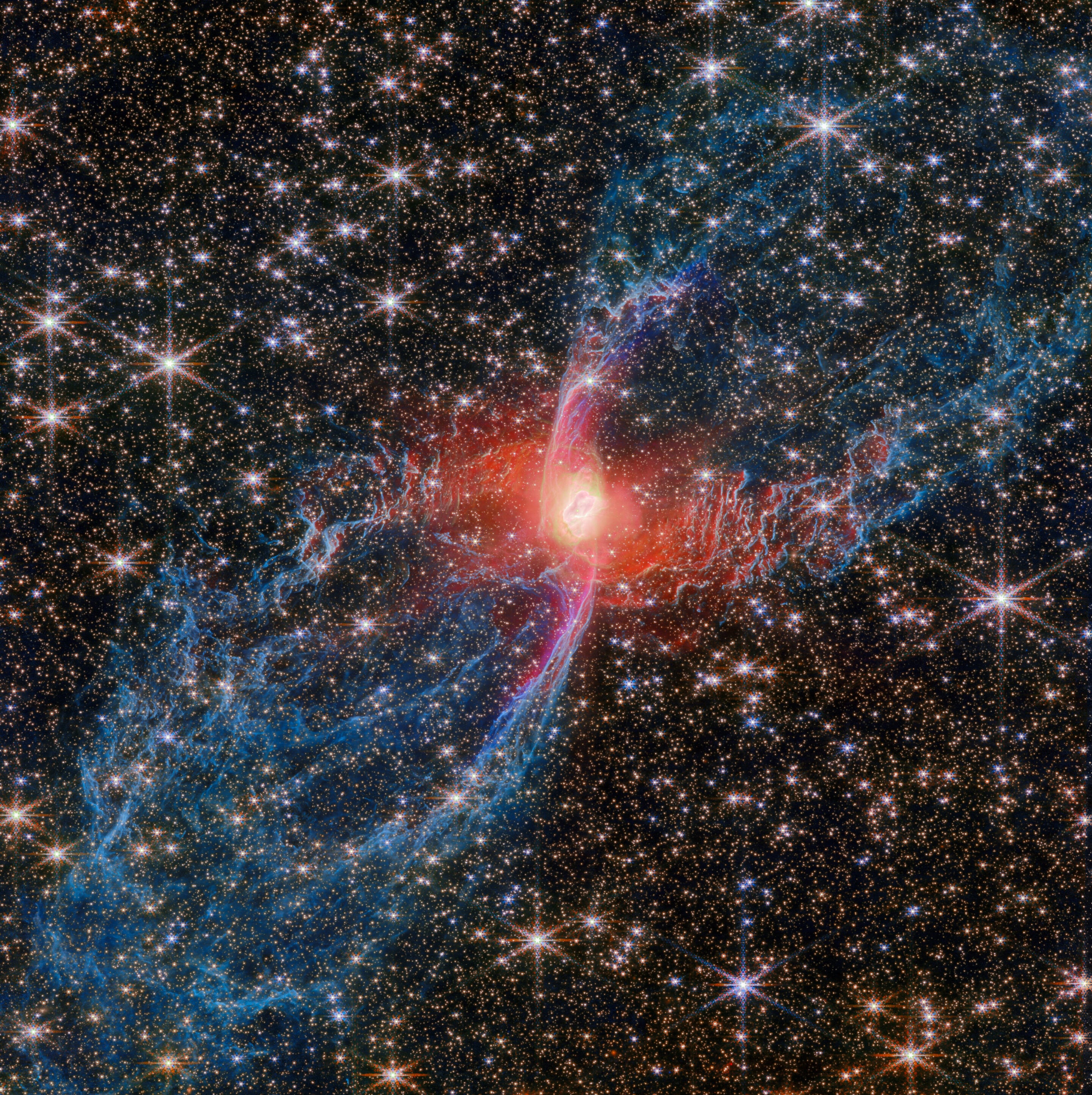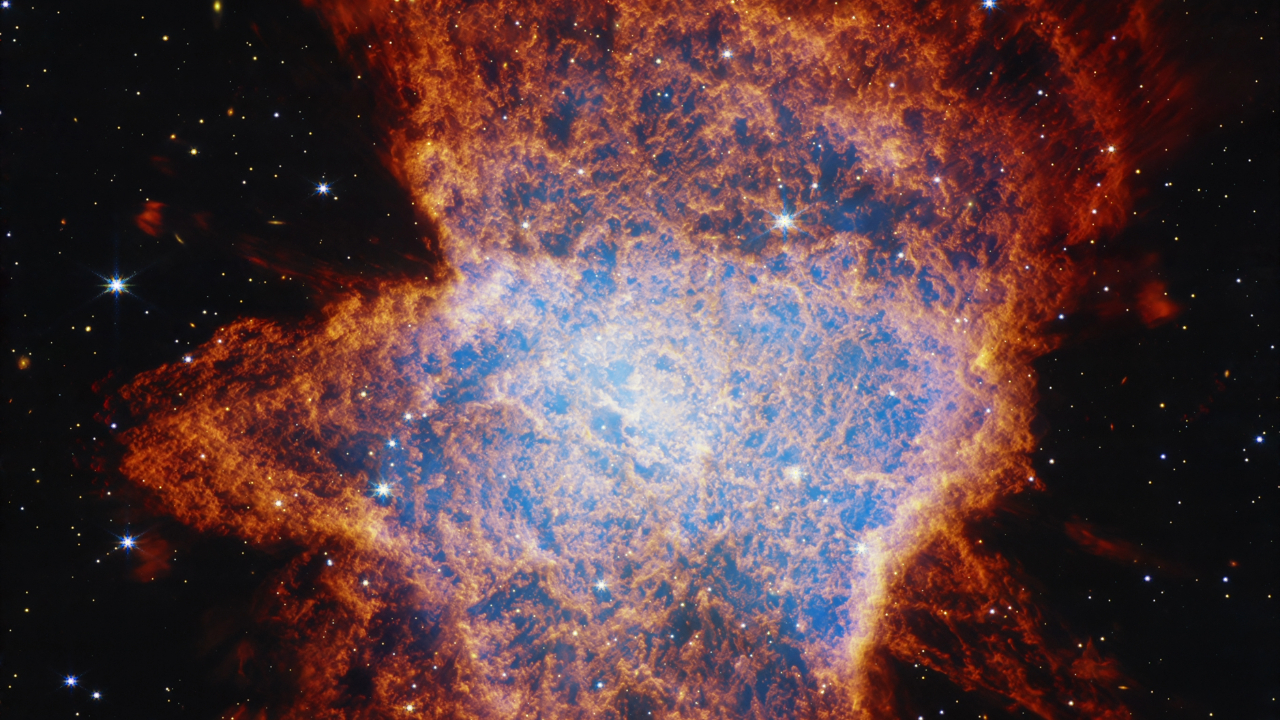
The James Webb Space Telescope captured a detailed image of the Red Spider Nebula, showcasing the complex gas and dust structures from a dying star, offering insights into the future of our own sun as it becomes a red giant billions of years from now.
New images from the James Webb Space Telescope reveal unprecedented details of the Red Spider Nebula, including its sprawling lobes, a glowing core, and signs of a hidden companion star, providing insights into the final stages of stellar evolution.
The James Webb Space Telescope has captured detailed images of the Red Spider Nebula (NGC 6537), revealing its intricate structure, including outstretched lobes, hot dust around the central star, and active gas jets, providing new insights into the late stages of stellar evolution.
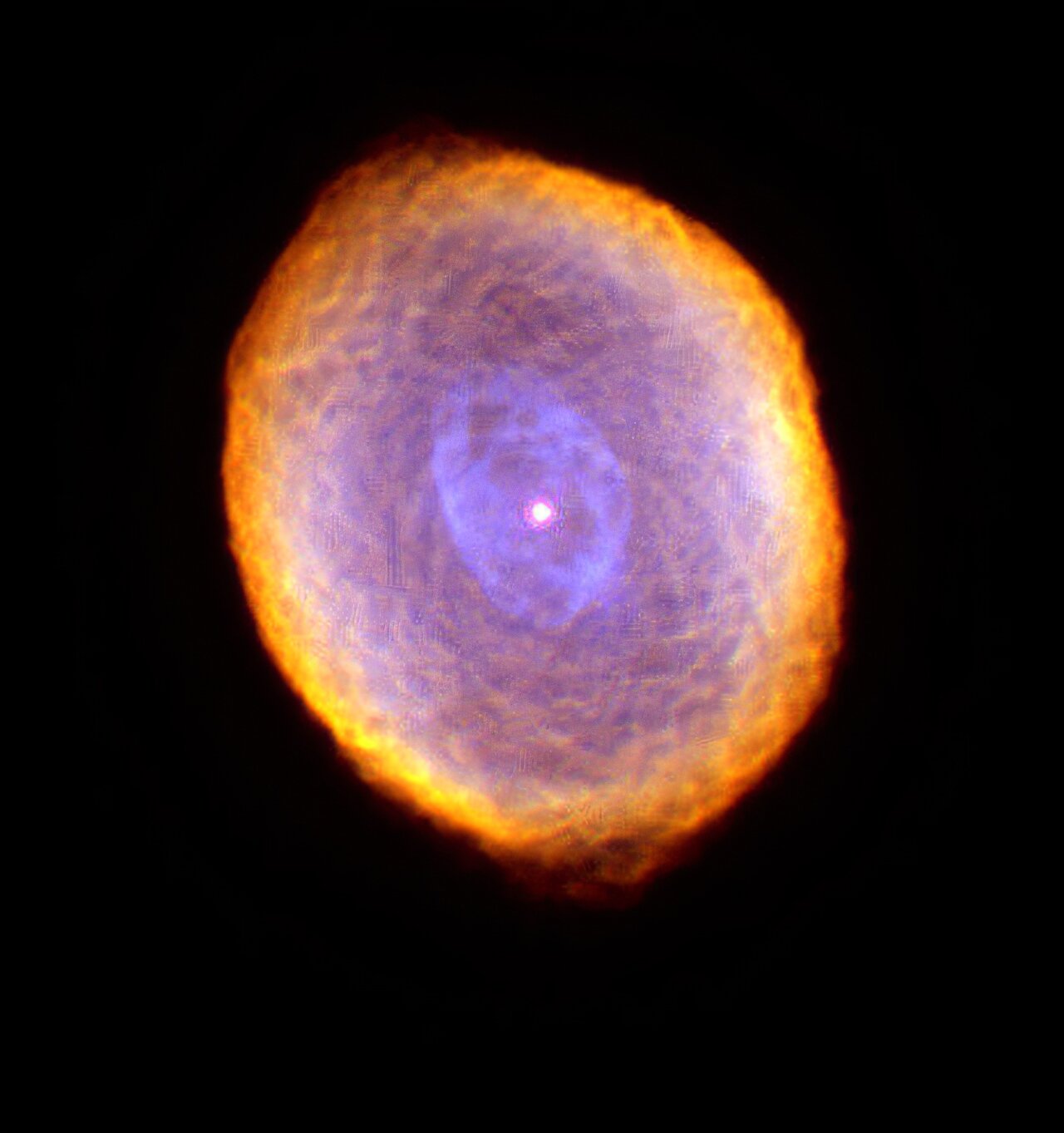
Scientists have tracked the 130-year evolution of the planetary nebula IC418, revealing its central star is heating up faster than previously thought, challenging existing models of stellar aging and offering new insights into the life cycle of stars.
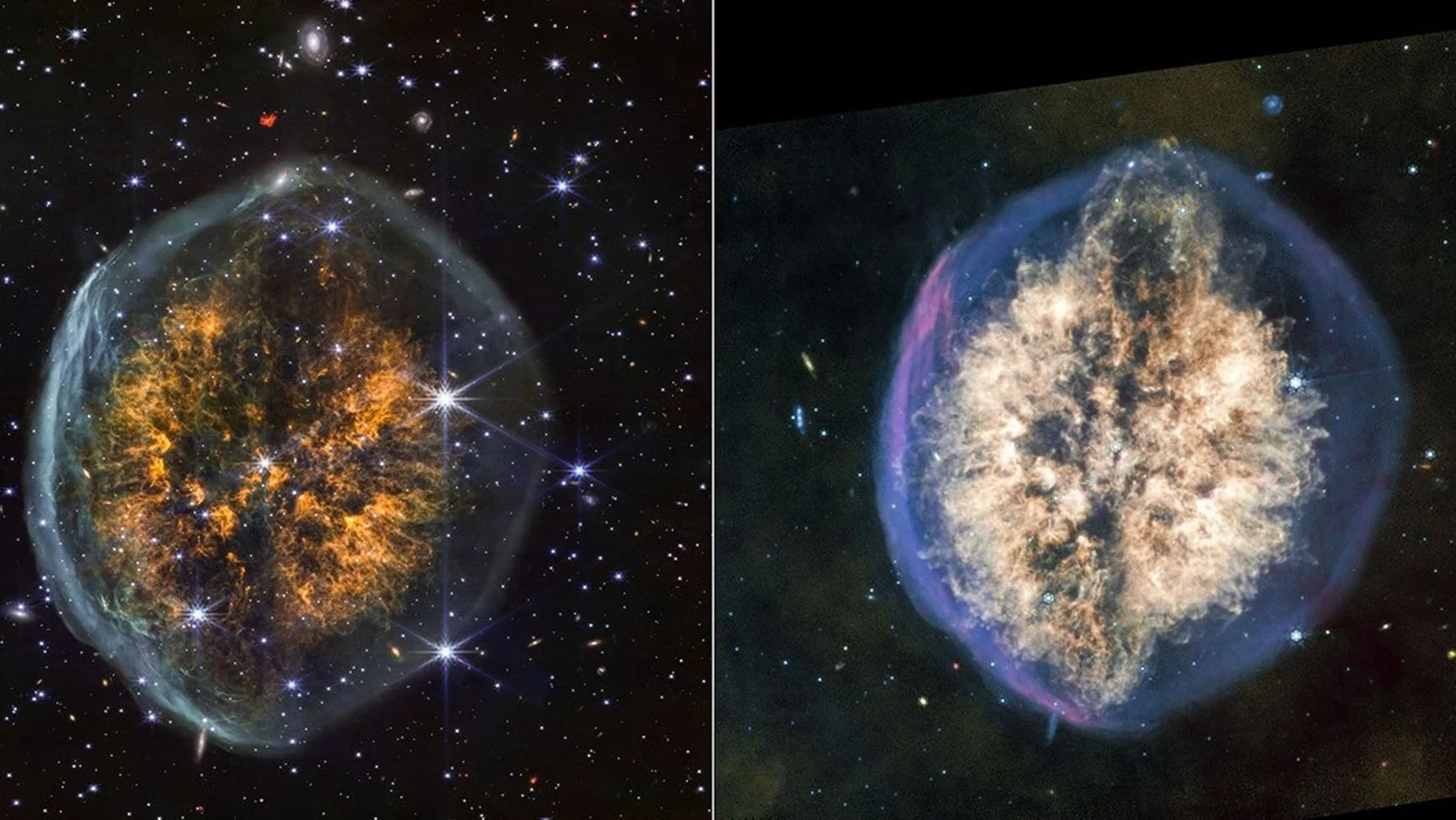
The James Webb Space Telescope captured detailed images of the planetary nebula NGC 6072, revealing complex structures and evidence of a binary star system, providing insights into the death of sun-like stars and the future of our own sun.
NASA's James Webb Space Telescope has captured detailed, high-resolution images of the complex planetary nebula NGC 6072, revealing asymmetrical, multi-polar outflows likely caused by interactions between multiple stars, providing insights into the late stages of stellar evolution and the shaping of nebulae.
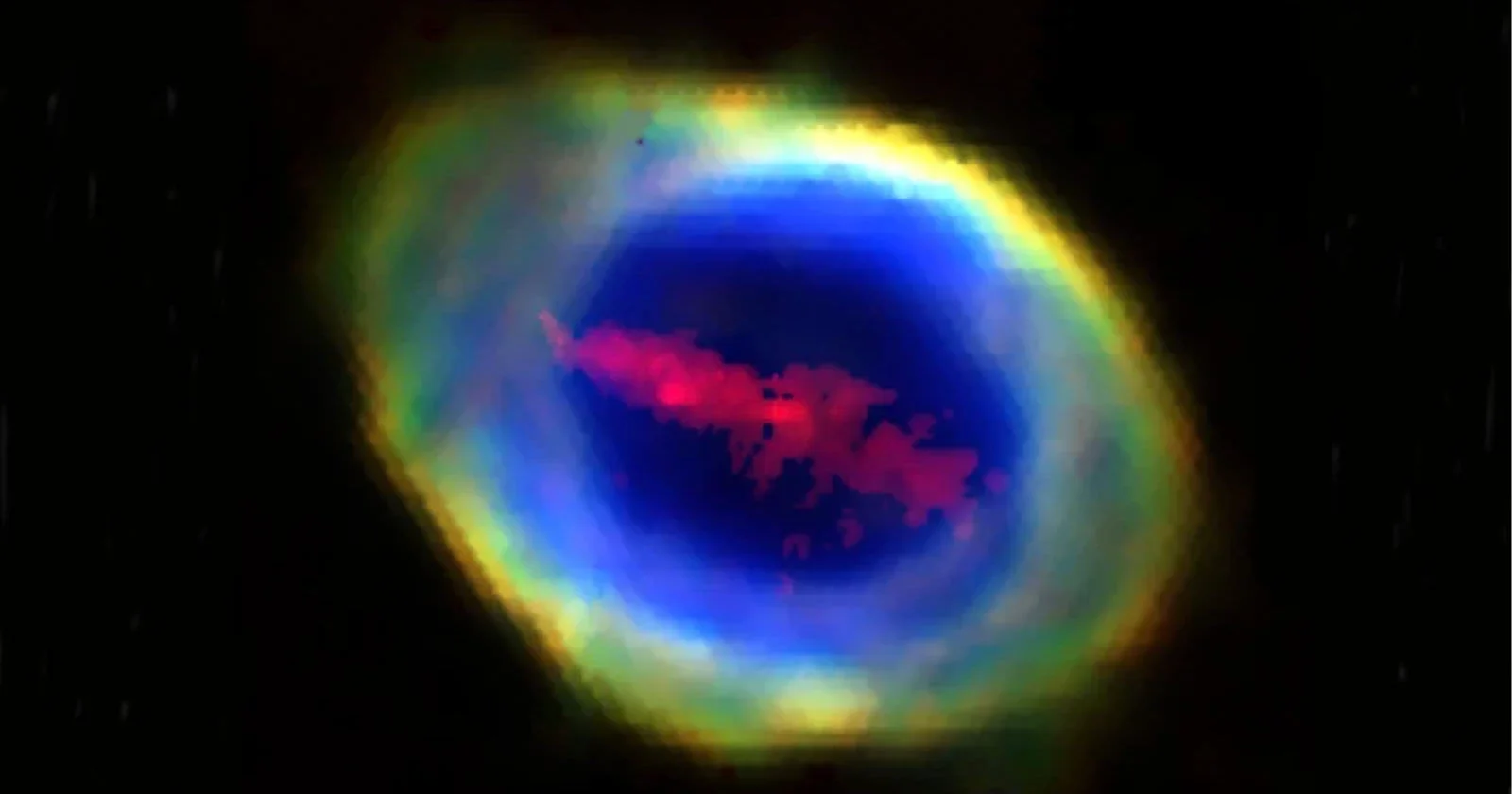
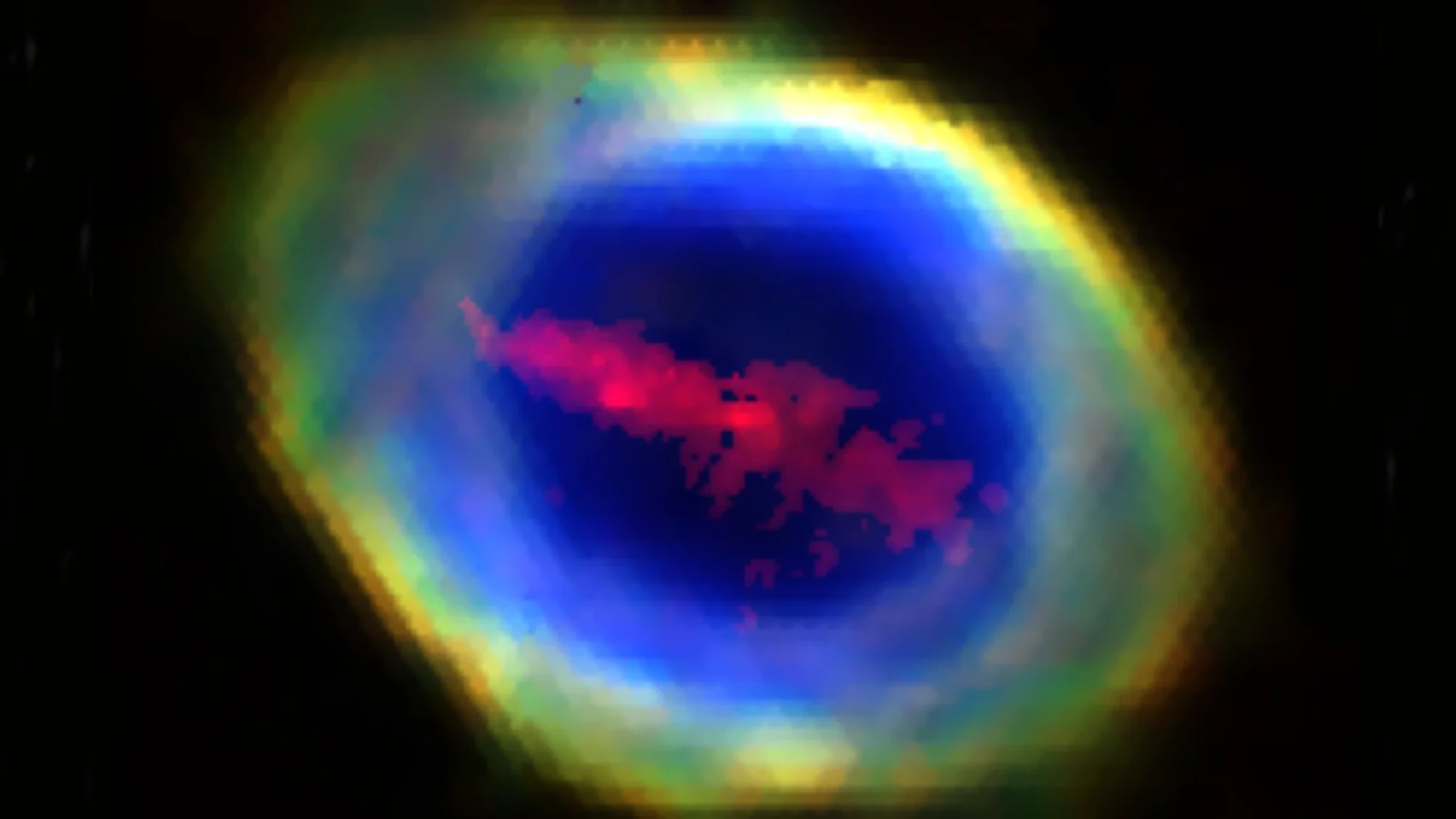
Scientists using the James Webb Space Telescope discovered a rare dust disk around the white dwarf in the Ring Nebula, raising questions about potential second-generation planet formation and the star's companions, providing new insights into the death of medium-sized stars.
In about 5 billion years, the Sun will transform into a red giant, expanding and ultimately leading to the destruction of the solar system. The inner planets, including Mercury and Venus, will be swallowed by the Sun's expansion, while Earth's fate is uncertain. The outer planets will also be affected, with the possibility of Saturn's moon Titan becoming temperate. Eventually, the Sun will expel its outer layers, leaving behind a planetary nebula and removing the outermost planets from its orbit.
In about 7-8 billion years, the Sun will evolve into a red giant, engulfing Mercury and Venus, and potentially the Earth, before shedding its outer layers and becoming a white dwarf. The inner planets and their atmospheres will be destroyed, while the remaining planets and asteroid cores may persist. Ultimately, only a few planets may survive in some form, orbiting the white dwarf Sun, with many unknowns about their fate in the far future.
Amateur astronomer Bill McLaughlin captured a stunning image of the "Headphones nebula," also known as Jones-Emberson 1, using his 14-inch Planewave CDK telescope. Planetary nebulae are formed when dying stars expand and create a glowing shell of ionized gas. The Headphones nebula gets its name from its resemblance to a pair of headphones. McLaughlin's image, composed from 127 sub-exposures taken over 19.25 hours, may not match that of a professional-level system, but he is pleased with the result.
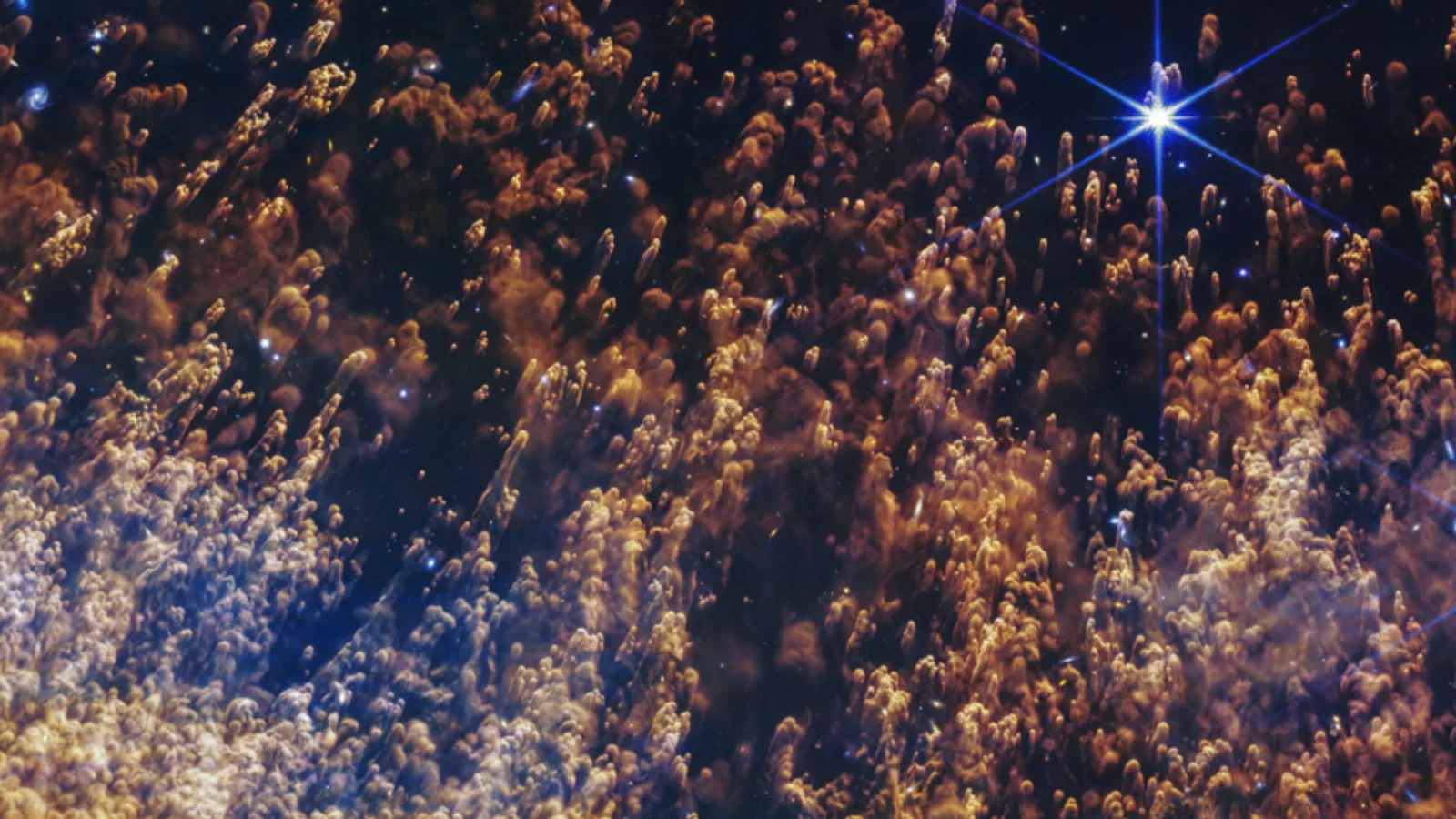
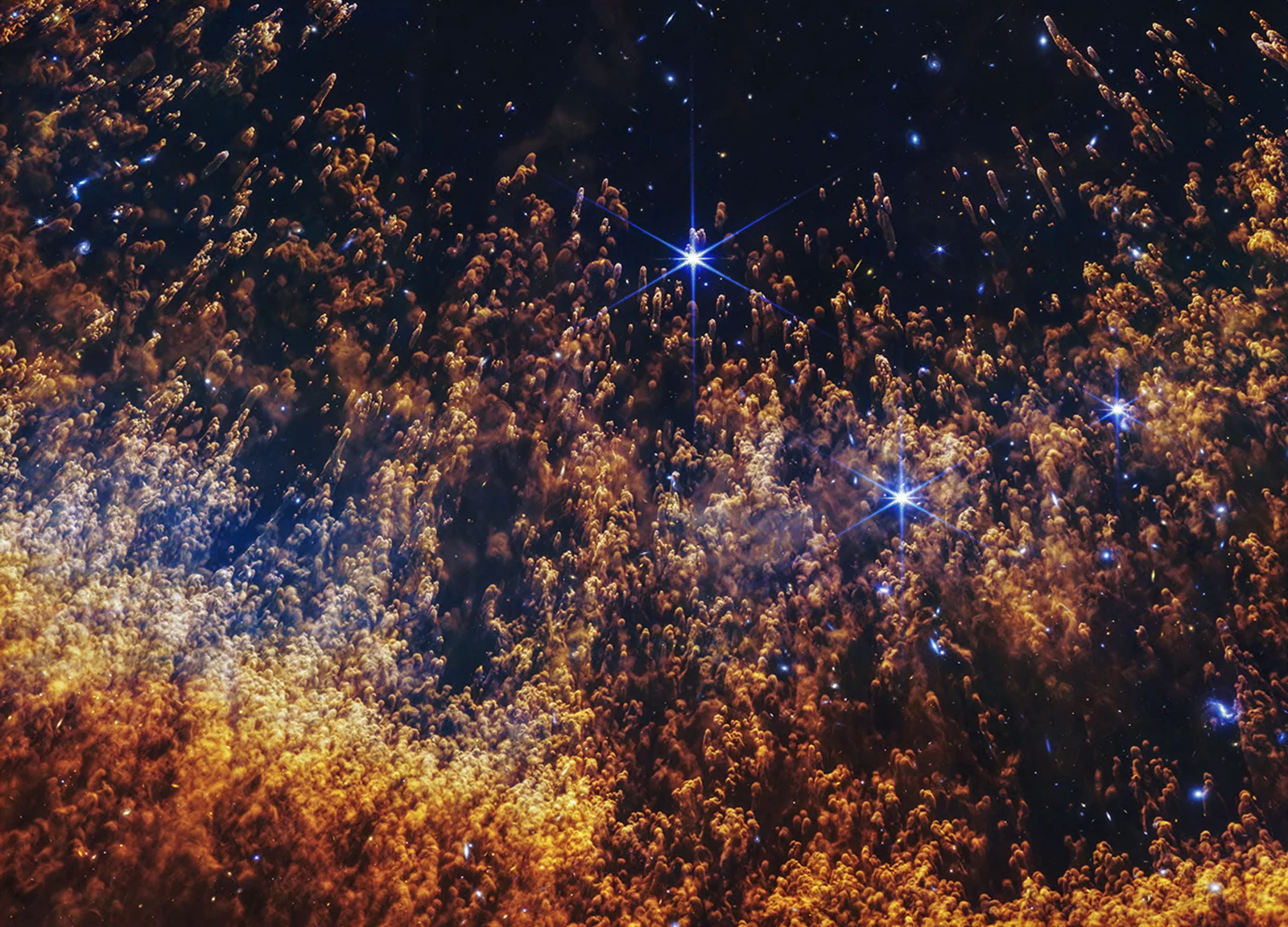
The James Webb Space Telescope (JWST) has captured stunning new images of the Ring Nebula, revealing intricate details and suggesting the presence of a companion star. The images show concentric arcs beyond the main ring, believed to be formed by the interaction of the central star with a low-mass companion. The Webb images also display dense hydrogen gas globules and polycyclic aromatic hydrocarbon (PAH) inside the nebula. Curious spikes outside the ring, visible in the infrared, may be due to molecules forming in the shadows. The findings provide valuable insights into stellar evolution and the elements released by stars into the universe.
Scientists have predicted that our Sun will eventually turn into a planetary nebula, a luminous bubble of gas and cosmic dust, after it goes through the red giant phase. This prediction was made using computer modeling and suggests that our Sun, like 90 percent of other stars, will shrink down to become a white dwarf before ending as a planetary nebula. The study also resolved a long-standing conflict between observations and models regarding the brightness of planetary nebulae. However, humans won't be around to witness this cosmic spectacle, as the Sun's increasing brightness will make Earth uninhabitable in about 1 billion years.
Astronomers have studied a dead star, a white dwarf, located in the open star cluster Messier 37, which is around 4,500 light years from Earth. This study could reveal how the star died and provide insights into the fate of our own sun in around 5 billion years. By studying a dead star in this cluster, scientists can better understand how stars of the same age evolve and die, helping to test theories of stellar evolution. The researchers also determined the chemical composition of the white dwarf, finding it strangely lacking hydrogen on its surface, indicating a violent event in its past. Understanding the initial-final mass relation is crucial for determining a star's lifespan and its final phase, whether it be a white dwarf, neutron star, or black hole.
The James Webb Space Telescope has captured stunning new images of the Ring Nebula, revealing intricate details of the planetary nebula. The images, taken in different wavelengths of infrared light, show the complex structure of the nebula and its surrounding halo. Astronomers believe that the presence of concentric features within the halo suggests the existence of a companion star in the system, shaping the outflow of the dying star's atmosphere. These unprecedented images provide valuable insights into the evolution of planetary nebulae and the lifetime of stars.
The James Webb Space Telescope (JWST) has provided unprecedented views of the Ring Nebula, the closest planetary nebula to Earth. JWST's high-resolution cameras have revealed approximately 20,000 dense knots of gas inside the nebula, intricate details of the inner filaments, and roughly 10 concentric arcs rich in hydrocarbons surrounding the main "ring" feature. The infrared imaging capabilities of JWST have allowed for a more accurate and detailed understanding of the structure and composition of the Ring Nebula.