Tag

Iron Atoms

All articles tagged with #iron atoms

Iron-bar cloud in Ring Nebula offers glimpse of Earth's distant fate
science1 month ago

Iron-bar cloud in Ring Nebula offers glimpse of Earth's distant fate

Astronomers have detected a large, bar‑shaped cloud of ionized iron inside the Ring Nebula, about 2,283 light‑years away and roughly 500 times wider than Pluto's orbit. Found with the Weave instrument by Cardiff University and University College London researchers, the iron bar's origin is unclear and theories range from formation during the nebula's creation to debris from a destroyed rocky planet. If confirmed, it could provide a foretaste of the Sun's future when it sheds its outer layers and may engulf Earth in several billion years. Further observations are planned over the next five years to determine its composition and origin.


Unveiling the Dynamic Dance of Iron Atoms in Earth's Core
science2 years ago

Unveiling the Dynamic Dance of Iron Atoms in Earth's Core

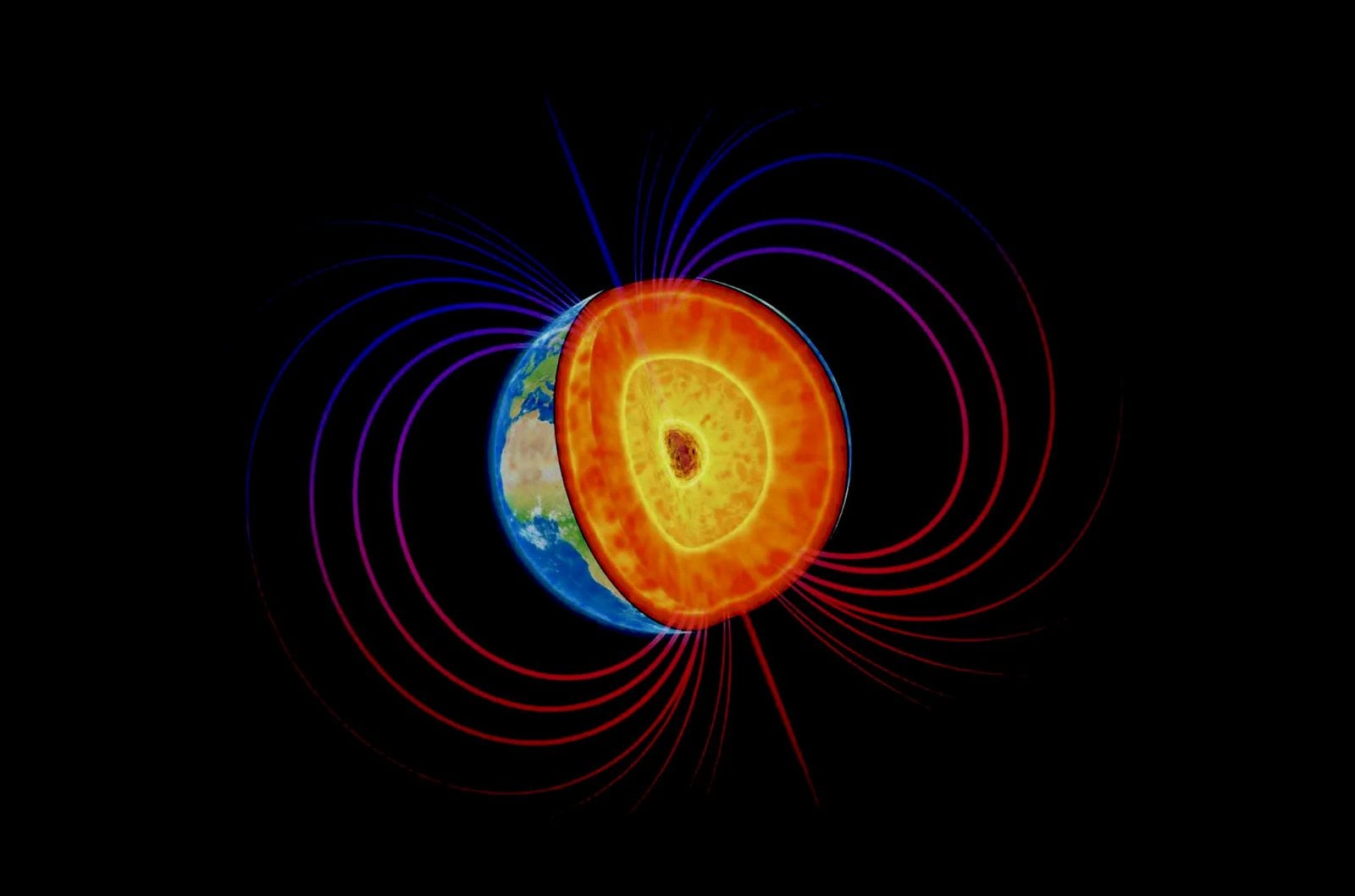
A new study led by The University of Texas at Austin and collaborators in China has discovered rapid "collective motion" of iron atoms in Earth's solid inner core. This movement, akin to dinner guests changing seats at a table, may explain the core's unexpected softness in seismic data and has implications for understanding Earth's magnetic field generation. By using laboratory experiments and theoretical models, researchers observed groups of iron atoms moving about while maintaining the overall hexagonal structure of the inner core. This increased movement makes the inner core less rigid and weaker against shear forces, shedding light on the inner core's role in powering Earth's geodynamo and magnetic field.

Unveiling the Dynamic Dance of Iron Atoms in Earth's Inner Core
science2 years ago

Unveiling the Dynamic Dance of Iron Atoms in Earth's Inner Core

Scientists have discovered that the iron atoms in Earth's solid inner core are not stationary, but rather move within a hexagonal lattice structure. Using computer simulations and lab experiments, researchers found that the iron atoms switch positions without disrupting the overall structure, making the core more malleable and softer than previously thought. This newfound understanding sheds light on the dynamic processes and evolution of Earth's inner core.

Revealing the Surprising Softness and Shifting Iron Atoms of Earth's Core
science2 years ago

Revealing the Surprising Softness and Shifting Iron Atoms of Earth's Core

Physicists from the University of Texas at Austin and Chinese universities have made progress in understanding how the Earth powers its magnetic field. By recreating a miniature model of the Earth's inner core in the lab, they discovered that iron atoms in the core are not stationary but move rapidly, a phenomenon known as collective motion. This finding helps explain the "soft" properties of the Earth's inner core and provides insights into the generation of heat at the planet's center. It also suggests that similar physics may occur in other planetary interiors, including exoplanets.

Unveiling the Dynamic Dance of Iron Atoms in Earth's Inner Core
science2 years ago

Unveiling the Dynamic Dance of Iron Atoms in Earth's Inner Core

Scientists have discovered that something is moving within the Earth's inner core at a surprisingly rapid pace, aided by machine learning. Researchers believe that groupings of iron atoms in the core can change their locations while preserving the iron's metallic structure, a phenomenon known as collective motion. This finding could help explain the softness of the inner core and its role in generating Earth's magnetic field, known as the geodynamo. The study provides insights into the dynamic processes and evolution of the Earth's inner core.

"Dynamic Discovery: Iron Atoms in Earth's Inner Core on the Move"
science2 years ago

"Dynamic Discovery: Iron Atoms in Earth's Inner Core on the Move"

Researchers from The University of Texas at Austin and collaborators in China have discovered that iron atoms in the Earth's solid inner core are capable of rapid movement, known as "collective motion," while maintaining the metallic structure of the iron. This finding could help explain various properties of the inner core and shed light on the role it plays in generating Earth's magnetic field. By re-creating the inner core in the lab and using an AI algorithm, the scientists observed groups of atoms changing places while still maintaining the overall hexagonal structure. The increased movement of the iron atoms could explain why seismic measurements show the inner core to be softer and more malleable than expected. Understanding the atomic-scale activity in the inner core can inform future research on energy generation and the dynamics of Earth's core.