Tag

Protons

All articles tagged with #protons

science1 year ago

Scientists Unveil Quantum Entanglement Map in Protons

Scientists at Brookhaven National Laboratory have used quantum information science to map quantum entanglement among quarks and gluons inside protons, revealing a complex, dynamic system. This entanglement, occurring at incredibly short distances, affects the distribution of particles resulting from proton-electron collisions. The research, published in Reports on Progress in Physics, provides new insights into proton structure and lays the groundwork for future experiments at the Electron-Ion Collider, which will explore how nuclear environments impact entanglement.

physics2 years ago

"Protons Uncover Maximal Entanglement Phenomenon"

A recent study by an international team of physicists has demonstrated that maximum entanglement is present in protons, even in cases where pomerons are involved in collisions. This maximal entanglement is a universal phenomenon in processes involving collisions between photons and protons, and it has practical significance for interpreting results from future particle colliders. The study provides a deeper understanding of how a maximally entangled state is formed inside the proton, shedding light on the onset of maximal entanglement in diffractive deep inelastic scattering.

science-and-technology2 years ago

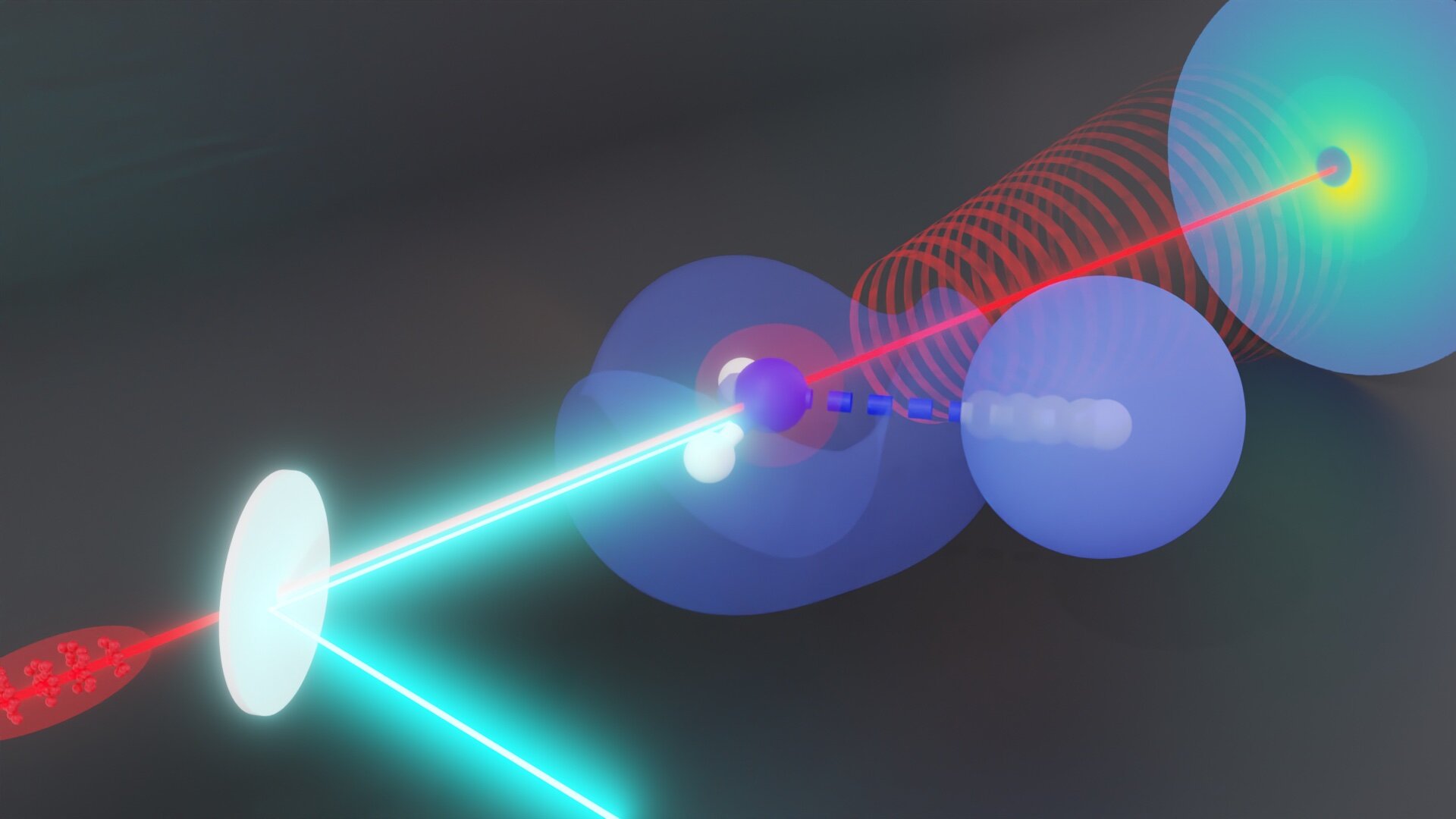
"Capturing Proton Dissociation: Groundbreaking Electron Camera Reveals Unprecedented Insights"

Researchers at SLAC National Accelerator Laboratory and Stanford University have successfully used ultrafast electron diffraction (UED) to capture the motion of hydrogen atoms within ammonia molecules as they dissociate. This breakthrough technique allows scientists to study hydrogen transfers, which are critical for many biological and chemical reactions. By understanding the structure and behavior of protons during these reactions, researchers can gain valuable insights into proton transfers and their implications in chemistry and biology. The findings open up new possibilities for investigating complex processes that occur within femtoseconds, providing a deeper understanding of fundamental scientific phenomena.

physics2 years ago

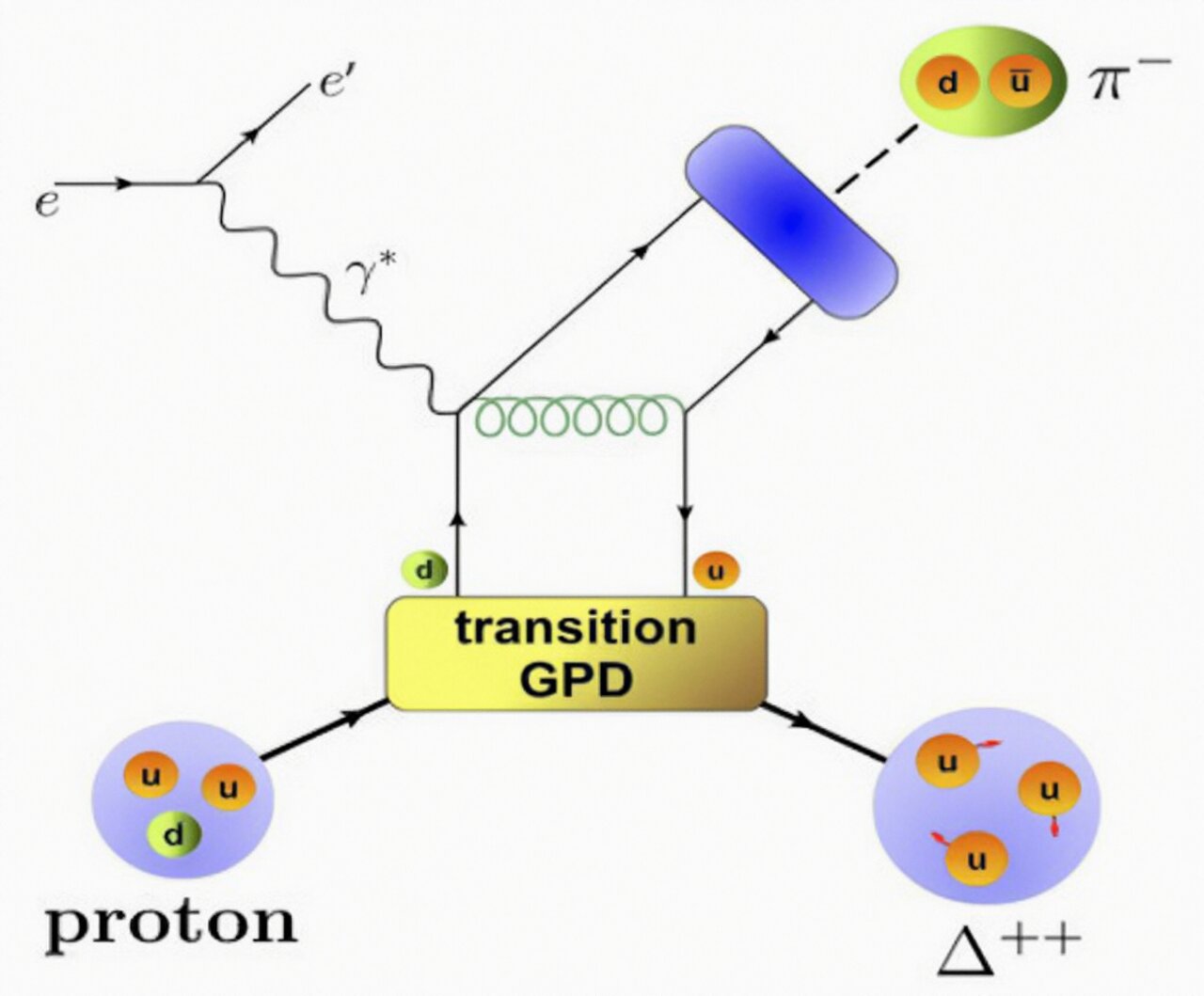
"Proton Rings Shed Light on the Early Universe"

Physicists at the Thomas Jefferson National Accelerator Facility have conducted an experiment to explore the 3D structures of resonances of protons and neutrons, shedding light on the basic properties of nucleon resonances. The experiment involved exciting the quarks within protons using a high-energy electron beam and studying the resulting nucleon resonance. The research provides insights into the early universe after the Big Bang and the formation of matter. Further experiments are planned to investigate different characteristics of the scattering process and to gain more information about the formation of matter in the universe.

science2 years ago

Unveiling the Enigmatic World Within Protons: Unprecedented Particle Mapping and Surprising Quark Diffusion

Scientists have created the highest resolution map yet of the distribution of quarks inside a proton, revealing that up and down quarks affect the proton differently in terms of internal energy and spin. The study used advanced analytical techniques, including lattice quantum chromodynamics, to accurately model the interactions between quarks and gluon particles. The findings suggest that gluons play a greater role in the proton's spin than previously assumed. The research provides valuable insights for future fundamental physics experiments and helps further our understanding of the building blocks of matter.

physics2 years ago

"ATLAS Experiment Uncovers Quantum Proton Billiards' Strong Interaction Secrets"

The ATLAS experiment at the LHC accelerator has measured the fundamental properties of strong interactions between protons at ultra-high energies by studying elastic scattering in proton-proton collisions. By analyzing the distribution of the scattering angle, the researchers were able to draw conclusions about the spatial structure of the colliding particles and the properties of their interactions. The measurements were made possible by using a dedicated measurement system and a special magnet configuration to minimize angular divergence. The results provide insights into the total cross-section and the interference between strong nuclear and Coulomb interactions, challenging pre-LHC theoretical models and advancing our understanding of fundamental particle interactions.

space2 years ago

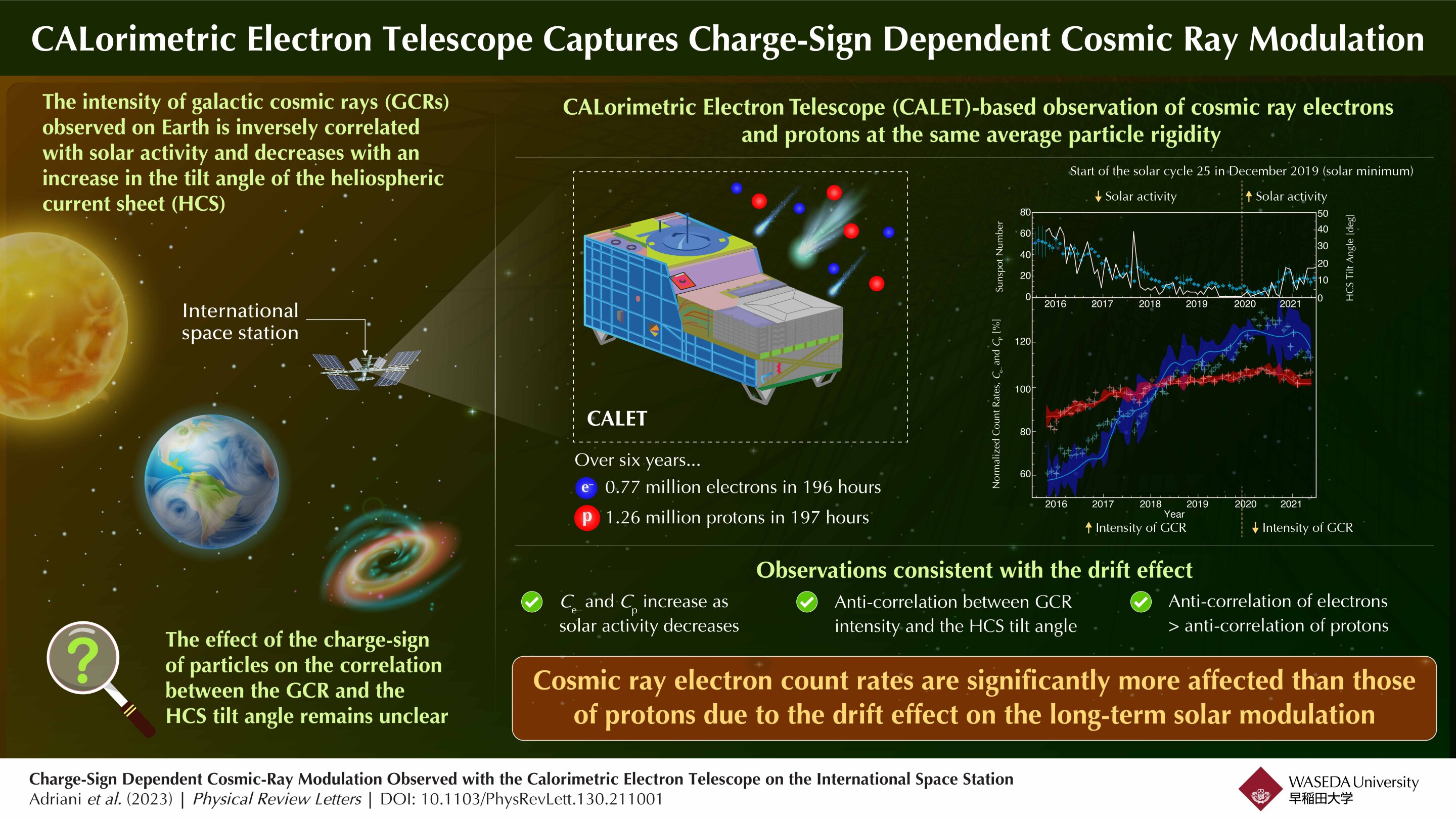
CALET detects charge-sign dependent cosmic ray modulation.

The CALorimetric Electron Telescope (CALET) has observed that the count rates of electrons in galactic cosmic rays (GCRs) are more strongly influenced by solar modulation than that of protons. The study analyzed over 0.77 million electrons and 1.26 million protons collected over a six-year period and found that the variation in the count rates of electrons was significantly higher than that of protons during this period, suggesting that electrons are more susceptible to the effects of solar modulation. The observations made by CALET could help better understand the space weather and its effects on the possibility of potential life on the moon and other planets.