Tag

Plasticity

All articles tagged with #plasticity

"Unpredictable Reactions: Neurons' Surprising Responses"
neuroscience2 years ago

"Unpredictable Reactions: Neurons' Surprising Responses"

New research from the Netherlands Institute for Neuroscience reveals that chandelier cells, a unique type of brain cell, become active during unexpected events, playing a crucial role in signaling and adaptation in response to surprising stimuli. The study used a novel mouse model to observe and understand the behavior of chandelier cells, showing their sensitivity to unexpectedness, habituation, and structural changes in synaptic connections. This comprehensive study sheds light on the role of these inhibitory neurons in the cortex, crucial for processes such as learning from unexpected circumstances.

Reevaluating Newborn Brain Development: Surprising Insights into Human Evolution
science2 years ago

Reevaluating Newborn Brain Development: Surprising Insights into Human Evolution

A study led by researchers at University College London challenges the belief that human newborns have less developed brains compared to other primates. The study found that humans are born at a typical development level for primates, but their brains undergo significant growth after birth, giving the impression of underdevelopment. This discovery alters the understanding of human brain evolution, suggesting that brain plasticity in humans is not due to being born less developed than other primates.

"Caffeine's Impact on Brain Learning: Surprising Findings Unveiled"
health2 years ago

"Caffeine's Impact on Brain Learning: Surprising Findings Unveiled"

Consuming high amounts of caffeine may hinder the brain's ability to rewire itself, according to a study analyzing brain signals associated with learning and memory. The study suggests that chronic caffeine use could limit learning and plasticity, challenging the assumption that caffeine promotes brain plasticity. The research, conducted on a small group of individuals, found that those who consumed fewer caffeinated drinks exhibited stronger effects of long-term potentiation (LTP), a process crucial for the brain to adapt and acquire new information. However, further well-controlled studies are needed to better understand the relationship between caffeine and its impact on learning and memory.

"Unlocking the Fountain of Youth: The Potential of a Protein to Reverse Brain Aging"
health2 years ago

"Unlocking the Fountain of Youth: The Potential of a Protein to Reverse Brain Aging"

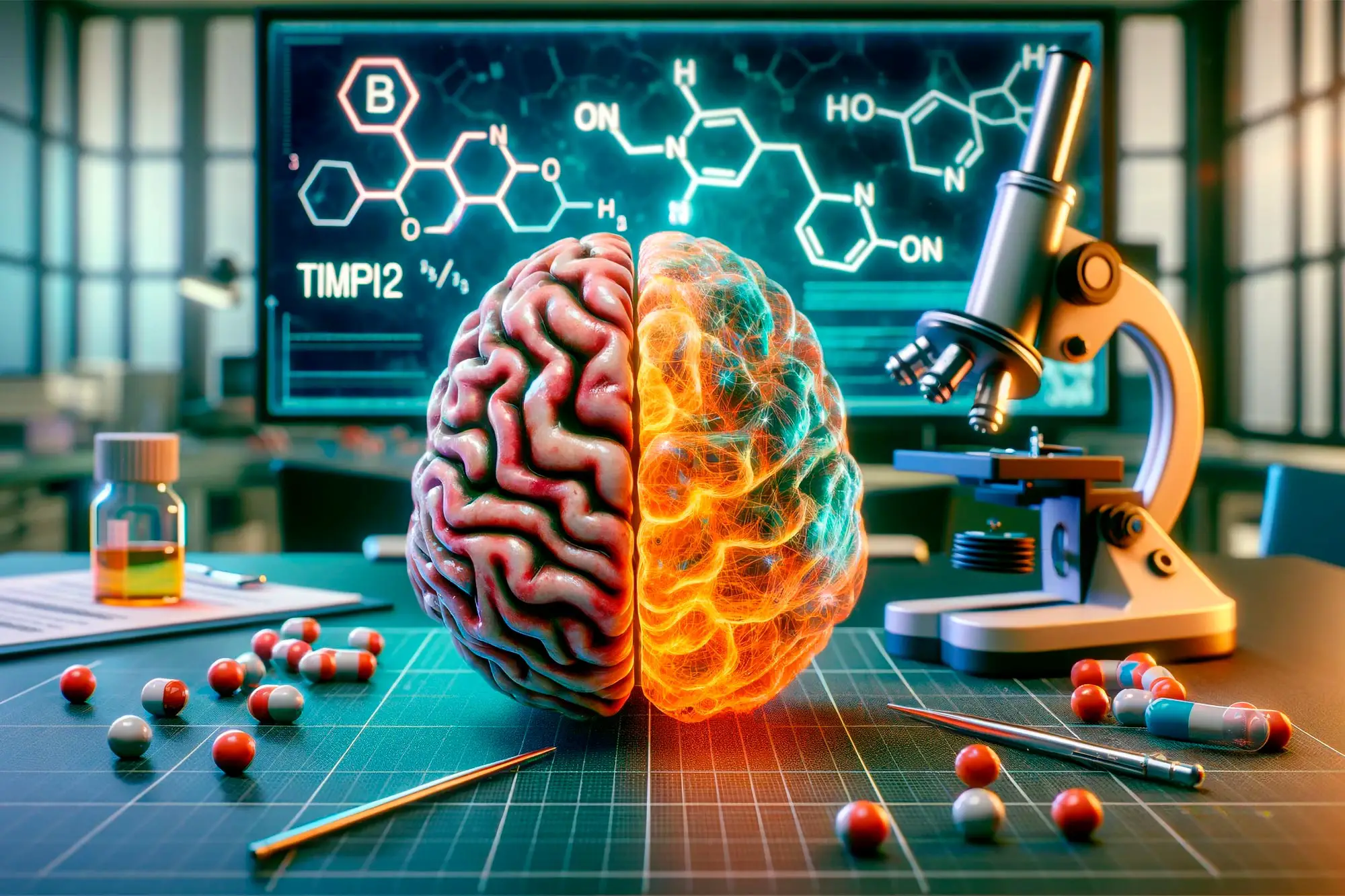
Researchers at Mount Sinai have discovered that the protein TIMP2 plays a crucial role in regulating brain plasticity, particularly in the hippocampus, a region important for memory and learning. Decreasing TIMP2 levels in mutant mouse models led to reduced plasticity and memory function. This finding could have implications for understanding and treating age-related disorders like Alzheimer's by targeting the brain's extracellular matrix. The study highlights the importance of studying pathways that regulate the extracellular matrix for designing novel therapies for diseases where plasticity is affected.

Penn Medicine Study Reveals New Brain Development Sequence Through Adolescence
neuroscience2 years ago

Penn Medicine Study Reveals New Brain Development Sequence Through Adolescence

A new study from the University of Pennsylvania has found that brain development does not occur uniformly across the brain, but follows a newly identified developmental sequence. Brain regions that support cognitive, social, and emotional functions appear to remain malleable longer than other brain regions, rendering youth sensitive to socioeconomic environments through adolescence. The findings reveal that reductions in brain plasticity occur earliest in “sensory-motor” regions, such as visual and auditory regions, and occur later in “associative” regions, such as those involved in higher-order thinking (problem solving and social learning).

Unusual Vaginal Abilities Found in Bomb-Sniffing Rats
science2 years ago

Unusual Vaginal Abilities Found in Bomb-Sniffing Rats

Female giant African pouched rats, used for detecting landmines and tuberculosis, have the ability to open or close their vaginal entrance multiple times during their lifetime, even after giving birth. This unusual trait could have implications for breeding them more effectively and may even have broader implications for other mammals struggling to reproduce, including humans. The study's findings are a step toward understanding their reproductive biology and how traits once considered "fixed" in adult animals may become variable under specific pressures.

The Fascinating Reproductive Habits of African Pouched Rats and Bomb Detector Rats
science2 years ago

The Fascinating Reproductive Habits of African Pouched Rats and Bomb Detector Rats

Female African pouched rats have been found to seal off their vaginas, preventing themselves from breeding. Researchers observed that some females had a smaller uterus and a fused vaginal opening, and their urine had a different chemical composition than their nestmates who were actively breeding. The phenomenon is speculated to be a result of one female manipulating others to stop reproducing, contributing to the care of the dominant reproducing female. This trait is unusual for mammals, and the hormones associated with breeding cycles in other rodents did not seem to determine which females were open for business in these giant African pouched rats.