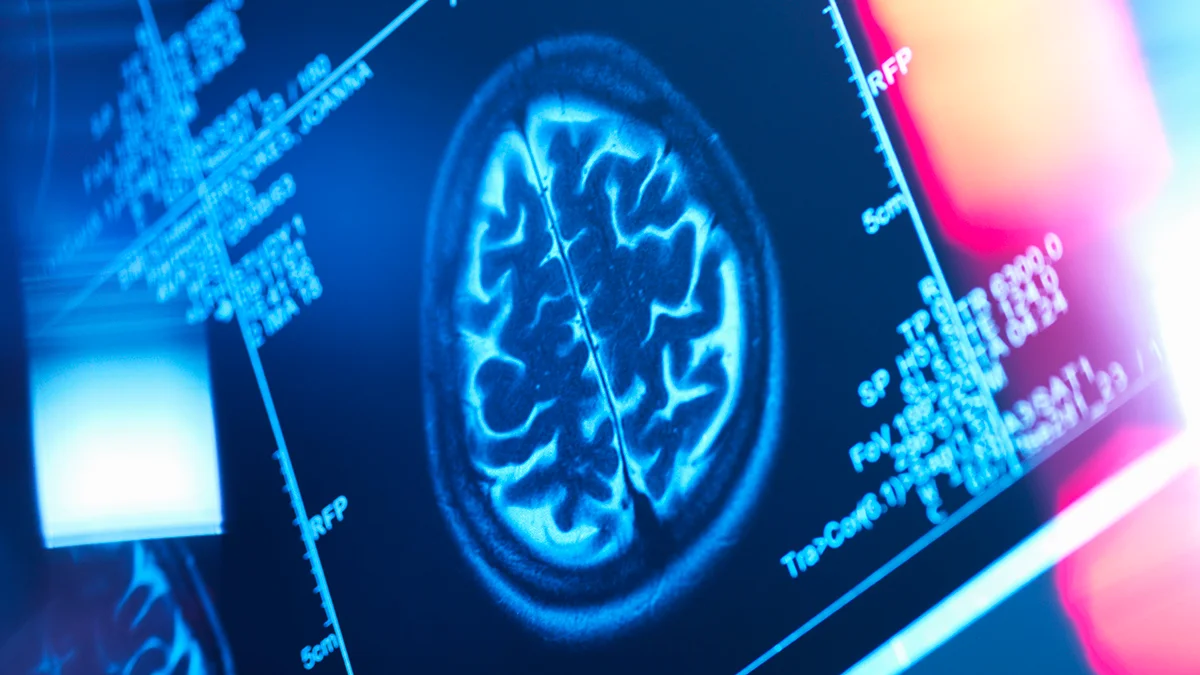
A study led by Rutgers University recorded women orgasming inside MRI machines to understand brain activity during climax, revealing insights into pleasure and potential applications for those with orgasm difficulties.
In 1991, a groundbreaking experiment used MRI technology to observe sexual intercourse in real time, challenging long-held assumptions about human anatomy and revealing new insights into the body's functioning during intimacy, with lasting influence on medical understanding and public curiosity.
A woman voluntarily experienced an orgasm inside an MRI scanner as part of a scientific study to map brain activity during climax, revealing detailed insights into how different brain regions activate and interact during orgasm, which could help understand sexual dysfunctions.
In 1991, a couple named Ida Sabelis and Jupp participated in an experimental MRI scan while having sex to study body responses, resulting in iconic medical images that contributed to understanding female anatomy and the shape of the penis, and the experiment is also remembered as a love story.,
Dutch researchers conducted experiments where couples had sex inside MRI machines to study bodily responses, discovering that the penis bends to fit the vaginal canal and that women's bladders fill rapidly during sex, though the reasons for these phenomena remain unclear.
In 1991, a couple had sex inside an MRI machine to study body responses, leading to important insights about vaginal shape and challenging long-held beliefs, and their images became influential in medical research.
President Donald Trump clarified that he received a CT scan, not an MRI, during his October health check at Walter Reed, with his doctor confirming the procedure and results as normal, while Trump expressed regret over the imaging being used against him.
President Trump clarified that he underwent a CT scan, not an MRI, during his October health check at Walter Reed, and expressed regret about having the scan as it provided ammunition for critics; he also discussed his health regimen and lifestyle preferences.
Research using advanced MRI techniques shows that COVID-19 can leave lasting effects on the brain, affecting both recovered individuals and those with Long COVID, potentially explaining ongoing cognitive issues.
President Donald Trump announced he would release the results of his October MRI, which he described as 'perfect,' but he was unsure which part of his body was scanned, emphasizing it was not his brain since he passed a cognitive test.
A new AI-powered brain atlas called NextBrain provides unprecedented detail of the human brain, mapping 333 regions at cellular resolution by integrating microscopy and MRI data from post-mortem brains. This open-access tool enables rapid, precise analysis of living brain scans, improving early diagnosis of neurological diseases like Alzheimer's and advancing brain research. It was developed over six years using AI to align and label microscopic slices, and has been validated on thousands of MRI scans, offering a significant leap forward in neuroimaging and understanding brain structure and aging.
Scientists have discovered a previously unknown lymphatic drainage system in the human brain, located along a major artery in the dura mater, which plays a crucial role in waste removal and brain health. Using advanced MRI techniques and microscopic tissue analysis, they identified a complex network of lymphatic vessels, expanding the understanding of brain fluid management and providing a baseline for studying neurological diseases. This discovery could lead to better diagnosis and treatment of conditions like Alzheimer's and brain injuries.
Scientists used AI and MRI data from over 50,000 individuals to map the genetic architecture of the brain's corpus callosum, revealing genes that influence its structure and linking these to mental health disorders like ADHD and bipolar disorder. The open-source AI tool accelerates brain research and enhances understanding of neurological conditions.
Scientists at USC have developed a new MRI technique to visualize the brain's microvascular pulsations, which become stronger with age and may contribute to Alzheimer's disease by disrupting waste clearance systems, offering potential for early diagnosis and treatment of neurodegenerative disorders.
The article highlights how fundamental scientific research, despite current funding cuts, has led to groundbreaking innovations like DNA fingerprinting, MRI, CRISPR gene editing, and advances in medicine and technology, demonstrating the immense societal value of investing in basic science.