Tag

Particle Collider

All articles tagged with #particle collider

Neutrinos Detected in Groundbreaking Collider Experiment
physics2 years ago

Neutrinos Detected in Groundbreaking Collider Experiment

Scientists have officially detected neutrinos created in a particle collider for the first time, providing valuable insights into the formation, properties, and role of these elusive particles in the Universe. The detection was made using the FASERnu detector at the Large Hadron Collider, and the results have been published in two peer-reviewed papers. Neutrinos, which are abundant but barely interact with matter, are believed to have a slight mass that may affect gravity. The ongoing data analysis from the detector is expected to yield many more neutrino detections, unlocking the full physics potential of the collider.

"Unveiling the Future: Collider Neutrino Physics Takes Center Stage in Physics"
physics2 years ago

"Unveiling the Future: Collider Neutrino Physics Takes Center Stage in Physics"

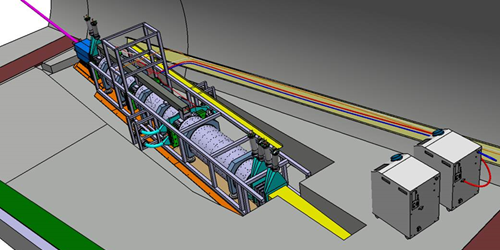
The Forward Search Experiment (FASER) at the Large Hadron Collider (LHC) has successfully detected neutrinos produced in colliding beams, opening up a new field of study in collider neutrino physics. Neutrinos, which rarely interact with matter, were observed by studying the particles produced when they interacted with matter. FASER, positioned in the forward region of the LHC's ATLAS experiment, identified muon neutrinos and antineutrinos by analyzing events consistent with the production of muons. This groundbreaking observation paves the way for future neutrino physics measurements at collider experiments, providing opportunities to test the limits of the standard model and search for new physics.

The Sun: The Ultimate Particle Collider?
astronomy2 years ago

The Sun: The Ultimate Particle Collider?

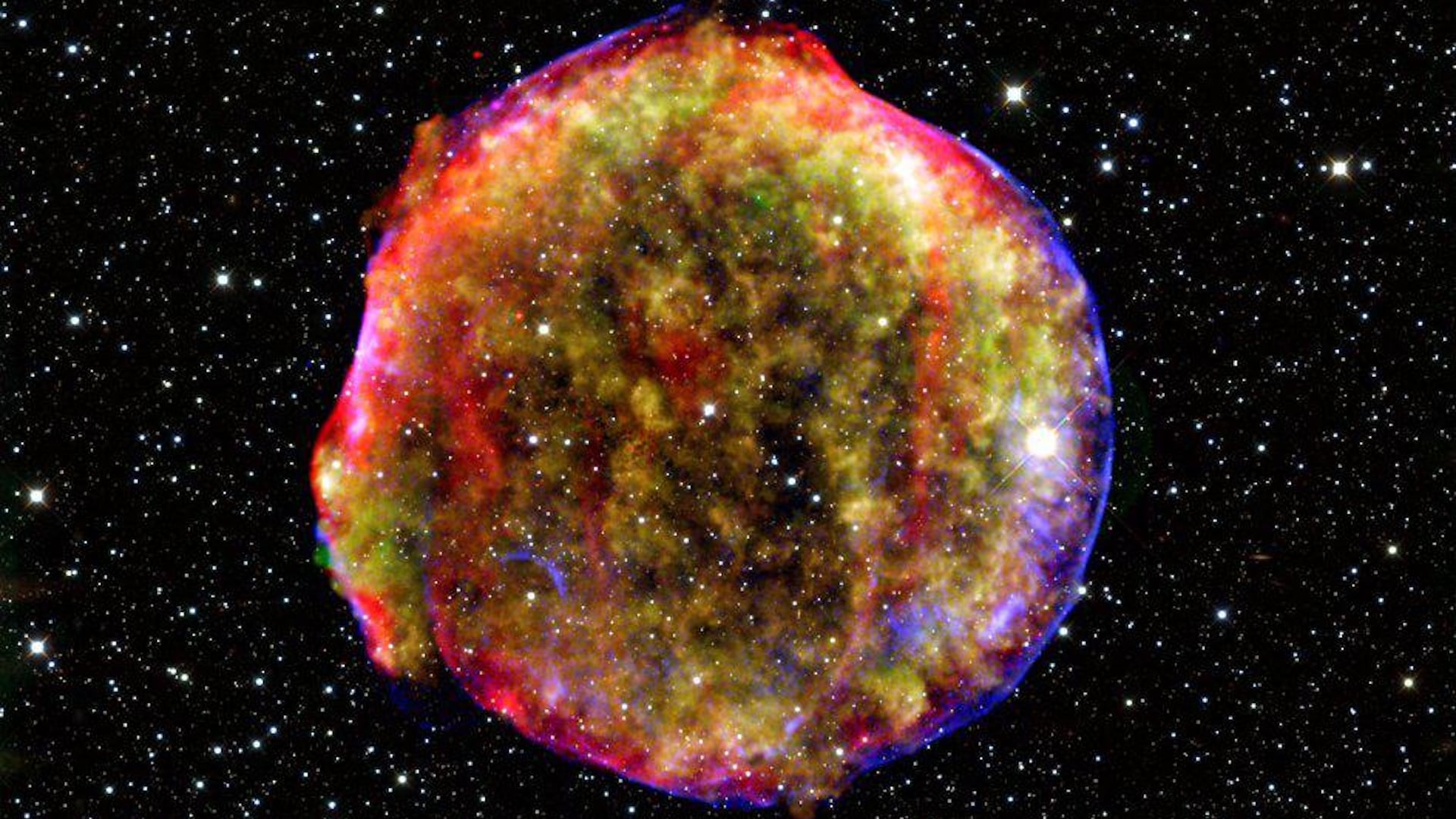
Astronomers have observed extremely high-energy particles coming out of the Sun even when it is relatively calm. The mystery has been solved by a team of theoretical astrophysicists who found that the chromosphere, the layer just below the photosphere, can have enough energy to accelerate cosmic rays to incredibly high energies. These particles then spit back out of the Sun and generate a flash of gamma ray radiation when they slam into a random proton near the surface of the Sun. This shows that the Sun is capable of accelerating particles to very high energies efficiently, even when there is nothing chaotic happening on the surface.

Unveiling the Mystery of Dark Matter with Axion Particle Discovery
physics2 years ago

Unveiling the Mystery of Dark Matter with Axion Particle Discovery

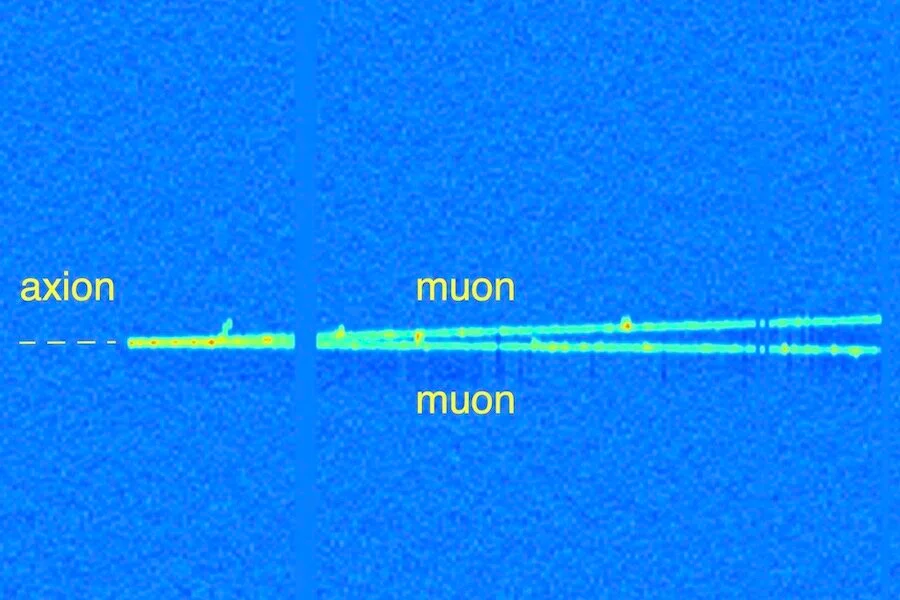
University of Minnesota researchers have developed a new method to search for axions, hypothetical particles that could help solve the Strong CP Problem in physics. The method involves measuring the decay of the axion into two muons, which has not been used before in neutrino or collider experiments. The researchers believe that by working backward from the muon tracks in the detector to reconstruct such decays, they have a chance to locate the axion and prove its existence. The discovery of axions could be a significant advance in our fundamental understanding of the structure of nature.

Unraveling the Mysteries of the Universe's Binding Force.
science2 years ago

Unraveling the Mysteries of the Universe's Binding Force.

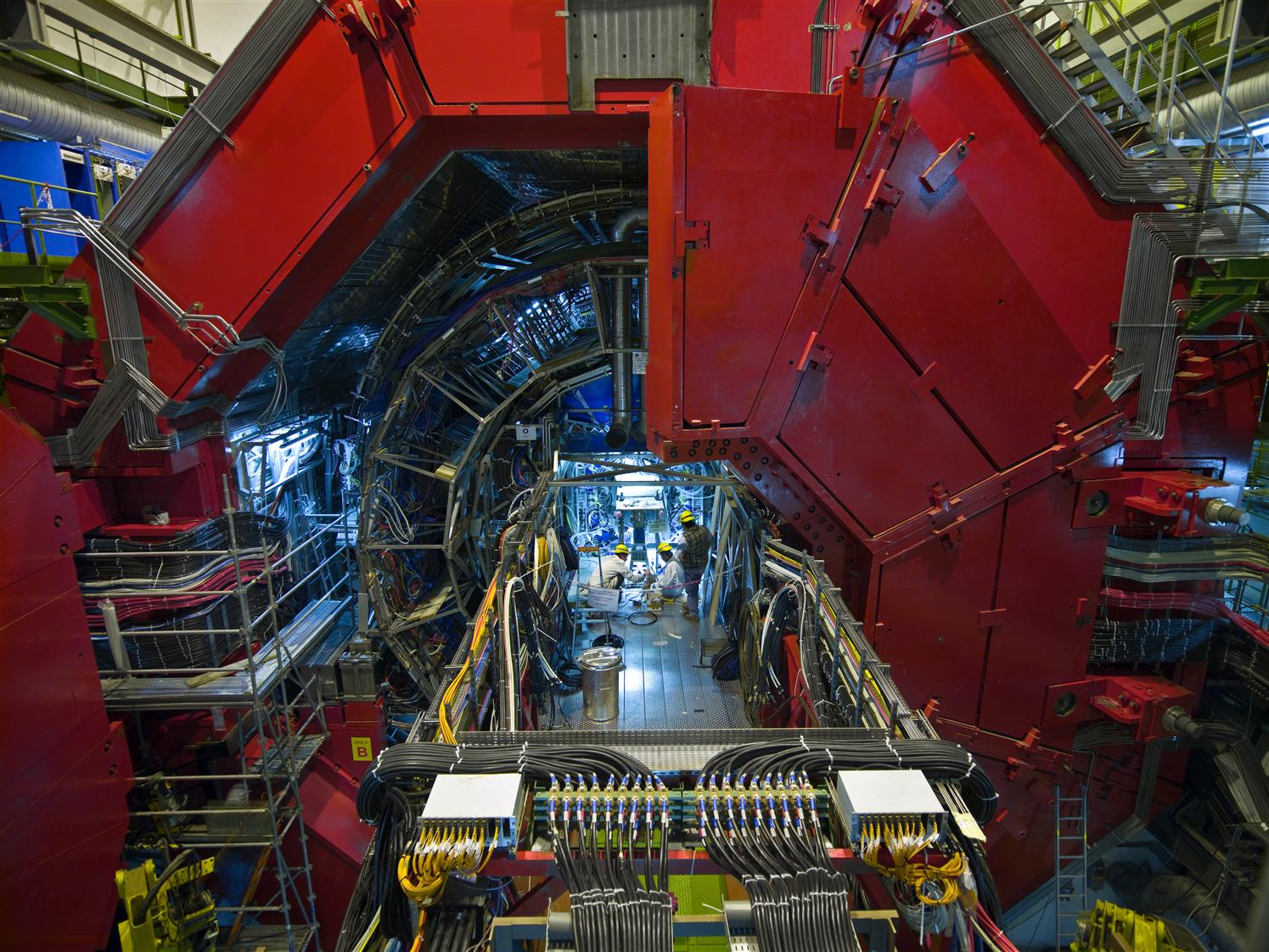
Physicists Rosi Reed and Anders Knospe are leading experiments at Brookhaven National Laboratory's Relativistic Ion Collider to explore the nature of quark-gluon plasma, a fluid made up of subatomic particles that existed in the first instant of the universe. They have built a highly-specialized detector to measure aspects of the universe that have never before been measured. Their event plane detector is designed to measure the trajectories of fundamental charged particles post-collision and will help answer questions about the strong force and the creation of matter in the universe.

Physicists Successfully Detect Neutrinos in Particle Collider for the First Time
science3 years ago

Physicists Successfully Detect Neutrinos in Particle Collider for the First Time

Scientists have detected neutrinos in a particle collider for the first time using the FASERnu detector at the Large Hadron Collider. Neutrinos are subatomic particles that barely interact with other particles and are produced in energetic circumstances such as nuclear fusion and supernova explosions. The detection of collider neutrinos will help scientists understand how these particles form, their properties, and their role in the evolution of the Universe. The FASER team is still analyzing data collected by the detector, and many more neutrino detections are expected.

Physicists Make Historic First Detection of Neutrinos from Particle Collider
science3 years ago

Physicists Make Historic First Detection of Neutrinos from Particle Collider

Physicists at the University of California, Irvine have detected neutrinos created by a particle collider for the first time, using FASER, a particle detector installed at CERN. This discovery will deepen our understanding of subatomic particles and could help with understanding cosmic neutrinos that travel large distances and collide with the Earth. FASER is also designed to help identify the particles that make up dark matter, which physicists think comprises most of the matter in the universe.

Physicists detect subatomic neutrinos from particle collider in breakthrough discovery.
science3 years ago

Physicists detect subatomic neutrinos from particle collider in breakthrough discovery.

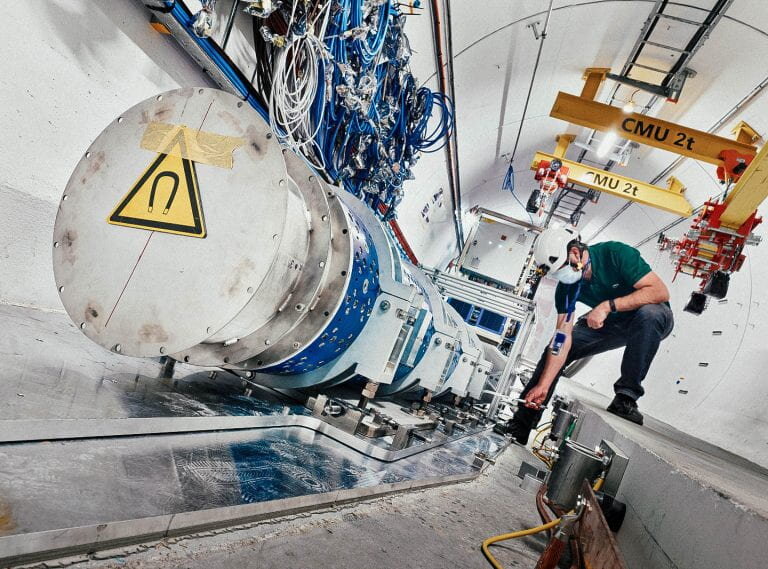
Physicists at the University of California, Irvine have detected neutrinos created by a particle collider for the first time, using the Forward Search Experiment (FASER) particle detector at CERN. The discovery could help scientists understand subatomic particles and cosmic neutrinos that travel large distances and collide with the Earth. FASER is unique among particle-detecting experiments, as it is small and made from spare parts from other experiments. The detector's other objective is to help identify the particles that make up dark matter.