Astrophotographer Andrew McCarthy captured the first-ever photo of a rocket launch in front of the Sun's chromosphere using hydrogen-alpha light, revealing detailed solar features and the rocket's shockwaves, marking a unique achievement in astrophotography.
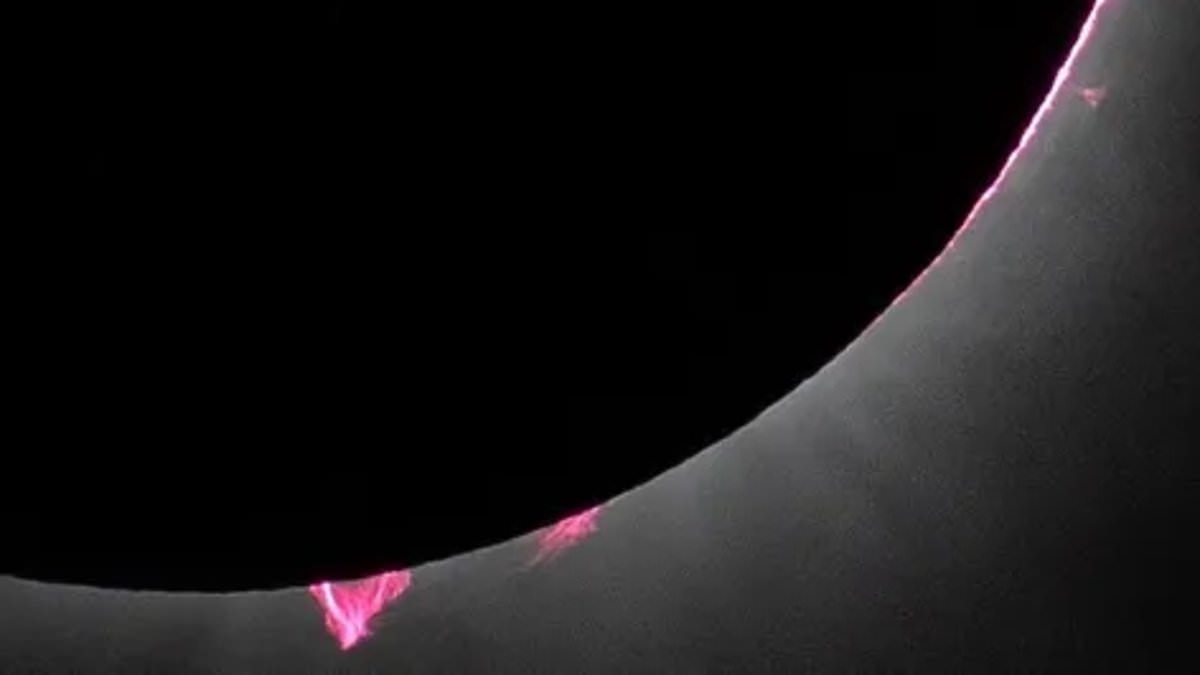
NASA photographer captures stunning images of pink solar prominences, massive loops of anchored plasma on the sun's surface, during the total solar eclipse in Dallas, Texas. These planet-sized pink flames, visible due to the eclipse, are ten times the diameter of Earth and emit a pinkish-reddish hue due to the transformation of hydrogen gas into plasma. The prominences are formed by magnetic fields trapping electrically charged hydrogen plasma, and their release into space can lead to powerful eruptions. The 2024 eclipse showed heightened solar activity compared to the 2017 eclipse, with more intense solar energy and prominences visible.
Astronomers have observed extremely high-energy particles coming out of the Sun even when it is relatively calm. The mystery has been solved by a team of theoretical astrophysicists who found that the chromosphere, the layer just below the photosphere, can have enough energy to accelerate cosmic rays to incredibly high energies. These particles then spit back out of the Sun and generate a flash of gamma ray radiation when they slam into a random proton near the surface of the Sun. This shows that the Sun is capable of accelerating particles to very high energies efficiently, even when there is nothing chaotic happening on the surface.
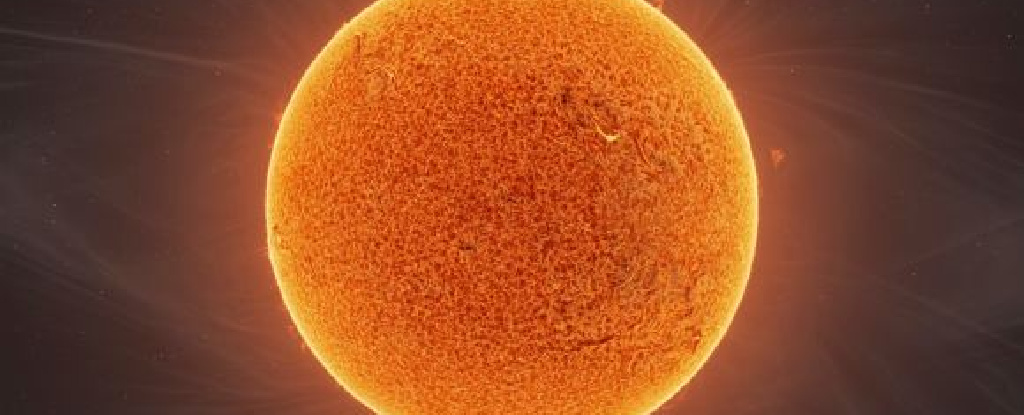
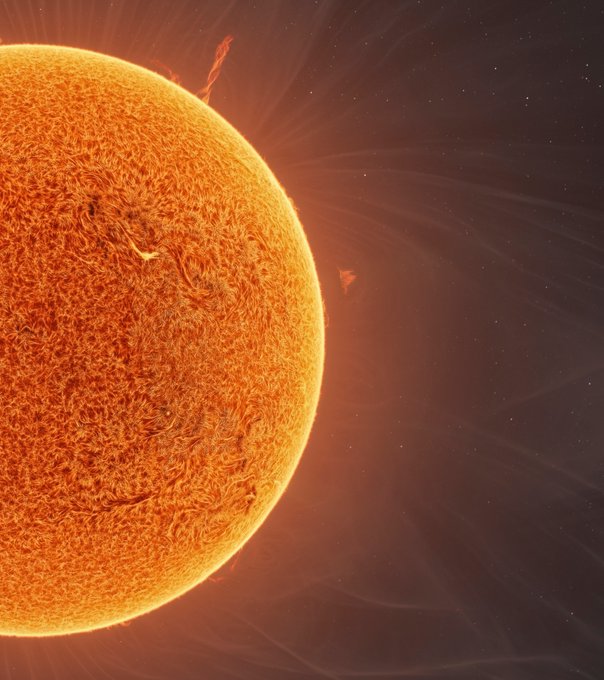
Amateur astrophotographer Andrew McCarthy captured a video of a tornado-like solar prominence on the Sun's surface, which was raining moon-sized gobs of incandescent material. McCarthy imaged the sequence using a modified telescope that can observe the Sun's atmosphere in hydrogen-alpha band using hundreds of thousands of images over a few hours. The solar prominence is a mass of plasma caught in a magnetic loop, drawing it away from the photosphere and over a hundred thousand miles into space. McCarthy collaborated with colleague Jason Guenzel to produce a 140-megapixel still image of the Sun with the tornado visible in the upper portion of the image.
Amateur astrophotographer Andrew McCarthy captured a video of a tornado-like solar prominence on the Sun's surface using a modified telescope that can observe the Sun's atmosphere in hydrogen-alpha band. The feature was a mass of plasma caught in a magnetic loop, drawing it away from the photosphere and over a hundred thousand miles into space. McCarthy collaborated with colleague Jason Guenzel to produce a 140 megapixel still image of the Sun with the tornado visible in the upper portion of the image. The Sun has layers just like the Earth and other celestial objects, including the photosphere, chromosphere, solar prominence, and corona.