Tag

Neutrons

All articles tagged with #neutrons

"Neutrons' Surprising Bonding Behavior with Quantum Dots Uncovered by MIT Study"

Originally Published 1 year ago — by Interesting Engineering

Featured image for "Neutrons' Surprising Bonding Behavior with Quantum Dots Uncovered by MIT Study"
Source: Interesting Engineering

MIT researchers have discovered that neutrons, despite being uncharged particles, are governed by the short-range strong force, rather than the electromagnetic force. This finding challenges previous understanding of neutron behavior and its interactions with materials.
"MIT Researchers Uncover Neutrons Binding to Quantum Dots in Groundbreaking Discovery"

Originally Published 1 year ago — by MIT News

Featured image for "MIT Researchers Uncover Neutrons Binding to Quantum Dots in Groundbreaking Discovery"
Source: MIT News

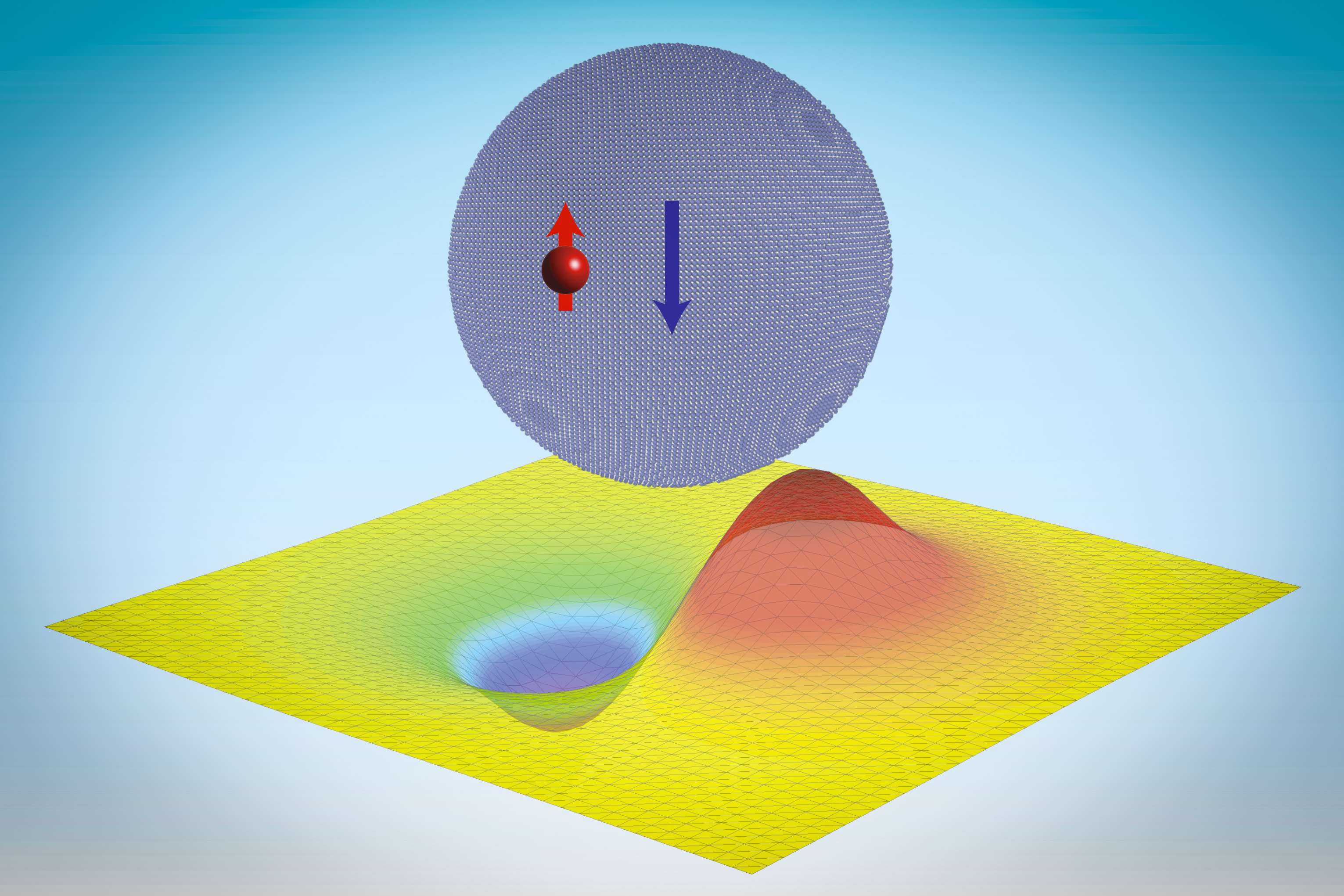
MIT researchers have discovered that neutrons can be made to cling to quantum dots, forming artificial "neutronic molecules" held together by the strong force, which may lead to new tools for probing material properties at the quantum level and exploring quantum information processing devices. This unexpected finding could have applications in controlling individual neutrons for triggering reactions and developing quantum information systems, as well as in neutron imaging for materials analysis. The research was reported in the journal ACS Nano and was supported by the U.S. Office of Naval Research.

Unprecedented Discovery: Scientists Uncover Mysterious Oxygen Isotope Defying Physics

Originally Published 2 years ago — by ScienceAlert

Featured image for Unprecedented Discovery: Scientists Uncover Mysterious Oxygen Isotope Defying Physics
Source: ScienceAlert

Scientists have discovered a new isotope of oxygen, oxygen-28, with the highest number of neutrons ever observed in an oxygen atom. While it was expected to be stable due to its "magic" numbers of protons and neutrons, it actually decays rapidly. This challenges our understanding of the stability of isotopes and the concept of magic numbers in atomic nuclei. The findings suggest that the neutron shell in oxygen-28 is not completely filled, raising questions about the stability of isotopes with 20 neutrons. Further research is needed to explore the nucleus in an excited state and investigate alternative methods of oxygen-28 formation.

Unveiling the Mystery of Dark Matter with Axion Particle Discovery

Originally Published 2 years ago — by Phys.org

Featured image for Unveiling the Mystery of Dark Matter with Axion Particle Discovery
Source: Phys.org

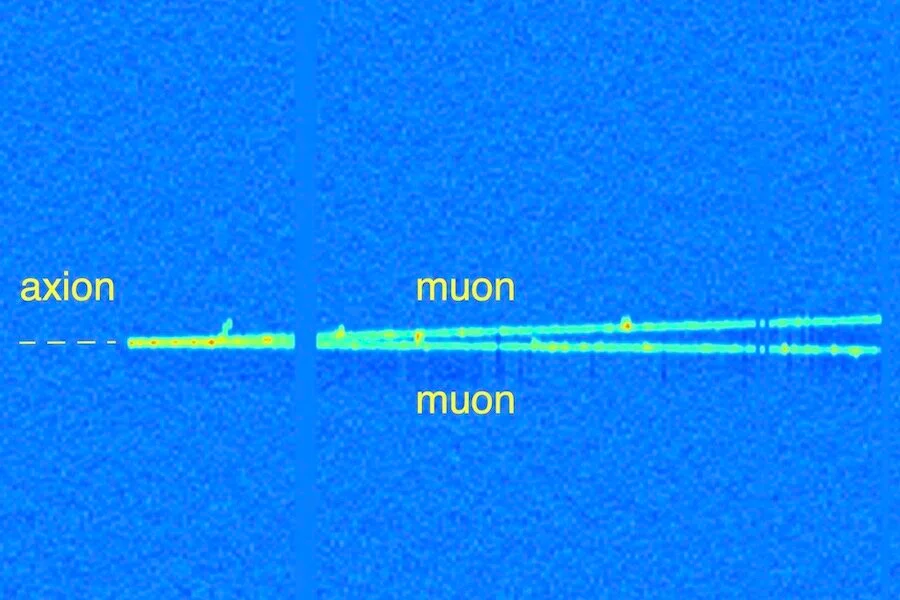
University of Minnesota researchers have developed a new method to search for axions, hypothetical particles that could help solve the Strong CP Problem in physics. The method involves measuring the decay of the axion into two muons, which has not been used before in neutrino or collider experiments. The researchers believe that by working backward from the muon tracks in the detector to reconstruct such decays, they have a chance to locate the axion and prove its existence. The discovery of axions could be a significant advance in our fundamental understanding of the structure of nature.

Unleashing the Power of Sodium: A Nuclear Physics Game-Changer

Originally Published 2 years ago — by SciTechDaily

Featured image for Unleashing the Power of Sodium: A Nuclear Physics Game-Changer
Source: SciTechDaily

Nuclear physicists at RIKEN have created an extremely neutron-rich isotope of sodium, 39Na, which was previously believed to be impossible. This breakthrough has significant implications for our understanding of atomic nuclei structure and the astrophysical processes that form heavier elements on Earth. The discovery provides a vital reference point for tweaking models of neutron-rich nuclei and for assessing their accuracy, which could help refine calculations for nuclei with more neutrons. The location of the neutron drip line provides a key benchmark to not only nuclear theories but also nuclear mass models that play a key role in theories of nucleosynthesis.

New Short-Lived Uranium Isotope Discovered Through Multinucleon Transfer

Originally Published 2 years ago — by IFLScience

Featured image for New Short-Lived Uranium Isotope Discovered Through Multinucleon Transfer
Source: IFLScience

Scientists have produced Uranium-241 for the first time, filling a gap in the long list of the heavy metal’s isotopes. The new isotope has a half-life of around 40 minutes, making it long enough to study its properties. Uranium-241's discovery is the first for an isotope at the heavier end of the scale since 1979. When U-241 decays it releases beta rays, converting one of its abundant supply of neutrons to a proton and forming neptunium-241, which in turn lasts for about 14 minutes before becoming plutonium-241 through the same decay process.

New 'neutron-rich' uranium isotope found after 42 years

Originally Published 2 years ago — by Livescience.com

Featured image for New 'neutron-rich' uranium isotope found after 42 years
Source: Livescience.com

Scientists have discovered and synthesized a new isotope of uranium, uranium-241, which has 92 protons and 149 neutrons, making it the first new neutron-rich isotope of uranium discovered since 1979. The half-life of uranium-241 is estimated to be around 40 minutes. The isotope was created by firing a sample of uranium-238 at platinum-198 nuclei at Japan's RIKEN accelerator. The discovery is unlikely to have any practical or scientific applications due to the small numbers in which it is created.