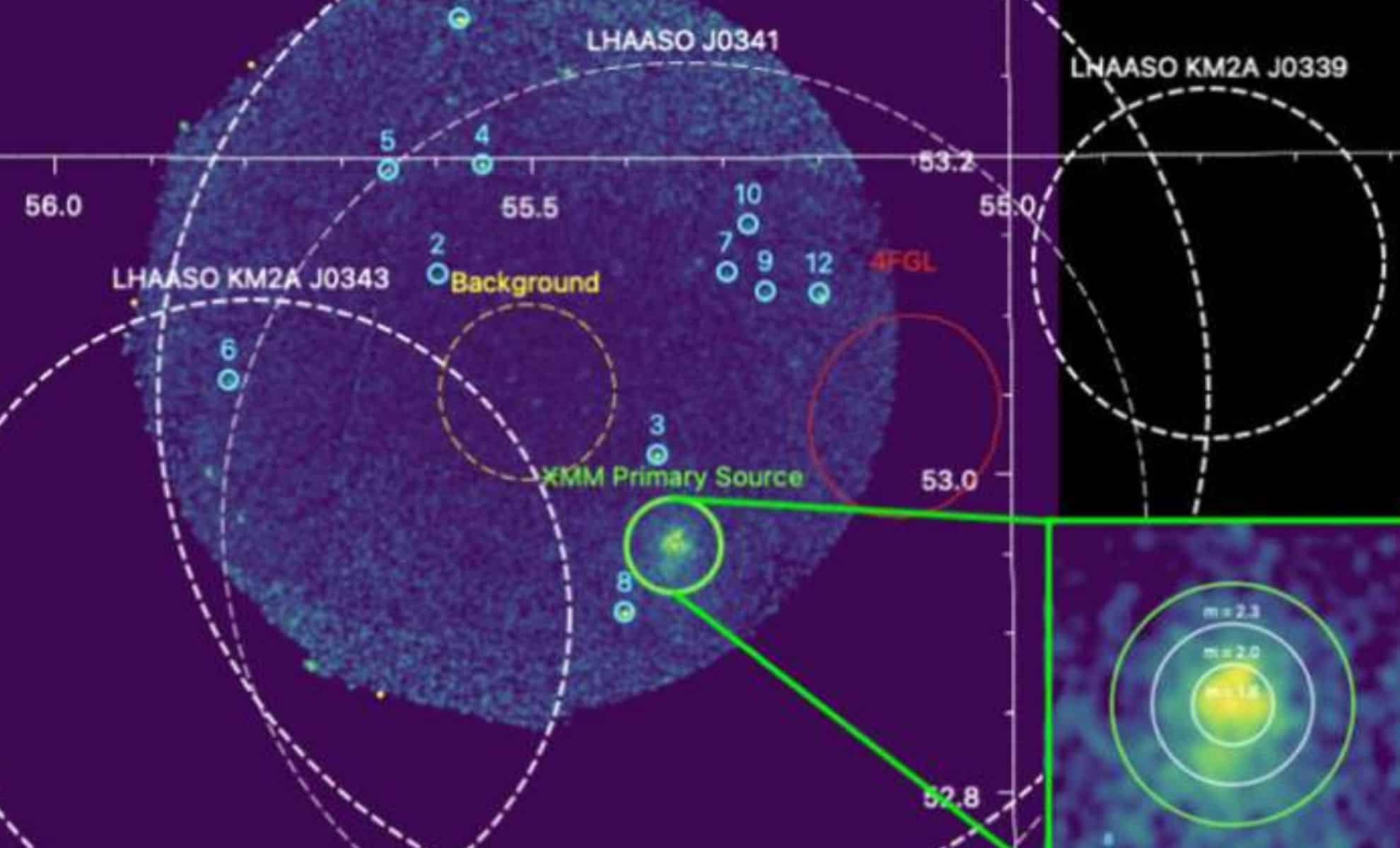
Researchers at Michigan State University have identified a pulsar wind nebula associated with a cosmic ray accelerator, providing new insights into the origins of galactic cosmic rays and their connection to high-energy astrophysical phenomena, with future plans to link these findings to neutrino detections.
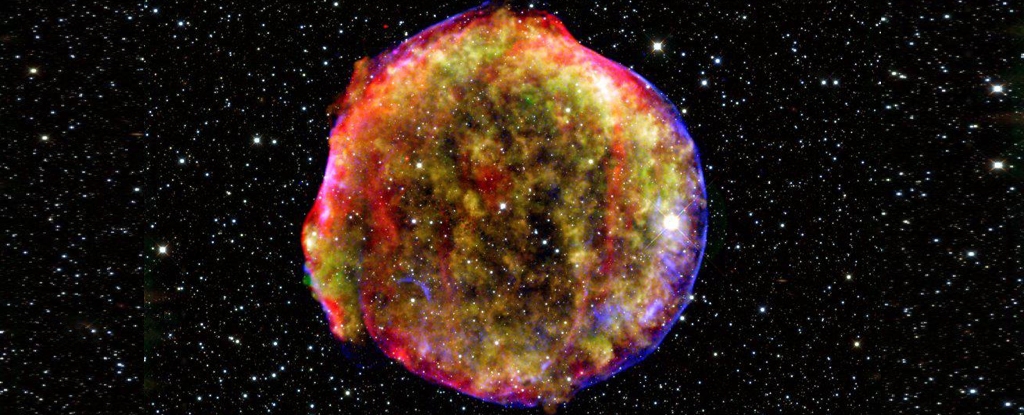
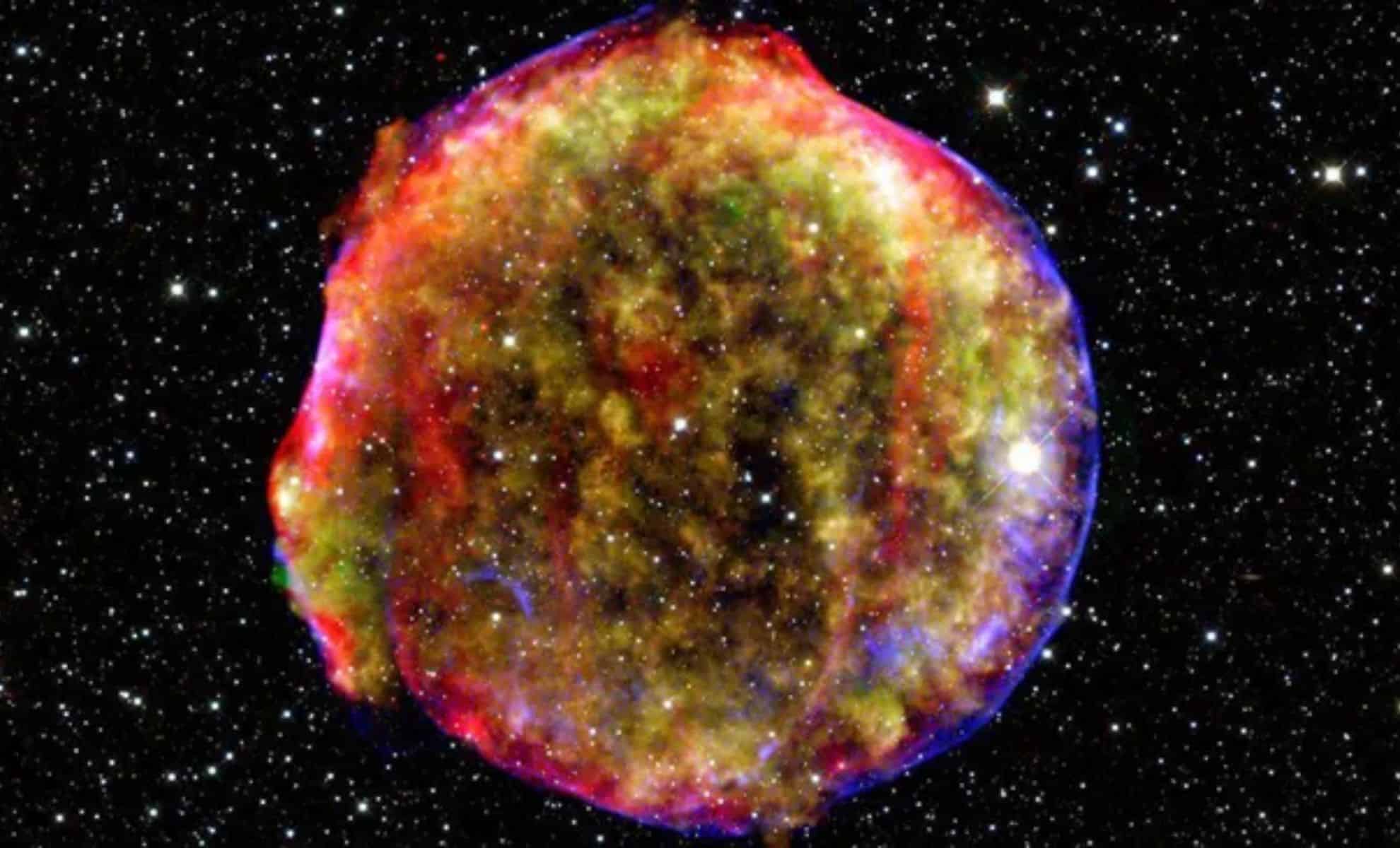
Researchers suggest that the most powerful cosmic rays, or PeVatrons, may originate from young supernova remnants, particularly in the first decade or two after a star's explosion, with dying stars like Tycho's supernova being potential sources. The study highlights the importance of dense surrounding shells and timing in accelerating particles to extreme energies, potentially solving the mystery of the universe's most energetic cosmic rays.
A new study suggests that supernova remnants can temporarily become the universe's most powerful particle accelerators, called PeVatrons, capable of producing ultra-energetic cosmic rays. This phase is brief, lasting only a few months, which explains why direct detections are rare despite frequent supernovae in the Milky Way. The key factor is the dense gas shell around the star, which, when hit by the explosion, creates intense magnetic fields that accelerate particles to PeV energies.
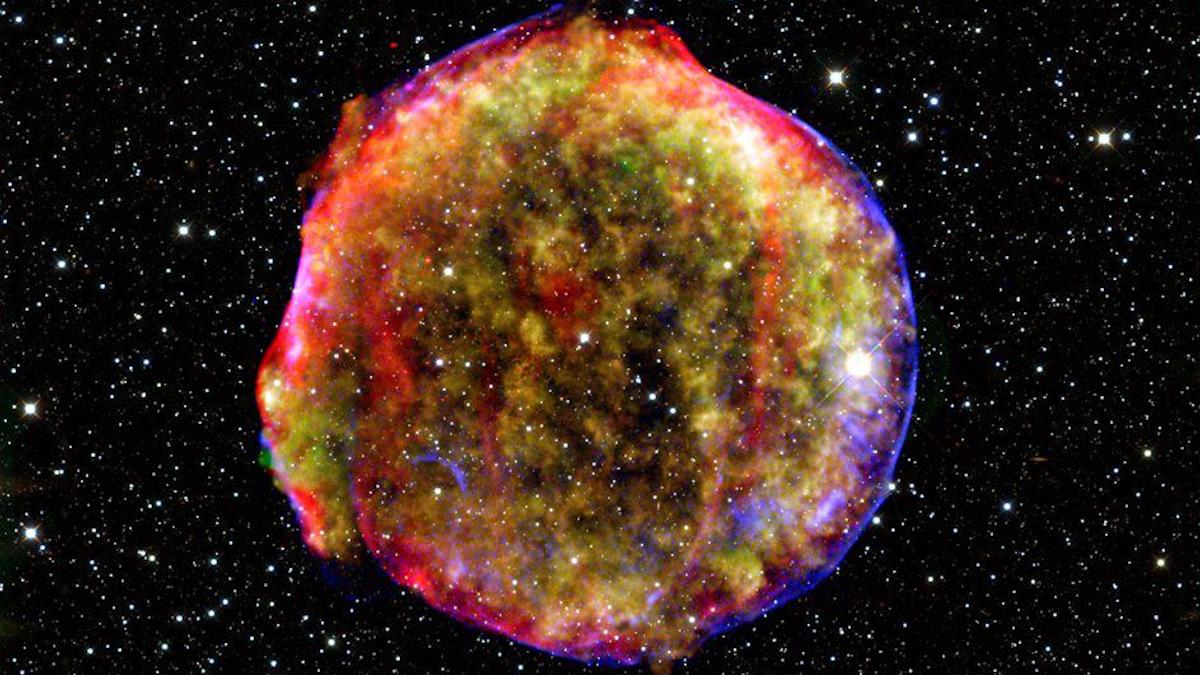
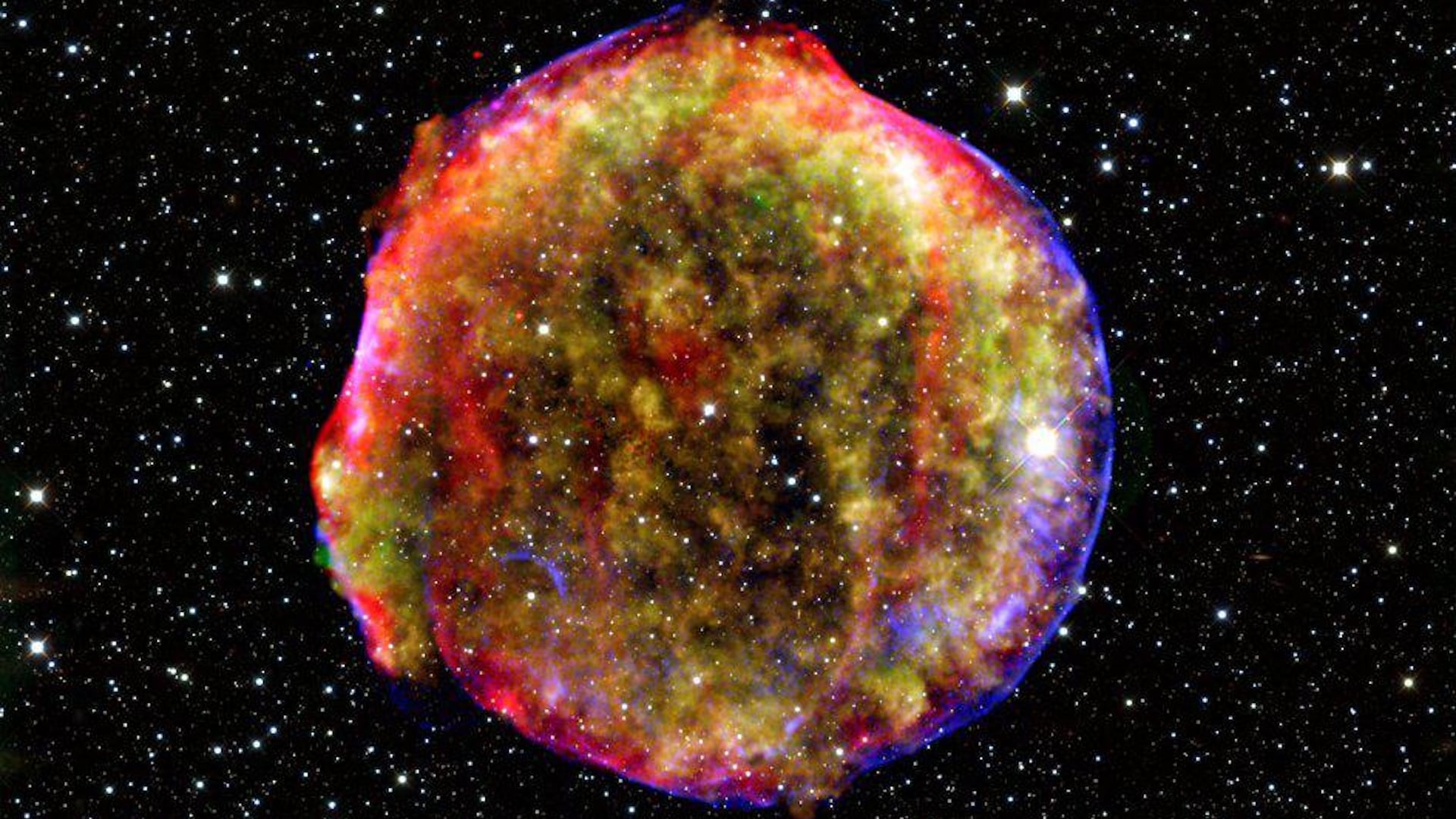
New research suggests that supernova remnants, like Tycho, can temporarily act as the universe's most powerful particle colliders, capable of generating PeV cosmic rays when the star loses a dense shell of material before exploding, creating conditions for extreme particle acceleration.
New research suggests that supernova remnants like Tycho can temporarily act as the universe's most powerful particle colliders, capable of generating PeV cosmic rays when the star loses a significant amount of dense material before exploding, creating conditions for extreme particle acceleration.