Tag

Quark Gluon Plasma

All articles tagged with #quark gluon plasma

Physicists Measure Trillion-Degree Quark-Gluon Plasma, Unlocking Early Universe Secrets

Originally Published 2 months ago — by ScienceDaily

Featured image for Physicists Measure Trillion-Degree Quark-Gluon Plasma, Unlocking Early Universe Secrets
Source: ScienceDaily

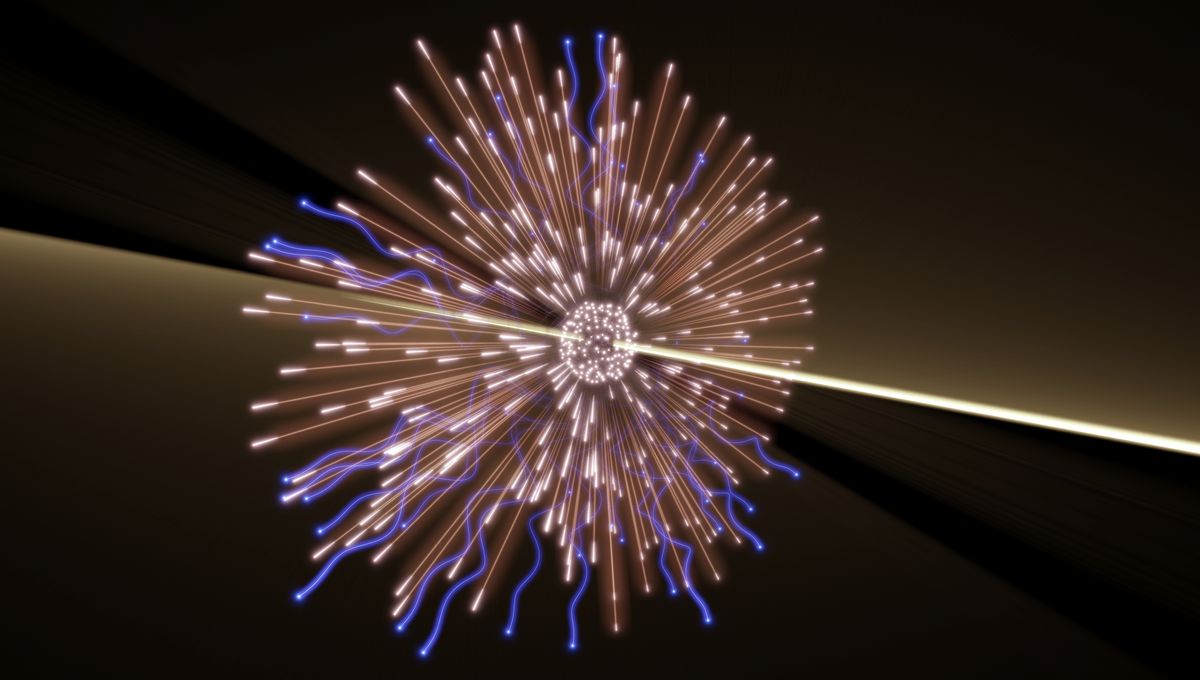
Physicists have measured the temperature of quark-gluon plasma, a state of matter from moments after the Big Bang, reaching trillions of Kelvin, providing new insights into the early universe's conditions and advancing understanding of matter under extreme temperatures.

Scientists Recreate the Universe's Birth, Uncovering Early Cosmic Secrets

Originally Published 3 months ago — by Energy Reporters

Featured image for Scientists Recreate the Universe's Birth, Uncovering Early Cosmic Secrets
Source: Energy Reporters

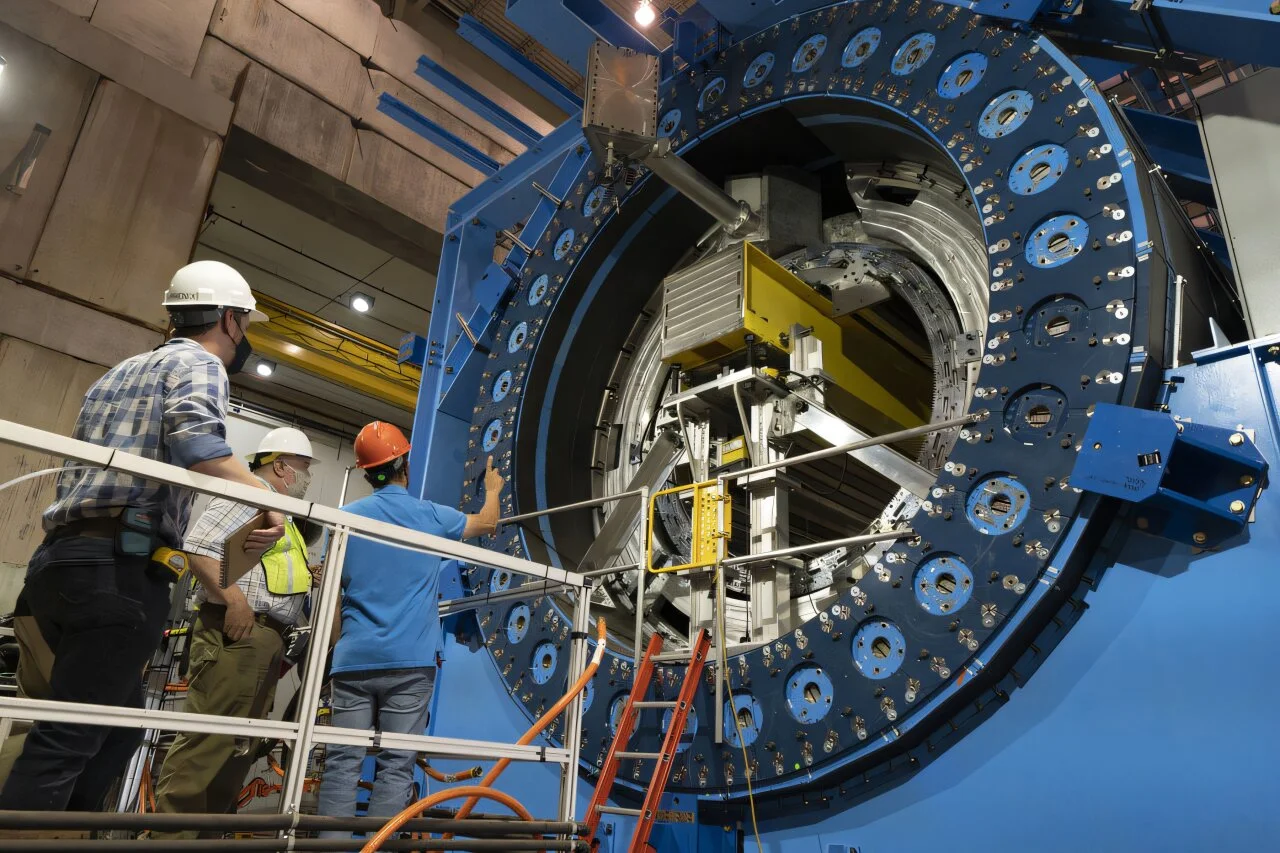
The sPHENIX detector at Brookhaven National Laboratory has successfully tested a new technology that captures detailed data from high-energy collisions, helping scientists better understand the universe's earliest moments and the elusive quark-gluon plasma formed shortly after the Big Bang, marking a significant advancement in cosmic research.

Brookhaven’s sPHENIX detector passes key test to explore early universe

Originally Published 4 months ago — by Space

Featured image for Brookhaven’s sPHENIX detector passes key test to explore early universe
Source: Space

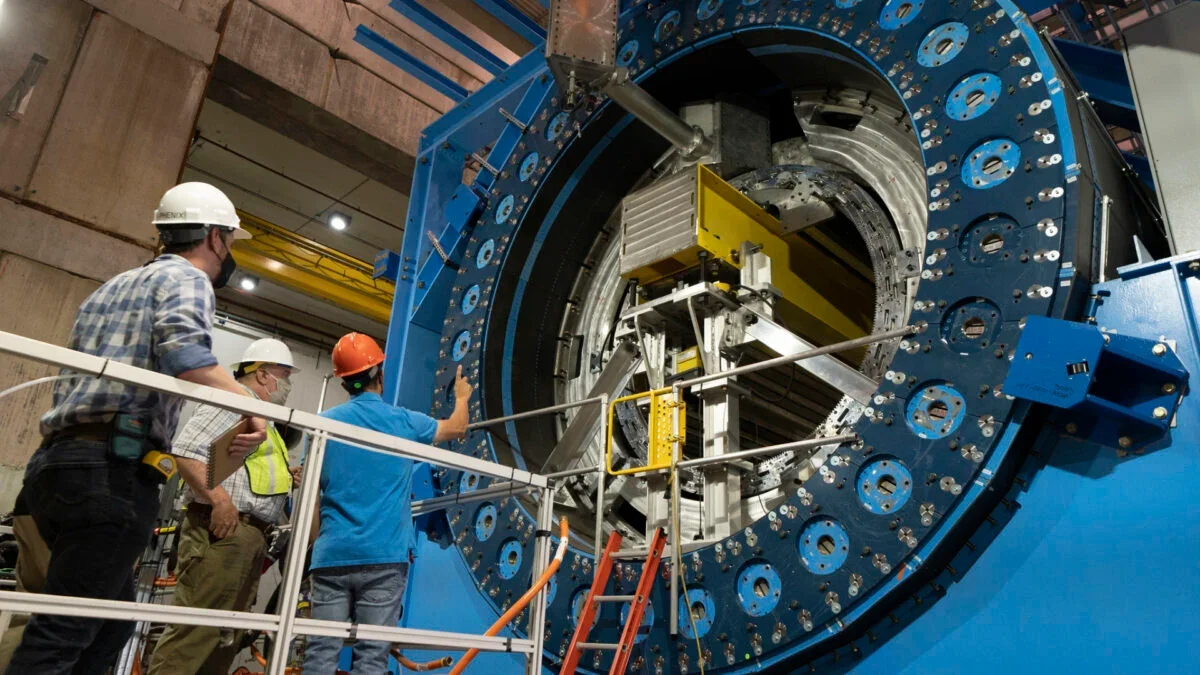
A new particle detector called sPHENIX at Brookhaven National Laboratory has successfully passed a crucial test, demonstrating its readiness to study the 'ashes' of quark-gluon plasma created in high-energy collisions, which can provide insights into the conditions of the early universe immediately after the Big Bang.

Brookhaven’s sPHENIX Detector Passes Key Test to Study Quark-Gluon Plasma

Originally Published 4 months ago — by Phys.org

Featured image for Brookhaven’s sPHENIX Detector Passes Key Test to Study Quark-Gluon Plasma
Source: Phys.org

The sPHENIX particle detector at Brookhaven's RHIC has successfully demonstrated its precision in measuring particle collisions, confirming its readiness to study the properties of quark-gluon plasma, a state of matter from the early universe, by analyzing the particles produced in high-speed gold ion collisions.

New York’s 'Big Bang Machine' Successfully Completes First Test

Originally Published 4 months ago — by Gizmodo

Featured image for New York’s 'Big Bang Machine' Successfully Completes First Test
Source: Gizmodo

Researchers have successfully tested the sPHENIX detector, a major upgrade at Brookhaven's RHIC, which is designed to study the conditions of the early universe by measuring particle collisions that recreate the quark-gluon plasma, passing a key initial test and paving the way for new insights into the universe's first moments.

Humans Create Object Over 300,000 Times Hotter Than the Sun

Originally Published 6 months ago — by IFLScience

Featured image for Humans Create Object Over 300,000 Times Hotter Than the Sun
Source: IFLScience

In 2012, CERN's Large Hadron Collider achieved the creation of the hottest artificially produced temperature ever, reaching 5 trillion Kelvin, which is about 100,000 times hotter than the Sun's core and similar to conditions microseconds after the Big Bang, by colliding lead ions at near-light speeds to study primordial matter.

Revealing the Secrets of Quark-Gluon Plasma in High-Energy Collisions

Originally Published 7 months ago — by Phys.org

Featured image for Revealing the Secrets of Quark-Gluon Plasma in High-Energy Collisions
Source: Phys.org

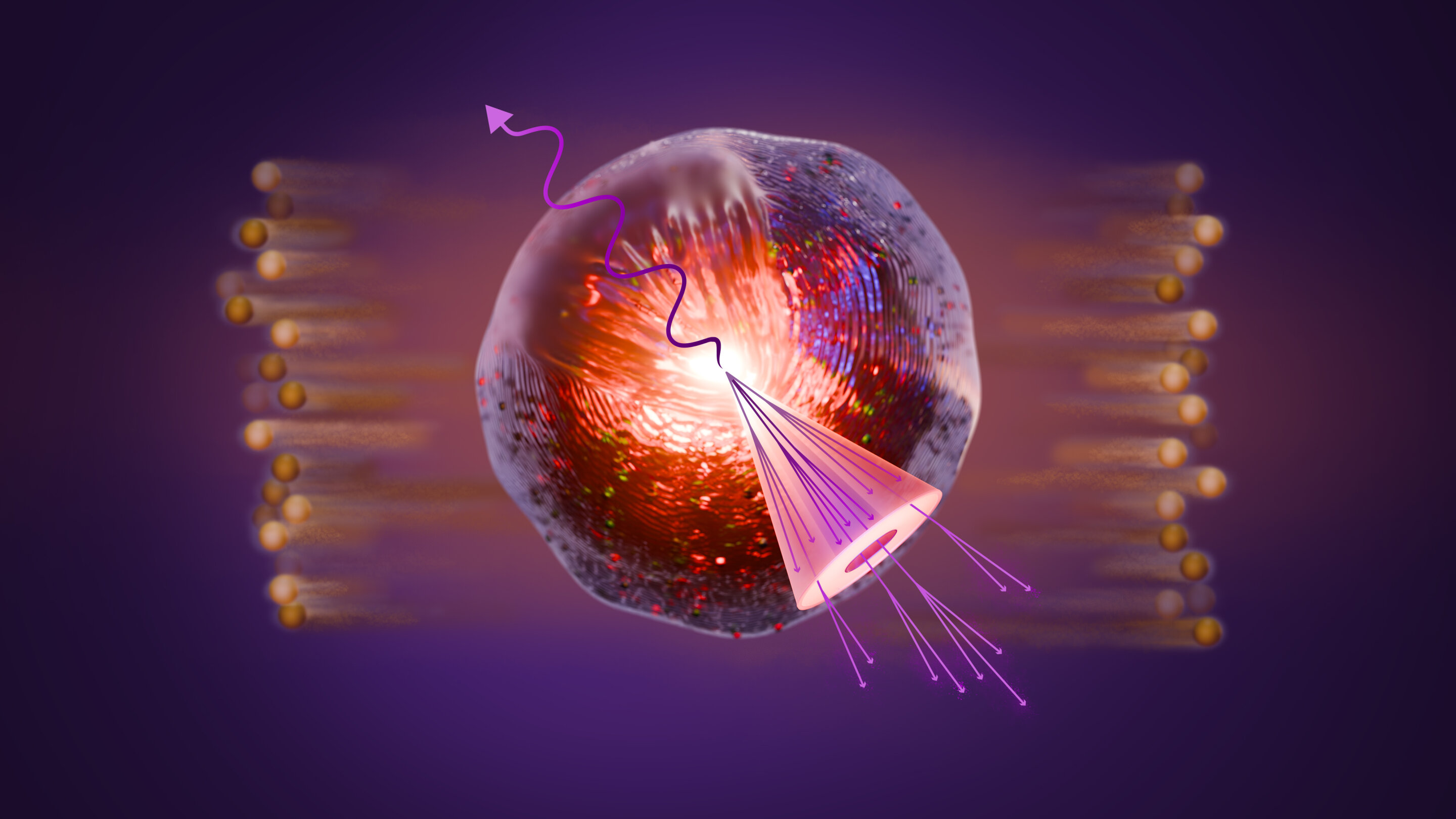
New experiments at RHIC reveal how quark-gluon plasma 'splashes' sideways when hit by energetic jets, providing insights into its properties and behavior during high-energy collisions, similar to a splash in water, and helping scientists understand the early universe conditions.

Study Reveals Thermodynamic Properties of Quark-Gluon Plasma

Originally Published 7 months ago — by Phys.org

Featured image for Study Reveals Thermodynamic Properties of Quark-Gluon Plasma
Source: Phys.org

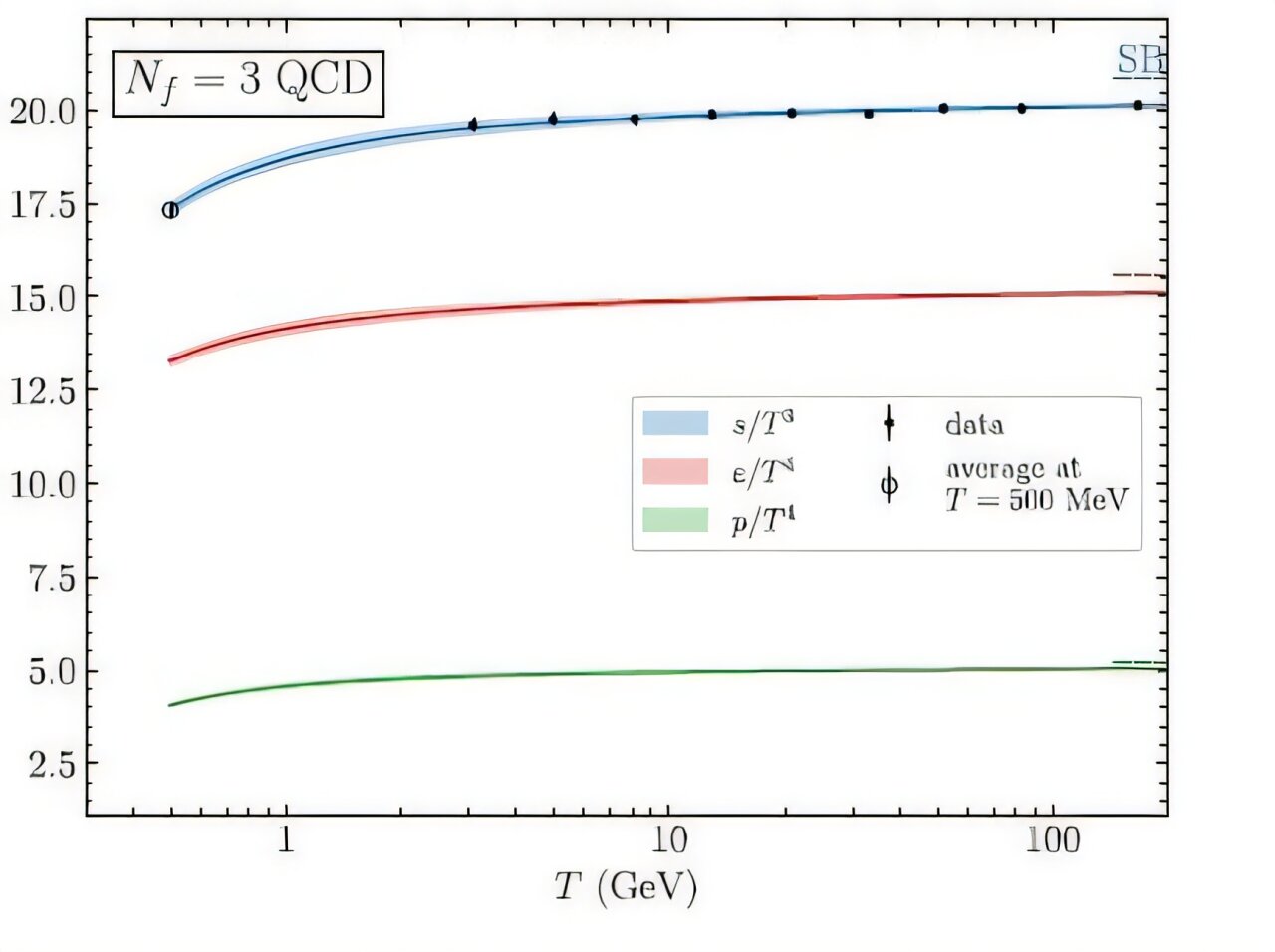
A new study using lattice QCD techniques has calculated the equation of state of the quark-gluon plasma from 3 GeV to 165 GeV, revealing that the strong force played a significant role in the early universe's conditions shortly after the Big Bang, with implications for understanding the universe's evolution and phase transitions.

Breakthrough in Solving Cosmic Ray Muon Mystery

Originally Published 1 year ago — by Phys.org

Featured image for Breakthrough in Solving Cosmic Ray Muon Mystery
Source: Phys.org

Researchers have proposed that gluon condensation during the initial collision of cosmic rays with atmospheric nuclei could explain the excess muons observed at Earth's surface. This theory suggests that gluon condensates enhance the production of strange quarks, leading to more muons than predicted by standard physics models. The findings, published in The Astrophysical Journal, offer a potential solution to the longstanding muon puzzle in cosmic ray physics.

Historic Lead Atom Collision Yields Top Quarks

Originally Published 1 year ago — by IFLScience

Featured image for Historic Lead Atom Collision Yields Top Quarks
Source: IFLScience

The ATLAS collaboration at CERN's Large Hadron Collider has observed top quarks in collisions between lead ions for the first time, marking a significant step in understanding the early universe's conditions. This discovery allows scientists to study the quark-gluon plasma, a state of matter present just after the Big Bang, and use top quarks as time markers to probe its evolution. The findings also open avenues for exploring momentum distribution within atomic nuclei and further understanding fundamental forces.

Unveiling Nuclear Shapes: Insights from High-Energy Collisions

Originally Published 1 year ago — by Phys.org

Featured image for Unveiling Nuclear Shapes: Insights from High-Energy Collisions
Source: Phys.org

Researchers from the Niels Bohr Institute and Peking University have used experiments at CERN's Large Hadron Collider to predict changes in the shape of Xenon nuclei during high-energy collisions. These findings, published in Physical Review Letters, reveal that the initial geometry of colliding nuclei significantly influences the outcomes of such collisions, challenging previous assumptions. The study also provides insights into the quark-gluon plasma, a state of matter present shortly after the Big Bang, and demonstrates a novel algorithm for analyzing particle interactions without supercomputers.

"Unleashing the Strongest Magnetic Force in the Universe"

Originally Published 1 year ago — by indy100

Featured image for "Unleashing the Strongest Magnetic Force in the Universe"
Source: indy100

Scientists at the US Department of Energy's Brookhaven National Laboratory have created the strongest magnetic field ever observed on Earth by inducing off-centre collisions of heavy atomic nuclei in a particle accelerator. This breakthrough allows for the study of the electrical conductivity of quark-gluon plasma, shedding light on the fundamental building blocks of matter and the universe. The magnetic field generated during these collisions is so powerful that it surpasses even that of neutron stars, providing new insights into the inner workings of atoms and the behavior of fundamental particles like quarks and gluons.

"Unleashing a Magnetic Monster: Scientists Smash Atom into Atom"

Originally Published 1 year ago — by Yahoo! Voices

Featured image for "Unleashing a Magnetic Monster: Scientists Smash Atom into Atom"
Source: Yahoo! Voices

Scientists at the Brookhaven National Laboratory used the Relativistic Heavy Ion Collider to create and measure an incredibly strong magnetic field within quark-gluon plasma resulting from off-center heavy nuclei collisions, which was found to be 10,000 times stronger than a magnetar. This breakthrough could help physicists understand the universe moments after the Big Bang and explore the properties of quark-gluon plasma, shedding light on the ultimate puzzle of how matter came to dominate the universe.

Insights into Charm and Beauty Particles in Quark-Gluon Plasma Revealed by ALICE Measurements

Originally Published 2 years ago — by Phys.org

Featured image for Insights into Charm and Beauty Particles in Quark-Gluon Plasma Revealed by ALICE Measurements
Source: Phys.org

The ALICE collaboration at CERN has conducted new measurements on the dynamics of charm and beauty particles in quark-gluon plasma. By analyzing non-head-on lead-lead collisions, they compared the elliptic flow of prompt D mesons (produced right after the collisions) with that of non-prompt D mesons (produced later in the decays of B mesons). The results show that the elliptic flow of non-prompt D mesons is weaker than that of prompt D mesons, confirming expectations and shedding light on the thermalization of beauty quarks. These findings pave the way for further measurements in the future.

"Revving Up the LHC: Lead-Ion Collisions Begin"

Originally Published 2 years ago — by CERN

Featured image for "Revving Up the LHC: Lead-Ion Collisions Begin"
Source: CERN

The Large Hadron Collider (LHC) at CERN has begun its first heavy-ion run in five years, with stable beams of lead nuclei colliding at an increased energy of 5.36 TeV per nucleon pair. The primary goal of this run is to study quark-gluon plasma, a state of matter believed to have existed shortly after the Big Bang. The ongoing run is expected to bring significant advances in our understanding of quark-gluon plasma, with upgrades in the experiments' detection and analysis systems. The experiments will also study ultra-peripheral collisions of heavy ions to probe gluonic matter and study rare phenomena.