UCLA researchers overturned Bredt's rule by creating cage-shaped cubene and quadricyclene with highly distorted double bonds, revealing bond orders around 1.5 and expanding 3D-molecule building blocks for future drug design.
Recent studies suggest that complex organic chemistry could thrive in sulfuric acid, challenging the assumption that water-rich environments are necessary for life. Research has shown that nucleic acid bases and amino acids can remain stable in concentrated sulfuric acid, similar to the conditions found in the Venusian clouds. While the study was conducted in a laboratory setting and not in the actual Venusian environment, upcoming missions to Venus may provide valuable data to further explore the potential for organic chemistry and possibly extraterrestrial life in such conditions.
Researchers from Tohoku University propose that organic materials on Mars might have originated from atmospheric formaldehyde, suggesting the planet’s early atmosphere could support the formation of life-essential biomolecules. New findings indicate Mars’ ancient atmosphere, rich in formaldehyde, could have supported the creation of organic materials essential for life, shedding light on the planet’s potential for past habitability. Scientists simulated the potential atmospheric composition of early Mars and found that it could have provided a continuous supply of formaldehyde, potentially leading to the creation of various organic compounds, broadening our understanding of the planet’s ancient capacity to sustain life.
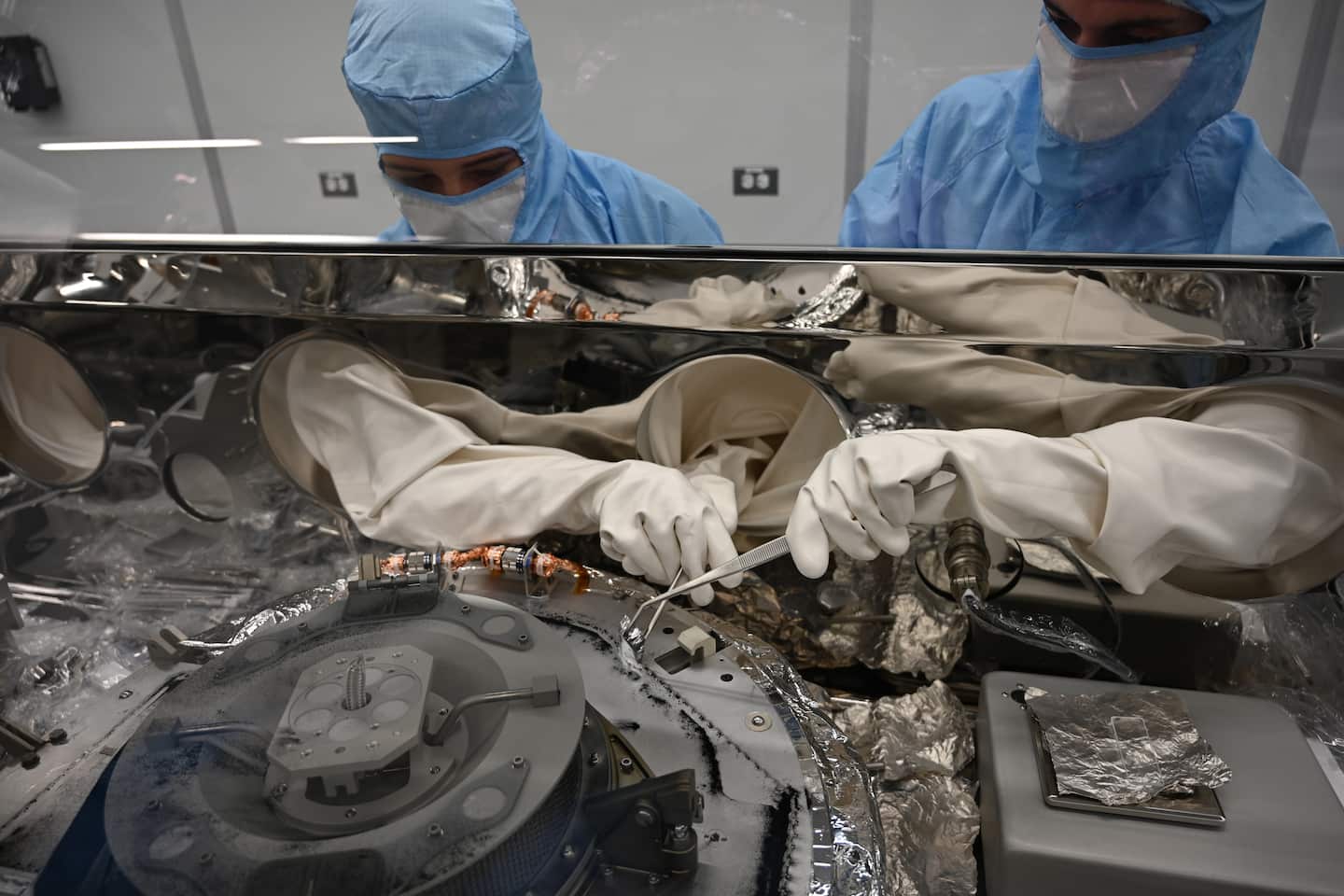
NASA's OSIRIS-REx mission has brought back samples from the asteroid Bennu, providing insights into the molecular building blocks of the solar system and potentially the origin of life. The samples contain intriguing molecules, including carbon-based organics, and ongoing analysis aims to uncover amino acids, lipids, sugars, and genetic code bases. Bennu, a potentially dangerous asteroid with a 1-in-2,700 chance of impacting Earth in 2182, offers a unique opportunity to study prebiotic chemistry and better understand the search for life on other celestial bodies.
Scientists from IOCB Prague have unraveled the unique behavior of azulene, a fundamental aromatic molecule known for its distinct blue hue. By violating Kasha's rule, azulene behaves differently from other molecules in terms of emitting light upon transitioning to excited states. The researchers used the concept of (anti)aromaticity to explain this behavior, showing that azulene falls quickly from the first excited state without emitting light, but behaves like a satisfied aromatic substance in the second step, emitting light for a longer duration. This understanding could lead to advances in organic chemistry and the efficient capture of light energy. The researchers also demonstrated that the properties of azulene can be transferred to other aromatic molecules.
Researchers at the University of Pennsylvania have developed amino acids that are unlike any found in nature, opening up possibilities for novel protein therapies and new branches of chemistry. By combining an engineered tryptophan enzyme with an organic light-reactive catalyst, the team created several amino acids never seen before. This breakthrough could have wide-ranging implications in various scientific fields, from medicine to therapeutic applications. The discovery is just the first step towards understanding these chemical reactions and their potential uses. The study was published in Science on July 27, 2023.
Scientists have discovered a new method to create "unnatural" amino acids, which could have applications in protein-based therapies and expand the field of organic chemistry. The process involves bioengineering enzymes to create an unnatural configuration of an amino acid, offering chemists greater control over the resulting molecule's orientation. By combining a light-sensitive molecular catalyst with a PLP enzyme, the reaction achieves unprecedented results. The research team used computer simulations to understand the reaction's mechanism and aims to further explore its potential applications in creating new chemical tools and medicines.
The James Webb Space Telescope (JWST) has detected the molecule methyl cation (CH3+) in a protoplanetary disk located in the Orion Nebula, about 1,350 light-years from Earth. This discovery is significant as methyl cation plays a crucial role in the complex carbon chemistry required for life. The observations were made possible by the JWST's advanced capabilities in resolving smaller details and identifying specific molecules. The findings suggest that ultraviolet radiation, which is typically destructive to carbon-based molecules, may actually be instrumental in kick-starting organic chemistry and the formation of more complex carbon molecules in early planet formation. This is another remarkable discovery by the JWST, which has previously detected ancient organic molecules, the coldest ice molecules, and evidence of frozen water in a near-Earth comet.
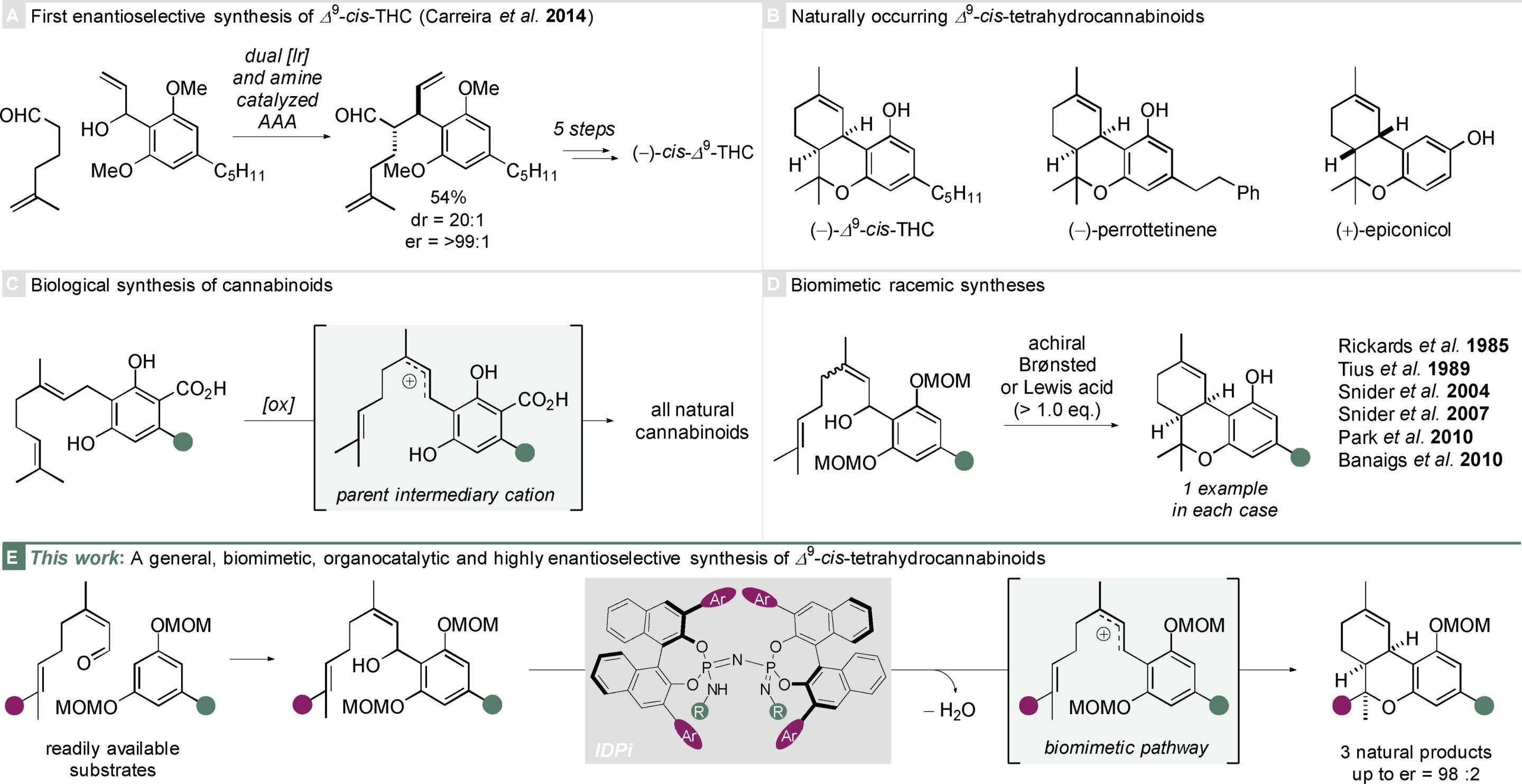
Researchers at Leipzig University have developed a new, simple, and inexpensive method for synthesizing cis-tetrahydrocannabinol (cis-THC), a natural substance found in the cannabis plant that produces the characteristic psychoactive effect and has many potential applications, including in the pharmaceutical industry. The new method allows for the production of cis-tetrahydrocannabinoids and testing them for their biological activity, which was not possible before. The substance can be synthesized with high overall yields and excellent optical purities using the new method, and it requires very small amounts of catalyst, which is highly attractive from an environmental perspective in terms of saving energy and resources and minimizing by-products.