
James Webb Telescope Uncovers Life's Essential Carbon Compounds in Distant Star System
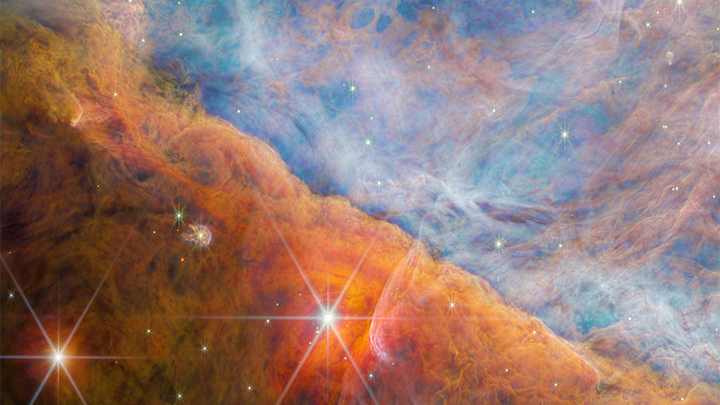
The James Webb Space Telescope (JWST) has detected the molecule methyl cation (CH3+) in a protoplanetary disk located in the Orion Nebula, about 1,350 light-years from Earth. This discovery is significant as methyl cation plays a crucial role in the complex carbon chemistry required for life. The observations were made possible by the JWST's advanced capabilities in resolving smaller details and identifying specific molecules. The findings suggest that ultraviolet radiation, which is typically destructive to carbon-based molecules, may actually be instrumental in kick-starting organic chemistry and the formation of more complex carbon molecules in early planet formation. This is another remarkable discovery by the JWST, which has previously detected ancient organic molecules, the coldest ice molecules, and evidence of frozen water in a near-Earth comet.
- James Webb telescope discovers carbon compounds crucial to life in star system 1000 light-years from Earth Livescience.com
- With Webb, scientists make first detection of carbon molecule in protoplanetary disk - NASASpaceFlight.com NASASpaceflight.com
- Webb Spots Crucial Carbon Molecule in Space for the First Time PetaPixel
- James Webb Telescope discovers life's building blocks in the Orion Nebula DIY Photography
- Another Key Molecule for Life Found in Space by JWST Universe Today
Reading Insights
0
4
2 min
vs 3 min read
78%
576 → 125 words
Want the full story? Read the original article
Read on Livescience.com