
Tag

Aromaticity

All articles tagged with #aromaticity

science2 years ago

"Revolutionizing Aromaticity: The Impact of a New Carbon Allotrope"

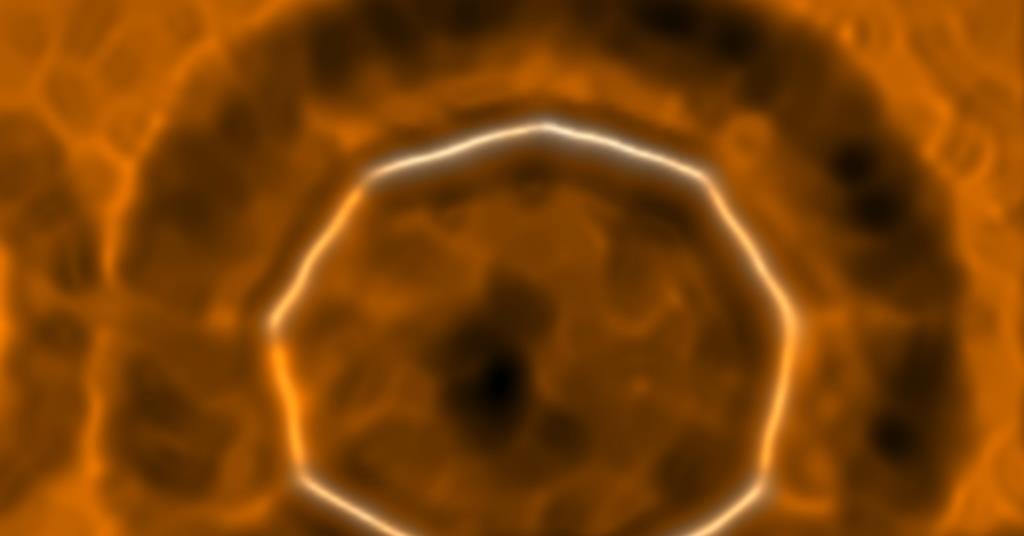
Chemists have recently made breakthroughs in synthesizing cyclocarbons, a new carbon allotrope, which has led to a reevaluation of the concept of aromaticity. These cyclocarbons have been created on surfaces using advanced single-atom manipulation techniques, revealing unexpected aromatic properties. The next challenge is to stabilize cyclocarbons under ambient conditions and explore their potential applications in creating new carbon materials and unique chemistry. Despite the lack of immediate practical applications, the study of cyclocarbons deepens our understanding of fundamental chemical concepts and has the potential to open up new avenues in molecular engineering.
science2 years ago

Unveiling the Secrets of a Mysterious Blue Molecule for Enhanced Light Energy Utilization

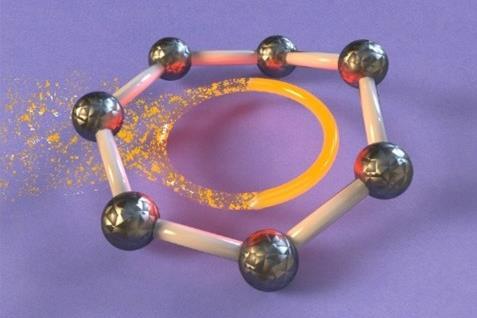
Scientists from IOCB Prague have unraveled the unique behavior of azulene, a fundamental aromatic molecule known for its distinct blue hue. By violating Kasha's rule, azulene behaves differently from other molecules in terms of emitting light upon transitioning to excited states. The researchers used the concept of (anti)aromaticity to explain this behavior, showing that azulene falls quickly from the first excited state without emitting light, but behaves like a satisfied aromatic substance in the second step, emitting light for a longer duration. This understanding could lead to advances in organic chemistry and the efficient capture of light energy. The researchers also demonstrated that the properties of azulene can be transferred to other aromatic molecules.

chemistry2 years ago

Reshaping Aromaticity and Chirality with Dynamic Bonds.

Researchers at the University of York have discovered that dynamic bonds can reshape our understanding of key chemical concepts, including aromaticity and chirality. They have synthesised a polycyclic molecule whose aromaticity can be switched on and off, as well as a carbon cage where chiral carbon atoms interconvert without breaking bonds at the stereocentre. These new concepts could one day underpin new applications for dynamic molecular materials.