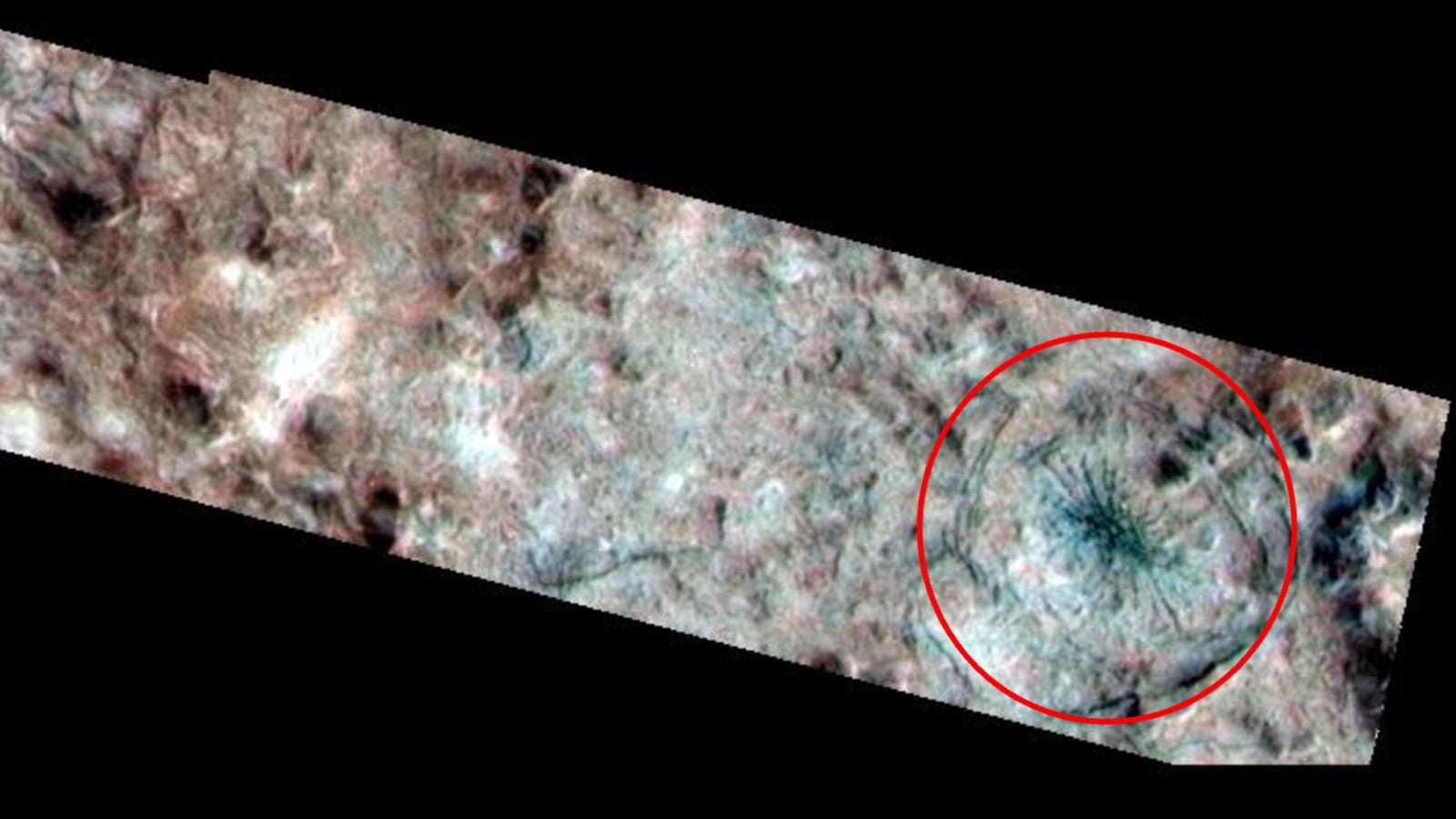
Scientists have proposed that the mysterious spider-like feature observed on Europa's surface, initially thought to be a structure within a crater, may have formed through processes similar to Earth's lake stars, but likely resulted from an asteroid impact that created cracks allowing salty water to seep through, providing insights into Europa's subsurface and potential signs of extraterrestrial life.
In the 1960s, MIT students and a professor devised a plan called 'Project Icarus' to prevent a catastrophic asteroid impact, which involved detecting and deflecting the asteroid using existing technology. Their efforts contributed to the development of modern planetary defense strategies, significantly reducing the risk of asteroid-induced extinction today.
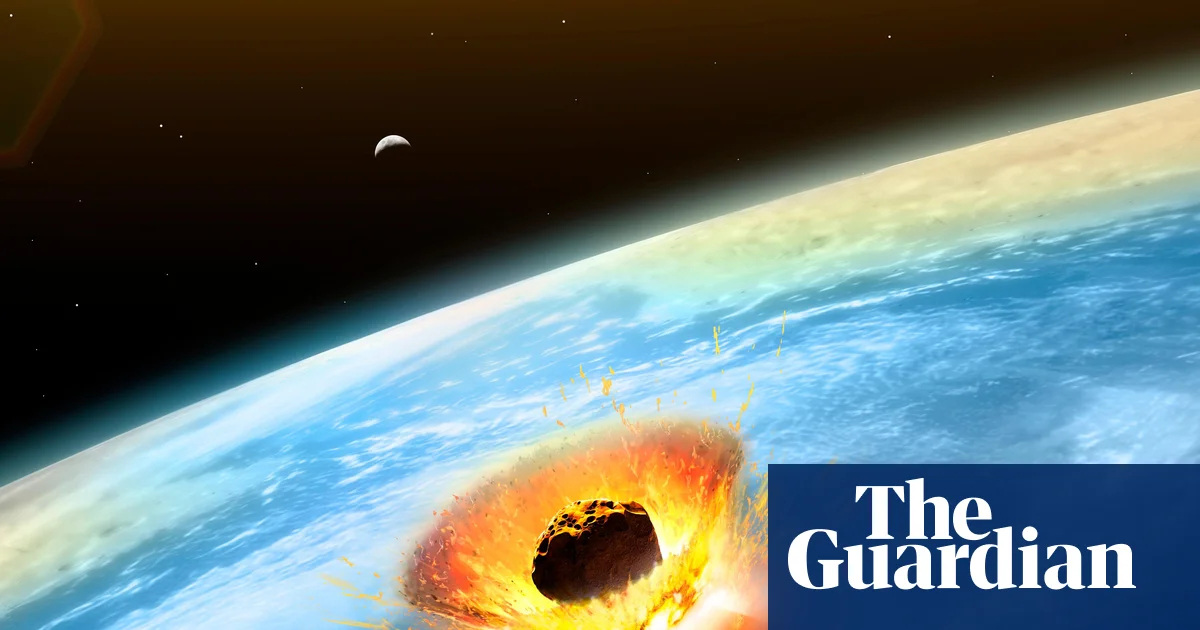
Scientists have confirmed the existence of the Nadir Crater, a 9 km wide impact crater beneath the Atlantic Ocean floor, formed 66 million years ago by an asteroid likely responsible for the extinction of the dinosaurs. Using advanced seismic imaging, they reconstructed the impact's aftermath, including tsunamis and liquefied sediments, and plan to drill cores to further study this well-preserved site, offering new insights into asteroid impacts and mass extinctions.
Researchers studying the Lake Lappajärvi impact structure in Finland found evidence that microbes colonized the site roughly 4 million years after the asteroid impact, revealing how quickly life can establish in post-impact environments and providing insights into early life on Earth and potential extraterrestrial habitats.
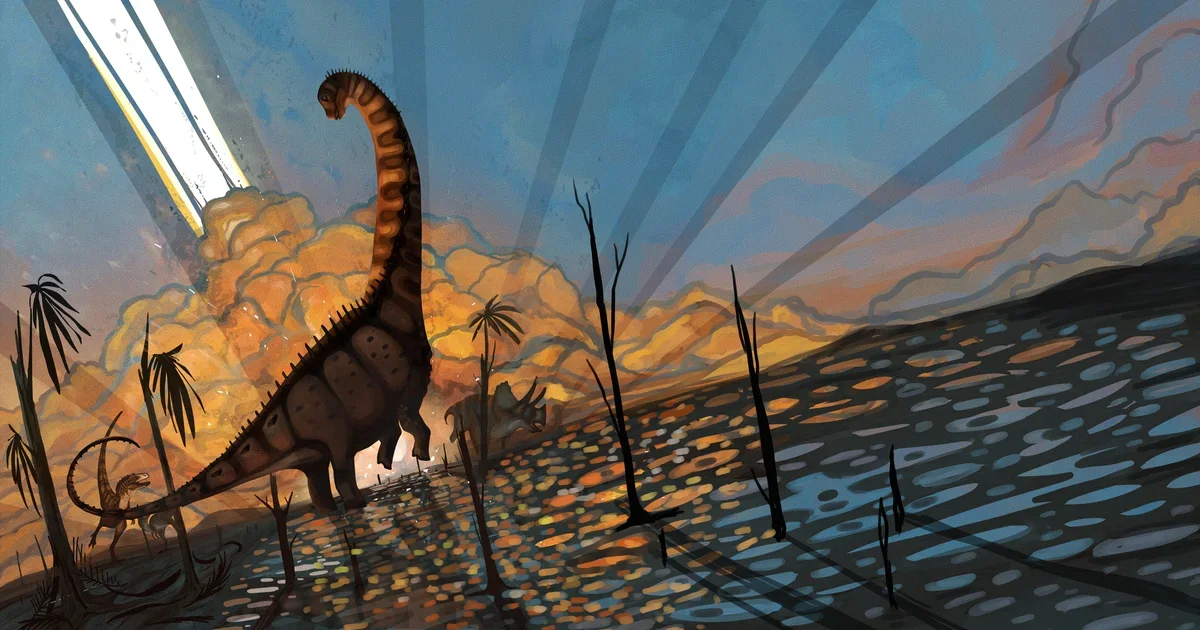
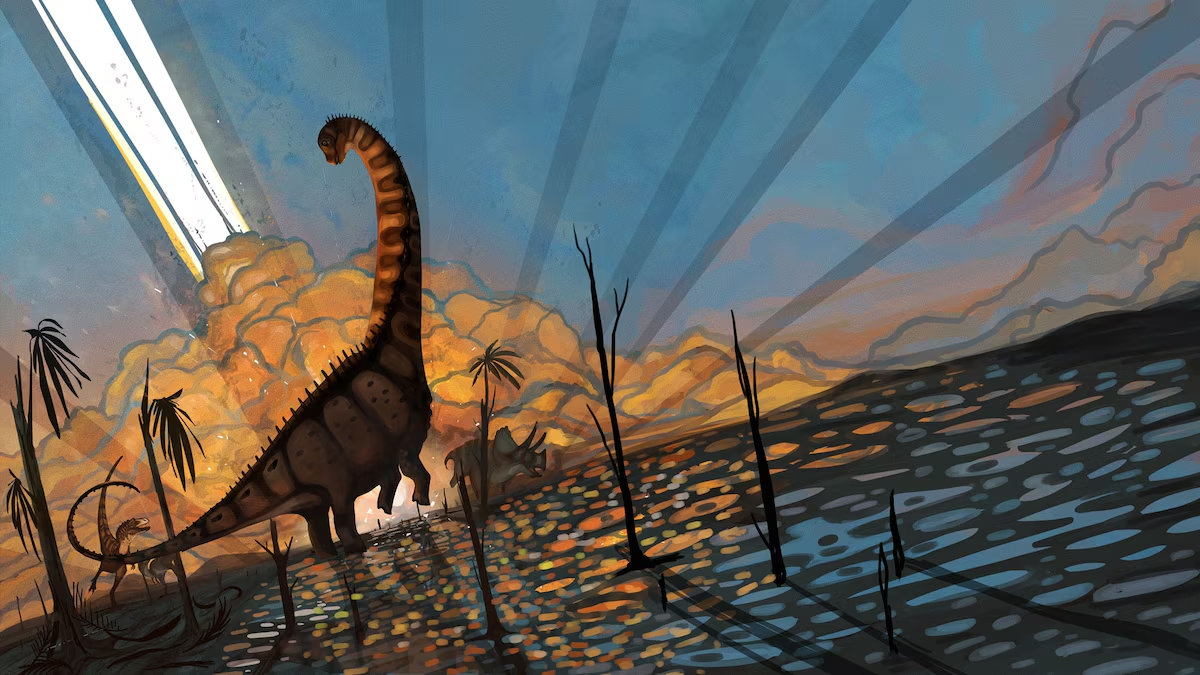
New research indicates that dinosaurs in North America were still thriving just before the asteroid impact 66 million years ago, with fossils from the last moments of the Cretaceous period showing diverse and large species like Tyrannosaurus rex, Triceratops, and Alamosaurus, challenging the idea that dinosaurs were in decline before their extinction.
New research shows that dinosaurs in North America were thriving up until the asteroid impact 66 million years ago, with fossils from New Mexico indicating they lived just 340,000 years before the extinction event, challenging the idea that they were already in decline.
Scientists confirmed that the Silverpit Crater beneath the North Sea was formed by a 45-million-year-old asteroid impact, which caused a massive tsunami and ended a long-standing debate about its origin, using new seismic imaging and shocked crystal analysis as definitive evidence.
Scientists have discovered a massive underwater impact crater beneath Chesapeake Bay, formed by an asteroid 35 million years ago, which provides insights into Earth's catastrophic past, including its effects on climate, ecosystems, and landscape changes.
Scientists have confirmed that the Silverpit Crater in the North Sea was formed by a 40-million-year-old asteroid impact, using advanced seismic imaging and microscopic analysis of drill samples, resolving a long-standing debate about its origin.
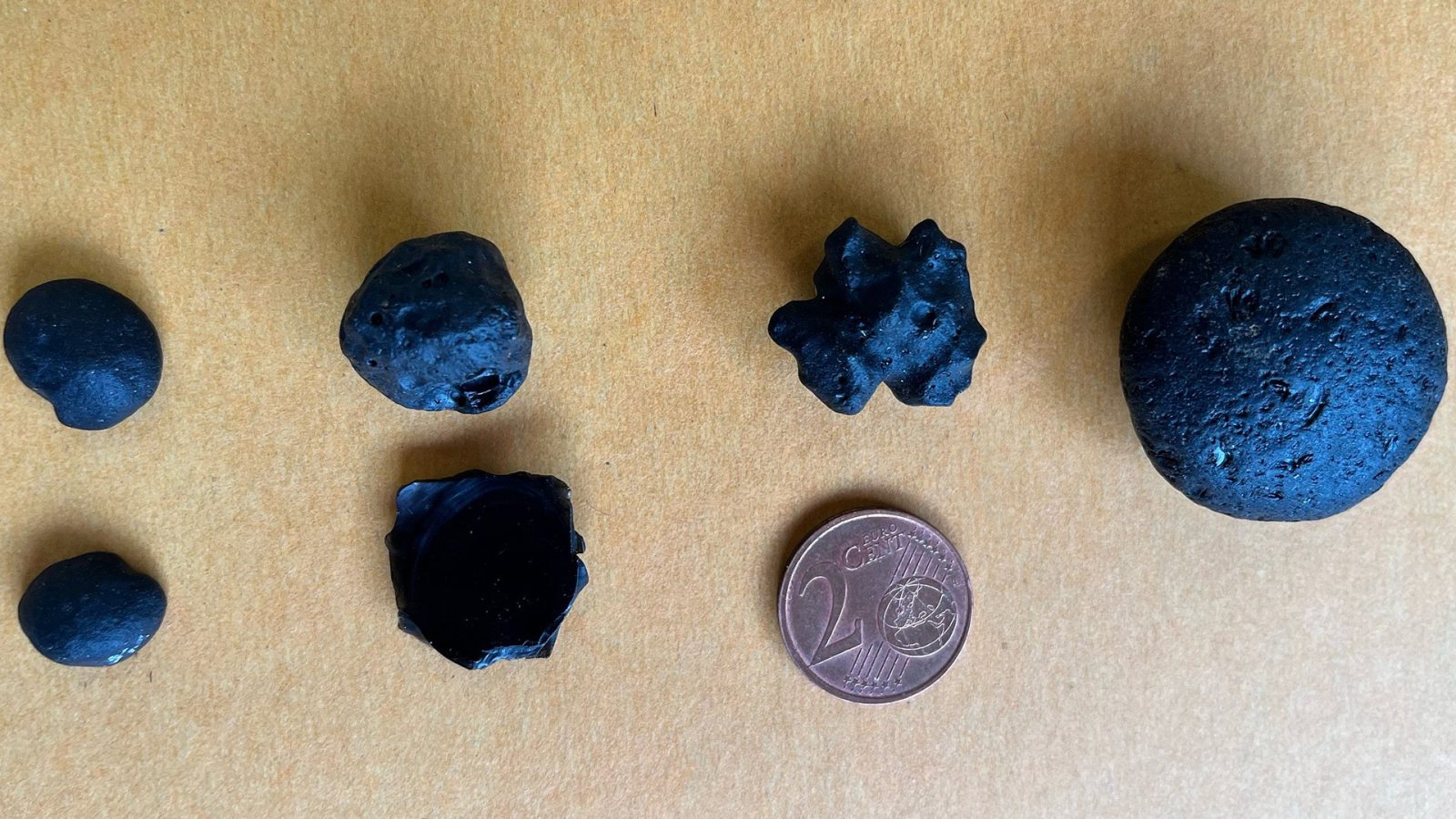
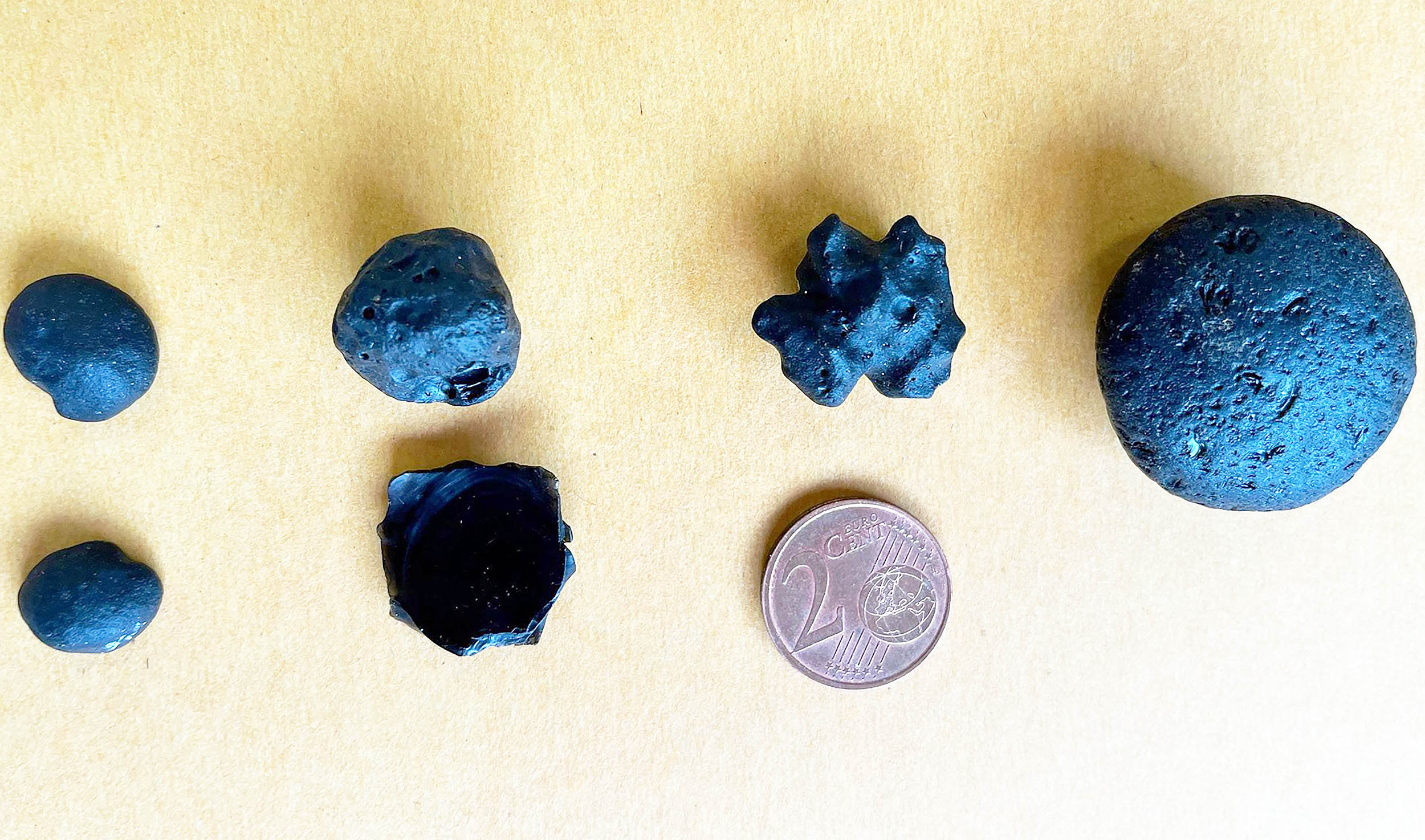
Scientists have identified unusual tektites in Australia that are likely from a previously unknown asteroid impact around 11 million years ago, but the impact crater has yet to be located, with possible sites in Southeast Asia and Papua New Guinea.
Scientists discovered unique impact glass in South Australia, dating back about 10.76 million years, indicating a previously unknown asteroid impact that created a strewn field over a large area, with no visible crater found yet.
Scientists have confirmed that the Silverpit crater beneath the North Sea was created by an asteroid impact approximately 43 million years ago, settling a long-standing debate and providing valuable insights into Earth's impact history.
Scientists confirmed that an asteroid approximately 535 feet wide struck the North Sea over 43 million years ago, creating a 3 km wide crater and causing a significant tsunami, with new evidence from seismic imaging and rock samples settling previous debates about its origin.
Researchers discovered that some tektites in an Australian museum, previously thought to originate from an 800,000-year-old asteroid impact, are actually over 11 million years old, revealing a forgotten cosmic impact in Earth's history.
Research by SMU paleontologists has reconstructed Louisiana's ancient marine life, highlighting the impact of the asteroid that caused the dinosaurs' extinction, evidenced by seismic megaripples and fossils, and revealing rapid mammal evolution afterward, thus providing a comprehensive timeline of Earth's major biological transitions.