Tag

Lost Continent

All articles tagged with #lost continent

"Discovery of Long-Lost Continent Reveals Ancient Civilization of 500,000 People"
archaeology2 years ago

"Discovery of Long-Lost Continent Reveals Ancient Civilization of 500,000 People"

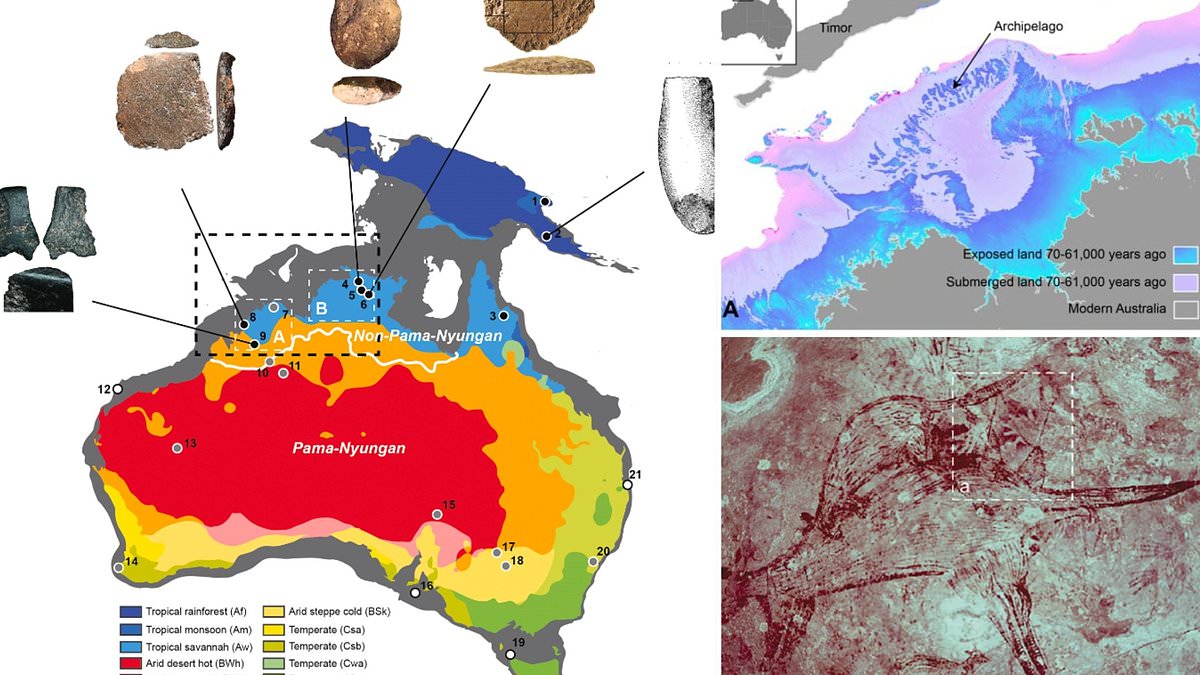
A recent study suggests that a large portion of land, known as Sahul, may be the lost civilization of Atlantis and could have been home to over 500,000 of our ancestors. This area, submerged under the Pacific Ocean, experienced natural climatological fluctuations, leading to its disappearance some 9,000 to 70,000 years ago. The study challenges the assumption that continental margins were unproductive and provides evidence of ancient human settlements on submerged landmasses, shedding light on our ancestors' history and the impact of natural disasters on ancient civilizations.
"Discovery of Long Lost Continent off Australian Coast After 70,000 Years"
archaeologygeography2 years ago

"Discovery of Long Lost Continent off Australian Coast After 70,000 Years"

Scientists have discovered evidence of a lost continent, the North West Shelf, off Australia's northern coast, which was home to half a million people around 70,000 years ago. This landmass, nearly twice the size of the UK, contained archipelagos, lakes, rivers, and a large inland sea, and was submerged around 10,000 years ago due to rising sea levels. The study suggests that the North West Shelf was a "single cultural zone" with similarities in technology, rock art, and languages. The findings shed light on the impact of sea level rise on human populations and the ecological richness of the now-drowned continent.

"155 Million-Year-Old Lost Continent 'Argoland' Rediscovered in Southeast Asia"
science2 years ago

"155 Million-Year-Old Lost Continent 'Argoland' Rediscovered in Southeast Asia"

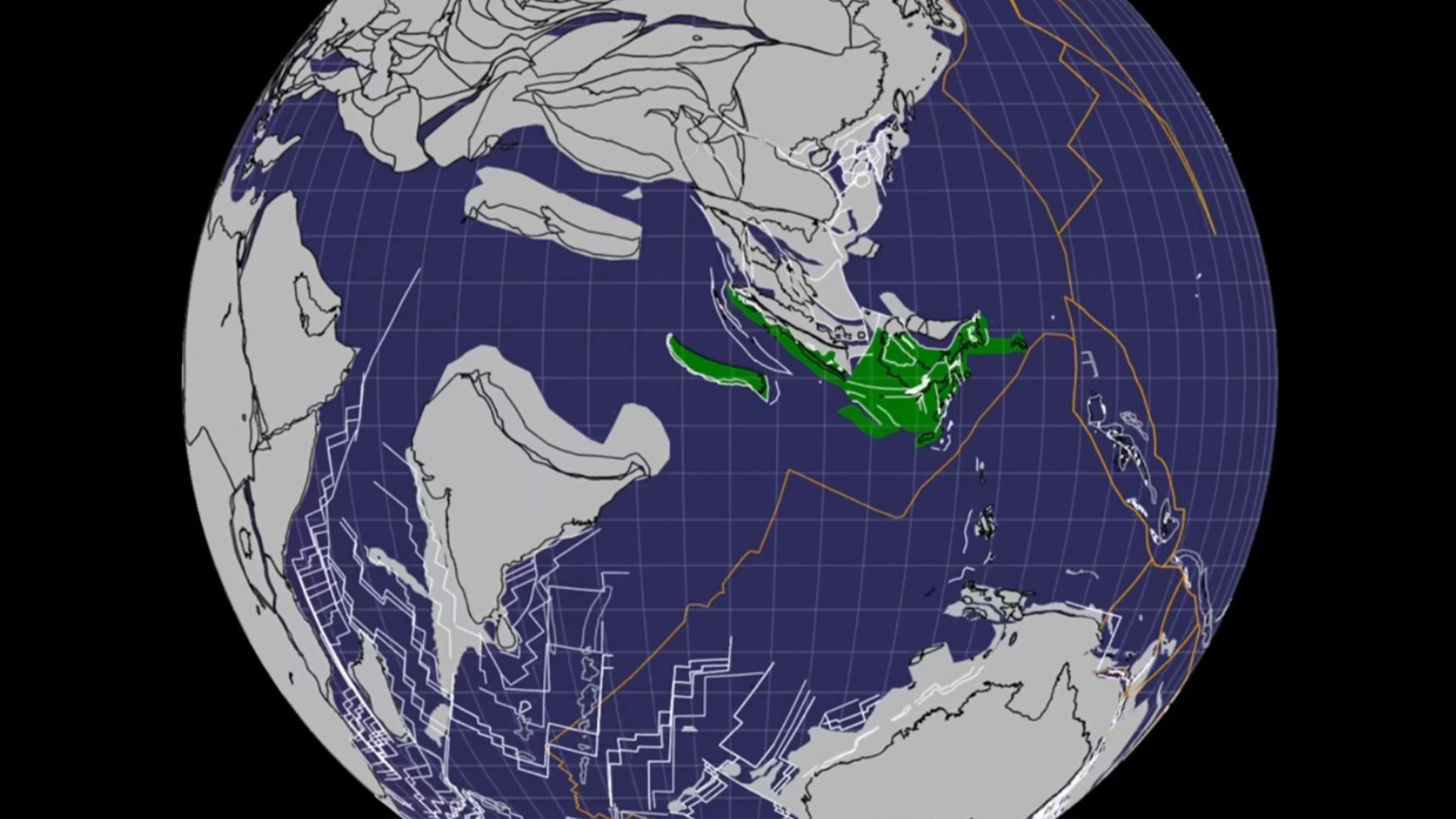
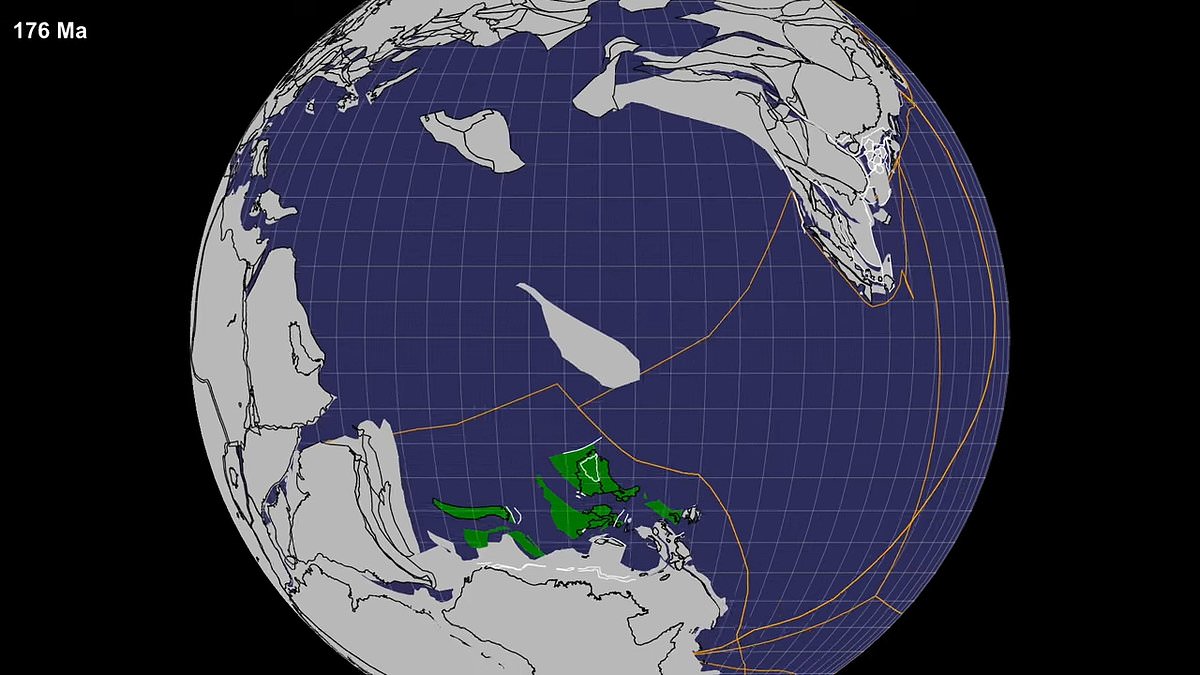
A lost continent called Argoland, which split away from Australia and drifted apart 150 million years ago, has been discovered in Southeast Asia. Argoland was part of the ancient supercontinent Gondwana, which disintegrated and gave rise to the modern continents we know today. While other landmasses linked with Gondwana were relatively easy to locate, Argoland proved to be exceptionally difficult to find.

"Lost Continent Rediscovered After 155 Million Years"
science2 years ago

"Lost Continent Rediscovered After 155 Million Years"

Scientists from Utrecht University in the Netherlands have discovered the lost continent of Argoland, which split from Australia 155 million years ago. After reconstructing the continent's journey, researchers found fragments of ancient land scattered across Southeast Asia, leading them to conclude that Argoland had survived as a fragmented ensemble under the islands to the east of Indonesia. The discovery may provide insights into the region's past climate and explain the uneven distribution of species in Indonesia.

Lost Continent of Argoland Rediscovered After 155 Million Years
science2 years ago

Lost Continent of Argoland Rediscovered After 155 Million Years

Scientists believe they have discovered the lost continent of Argoland, which vanished over 115 million years ago. Argoland, which split off from Australia, is believed to be lying dormant under the Eastern islands of Southeast Asia. The discovery of traces of Argoland beneath the ocean has helped explain ecological differences in the region, such as the Wallace line, which separates Australian and Southeast Asian fauna. The continent broke into small fragments when it separated from Australia, obstructing views of its journey. The largest pieces potentially became small island masses off the coast of East Indonesia. This research has shed light on the history of Argoland and solved geographical mysteries in the region, providing a better understanding of the barriers between different wildlife species.

"Scientists Uncover Ancient 'Lost Continent' After 155 Million Years"
science2 years ago

"Scientists Uncover Ancient 'Lost Continent' After 155 Million Years"

Geologists from Utrecht University have discovered a lost continent named "Argoland" that broke off from Australia and sank to the bottom of the Indian Ocean 155 million years ago. The 3,000-mile-wide landmass was found after years of searching and provides valuable insights into the Earth's geological past and processes such as plate tectonics. The discovery of Argoland helps fill in missing pieces of history and prevents a larger scientific problem of disappearing into the mantle.

"Lost Continent Rediscovered: Scientists Uncover Astonishing Clues"
science2 years ago

"Lost Continent Rediscovered: Scientists Uncover Astonishing Clues"

Scientists have discovered evidence of the lost continent Argoland, which vanished 155 million years ago. The continent disintegrated and scattered across Southeast Asia due to tectonic forces. Fragments of Argoland were found in Indonesia and Myanmar, and the researchers reconstructed its journey by tracing remnants of small oceans that formed during its breakup. The discovery sheds light on the region's past climate and helps explain the uneven distribution of species in Southeast Asia.

"Lost Continent Rediscovered: Scientists Uncover Astonishing Clues"
science2 years ago

"Lost Continent Rediscovered: Scientists Uncover Astonishing Clues"

Scientists have discovered evidence of a lost continent, known as Argoland, that broke away from western Australia 155 million years ago. The landmass disintegrated and scattered across Southeast Asia due to tectonic forces. Fragments of Argoland were found in Indonesia and Myanmar, and the continent's journey was reconstructed by tracing the remnants of small oceans that formed during its breakup. The discovery sheds light on the region's past climate and helps explain the uneven distribution of species in Southeast Asia.

"Geologists Rediscover Ancient Argoland, the Lost Continent"
science2 years ago

"Geologists Rediscover Ancient Argoland, the Lost Continent"

Geologists from Utrecht University have discovered the "lost continent" of Argoland, which broke off from western Australia millions of years ago due to shifting tectonic plates. The land mass splintered into shards, now embedded under land and sea, forming an "Argopelago." This finding provides valuable insights into the history of shifting continents, mountain formation, tectonic plate movement, and climate changes.

"Scientists Uncover Long-Lost 3,000-Mile-Wide Continent on Ocean Floor"
science2 years ago

"Scientists Uncover Long-Lost 3,000-Mile-Wide Continent on Ocean Floor"

Geologists have discovered the remains of a 155 million-year-old lost continent called Argoland at the bottom of the Indian Ocean and Southeast Asia. The continent, which was once as wide as the United States, broke off from Australia during the late Jurassic period and drifted towards Southeast Asia before disappearing. The discovery was made through the detection of tectonic "mega-units" scattered on the ocean floor and embedded within small islands. Understanding the life and death of continents is crucial for studying biodiversity, climate evolution, and plate tectonics.

"Scientists Uncover Long-Lost Continent Argoland, Solving Centuries-Old Mystery"
science2 years ago

"Scientists Uncover Long-Lost Continent Argoland, Solving Centuries-Old Mystery"

Scientists from Utrecht University have discovered evidence of a lost continent called Argoland that broke off from what is now Australia 155 million years ago. The 3,100-mile landmass has been found to have traveled to South Asia and now sits more than 18,000 feet below the surface of the Indian Ocean. By reconstructing the continent's history, researchers have filled in a significant knowledge gap in understanding how mountains, islands, and undersea geology formed. The discovery sheds new light on the movement of tectonic plates and provides valuable insights into the Earth's geological history.

Unveiling the Hidden Paradise: The Mysterious 'Lost Continent' Discovered by Unaware Tourists
science-and-discovery2 years ago

Unveiling the Hidden Paradise: The Mysterious 'Lost Continent' Discovered by Unaware Tourists

Tourists may have been unknowingly visiting the remains of a 'lost continent' called Greater Adria, which broke off from North Africa 250 million years ago and sank under parts of Southern Europe. Only a strip of this continent remains, running from Turin to the heel of Italy. This discovery follows the previous finding of Zealandia, a 'lost' continent that was part of a supercontinent called Gondwana. Zealandia, mostly underwater, was first discovered in 1642 and has been used as an example of how something obvious can take time to uncover.

Unveiling the Hidden Paradise: The Secret 'Lost Continent' Discovered by Unaware Tourists
science-and-discovery2 years ago

Unveiling the Hidden Paradise: The Secret 'Lost Continent' Discovered by Unaware Tourists

Tourists may have been unknowingly visiting the remains of a 'lost continent' called Greater Adria, which broke off from North Africa 250 million years ago and sank under parts of Southern Europe. Only a strip of this continent remains, running from Turin to the heel of Italy. This discovery follows the previous finding of Zealandia, a 'lost' continent that was part of a supercontinent called Gondwana. Zealandia, mostly underwater, was first discovered in 1642 and has been used as an example of how something obvious can take time to uncover.

Unveiling the Hidden Paradise: The Secret 'Lost Continent' Discovered by Unaware Tourists
science-and-discovery2 years ago

Unveiling the Hidden Paradise: The Secret 'Lost Continent' Discovered by Unaware Tourists

Tourists may have been unknowingly visiting the remains of a 'lost continent' called Greater Adria, which broke off from North Africa 250 million years ago and sank under parts of Southern Europe. Only a strip of the continent remains, running from Turin to the heel of Italy. This discovery follows the previous finding of Zealandia, a 'lost' continent that was part of a supercontinent called Gondwana. Zealandia, mostly underwater, was first discovered in 1642 and has been used as an example of how something obvious can take time to uncover.