Scientists are studying the molecular pathways opioids use to carry out their effects in the body to design drugs that deliver effective pain relief without the risk of side effects, including addiction and overdose. One approach is to target the "good" signals like pain relief and avoid the "bad" signals that lead to addiction and death. Researchers are targeting a protein called Heat shock protein 90 (Hsp90), which has many functions inside each cell and is important in regulating opioid signal transduction. Manipulating opioid signaling through Hsp90 offers a path forward to improve opioid drugs and reduce the risk of addiction and overdose.
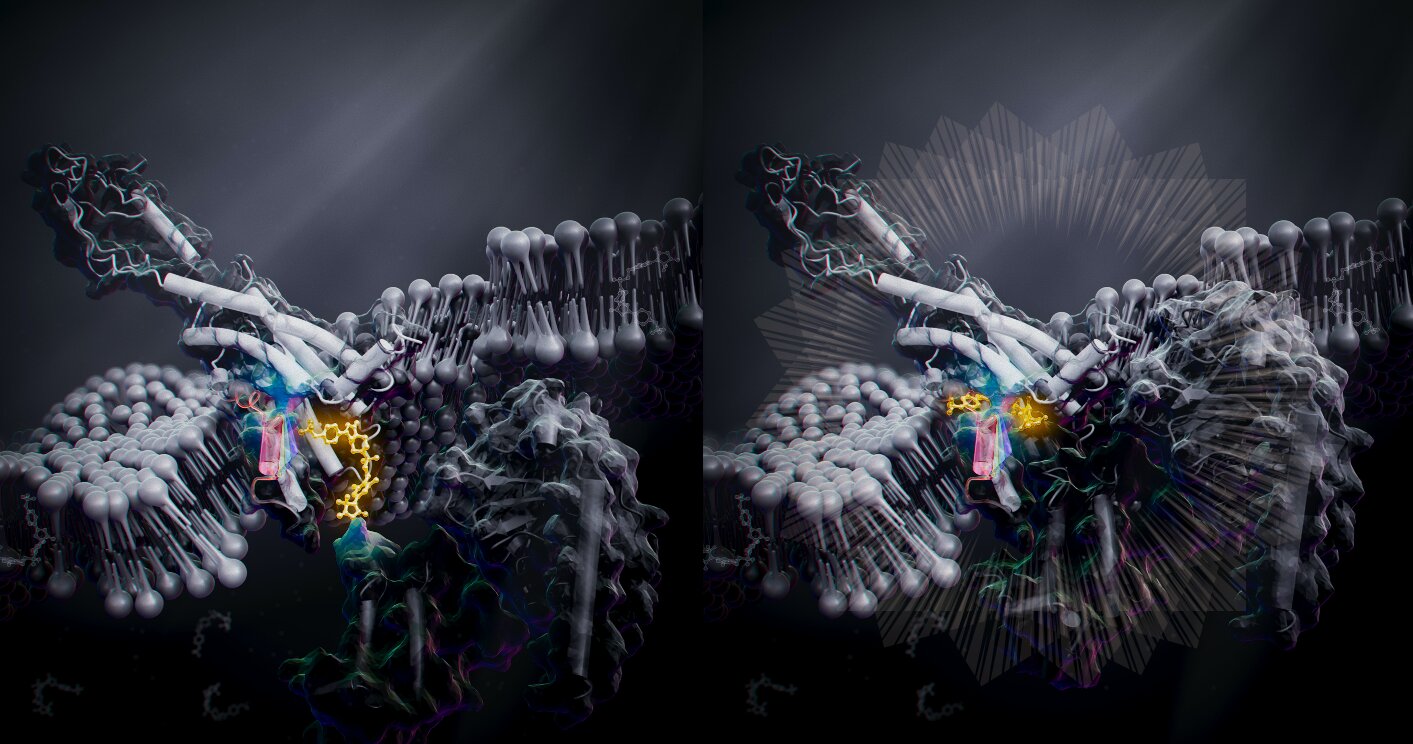
Japanese researchers have discovered a new way of activating G protein-coupled receptors (GPCRs) by triggering shape changes in the intracellular region of the receptor, which can help design drugs with fewer or no side effects. The team synthesized a non-peptide message molecule called PCO371, which binds to the intracellular region of the receptor and interacts directly with G protein subunits, making it a suitable candidate for potential small-molecule-based drugs for class B1 GPCRs, like PTH1R, which currently lack oral administrative drug ligands.
Researchers discovered an unexpected link between the progression of ALS and PEG10, a protein traditionally known for its role in placental development. Overabundance of this protein in nerve tissue has been observed to alter cell behavior contributing to ALS. The team is now studying the molecular pathways involved with a view to inhibiting this rogue protein, potentially paving the way for new therapeutics.
New research from UCL has uncovered the biology behind a rare genetic mutation that results in its carrier experiencing minimal pain, enhanced healing, and lower levels of anxiety and fear. The mutation in the FAAH-OUT gene ‘turns down’ FAAH gene expression, affecting molecular pathways related to wound healing and mood, thereby offering potential new targets for drug discovery. The insights garnered from these findings could potentially pave the way for novel drug targets and foster further research in these domains.