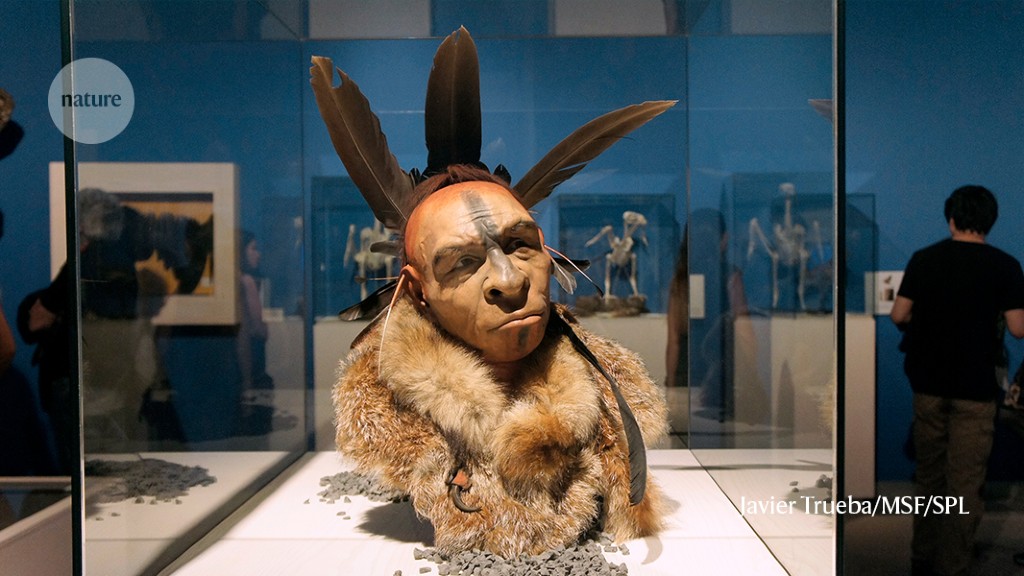
In his book "The Naked Neanderthal," archaeologist Ludovic Slimak challenges the prevailing view of Neanderthals as intellectual and creative cousins of Homo sapiens, arguing that they were more alien and strange. He explores evidence from archaeological excavations, including targeted hunting of male animals, potential cannibalism, and controversies surrounding the Châtelperronian culture. Slimak emphasizes the importance of robust context in interpreting Neanderthal bones and DNA, and suggests that extermination, rather than assimilation, may explain their eventual extinction. He criticizes the over-interpretation of evidence for Neanderthal artistic sensibilities, advocating for a more nuanced and cautious approach to understanding their culture.
The discovery of a modern human baby's hip bone among Neanderthal remains in a French cave suggests the existence of an unknown lineage of early modern humans. The finding raises questions about the origins of the Châtelperronian techno-cultural complex found in the cave, with some proposing a collaboration between Neanderthals and modern humans. The hip bone closely resembles that of anatomically modern humans but also displays variations not seen in modern human infants. This suggests the presence of ancient modern humans coexisting with Neanderthals during the transition from the Middle to the Upper Paleolithic, potentially leading to a cultural exchange or blending of populations.
A 45,000-year-old infant hip bone found in the Grotte du Renne cave in France suggests the existence of an unknown early lineage of Homo sapiens. The discovery challenges the prevailing belief that only Neanderthal remains were found in the cave during the transition period when modern humans replaced Neanderthals. The findings also suggest that the Châtelperronian techno-cultural complex, associated with the cave, may have resulted from cultural diffusion or acculturation processes between Neanderthals and modern humans.