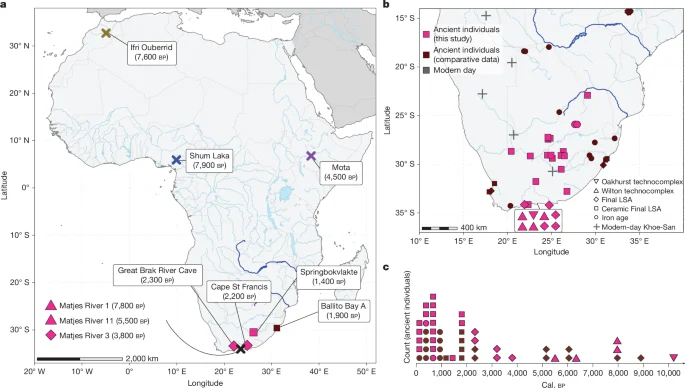
Ancient genomes from southern Africa reveal deep population stratification, long-term stability, and unique Homo sapiens-specific genetic variants, highlighting southern Africa as a long-standing refugium and providing insights into human evolution and adaptation.
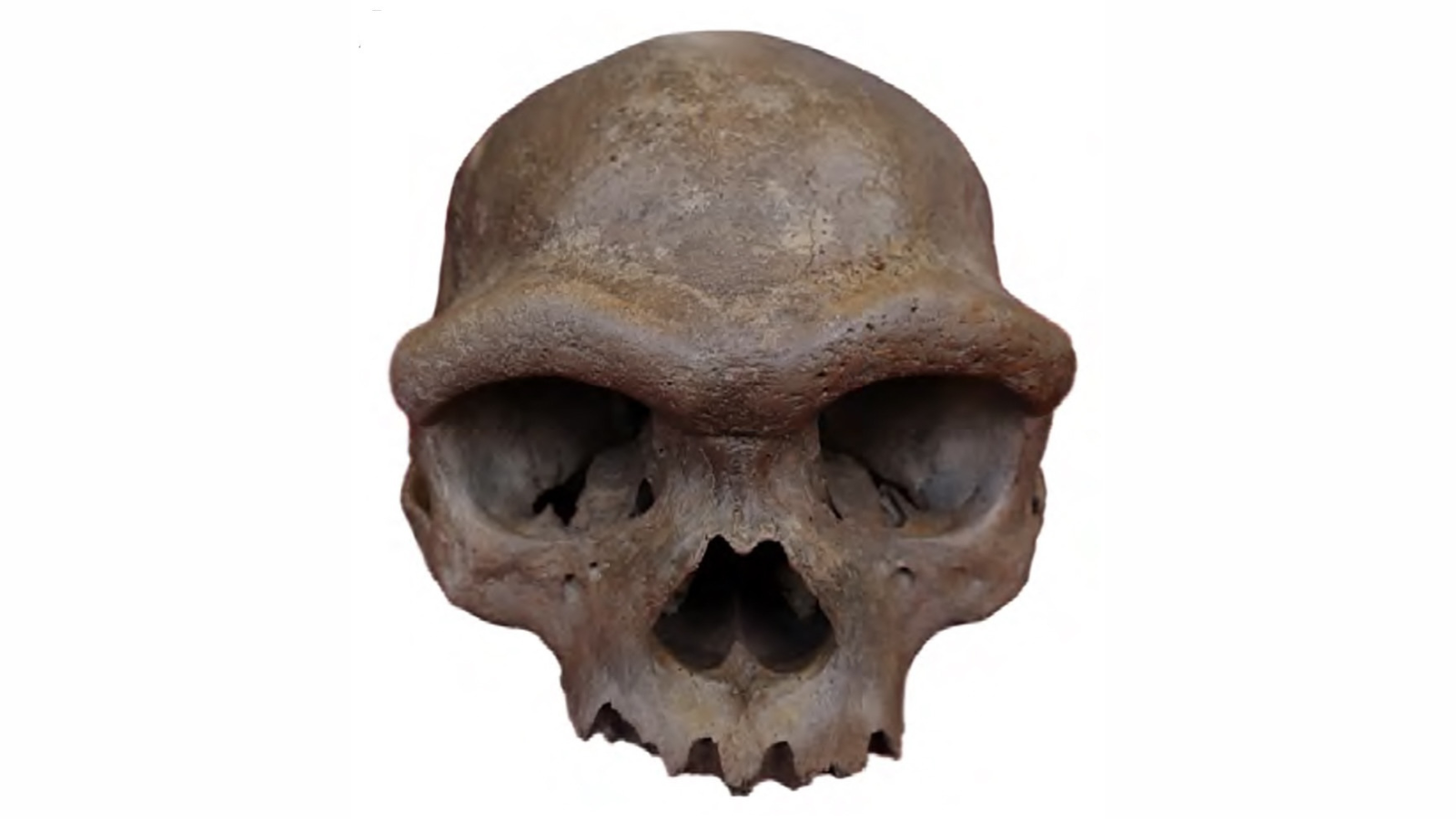
A study reveals that prehistoric Japanese Jomon people had minimal Denisovan DNA, suggesting limited contact with Denisovans, while ancient East Asians from China and Mongolia carried more Denisovan genes, helping to map early human migration and interactions across Eurasia.
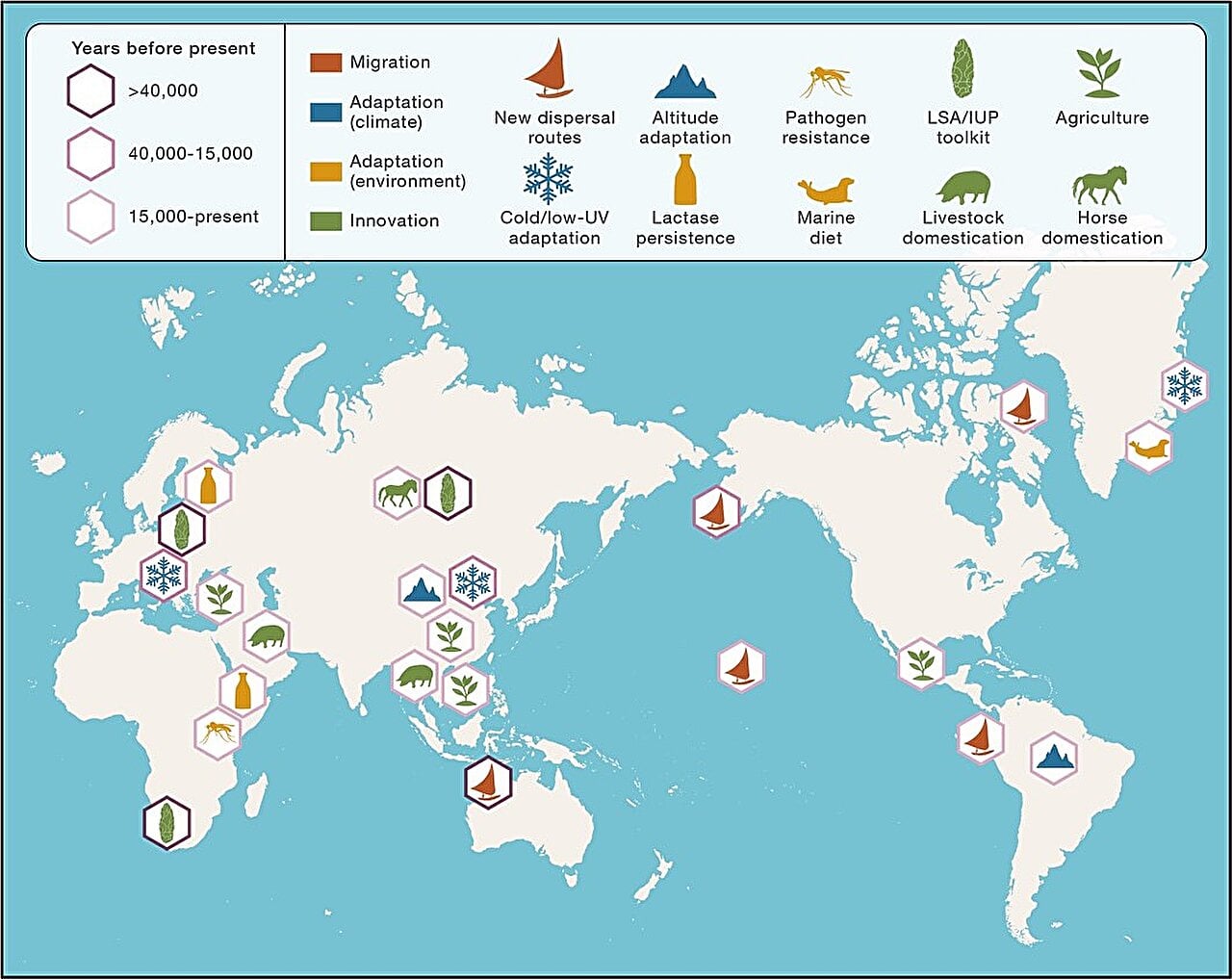
In a commentary for the 50th anniversary issue of Cell, researchers Fu Qiaomei and E. Andrew Bennett from the Institute of Vertebrate Paleontology and Paleoanthropology discussed the contribution of paleogenomics to understanding the evolution of modern humans. They highlighted the direct and indirect approaches of studying ancient DNA to identify genetic changes and reconstruct the life history of archaic and early modern human populations. The authors reviewed studies that revealed differences between early modern humans and archaic populations, suggesting that population-level advantages and adaptations to local environments may have contributed to the success and expansion of modern human populations. The commentary integrates the latest findings from ancient DNA with those from paleoanthropology and archaeology, expanding and updating the discussion of human origins.
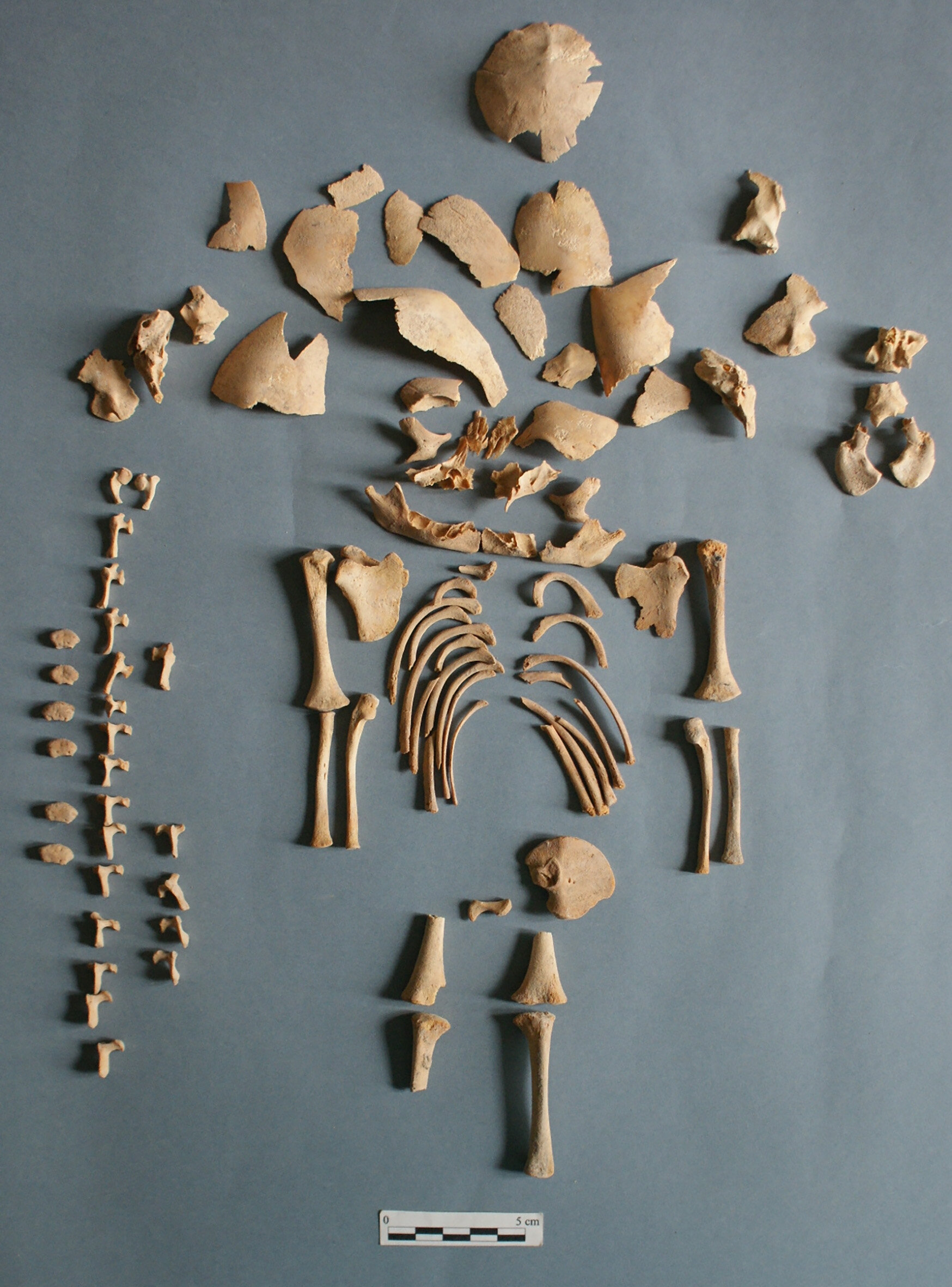
Researchers analyzing ancient DNA have identified six individuals from past societies with Down syndrome, dating back to between 5,000 and 2,500 years before present in Bronze Age sites in Greece and Bulgaria, and Iron Age sites in Spain. The individuals were found to have been cared for and appreciated as part of their ancient societies, with one individual also discovered to have Edwards Syndrome. The findings shed light on how ancient societies reacted to individuals with genetic conditions and may lead to further research in the future.
A new study published in the journal Nature challenges the long-held belief that Christopher Columbus brought syphilis to Europe. DNA evidence from 2,000-year-old human remains in Brazil suggests that some form of syphilis was already present in the Americas before Columbus' arrival. While the study doesn't definitively rule out Columbus' fleet as a potential source, it does indicate that the bacteria causing syphilis was widespread across both continents before his time, shedding new light on the origins of the disease.
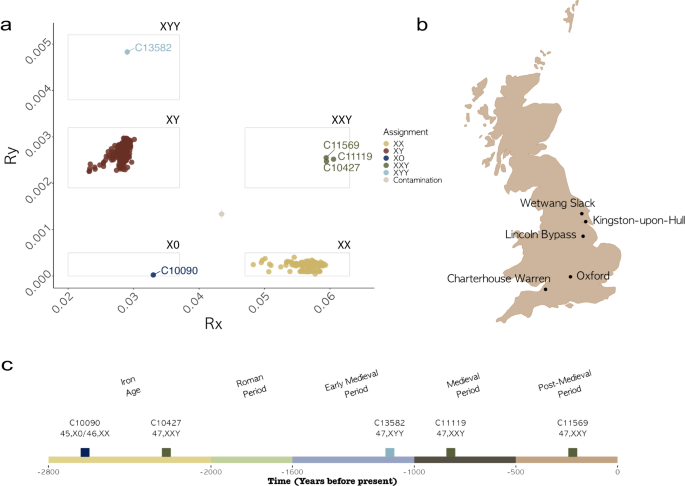
A new computational method has been developed to identify chromosomal aneuploidies, including sex chromosome karyotypes and autosomal aneuploidies, in ancient genomes. The method was applied to ancient British data, revealing the oldest known instance of mosaic Turner syndrome, individuals with Klinefelter syndrome, and an individual with 47,XYY syndrome, providing insights into the historical prevalence of these conditions. The study sheds light on the societal treatment of individuals with aneuploidies in ancient societies and highlights the potential for exploring past gender variability and societal perceptions of individuals with disorders of sex development.
Researchers have used DNA analysis to solve the mystery of how a man born 2,000 years ago in Russia ended up buried in England. The skeleton, known as Offord Cluny 203645, was found in Cambridgeshire in 2017. DNA testing revealed that he had common ancestors with individuals from the Caucasus and Sarmatian groups. Isotope analysis of his teeth indicated that he lived in an arid location in eastern Europe until the age of 5 or 6, then migrated west before arriving in Britain and dying between the ages of 18 and 25. Possible explanations for his journey include being part of the Sarmatian cavalry sent to Britain by Roman Emperor Marcus Aurelius or personal reasons for long-distance travel.