Research on great white shark DNA reveals three distinct groups with genetic differences that cannot be explained by current evolutionary theories or female philopatry, suggesting an unknown evolutionary mechanism at play, and highlighting gaps in understanding shark genetics.
Scientists studying great white sharks have uncovered a perplexing genetic anomaly: significant differences in mitochondrial DNA across populations, with no clear explanation, deepening the mystery about their evolutionary history and migration patterns.
A recent study reveals an unexplained split in the DNA of great white sharks, with mitochondrial DNA differences not accounted for by migration or known behaviors, leaving scientists puzzled about the underlying cause of this genetic divergence.
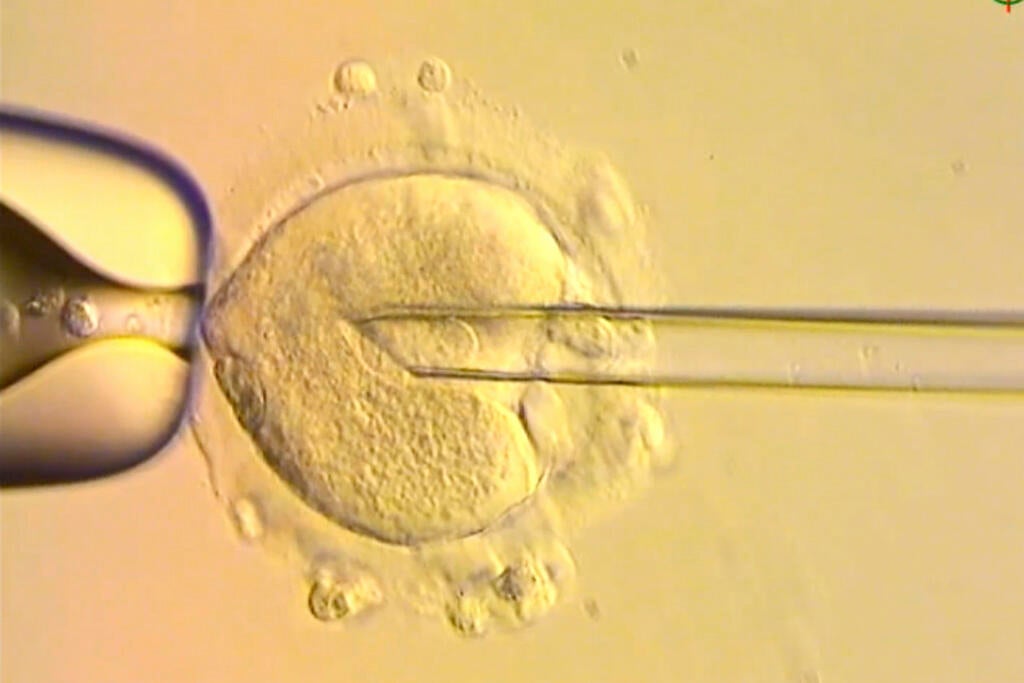
Scientists in Britain have successfully used a pioneering IVF technique involving DNA from three individuals to prevent the transmission of a rare mitochondrial disease, resulting in the birth of eight healthy babies, and this approach is now being cautiously monitored for long-term outcomes.
Scientists in Britain have successfully used a pioneering IVF technique involving DNA from three individuals to prevent the transmission of a rare mitochondrial disease, resulting in the birth of eight healthy babies, and this approach could pave the way for further research and medical advancements in genetic disease prevention.
Eight healthy babies have been born in the UK using a pioneering IVF technique that reduces the risk of mitochondrial diseases inherited from mothers, involving DNA from three people, marking a significant medical breakthrough despite ethical debates.
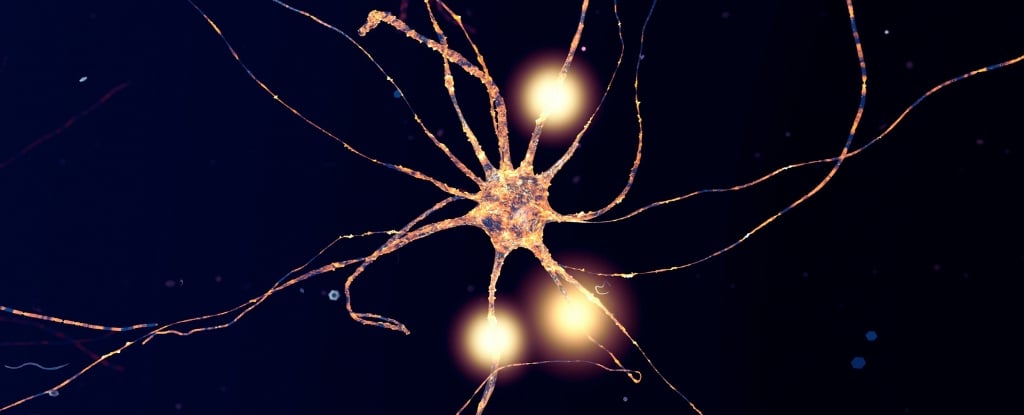
A groundbreaking study has revealed that damaged mitochondrial DNA (mtDNA) can trigger Parkinson's disease by setting off a chain reaction that spreads the condition to other parts of the brain. Researchers found that damaged mtDNA activates proteins involved in the immune system, which are upregulated in the brains of Parkinson's patients. They also identified a protein that plays a key role in spreading damaged mtDNA to other neurons, potentially offering a new target for treatment development. The study suggests that blood tests could detect damaged mtDNA as early biomarkers for Parkinson's disease. The findings shed light on the pathology of the disease and may lead to innovative treatment strategies and monitoring approaches.
Researchers from the University of Copenhagen have made a groundbreaking discovery in Parkinson's disease, finding that damage to mitochondria in brain cells leads to disruptions in mitochondrial DNA, causing the disease to spread through the brain. The study suggests that detecting damaged mitochondrial DNA could serve as an early biomarker for disease development and that a blood test could be used for diagnosis and measuring treatment efficacy. This research opens up new possibilities for understanding and treating Parkinson's disease.
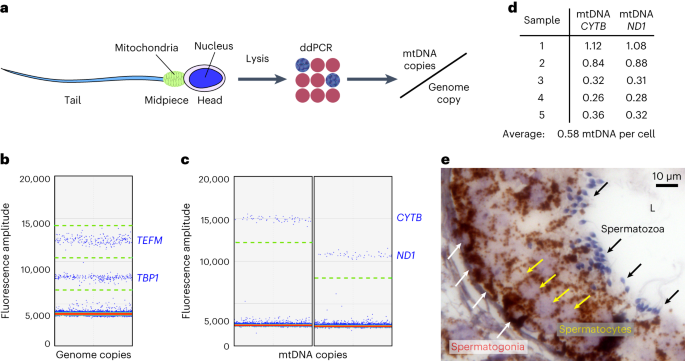
New research published in the journal Nature Genetics sheds light on why mitochondrial DNA (mtDNA) is exclusively inherited from the mother. While it was previously believed that paternal mtDNA was eliminated during fertilization, the study found that mature sperm lack intact mtDNA and a protein essential for mtDNA maintenance. The researchers speculate that this may be due to the high energy usage of sperm during fertilization, which could lead to the accumulation of mtDNA mutations. In contrast, developing eggs primarily draw energy from surrounding cells, maintaining relatively pristine mtDNA. Understanding the role of mtDNA in sperm maturation and fertilization could have implications for treating infertility disorders and improving assisted reproductive technologies.
Researchers studying the molecular basis for maternal inheritance of human mitochondrial DNA have provided data availability and code availability for their study. The research findings suggest that the regulation of mitochondrial DNA copy number during spermatogenesis plays a crucial role in the maternal inheritance of mitochondrial DNA. The study highlights the importance of protecting the privacy of research participants while facilitating controlled access to research data for legitimate research purposes.
A new study has found that mature sperm lack intact mitochondrial DNA (mtDNA), which is exclusively passed down by the mother. While sperm cells do carry a small number of mitochondria, they do not contain mtDNA. This discovery has important implications for human fertility and germ cell therapy, as understanding the role of mtDNA during sperm maturation and fertilization could potentially lead to advancements in treating infertility disorders and increasing the efficiency of assisted reproductive technologies.
Researchers have developed a new method of editing mitochondrial DNA using MutH, a bacterial nickase, and TALEs. The approach is much more precise and efficient than previous methods and has no off-target effects on mitochondrial DNA. While the technology is still in an early developmental stage, it may one day be used to treat mitochondrial genetic disorders and age-related disorders caused by accumulated mitochondrial damage.
A new high-throughput single-cell single-mitochondrial genome sequencing technology called iMiGseq has enabled researchers to uncover previously hidden mutations in mitochondrial DNA (mtDNA) that cause maternally inherited diseases. The technology has also revealed complex patterns of pathogenic mtDNA mutations, including single nucleotide variants and large structural variants, that were undetectable with conventional next-generation sequencing. Additionally, iMiGseq has shown the potential risks of unintended off-target mutations in a mitochondrial genome editing method called mitoTALEN, highlighting the need for more sensitive methods to assess the safety of editing strategies. The iMiGseq method provides a novel means to accurately depict the complete haplotypes of individual mtDNA in single cells, offering an ideal platform for explaining the cause of mitochondrial mutation-related diseases, evaluating the safety of various mtDNA editing strategies, and unraveling the links between mtDNA mutations, aging, and the development of complex diseases.