Tag

Microrna

All articles tagged with #microrna

science3 months ago

Fitness Traits in Mice Passed to Offspring Without DNA Changes

Scientists demonstrated that exercise in male mice can pass on athletic traits to their offspring through epigenetic mechanisms involving microRNAs in sperm, without altering DNA. This effect was also observed in humans, suggesting lifestyle choices of fathers may influence their children's traits. The study highlights a new paradigm in inheritance beyond genetics.

science1 year ago

Nobel-Winning Couple: Equal Partners in Science, Unequal in Recognition

Victor Ambros and Rosalind Lee, a married scientific duo, discovered microRNA in C. elegans, initially thought to be unique to the species. However, further research by their collaborator Gary Ruvkun revealed these molecules in various animals, indicating their ancient and widespread nature. Despite their equal contributions, the Nobel Prize committee did not recognize them equally, highlighting gender disparities in scientific recognition.

science2 years ago

Unraveling the Mystery: How Genes Emerge from Nothing

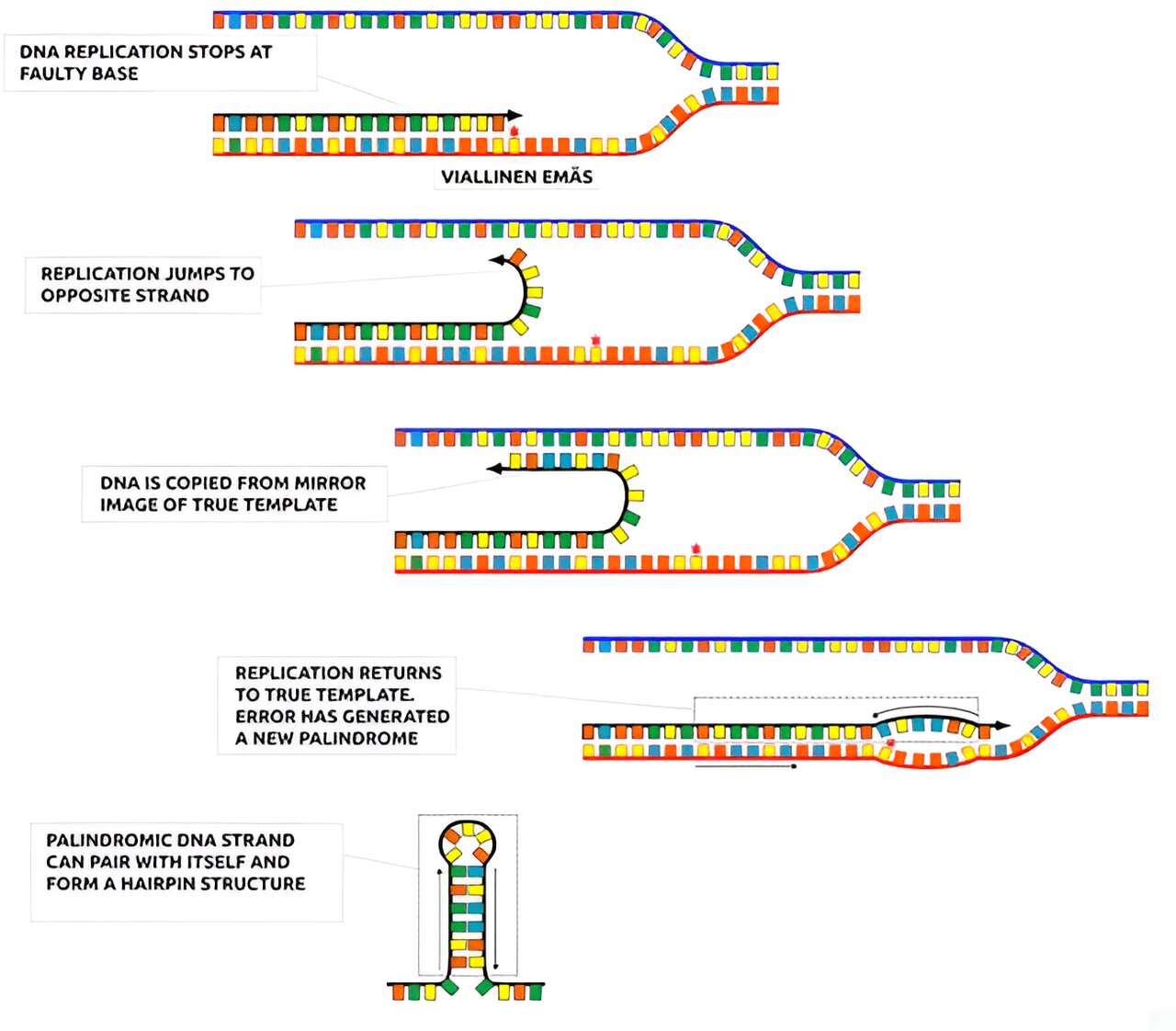
Scientists from the University of Helsinki have discovered a mechanism for the formation of new genes from nothing. By studying regulatory genes known as microRNA, the researchers used computer modeling to show that whole palindromes can arise from a single mutation event. This mechanism can explain approximately one-quarter of new genes and is believed to be universal. The findings provide insight into the origins of DNA and shed light on the evolution of RNA genes.

science2 years ago

"Breakthrough Discovery: DNA's Ability to Generate New Genes Unveiled"

Scientists from the University of Helsinki have discovered a mechanism by which DNA can rapidly create new genes for quick adaptation to changing environments. They found that certain single mutations can produce palindromes in DNA, which can evolve into microRNA (miRNA) genes. These miRNA genes play a significant role in regulating other genes and have been found to emerge in some animal groups, including primates. The process, called template-switching mutations (TSMs), allows for the creation of new miRNA genes from previously noncoding DNA sequences. This mechanism is much faster than the evolution of new functional proteins. The findings suggest a universal miRNA gene creation mechanism and have implications for understanding the impact of miRNA genes on human health.

science2 years ago

"Discovery of Genes Emerging Spontaneously Challenges Traditional Understanding"

Researchers at the University of Helsinki have discovered a mechanism that can generate complete DNA palindromes, leading to the creation of new microRNA genes from previously noncoding DNA sequences. By studying errors in DNA replication, the researchers found that certain errors can copy DNA backward, creating palindromic sequences. These palindromes can then fold into hairpin structures, which are crucial for the function of microRNA molecules. The researchers believe that this mechanism can explain the origin of at least a quarter of novel microRNA genes and may have broader implications for understanding the evolution of RNA genes and the basic principles of biological life.

health2 years ago

"RNA Breakthrough Unlocks Cancer-Fighting Potential of Immune System"

Researchers at the University of Massachusetts Amherst have discovered that a small strand of microRNA, called let-7, plays a crucial role in the ability of T-cells to recognize and remember tumor cells. This cellular memory is the basis for how vaccines work, and boosting it could improve cancer therapies. The study suggests a new strategy for the next generation of cancer-fighting immunotherapies. The researchers found that let-7, which is highly expressed in memory cells, reduces the chances of T-cells being tricked by cancerous tumor cells and increases the likelihood of them turning into memory cells. Understanding how let-7 is regulated during treatment could enhance the capabilities of our immune systems and lead to promising advancements in immunotherapy.

health2 years ago

"Breakthrough: Targeted microRNA therapy effectively inhibits cancer tumor growth"

Researchers at Purdue University have developed a new cancer therapy that targets tumors by using a modified version of microRNA-34a, a molecule that naturally slows or stops cell division. In mouse models, tumors treated with the therapy did not increase in size over a 21-day study, while untreated tumors tripled in size. The therapy also suppressed the activity of genes known to drive cancer and resistance to other therapies. The modified microRNA-34a is stable and can be delivered to cancer cells using a folate compound, reducing potential toxicity and side effects. The researchers are preparing for clinical trials.

health2 years ago

Revolutionary Hair Loss Solution Discovered: Harnessing the Power of MicroRNA and Hairy Moles

Scientists have discovered a potential breakthrough treatment for hair loss using microRNA. A recent study found that increasing the production of a specific type of microRNA, called miR-205, could soften hair follicles and promote hair growth in both young and old mice. While more research is needed to determine its effectiveness in humans, this discovery could lead to the development of a new treatment for baldness. Current FDA-approved treatments for hair loss include minoxidil, finasteride, laser light therapy, and platelet-rich plasma (PRP).

health2 years ago

MicroRNA Treatment Shows Promise for Hair Loss

Scientists may have discovered a breakthrough treatment that could help reverse hair loss by using microRNA. Hair follicles become stiffer as we grow older, contributing to hair loss. However, a new study found that a type of microRNA helps to soften the follicles, aiding hair regrowth. This could lead to the development of a new treatment for baldness. More work is needed, however, since only mice studies have been done so far.

health2 years ago

"RNA treatment shows promise in stimulating hair growth and regulating temperature"

Researchers from Northwestern University have found a potential breakthrough in baldness and hair growth by softening hair follicles through boosting production of a tiny RNA particle that relaxes the hardness of the cells. The study was conducted in genetically engineered mouse models, and the researchers found that the stem cells produced hair in mice both young and old. The scientists have demonstrated it’s possible to stimulate hair growth by regulating cell mechanics, and they plan to test whether topically delivered miR-205 can stimulate hair growth in mice. If successful, they will design experiments to test whether this microRNA can promote hair growth in humans.

health2 years ago

The Evolutionary Purpose of Curly Hair: Cooling and Regrowth.

Researchers at Northwestern University have successfully gene-hacked mice to stimulate hair growth using microRNA to hack hair follicle stem cells. They found that a particular microRNA, miR-205, plays an important role in the softness of hair follicles. Manipulating mouse stem cells to produce more of this microRNA led to new hair growth in just 10 days. The researchers plan to test whether they can replicate the study results with a topical solution, which could pave the way for a new topical baldness treatment for humans.