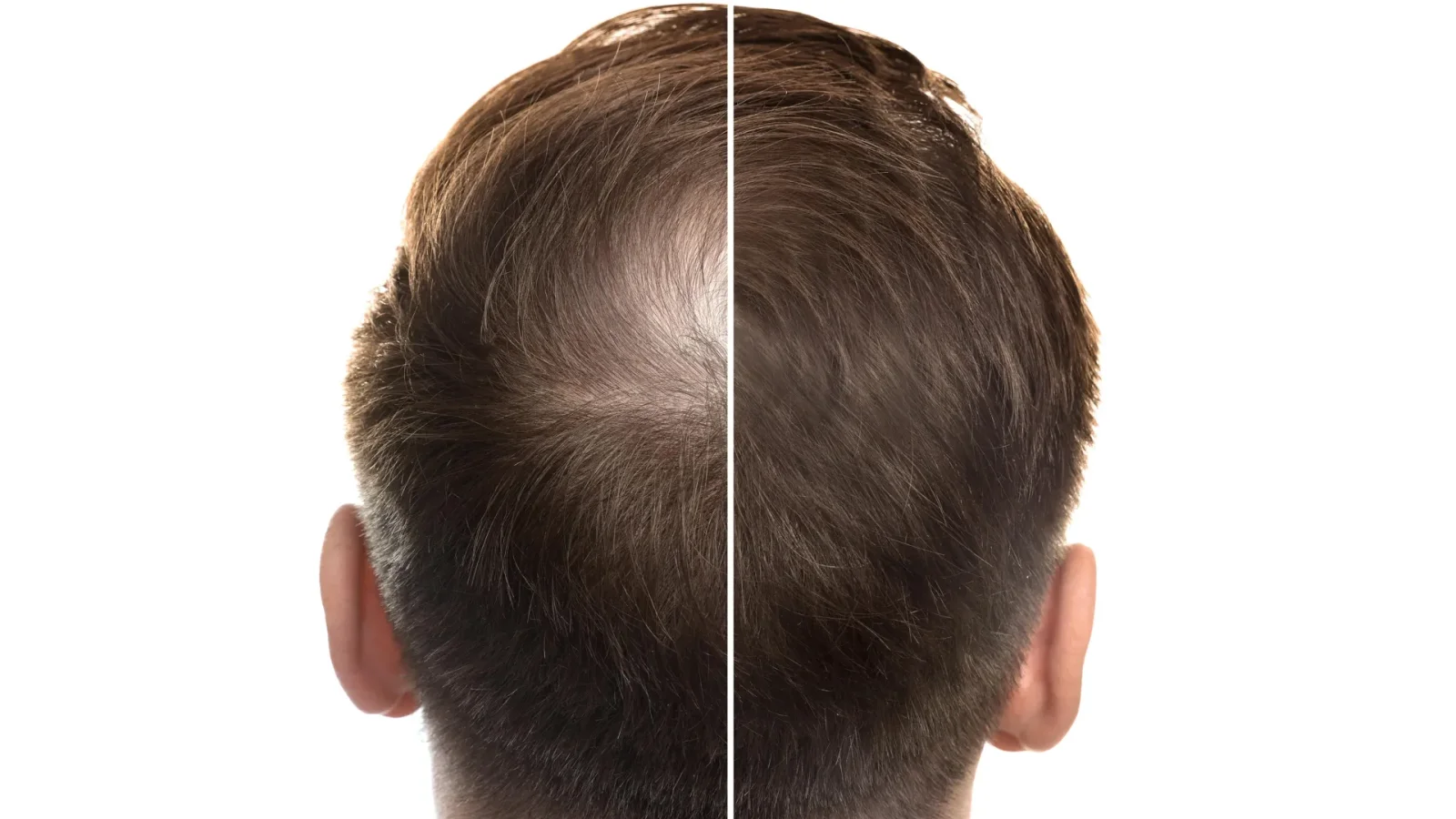
A new study from Taiwan shows that stimulating fat cells around hair follicles can trigger rapid hair regrowth in mice, suggesting a potential new treatment for baldness that involves activating fat cells through immune response mechanisms, with plans for human clinical trials.
Scientists have developed a new dissolving microneedle patch using stevioside from Stevia to enhance minoxidil absorption, showing promising hair regrowth results in mice, potentially offering a more effective treatment for baldness in humans.
Scientists discovered that a gel made from natural deoxyribose sugar can promote significant hair regrowth in mice with hereditary-patterned baldness, showing promise as a potential treatment for hair loss in humans, comparable to existing options like minoxidil.
A new drug, PP405, developed by Pelage Pharmaceuticals, shows promise in naturally regrowing hair by reactivating dormant hair follicle stem cells, with positive results from Phase 2a trials indicating significant hair density improvements and minimal side effects, potentially revolutionizing hair loss treatment.
Chemotherapy can temporarily alter hair texture, leading to 'chemo curls' where straight hair becomes curly during regrowth, due to damage to hair follicle shape and function. Most hair returns to normal within a year as follicles recover, though the process varies among individuals.
The article discusses the latest advancements in hair restoration, including less invasive treatments, promising new drugs like PP405, early detection strategies, and various in-office and at-home options, emphasizing that effective solutions are increasingly accessible for those seeking a Hollywood hairline.
Scientists have discovered that deoxyribose sugar, a natural component of DNA, may be as effective as current treatments like minoxidil in reversing hereditary-pattern baldness by promoting blood vessel formation and hair regrowth, based on promising early research in mice.
Scientists have discovered that a gel made from natural DNA sugar, deoxyribose, can stimulate significant hair regrowth in mice with hereditary-patterned baldness, showing promise as a potential treatment for hair loss in humans. The gel promotes blood supply to hair follicles, leading to robust hair growth comparable to existing treatments like minoxidil, and further research is needed to confirm its effectiveness in humans.
Scientists in Madrid have developed a new treatment combining stem cells and ATP that successfully triggered 100% hair regrowth in mice, offering a promising potential cure for androgenetic alopecia, though human trials are still needed.
A study published in Cell Press reveals that intermittent fasting, while beneficial for metabolic health, may slow hair regrowth by causing hair follicle stem cells (HFSCs) to undergo apoptosis due to oxidative stress and free fatty acid buildup. In mice, fasting led to slower hair regeneration, and a small human trial showed an 18% reduction in hair growth speed. Antioxidants like vitamin E were found to mitigate these effects, suggesting potential solutions to this unintended consequence of fasting.
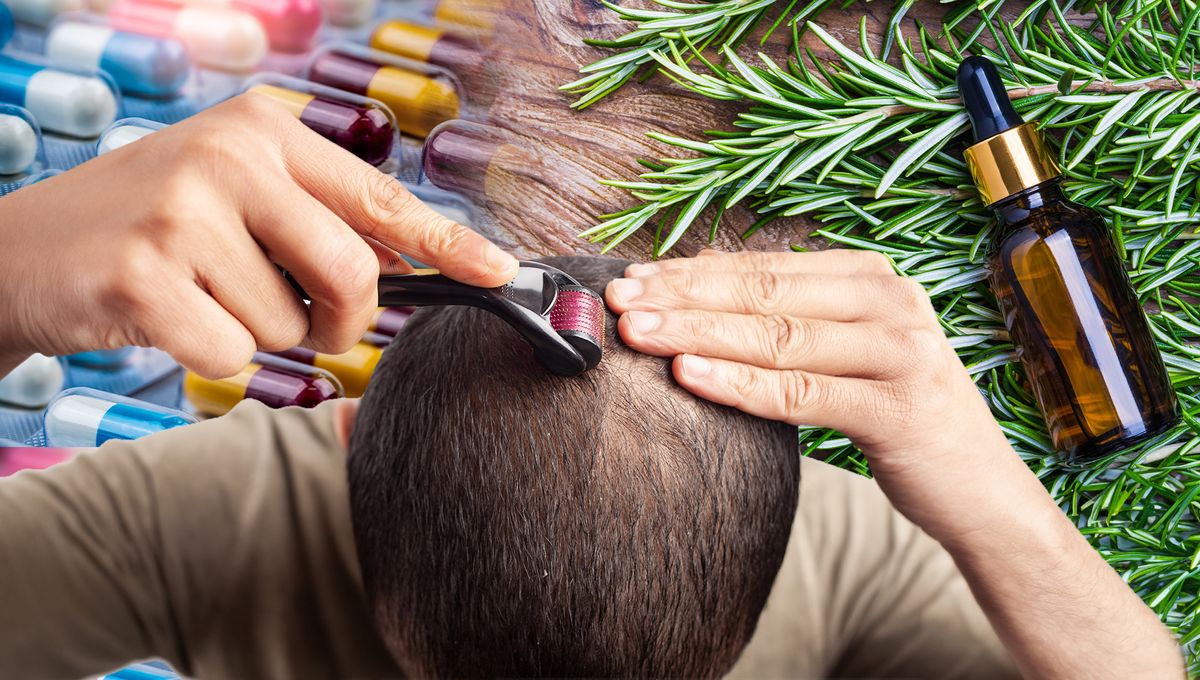
Hair loss can have significant psychological and social impacts, prompting ongoing research into treatments. While home remedies like rosemary oil and microneedling show some promise, scientific evidence is still limited. Recent developments include the approval of ritlecitinib for severe alopecia areata and the identification of microRNA-205 as a potential hair regrowth promoter. Additionally, a study suggests that cold capping during chemotherapy may be more effective than previously thought. However, it's crucial to seek a medical diagnosis before pursuing any treatment, as the causes of hair loss are complex.
Receding hairlines are a common issue, especially among men, and can be caused by genetics, hormones, stress, overall health, and lifestyle habits. Dermatologists recommend early treatment to prevent further hair loss. Common treatments include minoxidil, finasteride, laser therapy, microneedling, platelet-rich plasma, corticosteroids, hair transplants, and hair supplements. It's important to consult a dermatologist or trichologist as soon as symptoms appear to begin preventative measures.
Red and blue light therapy, forms of LED photodynamic therapy, are gaining popularity in dermatology and at-home treatments. Red light therapy stimulates cell renewal and repair, making it effective for regrowing hair and reducing fine lines. Blue light therapy targets oil glands, reducing sebum production and treating acne. Both therapies have in-office treatments for various skin conditions, including anti-aging, scar reduction, and rosacea treatment. At-home devices for red and blue light therapy are available, offering convenience and potential skin benefits. However, caution should be exercised with blue light therapy due to potential long-term effects on the skin and eyes.
Scientists have discovered a potential breakthrough treatment for hair loss using microRNA. A recent study found that increasing the production of a specific type of microRNA, called miR-205, could soften hair follicles and promote hair growth in both young and old mice. While more research is needed to determine its effectiveness in humans, this discovery could lead to the development of a new treatment for baldness. Current FDA-approved treatments for hair loss include minoxidil, finasteride, laser light therapy, and platelet-rich plasma (PRP).
Scientists may have discovered a breakthrough treatment that could help reverse hair loss by using microRNA. Hair follicles become stiffer as we grow older, contributing to hair loss. However, a new study found that a type of microRNA helps to soften the follicles, aiding hair regrowth. This could lead to the development of a new treatment for baldness. More work is needed, however, since only mice studies have been done so far.