Tag

Lunar Resources

All articles tagged with #lunar resources

space-exploration14 days ago

Global Race for Lunar Gold Sparks Urgent Calls for Space Mining Rules

The race to mine the moon is accelerating with new technological developments and international players, but the legal framework remains outdated and fragmented, raising concerns about equitable benefit-sharing, environmental impact, and potential conflicts. Urgent international cooperation and updated governance are needed to ensure responsible and sustainable lunar resource exploitation.
science-and-technology7 months ago

Moon's Hidden Treasure: A $1 Trillion Platinum Mine

Research suggests that lunar craters may contain over a trillion dollars worth of precious metals like platinum, making the Moon a potential new frontier for mining. While lunar mining could be more accessible and economically viable than asteroid mining, legal issues surrounding ownership and resource sharing remain unresolved, requiring international cooperation and regulation.

space-exploration1 year ago

Experts Urge US-China Collaboration in Lunar Exploration

American space security scholars advocate for a U.S.-China accord to ensure peaceful coexistence in lunar exploration, as both nations plan extensive Moon missions. The proposed agreement would involve sharing data to prevent spacecraft collisions and reaffirm commitments to the Outer Space Treaty, which prohibits militarization of celestial bodies. This collaboration could also address gaps in lunar resource governance, with the potential to set international standards. The scholars emphasize the importance of this cooperation, especially in light of Russia's potential space militarization efforts.

space-exploration1 year ago

"China Acknowledges Moon Race with US Amid Lunar Ambitions"

China has officially declared the United States as a competitor in the race to explore and utilize lunar resources, marking a significant shift in its space policy. The China National Space Administration (CNSA) plans to establish a lunar base by 2045, complete with power plants, factories, and research institutions, aiming to lead in deep space exploration. This move comes as the US faces challenges with its Artemis program and private lunar missions, highlighting a new era of competition reminiscent of the Cold War space race.

space-exploration1 year ago

"Former Blue Origin President Leads Interlune's Helium-3 Moon Mining Mission"

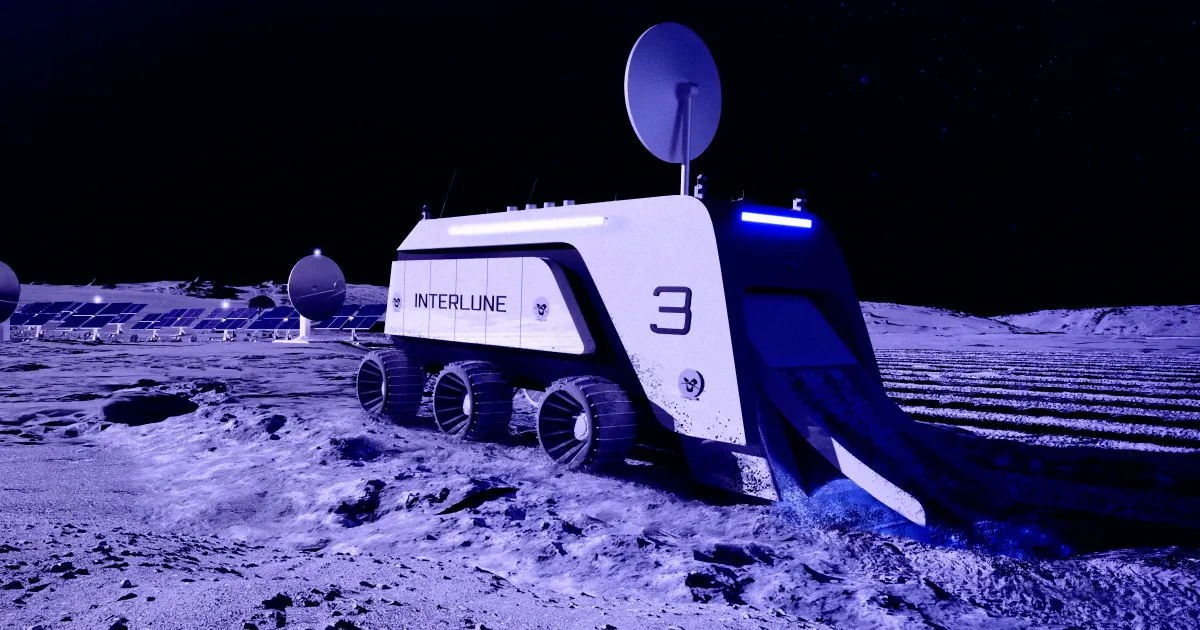
Former Blue Origin employees have founded a company, Interlune, to mine helium-3 on the moon and sell it on Earth, raising $15 million in funding. Helium-3, a rare isotope, is abundant on the moon's surface and has potential applications in quantum computing and fusion energy. With NASA's Artemis Program investing in lunar exploration, Interlune aims to capitalize on the growing interest in space resources, although significant technical and market challenges remain.

space-exploration2 years ago

The Global Rush to Reach the Moon: Exploring the Dark Side and a New Space Race

Multiple countries, including the US, China, Russia, and India, are planning missions to the moon to explore its resources, particularly water ice found in the polar craters. The focus is on economic independence and affluence rather than a non-military proxy contest between superpowers. However, as more players operate on the moon, disputes over mining and drilling rights may arise. The Outer Space Treaty of 1967 forbids territorial claims but permits resource utilization. The technological basis for these missions is different from the past, and space is now more crowded with satellites. While the moon is easier to reach than before, challenges still exist.

space-exploration2 years ago

"NASA Chief Worries Over China's Lunar Resource Theft"

NASA administrator Bill Nelson expressed concern that China may claim lunar resources for itself if it reaches the Moon's south pole before the US. Nelson emphasized the importance of ensuring that any resources found on the Moon, such as water, are available to all nations. Tensions between NASA and China's space program have been growing, with Nelson warning of a space race and potential political motives behind China's scientific research. While Russia's space program also plans to search for water on the Moon, Nelson sees China as a greater threat. The Artemis III mission, NASA's first crewed Moon landing since 1972, is still on track for a late 2025 launch, potentially giving China limited time to reach the lunar surface.

space2 years ago

NASA's Urgent Mission: Regaining Lunar Supremacy

NASA Administrator Bill Nelson emphasizes the need for the US to return to the Moon before China to prevent foreign states from claiming and controlling valuable resources such as water and ice. The Artemis II mission, set for November 2024, aims to establish a long-term lunar base and explore the Moon's south pole, where water is suspected to be abundant. While Russia also has lunar aspirations, Nelson considers China a greater threat. NASA's Artemis II mission will involve sending four astronauts on a ten-day journey around the Moon, marking the first crewed test of the Orion capsule and Space Launch System rocket.

space-technology2 years ago

"Exploring the Potential of a Lunar Solar Power Satellite"

A study conducted by Switzerland's Astrostrom company as part of ESA's Open Space Innovation Platform Campaign has proposed the concept of a Greater Earth Lunar Power Station (GE⊕-LPS), a solar power satellite constructed mainly from lunar resources that could deliver megawatts of microwave power to the lunar surface. The station, located at an Earth-Moon Lagrange point, would serve the needs of surface activities and potentially become a tourist destination. The study suggests that lunar-made solar power satellites would be cheaper and more environmentally friendly than those produced on Earth, and could be a viable solution for meeting terrestrial clean energy needs.

space-exploration2 years ago

NASA's Groundbreaking Lunar Mining Project: Transforming the Moon and Testing New Technologies

NASA plans to establish a long-lasting presence on the Moon by bringing oxygen and water to the lunar surface by the end of the decade. In addition to excavating the Moon for resources, such as iron and rare earths, NASA aims to return Americans to the Moon by 2025 and bring the first woman and person of color. The agency intends to attract commercial investment by quantifying potential resources and plans to send a test drill rig to the Moon this month. The Australian Space Agency is collaborating with NASA to develop a rover to collect regolith samples containing oxygen. These efforts mark a significant step towards achieving a sustainable future in space exploration.