Tag

Darpa

All articles tagged with #darpa

technology1 year ago

DARPA Develops Quantum Laser with Entangled Photons to Surpass Conventional Beams

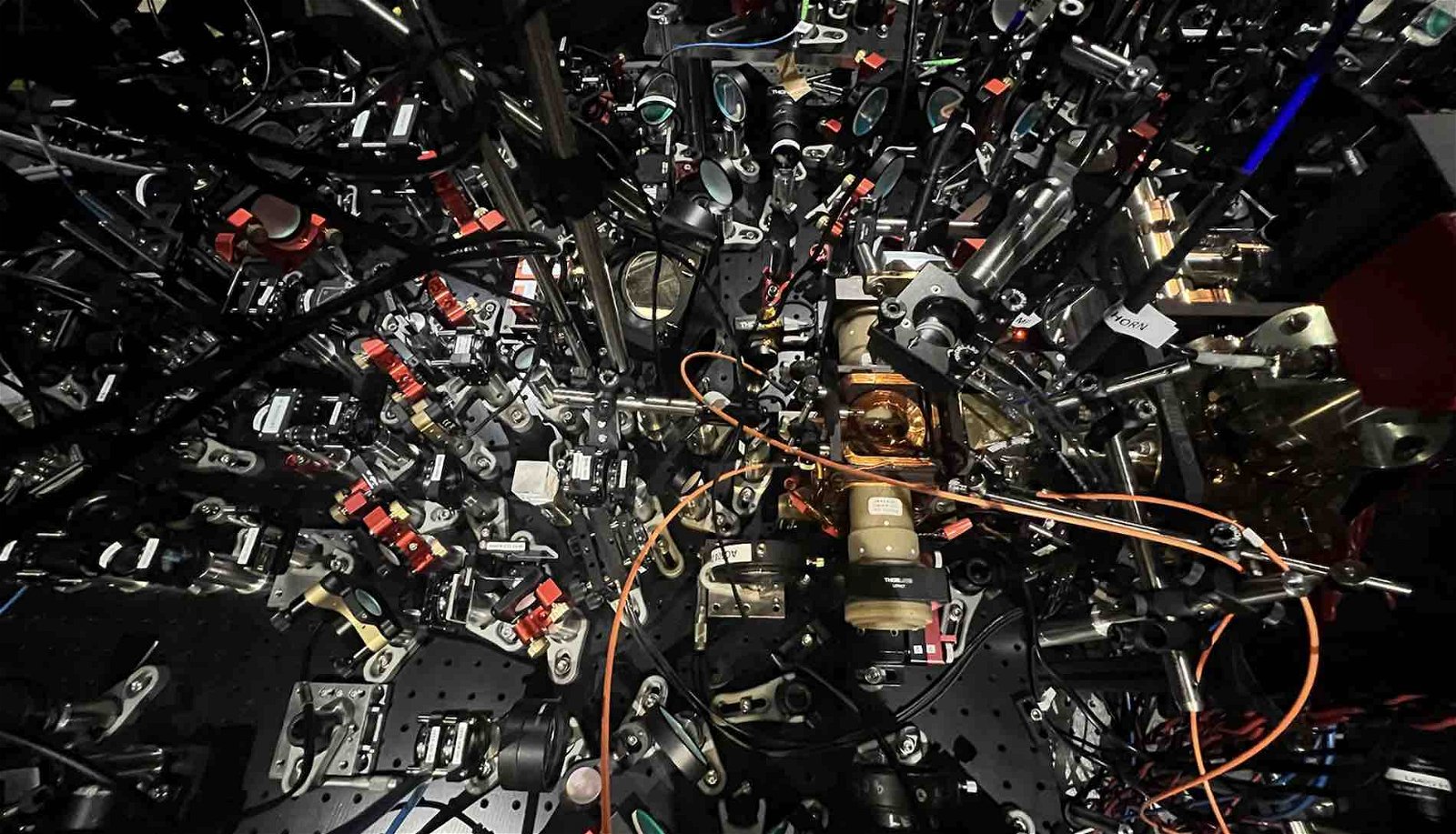
DARPA has awarded a $1 million grant to develop a "quantum photonic-dimer laser" that uses quantum entanglement to bind photons together, creating a highly concentrated and stable laser beam. This new technology aims to enhance military applications by maintaining precision and strength over long distances and in adverse conditions, potentially improving surveillance, secure communications, and other uses in harsh environments.

robotics1 year ago

"From Marvel to Retirement: The Legacy of Boston Dynamics' Atlas Robot"

Boston Dynamics' Atlas robot, known for its impressive capabilities, has been showcased in various videos demonstrating its agility, balance, and ability to perform tasks such as gymnastics, running, and navigating autonomously. The company's ongoing research and development on Atlas aim to improve its control and perception systems, with potential applications in construction, disaster response, and household chores. Additionally, DARPA's Virtual Robotics Challenge has selected Atlas as one of the advanced humanoid robots to compete in a public contest for disaster response applications.

space-technology1 year ago

"2025 Military Satellite to Undergo On-Orbit Servicing Mission"

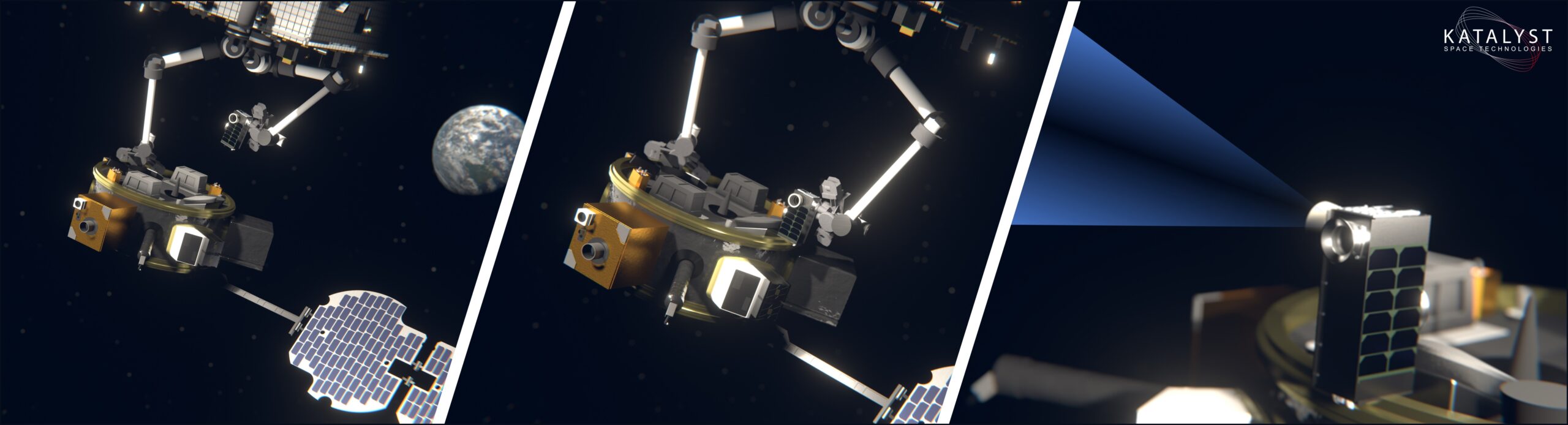
In 2025, a robot satellite in geostationary orbit will attempt to affix a new imaging sensor payload on a military satellite using a robot arm developed by DARPA and the Naval Research Laboratory. The mission, overseen by the Defense Innovation Unit, aims to upgrade the satellite's hardware, a major technological challenge. The Mission Robotics Vehicle (MRV) being built by Northrop Grumman's subsidiary SpaceLogistics will perform the mission, which is part of the effort to match commercial technologies with military needs for in-orbit services.

military-technology1 year ago

"US Successfully Tests Hypersonic Missile in Pacific, Closing Technology Gap with China and Russia"

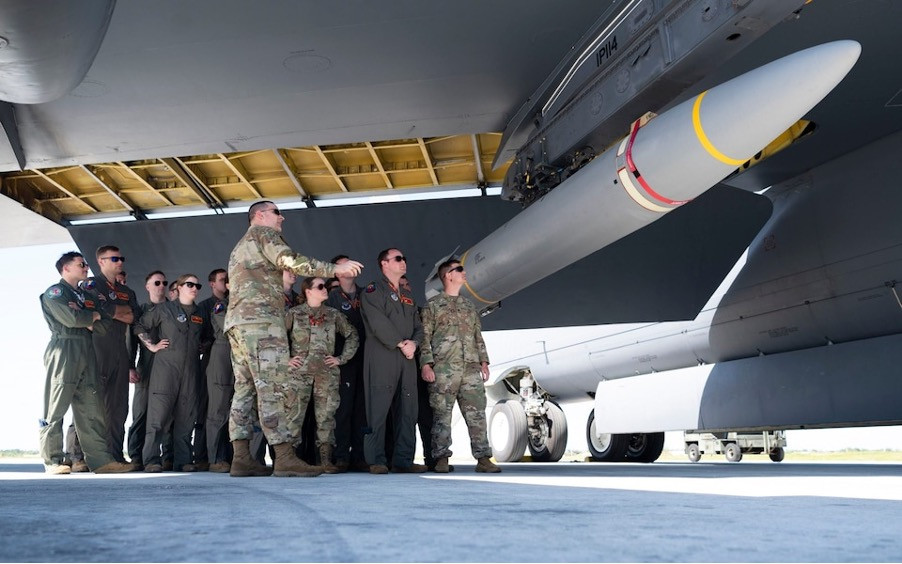
The US Air Force conducted the final test of the Lockheed Martin hypersonic AGM-183A Air-launched Rapid Response Weapon (ARRW) without disclosing its success. The ARRW is one of four hypersonic missiles in development, each with varying missions and flight profiles. The US is also working on the Hypersonic Air-breathing Weapon Concept (HAWC) missile system. Hypersonic weapons offer increased speed and maneuverability, making them harder to track and intercept. This test comes amid claims from North Korea and Russia about their own hypersonic capabilities, and amidst increased investment in hypersonic missile development by the US Department of Defense.

space-technology1 year ago

"Northrop Grumman Chosen to Develop Lunar Railroad for US Government"

DARPA has chosen Northrop Grumman to develop a "lunar railroad" concept as part of its 10-Year Lunar Architecture (LunA-10) Capability Study, aiming to facilitate sustained economic development on the moon. The envisioned network could transport humans, supplies, and resources for commercial ventures, contributing to a space economy for the United States and international partners. Northrop Grumman's study will define interfaces and resources required to build the lunar rail network, establish foreseeable risks, and explore concepts for constructing and operating the system with robotics. The selected companies will share their work at the Lunar Surface Innovation Consortium Spring Meeting next month and write up final reports to be released in June.

space-exploration1 year ago

"US Government's Commitment to Lunar Economy Development"

The United States is making strides in developing a lunar economy as part of the Artemis program, with NASA seeking to foster a thriving economy on the Moon. DARPA has initiated the LunA-10 study involving 14 companies to assess services such as power and communications on the lunar surface, with the goal of facilitating a lunar economy by 2035. DARPA has also issued a "Request for Information" for technological capabilities that could scale up lunar exploration and commerce, focusing on areas such as centralized heating and cooling to support lunar activities.

space-technology1 year ago

"Designer Unveils Revolutionary Air-Thrust Engine Technology"

Scientists at George Washington University and Princeton Plasma Physics Laboratory are developing air-breathing plasma engines (APEBs) to power satellites in very low Earth orbit using air as a fuel source, potentially reducing launch costs and preventing space debris. Anmol Taploo, a PhD student at GWU, explains the concept and benefits of APEBs, including high-quality imaging, disaster management, military defense, communications, and space debris prevention. The goal of the DARPA Charge Harmony project is to achieve a thrust-to-drag ratio greater than one, and the technology could potentially be used for spacecraft orbiting other planets within the next five years.

space-technology1 year ago

"Designer Unveils Revolutionary Air-Thrust Engine Technology"

Scientists at George Washington University and Princeton Plasma Physics Laboratory are working on air-breathing electric propulsion (ABEP) engines that could potentially power satellites with electric power in very low Earth orbit, using air as a fuel source. Anmol Taploo, a PhD student at GWU, explains the concept and benefits of ABEP engines, including reduced launch costs, high-quality imaging, disaster management, military defense, communications, and space debris prevention. The goal of the DARPA Charge Harmony project is to achieve a thrust-to-drag ratio greater than one, and the technology could potentially be used for spacecraft orbiting other planets within the next five years.

space-technology1 year ago

"Uncle Sam's Quest for Satellite Fuel from Thin Air"

Researchers from the Department of Energy's Princeton Plasma Physics Laboratory and George Washington University are developing air-breathing electric propulsion (ABEP) systems for satellites in very low Earth orbit (VLEO) that can generate fuel from the atmosphere, potentially extending satellite lifetimes and reducing mass. This technology, funded by DARPA, aims to use air as propellant instead of conventional fuels, and while still in the experimental phase, it has garnered interest from space agencies like the European Space Agency.

neuroscience1 year ago

"Enhancing Memory Recall through Neural Prosthetics"

Researchers have made a significant advancement in neural prosthetics by developing a memory decoding model (MDM) that enables the recall of specific memories through targeted electrical stimulation in the hippocampus. The study, involving 14 adults with epilepsy, demonstrated significant improvements in memory performance, particularly in those with impaired memory, offering hope for treating conditions like Alzheimer’s disease, stroke, or head injury. This breakthrough paves the way for interventions that can restore lost memory functions, potentially aiding individuals in living more independently.

technology1 year ago

"NASA's Autonomous Flight Software Powers Air Taxi Stand-Ins"

NASA successfully tested autonomous flight software on two helicopters, allowing them to fly autonomously and avoid virtual aircraft in a mixed-reality setting over Long Island Sound, Connecticut. The collaboration with Sikorsky and DARPA aims to advance completely autonomous flight systems for air taxis and other automated air transportation options, with the potential to inform the integration of Advanced Air Mobility systems into national airspace.

technology-and-military2 years ago

"DARPA's X-65 Aircraft with Innovative Air Jet Controls Begins Manufacturing for 2025 Flight"

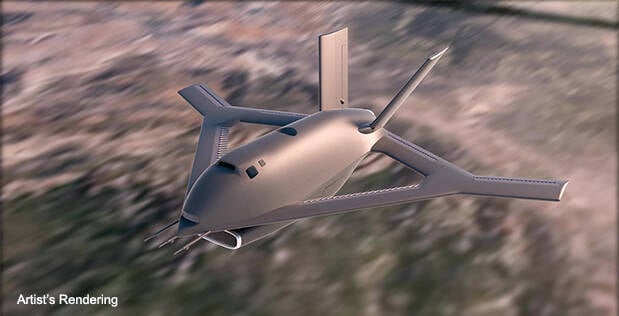
DARPA's experimental X-65 jet, which maneuvers using active flow control (AFC) instead of traditional flaps and rudders, is entering the production phase with Aurora Flight Sciences. The aircraft aims to validate AFC technology, which could revolutionize aircraft design by reducing weight and mechanical complexity while improving aerodynamics. The X-65, resembling the size and speed of military trainer aircraft, will undergo flight testing in 2025 to compare AFC with conventional control surfaces. This technology has potential military and civilian applications, and the modular design of the X-65 will facilitate future testing with different AFC configurations.

science-and-technology2 years ago

"Quantum Leap: SMEs, Noise Challenges, and the Dawn of Logical Qubit Circuits"

DARPA-funded researchers at Harvard have achieved a quantum computing milestone by creating the world's first quantum circuit with logical qubits, advancing the quest for fault-tolerant quantum computing. The ONISQ program's development of error-correcting logical qubits from Rydberg qubits could significantly reduce the number of physical qubits needed for quantum computing, challenging previous assumptions in the field. This breakthrough, detailed in a Nature publication, is a step towards scalable quantum processors and has the potential to revolutionize various industries by leveraging quantum mechanical phenomena for enhanced problem-solving capabilities.