Researchers at the University of Science and Technology of China have developed contact lenses containing upconversion nanoparticles that enable humans to see infrared light without external power, potentially revolutionizing vision and applications in security, medicine, and beyond.
During a total solar eclipse, the sudden shift from light to darkness can profoundly change color perception due to the Purkinje effect, causing colors to appear differently. This is because the rapid dimming of sunlight during totality prompts the eyes to enter mesopic vision, where the retina's rods and cones work together, resulting in a shift in color perception. Humans with three types of color-sensing cones experience a heightened vibrancy of greens and blues, while animals like birds with a fourth cone for ultraviolet light may have an even more intense experience. The upcoming April 8 solar eclipse will provide an opportunity to witness this phenomenon, with experts recommending wearing reds and greens to elicit the greatest visual contrast and observing the color shifts with items like colorful Skittles candy.
A new study suggests that some people are capable of seeing the world at a higher "frame rate" than others, potentially giving them an edge in competitive gaming and sports. The research, published in PLOS ONE, found that individuals vary in their ability to perceive flickering light, indicating differences in temporal resolution. This variation could impact performance in high-speed activities such as ball sports and competitive gaming. Further research is needed to fully understand the implications of this visual difference.
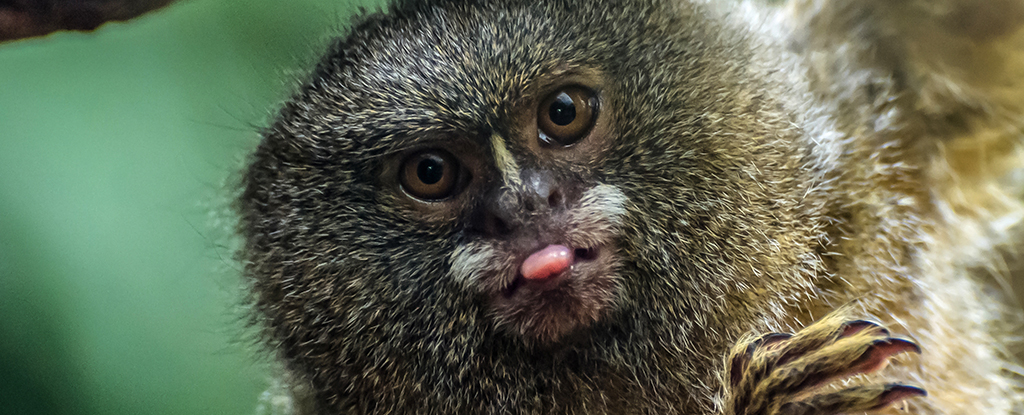
Researchers have discovered that humans have a greater range of blue tones in their vision compared to monkeys due to small differences in the structure of the retina. The study focused on the fovea, a part of the eye crucial for picking out detail, and found that connections between short-wave cones with long and middle-wave cones that exist in humans, a circuit sensitive to blue light, are mostly missing in marmosets and macaques. The findings add some interesting detail to what we know about how we process visual information and send it to the brain.