Tag

Brown Dwarfs

All articles tagged with #brown dwarfs

science6 months ago

Dark Matter's Role in Creating and Illuminating Mysterious Stars

New research suggests that dark matter could lead to the formation of dark dwarfs—sub-stellar objects powered by dark matter annihilation—at the center of the Milky Way. These objects could be detected through their unique lithium-7 signatures, providing a potential method to identify dark matter particles like WIMPs and deepen our understanding of this mysterious component of the universe.

astronomy1 year ago

"Lonely Brown Dwarfs: Hubble's Surprising Discovery"

The Hubble Space Telescope has discovered that brown dwarfs, often referred to as "failed stars," struggle to maintain relationships with binary companions over time due to weak gravitational binding. Observations suggest that as brown dwarfs age, they are less likely to have a companion, possibly due to the gravitational influence of passing stars. This finding provides direct evidence that brown dwarf pairs drift apart over time, shedding light on the dynamics of these celestial objects.

astronomy1 year ago

"Lonely Ageing Brown Dwarfs: Hubble's Surprising Discovery"

A recent survey using the Hubble Space Telescope has found that ageing brown dwarfs, which are larger than Jupiter but smaller than stars, are less likely to have companions as they get older. This suggests that binary pairs of brown dwarfs do not survive over time, likely due to the weak gravitational hold between them and the disruptive influence of passing stars. The survey provides evidence that most brown dwarfs remain single for the majority of their long existence, supporting the theory that they are born the same way as stars but do not have enough mass to sustain nuclear fusion.

astronomy2 years ago

"JWST Uncovers Unbelievably Tiny Brown Dwarf Defying Explanation"

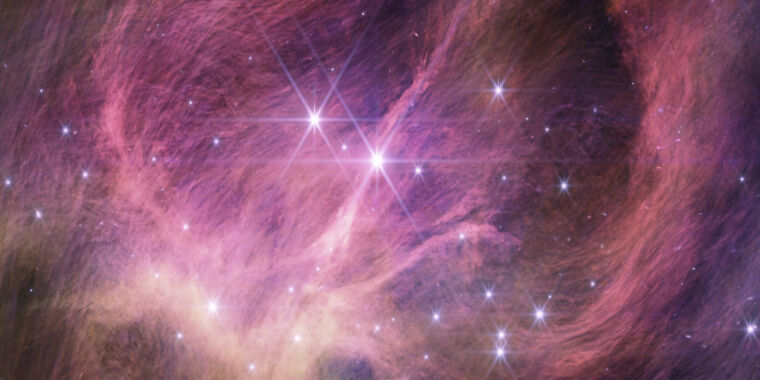
Astronomers using the James Webb Space Telescope have studied a star cluster in the constellation Perseus to determine the smallest possible size for a star. The cluster, IC 348, was chosen because it is young and likely to have new brown dwarfs, which emit light from the fusion of deuterium. Using Webb and ground-based telescopes, astronomers identified three targets weighing between three to eight times Jupiter, with surface temperatures ranging from 830° to 1,500° degrees Celsius. The study of these small brown dwarfs has raised questions about their formation and the discovery of mysterious hydrocarbons.

science-and-astronomy2 years ago

"Unveiling the Colossal Giant: The Largest Planet Ever Discovered"

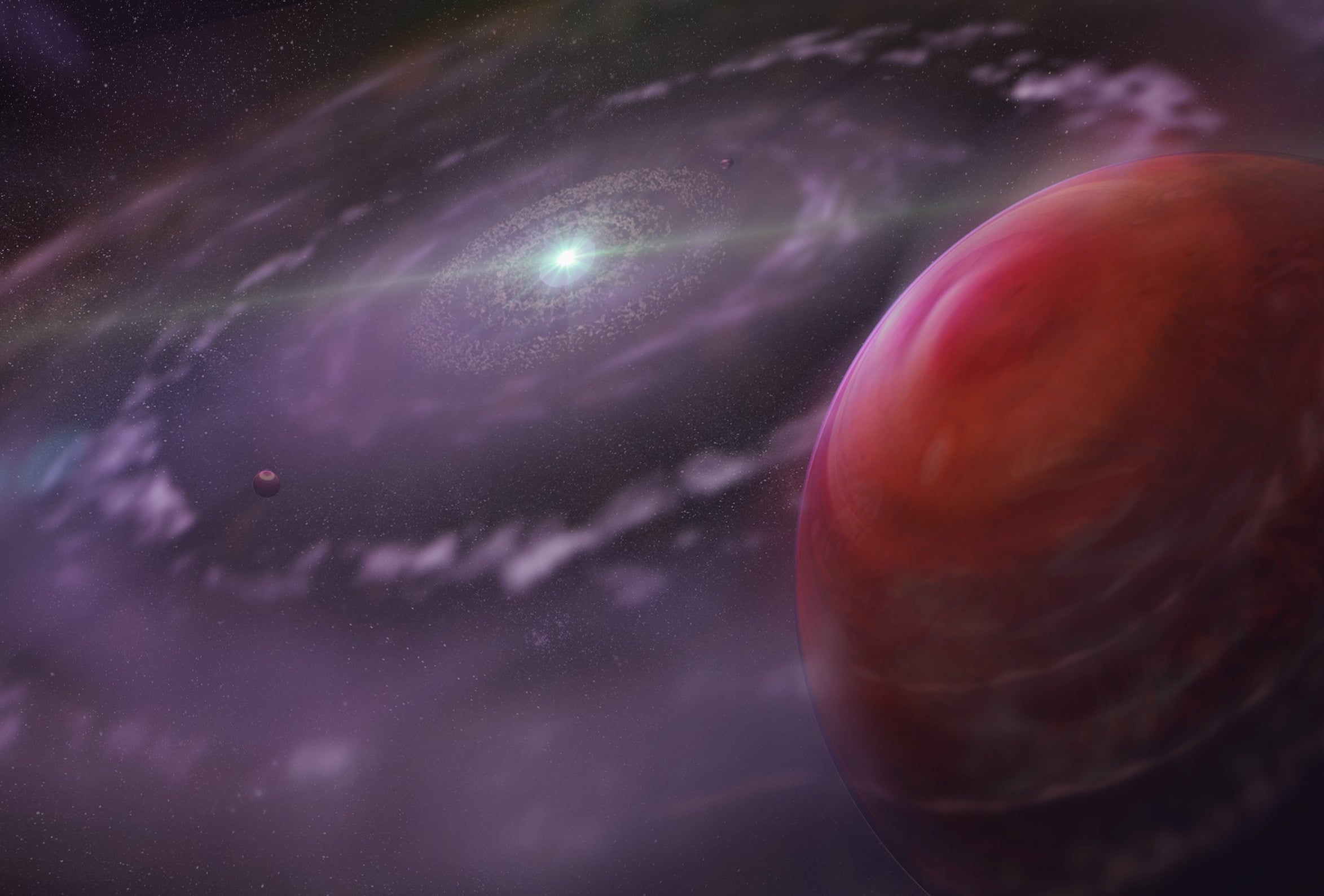
The largest known planet depends on various factors, including how one defines a planet. One candidate is ROXs 42Bb, a gas giant about nine times the mass of Jupiter and with a radius 2.5 times that of Jupiter. However, there are other objects, including protoplanets, that may be larger. The uncertainty arises from different measurement methods and the challenge of distinguishing between planets and brown dwarfs. The formation process of an object is not currently part of the formal definition of a planet. The debate over what constitutes a planet highlights the diversity of planetary systems and the many possible outcomes.

astronomy2 years ago

Exploring Exoplanets: From Gaia Enceladus to Habitable Zones

The James Webb Space Telescope (JWST) has observed the HR 8799 solar system, located 133 light-years away, and detected four exoplanets using its MIRI instrument. The system is young and unique, with the four massive planets on wide orbits. The JWST's observations confirm that these planets are not brown dwarfs and provide insights into their temperatures and atmospheric compositions. The study also clarifies the nature of a background object in the system and highlights the challenges and potential of using the JWST's MIRI instrument for future observations of young exoplanetary systems.

astronomy2 years ago

"Unveiling the Colossal Champion: The Universe's Largest Planet Revealed"

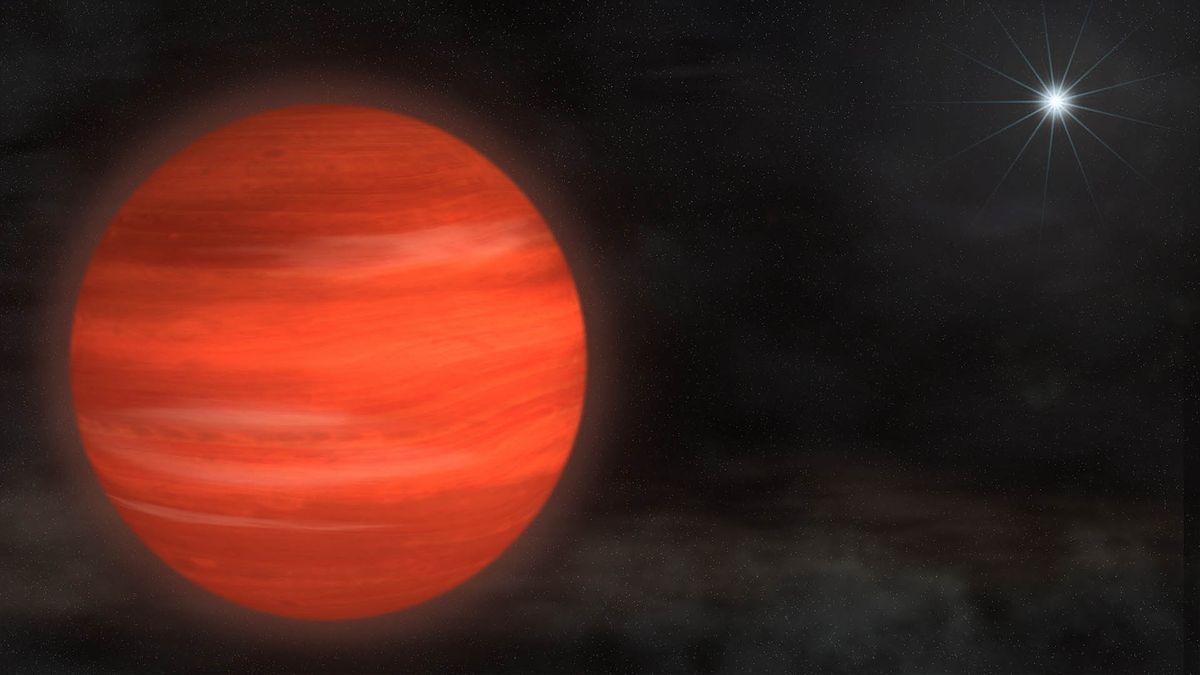
The largest known planet in the universe is the super-Jupiter Kappa Andromedae b, which has a mass around 12.8 times that of Jupiter. Planets can vary in size based on their width and mass, with some low-density gas giants being larger than higher-density exoplanets. The largest rocky planets, known as "super-Earths," are about twice the width of Earth. Planets become brown dwarfs once they reach a certain size and mass, with the dividing line between planets and brown dwarfs thought to be around 14 times the mass of Jupiter. The most massive brown dwarf discovered so far is 90 times more massive than Jupiter but has a smaller radius.

astronomy2 years ago

Hunting for Brown Dwarfs: Exploring the Sun's Cool Neighbors.

The Backyard Worlds: Cool Neighbors citizen science project is calling on anyone with a phone or computer to help uncover brown dwarfs, celestial neighbors of our Sun. These objects are relatively cool compared to our Sun and are in the mass range between stars and giant planets like Jupiter. The project presents a unique opportunity to spot undiscovered brown dwarfs in our cosmic backyard and potentially uncover hundreds or even thousands more of these captivating objects.