Scientists using the KM3NeT underwater telescope in the Mediterranean Sea detected the most energetic cosmic neutrino ever recorded at 120 PeV, challenging existing theories and opening new avenues for understanding extreme astrophysical phenomena and cosmic particle acceleration.
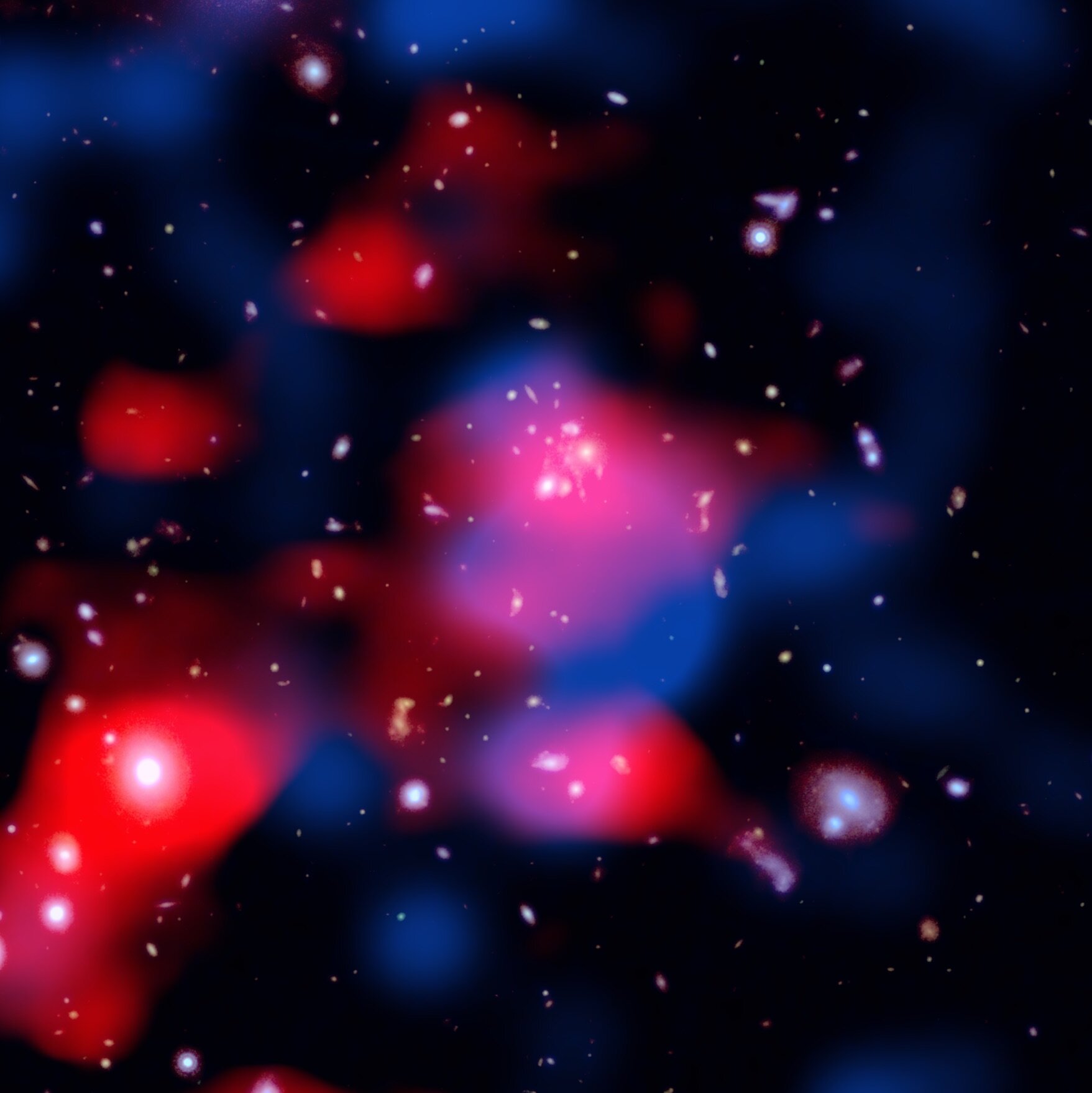
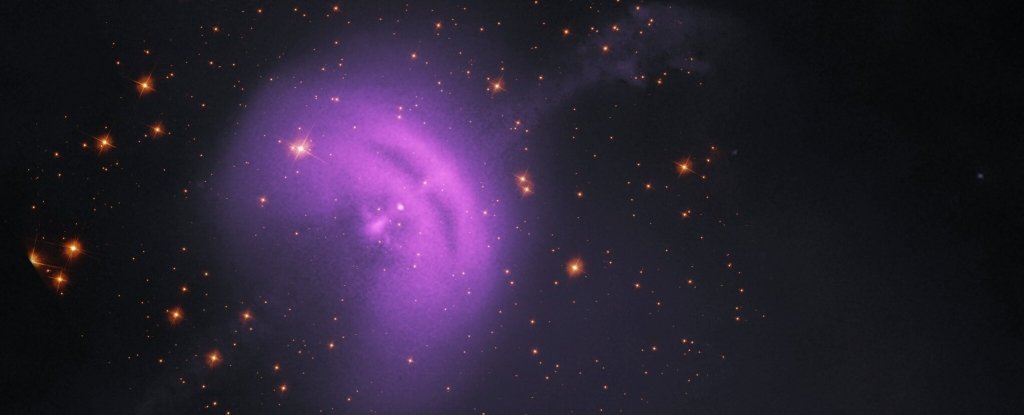
Astronomers have discovered the most distant mini-halo surrounding a galaxy cluster from 10 billion years ago, revealing that energetic processes involving black holes and cosmic collisions have shaped galaxy clusters throughout most of the universe's history, providing new insights into the early universe's formation.
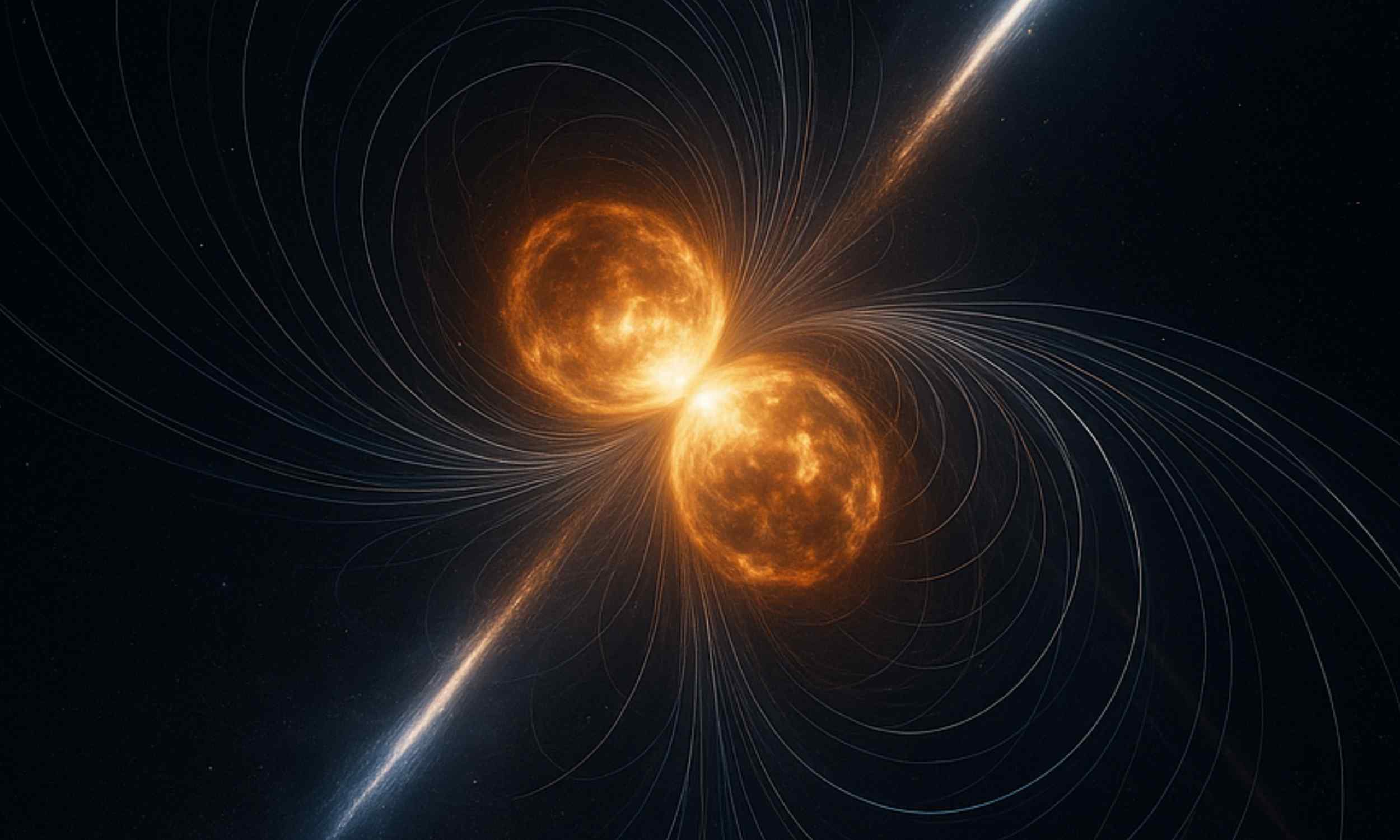
A new study proposes that the most energetic cosmic rays are generated during the magnetic chaos of merging neutron stars just before they collapse into black holes, potentially explaining their extreme energies and linking them to gravitational wave events and neutrino bursts. This model offers a testable hypothesis that could unify observations of cosmic rays, gravitational waves, and neutrinos, advancing our understanding of high-energy astrophysical phenomena.
Astronomers are making significant progress in identifying the origins of the highest energy cosmic rays, with evidence pointing to our own galaxy. Using detectors like IceCube and LHAASO, scientists have traced these particles back to sources such as pulsar wind nebulae, supernova remnants, and black holes within the Milky Way, advancing our understanding of cosmic particle acceleration and multi-messenger astronomy.
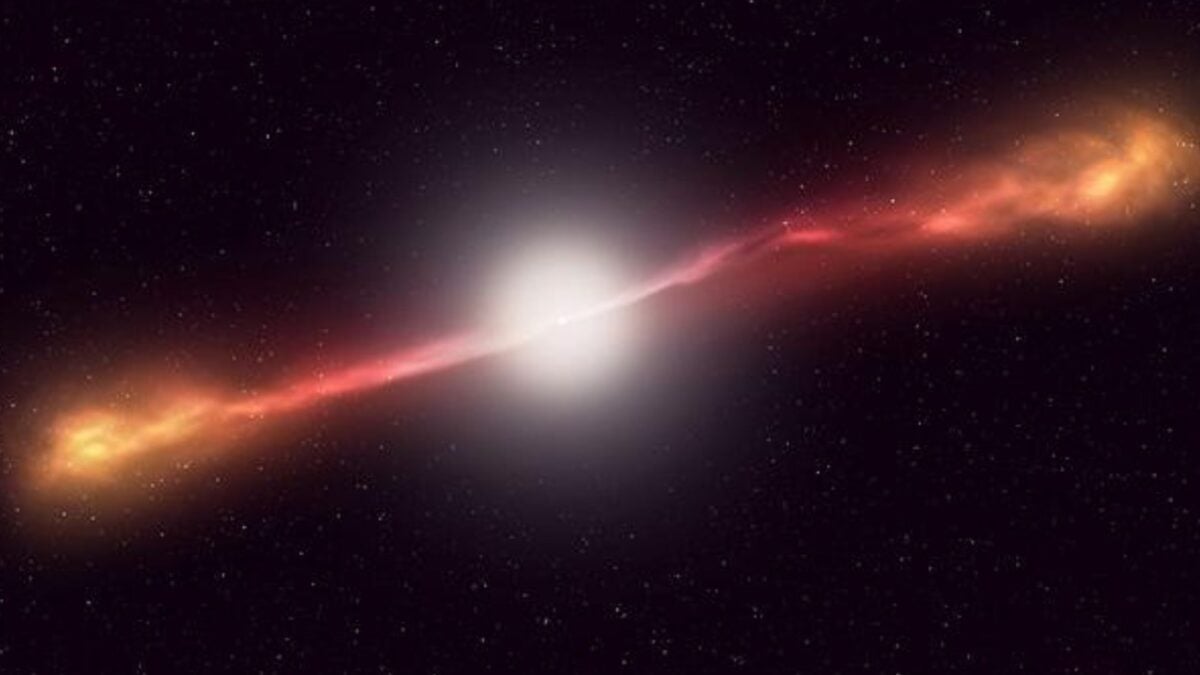
A study from Johns Hopkins proposes that supermassive black holes could act as natural particle accelerators, producing high-energy particles and potentially offering a cost-effective alternative to traditional colliders for studying dark matter and fundamental physics, especially as funding for large-scale experiments like the LHC becomes scarce.
The H.E.S.S. Observatory in Namibia has detected the most powerful cosmic-ray electrons and positrons ever observed, with energies up to 40 teraelectronvolts. These particles, known as cosmic ray electrons (CRe), likely originate from a few sources within a few thousand light-years of our Solar System. The detection of these high-energy particles, which create Cherenkov radiation when they hit Earth's atmosphere, provides new insights into their origins, possibly linked to supernova remnants or pulsars. The findings, published in Physical Review Letters, advance our understanding of cosmic rays and their sources.
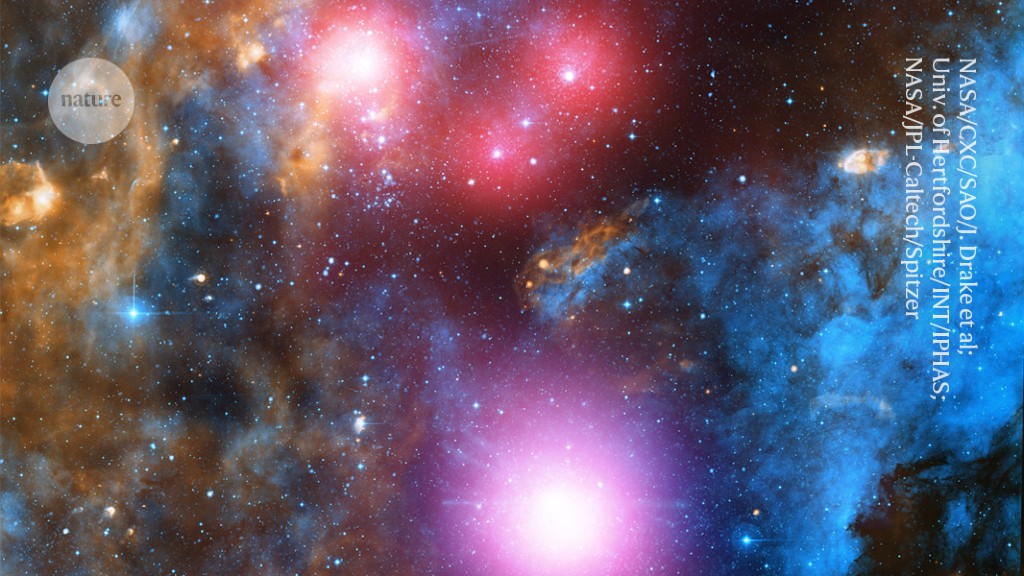
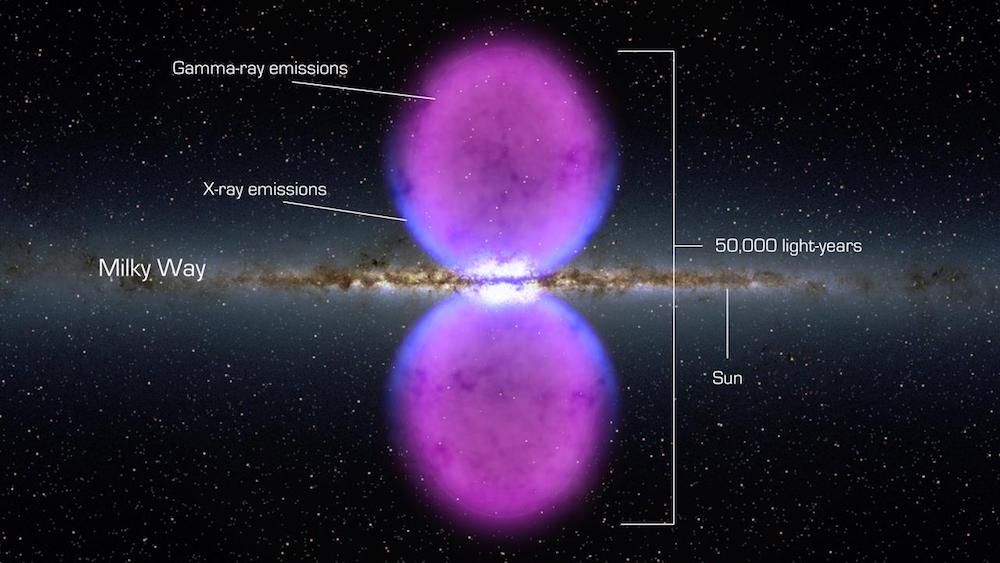
Astronomers have discovered a massive gamma-ray bubble in the Milky Way, known as a 'super PeVatron', which could be the source of the galaxy's most powerful cosmic rays. The region, located in the star-forming area Cygnus OB2, is capable of accelerating particles to energy levels exceeding 10 petaelectronvolts (PeV). This finding challenges previous assumptions about the maximum energy levels of cosmic rays in our galaxy and provides new insights into the origins of high-energy cosmic rays.
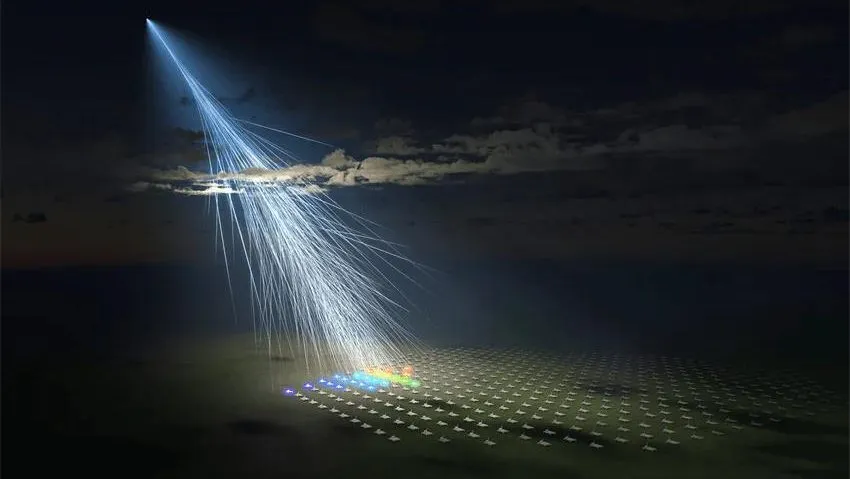
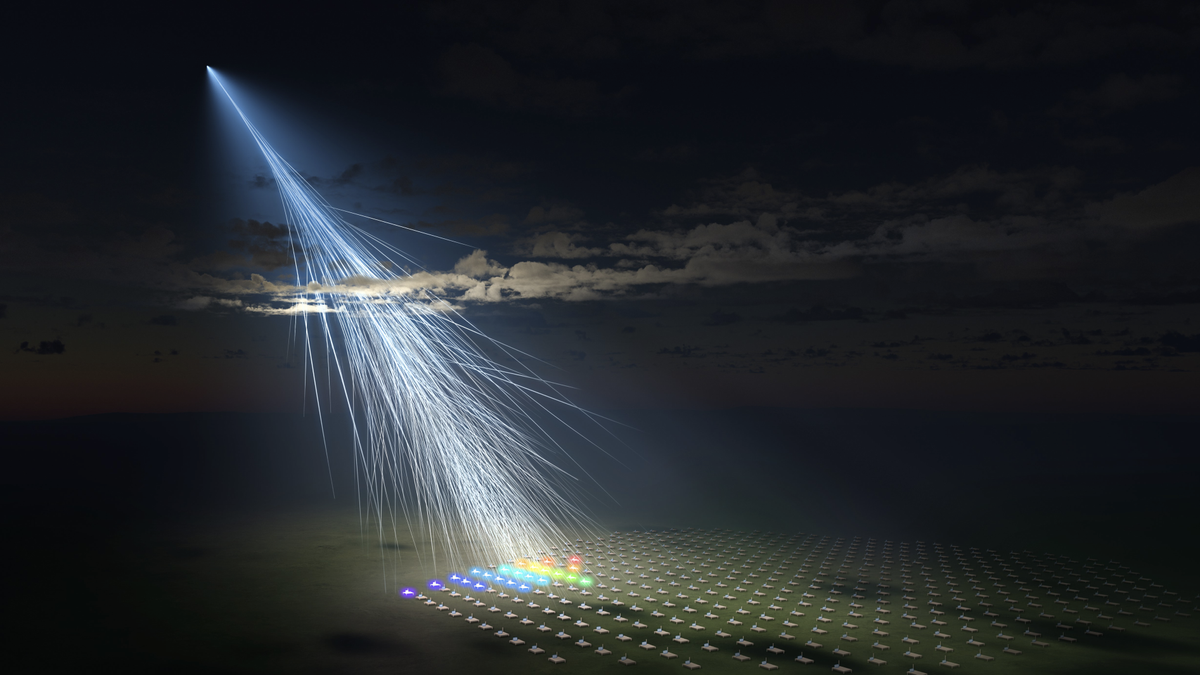
A mysterious cosmic ray, dubbed the Amaterasu particle, has been detected in Utah, originating from beyond our known galaxy. Unlike low-energy cosmic rays commonly found on Earth, this ultra-high-energy particle contains properties from deep space. Scientists at the Telescope Array observatory are studying the particle, which triggered nearly two dozen surface detectors and measured 244 exa-electron volts. The origins of these high-energy cosmic rays remain unknown, but researchers speculate they may be related to phenomena such as gamma-ray bursts, black holes, and galactic nuclei. The closest potential source is the Local Void, an empty region on the outskirts of the Milky Way. Scientists aim to establish patterns and understand the movement of these particles.
Scientists have discovered a new particle called the "sun goddess" particle, named Amaterasu, which has an energy level one million times greater than what can be generated in humanity's most powerful particle accelerators. This particle, detected by the Telescope Array experiment, is the most energetic charged particle ever detected and its origins and nature remain a mystery. It could potentially open up new avenues in high-energy astrophysics and challenge the Standard Model of particle physics. Further investigation and collaboration with next-generation observatories are expected to shed light on the Amaterasu particle.
A new study suggests that the most energetic cosmic rays in the universe originate from within the Milky Way galaxy, specifically from the remnants of exploded stars known as supernova remnants. The findings were made possible by the Calorimetric Electron Telescope (CALET), a sensitive instrument mounted on the International Space Station (ISS) that has detected over seven million ultra-high-energy cosmic ray particles since 2015. The recorded high-energy rays provide convincing evidence that they originated from sources nearby our solar system, possibly from at least three of the 12 supernova remnants within 3,000 light-years of us. The research supports the current understanding of high-energy electrons and offers insights into the galaxy and its sources.
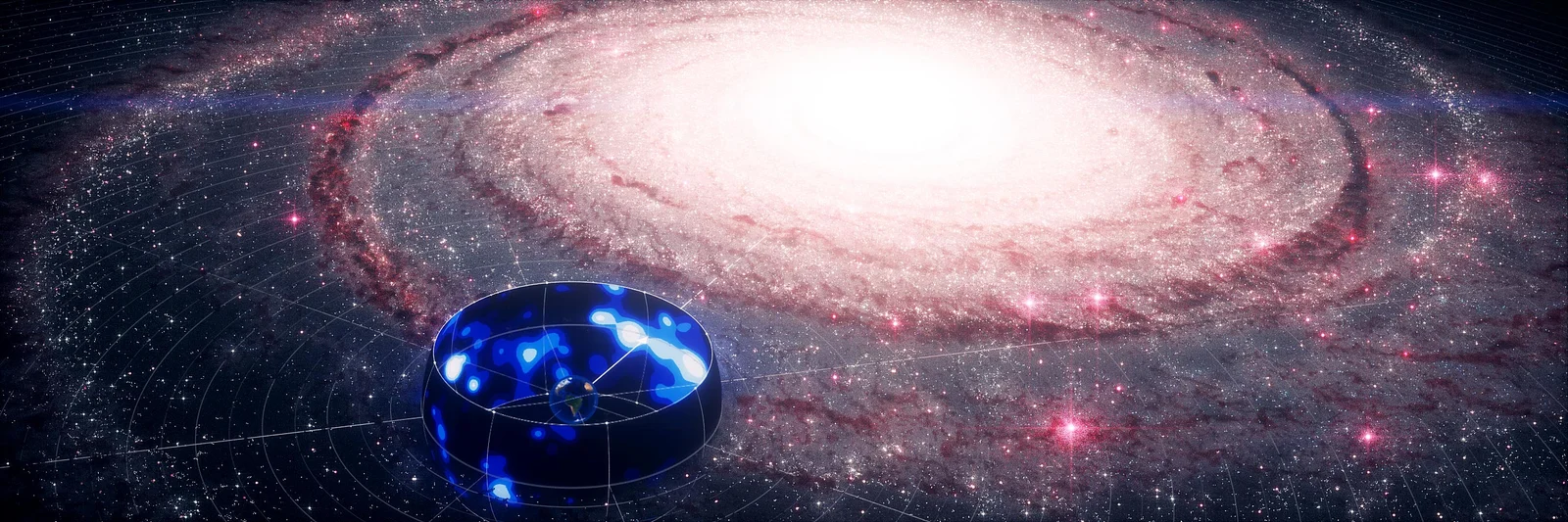
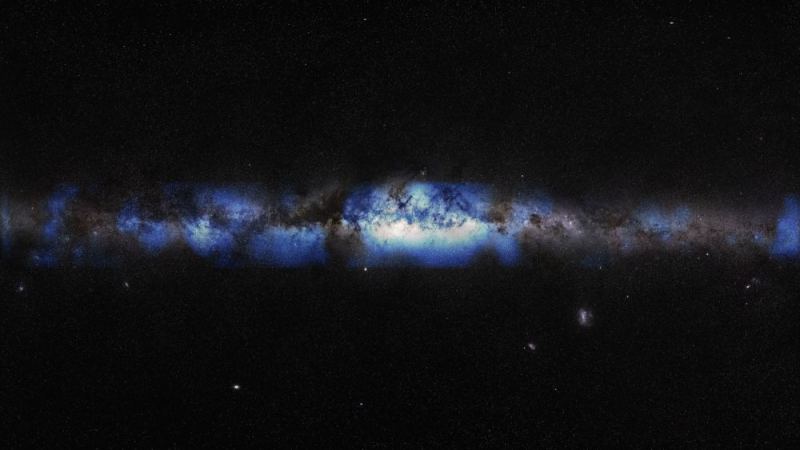
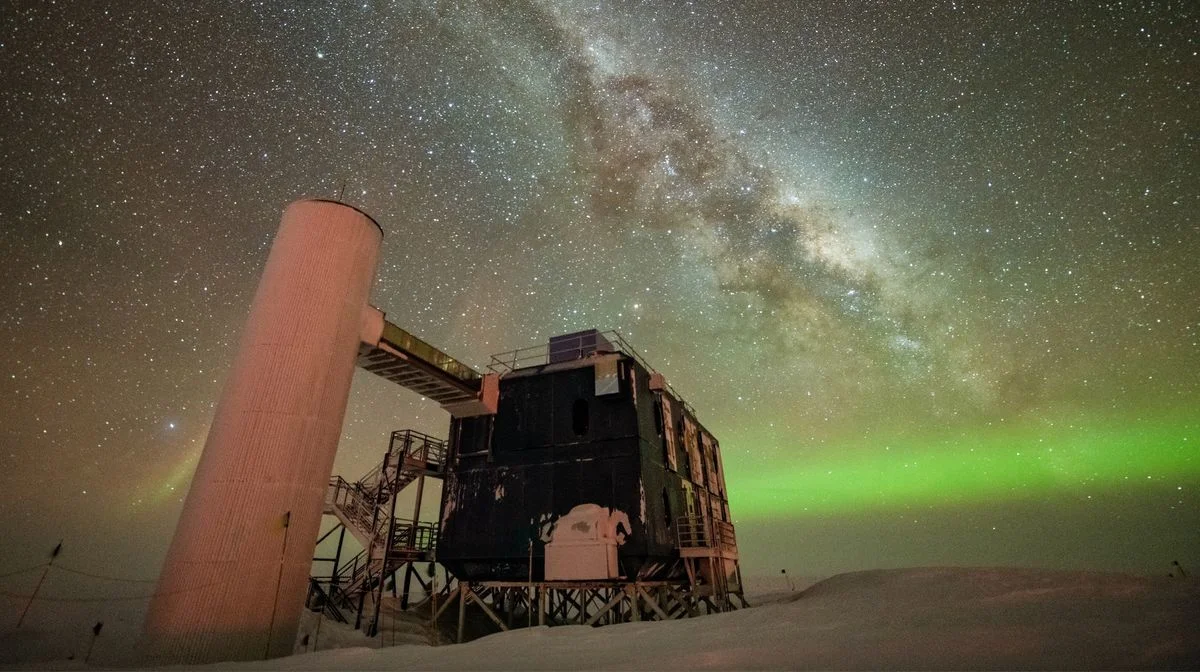
The IceCube Neutrino Observatory has produced the first image of the Milky Way using neutrinos, providing a new perspective on our galaxy. The observatory, located at the South Pole, detected high-energy neutrinos originating from both within our galaxy and beyond. This breakthrough was made possible by over 5,000 light sensors and advanced data analysis techniques, including machine learning. The discovery confirms the presence of high-energy neutrinos from the Milky Way and opens the door to identifying specific sources within our galaxy.
The IceCube Collaboration has created a map of high-energy neutrino emissions from the Milky Way, revealing that our galaxy produces far fewer neutrinos than many distant galaxies. Neutrinos are tiny, massless particles that come from galactic and cosmic sources, as well as cosmic ray interactions with Earth's atmosphere. The team of scientists faced challenges in sifting out the sparse numbers of high-energy neutrinos from galactic sources due to background noise. The findings raise questions about why the Milky Way lacks these particles and where the high-energy sources exist. Further analysis by IceCube is expected to shed light on the particle accelerators in our galaxy.
Scientists have detected high-energy neutrinos originating from within our Milky Way galaxy, a groundbreaking discovery that could open up new avenues of research. Neutrinos are extremely difficult to detect as they rarely interact with atoms. The study used the IceCube Neutrino Observatory, the first gigaton neutrino detector ever built, to analyze 10 years of data and identify high-energy neutrinos likely coming from the Milky Way's galactic plane. The findings suggest that IceCube will need upgrades to pinpoint the sources of these neutrinos and further enhance its sensitivity. This discovery could provide valuable insights into cosmic rays, their origin, and the properties of our host galaxy.