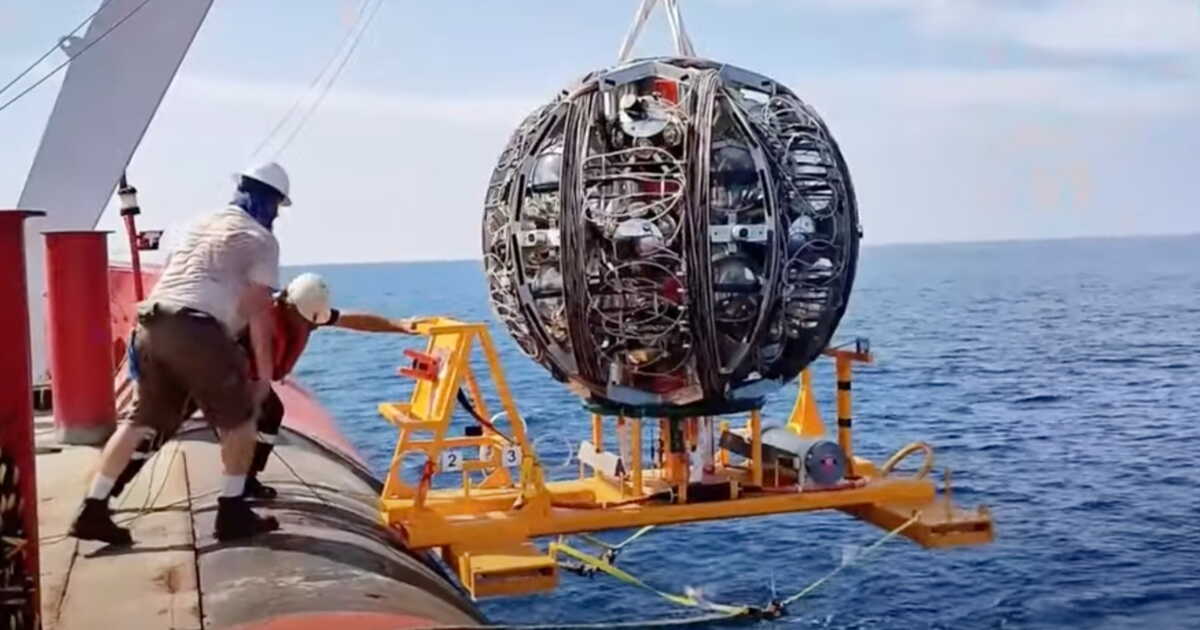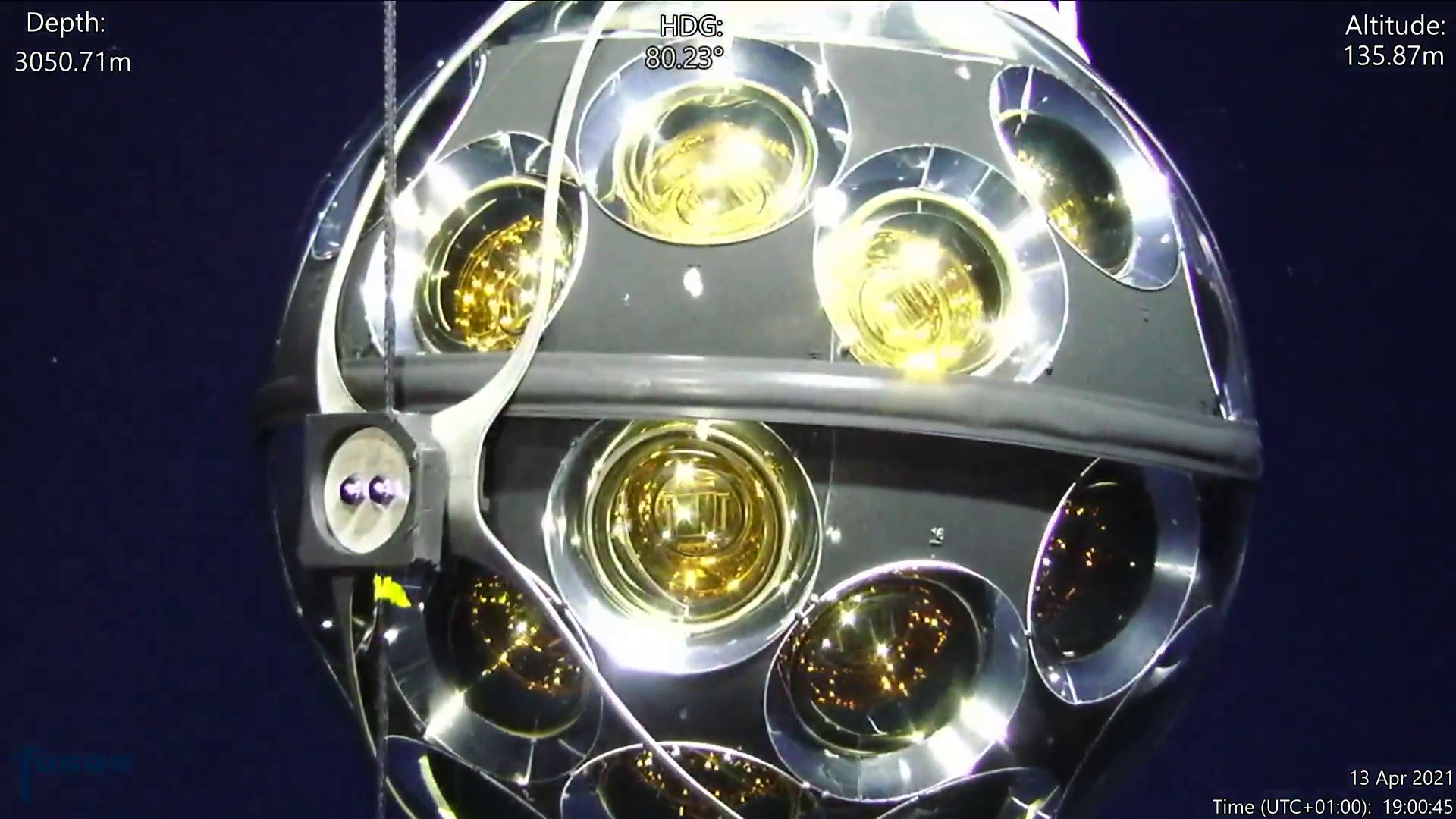
Scientists using the KM3NeT underwater telescope in the Mediterranean Sea detected the most energetic cosmic neutrino ever recorded at 120 PeV, challenging existing theories and opening new avenues for understanding extreme astrophysical phenomena and cosmic particle acceleration.
A 2023 detection by the KM3NeT/ARCA neutrino detector has confirmed a record-breaking 220 PeV cosmic neutrino event, likely of cosmogenic origin, highlighting the rarity and significance of ultra-high energy neutrino observations in Earth's oceans.
Scientists detected a record-breaking 220 PeV neutrino using the KM3NeT detector deep in the Mediterranean Sea, marking the highest energy neutrino ever observed and opening new avenues in ultra-high-energy neutrino astronomy, though its exact origin remains uncertain.
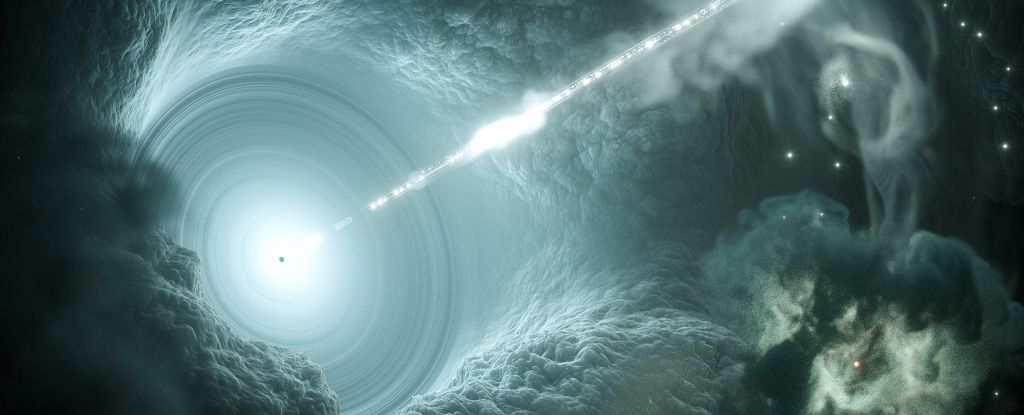
A high-energy neutrino detected by the KM3NeT telescope in 2023 may have originated from dark matter decay, offering a new way to explore dark matter, though the most likely explanation remains a high-energy neutrino from a distant blazar. The event's unique detection, not seen by the IceCube Observatory, has sparked hypotheses about dark matter interactions, with further research expected as KM3NeT completes construction.
In February 2023, the KM3NeT underwater telescope detected an extremely high-energy particle that may be the first direct evidence of dark matter, possibly originating from a blazar. This discovery challenges existing understanding of cosmic particles and could open new avenues for dark matter research, though further verification is needed. The event's uniqueness and potential implications make it a significant development in astrophysics.
Scientists using the KM3NeT telescope in the Mediterranean Sea detected an ultra-high-energy neutrino in February 2023, traveling billions of light-years from a distant galaxy, providing new insights into cosmic phenomena involving black holes and other energetic events.